How to Spot Predators: Practical Tips for First-Time Safari Goers
On your first game drive, look for part of an animal rather than its whole body. A lion’s ear may be the only thing visible above the grass. A leopard’s tail may hang below a branch while the rest of the cat lies in shade. If something looks out of place, tell your guide where to look before deciding what it is.
Learning how to spot predators on safari starts with knowing where to scan. Check the shade beneath trees, the edges of open grassland and the gaps between bushes. Use binoculars to confirm a shape rather than searching the entire landscape through them. When your guide stops, give yourself a moment to look and listen. A quiet pause often reveals details you would miss while the vehicle is moving.
How to Spot Predators on Safari: Where to Look First
| Predator | Where to scan | What might give it away |
|---|---|---|
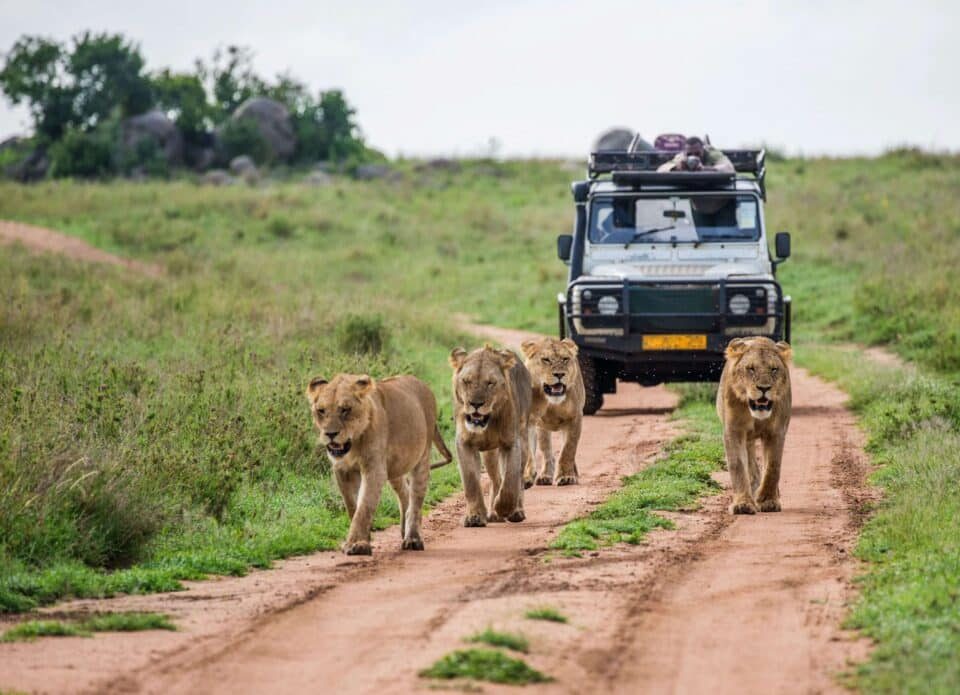
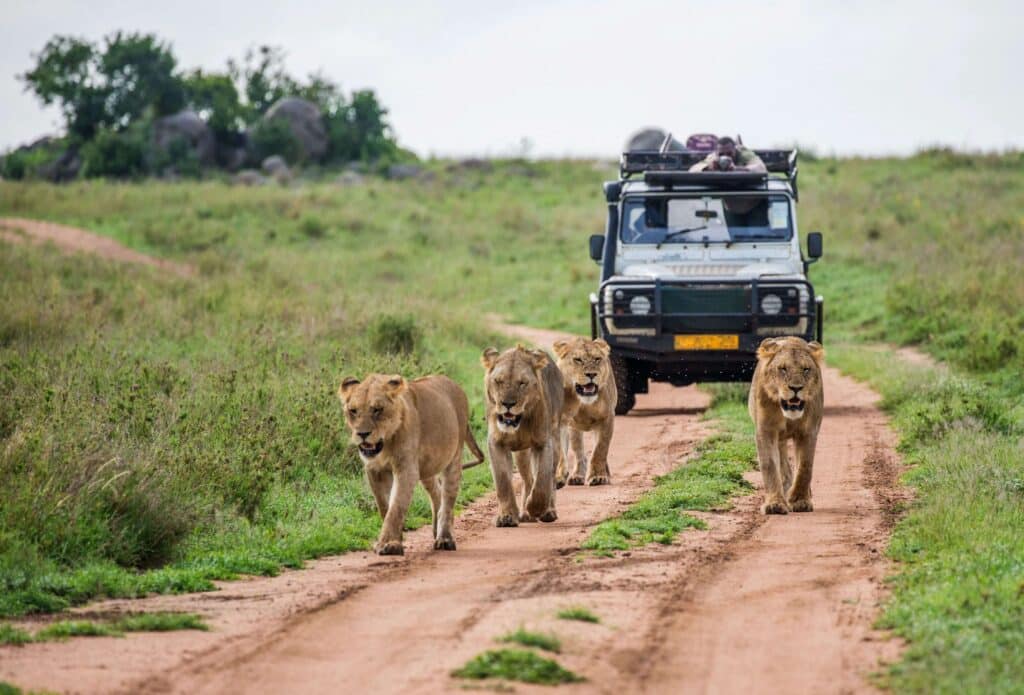
| Lion | Under shade trees, beside bushes or on rocky outcrops | An ear turning, a pale belly in the shade or the outline of a head above the grass |
| Leopard | Along wooded riverbanks, at the base of trees and across broad branches | A hanging tail, a spotted flank or a shape resting where two branches meet |
| Cheetah | Across open ground, around low mounds and beneath isolated shade trees | A slender head looking over the grass or dark tear marks when the face is visible |
| Spotted hyena | Along tracks and across open ground, especially early or late in the day | Rounded ears, a sloping back or a steady trot |
These are places to start, not rules about where each animal belongs. Leopards spend time on the ground, cheetahs rest in shade and hyenas can be visible during daylight. Let the habitat guide your search without ruling out the places in between.
Scan With Your Eyes Before Using Binoculars
Search one section at a time
Start by looking across the area without binoculars. Pick a section you can scan slowly, such as the line of shade under three trees or the grass between two bushes. Then move to the next section. Look for something that breaks the pattern: an ear that turns, a curved back where you expected a straight branch or a patch of colour that doesn’t match the grass around it.
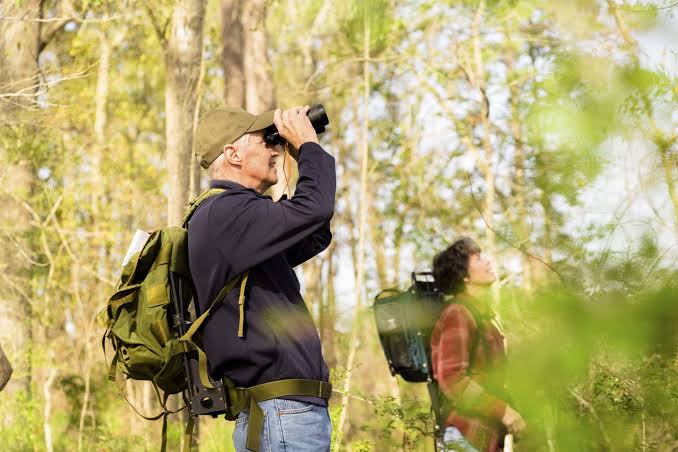
Bring up your binoculars once you have a likely spot. Keep looking at it as you lift them so you don’t lose your place. If the vehicle is moving over rough ground, ask your guide to stop when there’s a suitable place. A stationary view is easier to hold, and you’ll have more time to tell a branch or rock from an animal.
Give a landmark instead of saying “over there”
If you spot something, use a feature everyone can see. Say, “Under the second tree to the left of the termite mound,” or “On the thick branch that slopes down towards the road.” Add whether it’s close to the track or farther back. Pointing alone can be hard to follow, especially if someone is sitting on the other side of the vehicle.
You don’t need to name the animal. “I can see something moving in the shade” gives your guide a useful starting point. If the shape turns out to be a stump, you’ve still practised spotting and describing a detail. That same habit will help when something is there.
Look for Signs, but Treat Them as Clues
Fresh tracks can help you decide where to look
A guide may notice paw prints on a sandy track and stop to see which way they point. Ask what makes the guide think the tracks are recent and where the animal might have left the road. Dust, rain and other vehicles can blur a print. Even a clear track shows where an animal passed, not where it is now.
If the guide decides to continue, keep watching both sides of the road. A cat may have crossed into cover before the vehicle arrived. The useful skill is learning how tracks narrow down a search, even if they don’t lead to a sighting. Stay in the vehicle rather than getting out for a closer look.
Watch where other animals are looking
An antelope that stops feeding and stares in one direction gives you a reason to look that way. Vervet monkeys can give alarm calls in response to predators, including leopards, but a call on its own doesn’t tell you what caused it. If your guide hears a call, ask what else they’re looking for before drawing a conclusion.
Vultures gathering or dropping towards one area can point to a carcass, but they don’t prove a predator is nearby or that a hunt just took place. Scan the ground and the surrounding shade from a position your guide chooses. If there’s nothing visible, move on. Treating every call or circling bird as a promise can cost you time in better viewing areas.
Choose the Time and Habitat, Not Just the Park
Try an early drive if you only have one outing
An early morning drive is a sensible starting point if you want to see predators moving rather than resting. A late afternoon drive can work well too, especially if your guide has recent information about where animals have been seen. Ask when you’ll reach the viewing area. Leaving your lodge at sunrise is less useful if you still have a long drive to reach the habitat you want to explore.
Don’t stop looking when the day warms up. Research in the Serengeti found that cameras often recorded lions and cheetahs at shaded resting sites around midday, while spotted hyenas were recorded mainly at night. That does not mean midday is best for seeing cats on every safari. It does explain why checking shade can be worthwhile even when you don’t expect much movement.
Give each drive a different purpose
The Serengeti and Maasai Mara offer open ground, rocky areas and wooded waterways. Those habitats call for different ways of looking. On an open plain, sweep across the bases of low mounds and isolated trees. Along a wooded waterway, slow the search down and check both the ground and the larger branches. Your guide can tell you which sections are practical to reach on the day.
If you have two drives, ask to vary the route as well as the time. For example, spend an early drive scanning open ground and use a second outing to check wooded habitat. If you’re particularly interested in hyenas after dark, ask whether your park or conservancy permits guided night drives. A late afternoon drive doesn’t automatically continue after sunset.
What to Do Once You Spot a Predator
Keep your voice low and let the guide position the vehicle. Don’t ask the driver to follow an animal off the track or block its path. Rules differ between reserves and conservancies, and the guide may need to leave a busy sighting or give another vehicle a turn. If everyone is photographing from one side, take turns rather than leaning across other passengers.
Before reaching for your camera, watch the animal for a moment. Is it resting, looking in one direction or starting to move? If it gets up, look where it’s going instead of fixing your attention on the spot where it was lying. A few minutes with a resting lion or a hyena crossing the road can be worth more than rushing to the next sighting.
Frequently Asked Questions
Which predator is easiest to spot on a first safari?
It depends on the park, the habitat and recent sightings. A pride of lions on open ground may be easier to find than a solitary leopard in thick cover, but both can be difficult to see in long grass. Ask your guide which predator they would look for first on your route and why.
Do I need expensive binoculars to spot predators?
No. Use a pair you can hold steady and focus quickly. Practise finding a distant object with your eyes and then lifting the binoculars without looking away. That skill is more useful on your first drive than buying a stronger pair you find difficult to hold still.
How can I improve my chances if my first drive is quiet?
Ask your guide what they would change next time. A different route, an earlier start or more time near good habitat may help. If you book another drive, tell the guide what you’ve already covered so you don’t repeat the same search without a reason.