

Kampala City Guide: Where to Stay, Eat, and Explore
Kampala rarely gets top billing on a Uganda itinerary built around gorillas, chimpanzees, and savannah game drives, and most travellers pass through it as little more than a transit point between the airport at Entebbe and whatever national park comes first. That’s a genuine shame, because Uganda’s capital, spread across a series of hills overlooking the northern shore of Lake Victoria, has a history, a food scene, and an energy that reward at least a day or two of proper attention rather than a rushed drive-through on the way to somewhere else.
A City Built on Seven Hills
Kampala’s traditional description as a city of seven hills undersells the reality somewhat, since the modern metropolitan area has long since sprawled across considerably more high ground than that original count, but the phrase captures something real about how the city developed. Long before it became Uganda’s national capital, this was the heartland of the Buganda kingdom, one of East Africa’s oldest and most sophisticated traditional monarchies, and that royal history still shapes the city’s geography today, with sites like the Kasubi Tombs and the Buganda king’s palace sitting on hills that carried real ceremonial and political significance centuries before any colonial administrator ever arrived. The British eventually built their own colonial administration on a neighbouring hill rather than displacing the existing Buganda capital outright, a coexistence that left Kampala with the unusual distinction of housing both a national government and an active traditional kingdom’s seat of power within the same city limits, a dynamic that persists today.
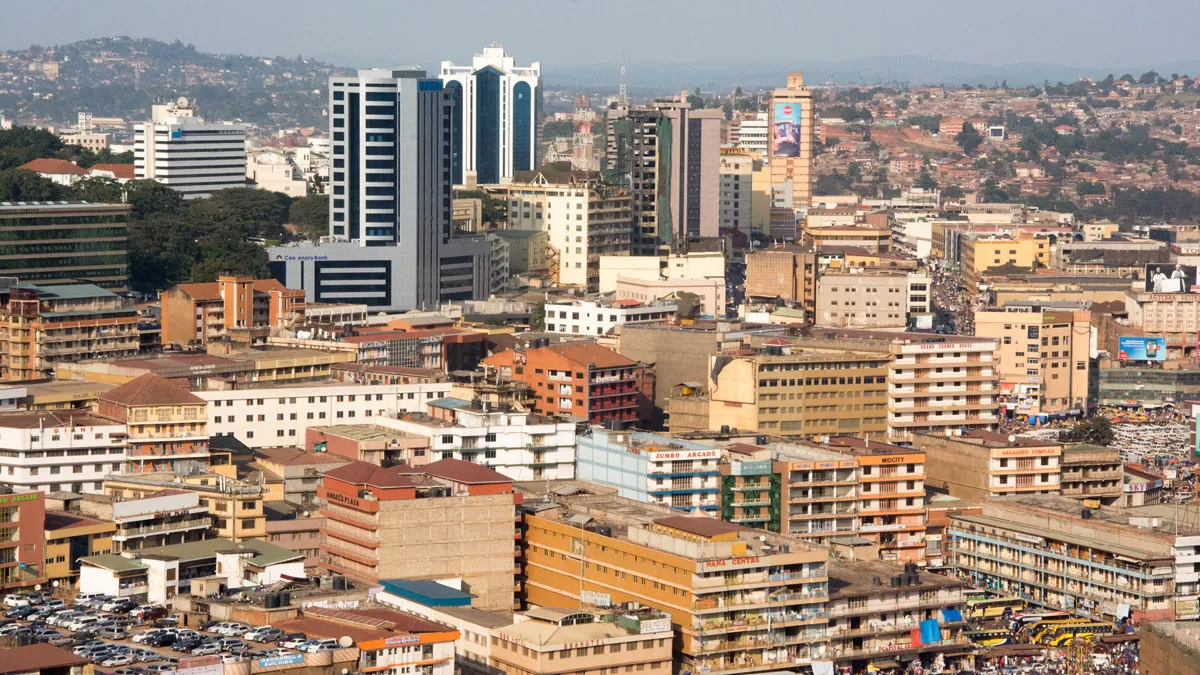
Kampala City Guide featuring accommodation, restaurants, attractions, shopping, nightlife, and local experiences
Getting Your Bearings on the Hills
Kampala’s character shifts noticeably depending on which of its famous hills you’re standing on, and understanding that layout helps enormously when deciding where to base yourself and what to prioritise.
Kololo and Nakasero
Kololo, home to most of Kampala’s foreign embassies and a good share of its wealthier residents, carries an unhurried, leafy character with rooftop bars and upscale restaurants that feel a world away from the city’s traffic-choked commercial core. Nakasero, just downhill, is that commercial core, a dense mix of office towers, government buildings including State House’s Kampala presence, and the sprawling Nakasero Market, one of the city’s best spots for fresh produce and a genuine sense of everyday Kampala life rather than a curated tourist experience.
Kabalagala and Kisementi
For nightlife, two neighbourhoods dominate the conversation. Kabalagala has built its reputation as Kampala’s budget travel and nightlife hub, packed with cheap guesthouses, rolex stalls, and bars that keep going well past midnight on some of the most affordable drink prices anywhere in East Africa. Kisementi, in the Kamwokya area, offers a calmer, more polished alternative, with live music venues and bars that suit solo travellers and groups wanting good conversation over their drinks rather than pure late-night chaos.
Where to Stay
Kampala’s accommodation spans the full range from genuine five-star comfort down to backpacker dorms, and the right choice depends heavily on which neighbourhood’s character appeals most.
Upscale and Business Hotels
Kampala Serena Hotel remains one of the city’s most established high-end options, centrally located with the polish expected of an international chain property, while the Sheraton Kampala trades on some of the city’s best elevated views from its hillside position. Newer entrants like Mestil Hotel and Residences have pushed the city’s luxury bar higher still, aimed squarely at business travellers and visitors wanting a genuinely modern stay rather than colonial-era grandeur.
Mid-Range and Budget Options
Fairway Hotel offers a reliable, well-located mid-range option favoured by both business and leisure travellers, while budget-conscious visitors gravitate toward well-known backpacker properties such as Red Chilli Hideaway, which has built a loyal following among overlanders and independent travellers passing through on tighter budgets. Location relative to Entebbe Road and the airport matters more than it might seem for anyone with an early flight or a late arrival, since Kampala’s notoriously heavy traffic can turn what should be a straightforward forty-minute transfer into well over an hour during peak periods.
What to Eat
Kampala’s food scene runs from world-class restaurant dining in Kololo down to street-side stalls doing brisk trade on a single dish, and both ends of that spectrum are worth exploring rather than sticking exclusively to hotel restaurants.
The Rolex: Uganda’s National Snack
No Kampala food guide gets far without mentioning the rolex, a fried egg omelette rolled inside a chapati that has become Uganda’s most recognisable street food, sold from small carts clustered around virtually every entertainment district and street corner in the city. It’s cheap, filling, and endlessly customisable with vegetables and sauces depending on the vendor, and eating one from a genuinely busy cart late at night, rather than a version aimed squarely at tourists, is one of the more reliably authentic food experiences Kampala has to offer any visitor. For a broader look at Ugandan cuisine beyond the rolex, our primer on matoke, luwombo, and groundnut stew covers the country’s more substantial traditional dishes in far greater depth than a single street snack ever could.
Local Joints and Rooftop Bars
Beyond street food, Kampala’s drinking and dining culture splits fairly cleanly between no-frills local bars, sometimes called kisakis, where Nile Special beer flows cheaply among a mostly local crowd, and considerably more polished rooftop venues in Kololo and Nakasero where carefully made cocktails come with a view over the city’s hills at dusk. Both are worth experiencing on different nights of a longer stay, since they offer genuinely different windows into how Kampala actually socialises.
What to Explore
Kampala’s sightseeing highlights lean heavily toward religious architecture and Buganda kingdom history, a reflection of the city’s role as both national capital and traditional royal seat.
Kasubi Tombs
The Kasubi Tombs, burial grounds for four former kings of the Buganda kingdom, earned UNESCO World Heritage status in 2001 for their grass-thatched architecture and the living cultural traditions still practised there. The tombs sit within our broader coverage of Buganda royal history in the Kabaka’s Palace and Buganda Kingdom cultural day trip, worth reading before a visit for the fuller historical context.
The Uganda National Mosque
Perched on Old Kampala Hill, the Uganda National Mosque, still widely known by its former name as the Gaddafi National Mosque, ranks among East Africa’s largest, with a main hall built to hold roughly seven thousand worshippers at once. Climbing the minaret rewards visitors with one of the best panoramic views over Kampala’s hills and rooftops available anywhere in the city, and it’s open to non-Muslim visitors for a modest fee outside of prayer times.
Uganda Museum and the Bahá’à Temple
The Uganda Museum in Kitante houses a genuinely broad collection running from prehistoric artefacts through traditional musical instruments to ethnographic displays covering the country’s many distinct communities, making it a useful orientation stop for anyone early in a longer Uganda trip. The Bahá’à Temple on Kikaya Hill, the only one of its kind anywhere in Africa, offers manicured gardens open to visitors of every faith and a genuinely peaceful contrast to the city’s busier commercial districts.
Owino Market
For a dose of unfiltered Kampala commerce, Owino Market, also known as St. Balikuddembe Market, ranks among the largest markets in East Africa, a dense, chaotic sprawl of stalls selling everything from secondhand clothing to fresh produce. It’s not a curated tourist experience by any stretch, which is exactly its appeal for travellers wanting to see how a huge share of Kampala’s population actually shops day to day.
Getting Around the City
Kampala’s traffic is genuinely one of the more challenging aspects of visiting, with the city’s road network struggling under a volume of vehicles it was never designed to handle, particularly during weekday rush hours when a short cross-town trip can stretch well past an hour. Boda-boda motorcycle taxis cut through that congestion far faster than any car, weaving between stationary traffic in a way that makes them the fastest way to move around the city, though they come with real safety trade-offs that make many visitors, and plenty of long-term residents, prefer a hired car and driver despite the slower pace. Shared minibus taxis, known locally as matatus, cover most of the city at minimal cost but require some familiarity with the informal route and hand-signal system to use effectively, making them a better fit for longer-stay visitors than for someone spending only a day or two in the city.
Making the Most of Limited Time
Because most Uganda itineraries treat Kampala as a starting or ending point rather than a dedicated destination, a single well-planned day can realistically cover the mosque’s minaret view, a stop at either the museum or the Bahá’à Temple, a walk through Owino or Nakasero Market, and an evening exploring Kabalagala or Kisementi’s contrasting nightlife scenes. Given Kampala’s notorious traffic, sequencing stops by proximity rather than by personal preference alone saves considerably more time than most first-time visitors expect, making a hired driver for the day a worthwhile investment even for otherwise budget-conscious travellers who might normally avoid the expense elsewhere on their trip.













