Kibale National Park vs Budongo Forest for Chimpanzee Tracking
Chimpanzee tracking in Uganda is primarily concentrated in two major forest ecosystems, Kibale National Park and Budongo Forest Reserve, each offering distinct wildlife experiences and ecological settings. Both destinations provide opportunities to observe habituated chimpanzee communities in their natural rainforest environments, but they differ significantly in density, accessibility, forest structure, and overall visitor experience.
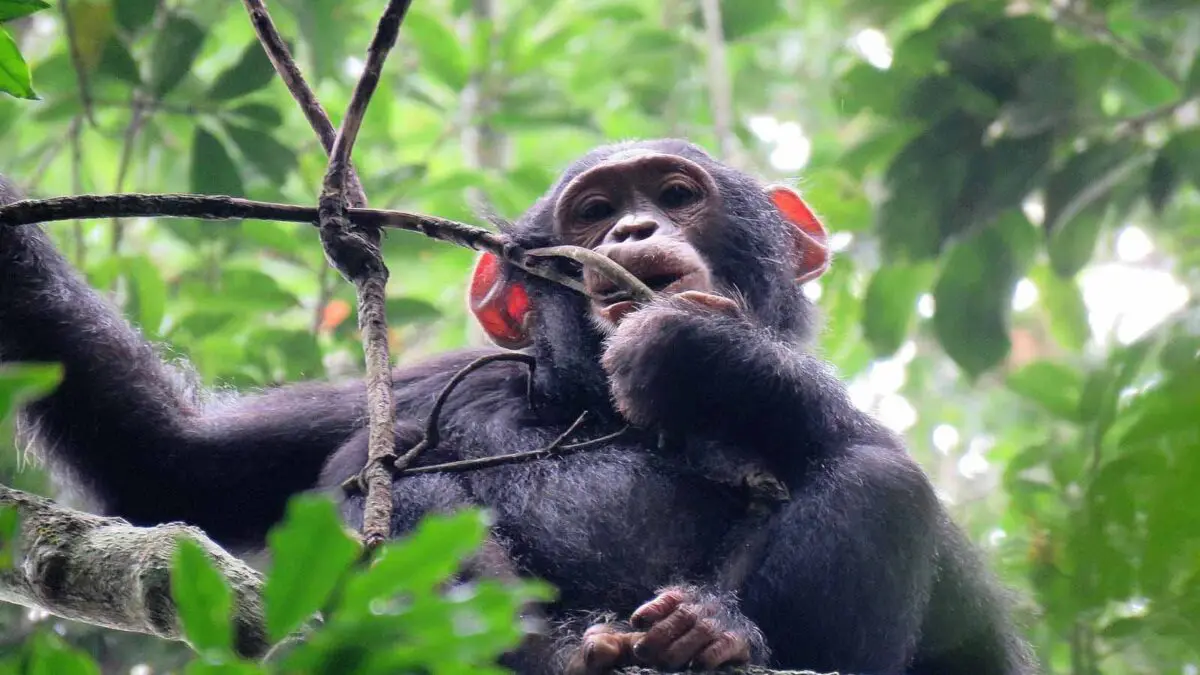
While Kibale National Park is widely regarded as the most reliable chimpanzee tracking destination in East Africa, Budongo Forest Reserve offers a quieter, more remote experience within the greater Murchison Falls conservation area. Understanding these differences is essential when choosing the right chimpanzee trekking destination in Uganda.
Chimpanzee Population Density and Sightings Success
Kibale National Park is known for having the highest concentration of chimpanzees in Uganda, with multiple habituated communities spread across a relatively compact rainforest ecosystem. This high density significantly increases the likelihood of successful sightings, often resulting in shorter search times and more consistent encounters.
Budongo Forest Reserve also hosts a healthy chimpanzee population, but sightings can be more variable due to the forest’s larger and more dispersed habitat structure. While encounters are still common, tracking sessions may require longer treks and more patience compared to Kibale.
For travelers prioritizing guaranteed sightings and frequent interactions, Kibale generally offers a more dependable experience.
Forest Environment and Landscape Differences
Kibale Forest is a dense tropical rainforest characterized by thick vegetation, diverse primate populations, and a continuous canopy that creates a deeply immersive jungle atmosphere. The terrain is relatively compact, making chimpanzee movement easier to follow within a defined tracking zone.
Budongo Forest Reserve, in contrast, is part of the larger Murchison Falls ecosystem and features a mix of tall mahogany trees, semi-deciduous forest, and open woodland edges. This creates a slightly more open tracking environment in some areas, though it can also make chimpanzee detection more dispersed.
The difference in vegetation structure shapes the overall tracking experience, with Kibale feeling more enclosed and Budongo feeling more expansive and less predictable.
Accessibility and Travel Logistics
Kibale National Park is located near Fort Portal in western Uganda and is easily accessible from Kampala via a 5 to 6 hour drive. It is frequently included in standard Uganda safari circuits that also feature Queen Elizabeth National Park and Bwindi Impenetrable Forest.
Budongo Forest Reserve is located in northwestern Uganda near Murchison Falls National Park, requiring a longer journey from Kampala of approximately 5 to 7 hours depending on the route. However, it integrates naturally into northern Uganda safari itineraries that include river safaris and savannah game drives.
In terms of logistics, Kibale is more central to Uganda’s main safari corridor, while Budongo is better suited for travelers exploring the northern wildlife circuit.
Tracking Experience and Difficulty Level
Chimpanzee tracking in Kibale typically involves moderate hikes through dense rainforest, with relatively predictable tracking outcomes due to ranger familiarity with habituated groups. Encounters are often reached within shorter timeframes, making the experience more structured.
Budongo Forest tracking can be more physically variable, with longer walking distances and less predictable chimpanzee movement patterns depending on the day. This creates a more exploratory and less guaranteed experience, especially for first-time visitors.
Both destinations require basic fitness, but Budongo may demand slightly more endurance depending on chimpanzee location on the day of tracking.
Wildlife Diversity Beyond Chimpanzees
Kibale Forest is one of the richest primate ecosystems in Africa, hosting over 13 primate species including red colobus monkeys, L’Hoest’s monkeys, and grey-cheeked mangabeys. This creates a multi-species primate experience even before chimpanzees are located.
Budongo Forest is also biologically rich, but it is more strongly associated with its mahogany forest ecosystem and bird diversity, particularly within the broader Murchison Falls region. Wildlife experiences here are often combined with savannah game drives and Nile river excursions.
Kibale is more primate-centric, while Budongo offers a broader forest-and-savannah ecological contrast.
Visitor Numbers and Tourism Atmosphere
Kibale National Park receives higher visitor traffic due to its reputation as Uganda’s premier chimpanzee destination, which creates a more structured but busier tourism environment. Tracking groups are often larger, and permit demand can be high during peak seasons.
Budongo Forest Reserve offers a quieter and less commercialized experience, with fewer tourists and a more secluded forest atmosphere. This appeals to travelers seeking solitude and a more off-the-beaten-path safari.
The choice often comes down to whether a visitor prefers a well-developed tracking system or a more remote and less crowded forest experience.
Best Time to Visit Each Destination
Both Kibale and Budongo offer year-round chimpanzee tracking opportunities, but dry seasons generally improve forest accessibility and reduce trekking difficulty. These periods typically fall between June to September and December to February.
During wet seasons, both forests become more challenging to navigate, though chimpanzee sightings remain consistent due to habituation programs. Kibale tends to remain more reliable during heavy rains due to its dense ranger network and tracking infrastructure.
Seasonality affects comfort more than sighting probability in both destinations.
Accommodation and Safari Integration
Kibale National Park has a wide range of eco-lodges and forest accommodations located near the park boundary, making it highly convenient for early morning tracking. It also integrates seamlessly into western Uganda safari circuits.
Budongo Forest Reserve has fewer direct accommodation options within the forest itself, but it connects well with lodges in the Murchison Falls area, where visitors can combine chimpanzee tracking with savannah game drives and boat safaris.
Kibale is more lodge-dense and forest-focused, while Budongo is more integrated into a broader multi-ecosystem safari experience.
Final Verdict: Which Chimpanzee Tracking Destination Is Better?
Kibale National Park is the best choice for first-time visitors, wildlife photographers, and travelers seeking high chimpanzee sighting reliability in a well-established rainforest environment. It offers consistency, accessibility, and one of the highest primate densities in Africa.
Budongo Forest Reserve is ideal for experienced safari travelers, return visitors to Uganda, or those combining chimpanzee tracking with Murchison Falls National Park. It provides a quieter, more exploratory, and less commercialized alternative.
Ultimately, Kibale represents the premier chimpanzee tracking experience in Uganda, while Budongo offers a complementary and more remote forest adventure within a larger savannah ecosystem.
Chimpanzee Trekking in East Africa – Complete Guide
Chimpanzees (Pan troglodytes) are our closest living relatives, sharing approximately 98.7% of human DNA. Watching a habituated chimpanzee family in the wild – their complex social dynamics, tool use, and remarkable expressions – is one of the most intellectually and emotionally engaging wildlife experiences Africa has to offer.
East Africa’s premier chimpanzee destination is Kibale Forest National Park in western Uganda, home to over 1,500 chimpanzees – the highest density of primates in Africa. Rwanda’s Nyungwe Forest National Park offers another outstanding option within one of Africa’s largest montane rainforests.
Kibale Forest National Park – Uganda’s Chimpanzee Capital
Kibale Forest covers 776 km² of moist evergreen and semi-deciduous forest in the Rwenzori foothills of western Uganda. The park’s Kanyanchu tourism site is where chimpanzee trekking takes place, with several habituated communities accustomed to human observation.
A standard chimpanzee trekking permit in Kibale costs USD 250 per person and covers one hour with the chimps after tracking them through the forest. The Chimpanzee Habituation Experience (CHEX) costs USD 250 per person and runs from 6 AM to 6 PM, allowing a full day following a semi-habituated community – a far more intimate encounter. Permits are available through Uganda Wildlife Authority or licensed tour operators.
Beyond chimpanzees, Kibale is home to 12 other primate species including red-tailed monkeys, black-and-white colobus, grey-cheeked mangabeys, olive baboons, and the rare L’Hoest’s monkey. Over 375 bird species have been recorded, making it one of Uganda’s premier birding destinations.
Recommended Tours: 3 Days Chimpanzee Trekking in Kibale | 4 Days Kibale & Queen Elizabeth Safari