Kigali to Bwindi Transfers: Driving Times and Border Tips
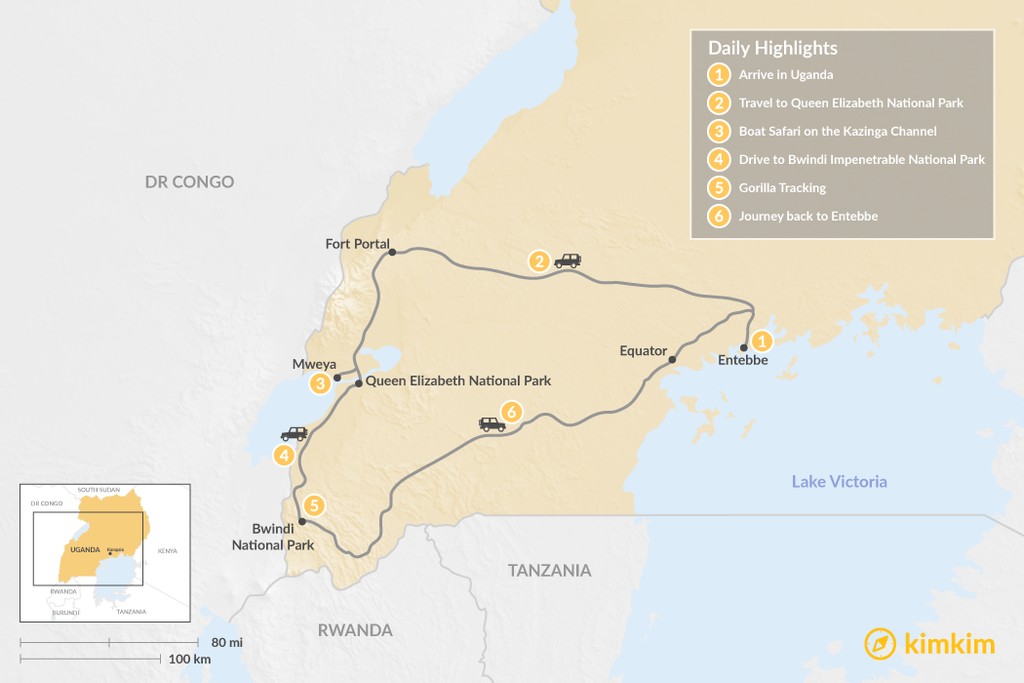
Travelling from Kigali to Bwindi Impenetrable National Park is a convenient option for visitors planning mountain gorilla trekking in Uganda. Compared with the lengthy road journey from Entebbe or Kampala, starting your safari in Rwanda can significantly reduce driving time, particularly when visiting the southern gorilla trekking sectors of Bwindi.
Kigali to Bwindi transfers involve crossing the international border between Rwanda and Uganda, navigating mountainous countryside and continuing to your accommodation near the designated trekking sector.
Although the journey is relatively straightforward under normal operating conditions, immigration requirements, border delays, road conditions and time zone differences require careful planning.
Whether you are organising a three-day gorilla trekking safari or combining Rwanda and Uganda in a longer itinerary, this guide explains driving times, border crossings, transport options, visa requirements and practical recommendations for your journey.
How Long Does It Take to Drive From Kigali to Bwindi?
The journey from Kigali to Bwindi generally takes between four and nine hours, depending on your gorilla trekking sector, border processing times and accommodation location.
Bwindi Impenetrable National Park has four trekking sectors: Rushaga, Nkuringo, Ruhija and Buhoma. Each sector has different access routes.
| Bwindi trekking sector | Recommended border crossing | Estimated transfer time |
|---|---|---|
| Rushaga | Cyanika | 4–6 hours |
| Nkuringo | Cyanika | 4–6 hours |
| Ruhija | Gatuna/Katuna | 4–6.5 hours |
| Buhoma | Gatuna/Katuna | 6–9 hours |
These are practical planning estimates based on published regional transfer information. Heavy rainfall, immigration delays and remote accommodation locations may extend your journey.
Best Routes for Kigali to Bwindi Transfers
Two principal international border crossings connect northern Rwanda with southwestern Uganda. Your driver should select the crossing according to your trekking permit and accommodation location.
1. Kigali to Bwindi via Cyanika Border
The Cyanika route is generally convenient for visitors trekking gorillas in Rushaga and Nkuringo.
The journey takes you through Rwanda’s mountainous countryside towards Musanze before crossing into Uganda’s Kisoro District.
After completing immigration procedures, you continue through cultivated hills, rural communities and winding roads towards southern Bwindi.
This route is also suitable for travellers visiting Mgahinga Gorilla National Park.
2. Kigali to Bwindi via Gatuna and Katuna Border
Gatuna is the Rwandan name for the border crossing known as Katuna on the Ugandan side.
This route is generally preferable for travellers visiting Ruhija and Buhoma. After entering Uganda, you continue towards Kabale before taking the appropriate roads to your accommodation.
Travellers can also combine this route with a visit to Lake Bunyonyi
Uganda and Rwanda Border Crossing Requirements
International travellers must complete immigration procedures when leaving Rwanda and entering Uganda.
Your driver can assist with directions and paperwork, but every passenger must personally satisfy the applicable immigration requirements.
| Required document | Purpose |
|---|---|
| Valid passport | International identification |
| Uganda visa approval | Entry authorisation where required |
| Rwanda visa or entry authorisation | Required for applicable nationalities |
| Gorilla trekking permit confirmation | Verification of scheduled trekking activity |
| Accommodation confirmation | Supporting evidence of travel plans |
| Return flight details | Evidence of onward travel |
| Vaccination certificate | Required for certain onward destinations |
| Travel insurance | Medical and travel protection |
Your passport should have at least six months of remaining validity when entering Uganda and sufficient blank pages for immigration records.
Travellers requiring an ordinary Uganda tourist visa should obtain approval online before travelling. Do not assume that you can purchase an ordinary Uganda visa at the land border without prior approval.
Using the East Africa Tourist Visa
The East Africa Tourist Visa is a convenient option for eligible international travellers combining Rwanda and Uganda within one holiday.
The visa costs $100 and allows multiple entries between Rwanda, Uganda and Kenya over 90 days, provided travellers remain within the participating countries.
If Kigali is your first arrival destination, apply through Rwanda or obtain the regional visa upon arrival, subject to eligibility.
This arrangement is particularly useful if you plan to return to Kigali after gorilla trekking in Uganda.
| Visa feature | East Africa Tourist Visa |
|---|---|
| Cost | $100 |
| Validity | 90 days |
| Participating countries | Rwanda, Uganda and Kenya |
| Multiple entries | Permitted within participating countries |
| Tourism activities | Permitted |
| Employment | Not permitted |
Depending on your nationality and itinerary, individual country visas may be less expensive than the regional visa. Compare your options before applying.
migration.gov.rw+1
What Happens at the Rwanda-Uganda Border?
Border procedures generally involve presenting your passport, completing immigration checks and obtaining authorisation to enter the neighbouring country.
Customs officials may also inspect luggage and verify vehicle documentation.
Your driver should explain where you need to present your travel documents and whether you must remove your luggage from the vehicle.
Allow approximately 30 minutes to two hours for border formalities as a planning precaution. Processing may take longer during busy periods, additional health checks or administrative delays.
Confirm current border opening hours before departure rather than assuming both crossings operate throughout the night.
Yellow Fever and Health Screening Requirements
Travellers should pay particular attention to health regulations when crossing between Uganda and Rwanda.
Uganda’s immigration authorities recently announced that a yellow fever vaccination certificate is no longer mandatory for entry into Uganda. However, yellow fever vaccination remains an important health precaution for eligible travellers.
Rwanda may require vaccination documentation when you arrive from a country with a recognised yellow fever transmission risk, including Uganda.
Carry your vaccination certificate if applicable, particularly when returning to Kigali after gorilla trekking.
NCIC+2
Regional Ebola-related health precautions also remain relevant as of November 2026. Travellers should confirm screening procedures and entry eligibility before departure, especially if their itinerary includes the Democratic Republic of Congo.
Remember the Time Difference Between Rwanda and Uganda
One of the most frequently overlooked details during Kigali to Bwindi transfers is the time difference between the two countries.
Uganda operates on East Africa Time, while Rwanda uses Central Africa Time. Uganda is one hour ahead of Rwanda.
| Rwanda time | Uganda time |
|---|---|
| 6:00 am | 7:00 am |
| 8:00 am | 9:00 am |
| 12:00 pm | 1:00 pm |
| 3:00 pm | 4:00 pm |
| 6:00 pm | 7:00 pm |
For example, if you leave Kigali at 8:00 am and complete a five-hour transfer, you will arrive at approximately 2:00 pm Uganda time.
Remember this difference when arranging gorilla trekking briefings, accommodation check-in, airport transfers and return flights.
Road Conditions Between Kigali and Bwindi
Most major roads connecting Kigali with Musanze and Gatuna are paved. Uganda’s principal roads towards Kisoro and Kabale are also largely paved.
However, the final approach to many Bwindi accommodation facilities involves narrow, winding and unpaved roads.
During heavy rainfall, these roads may become muddy and slippery. Steep gradients can also make driving difficult for inexperienced drivers.
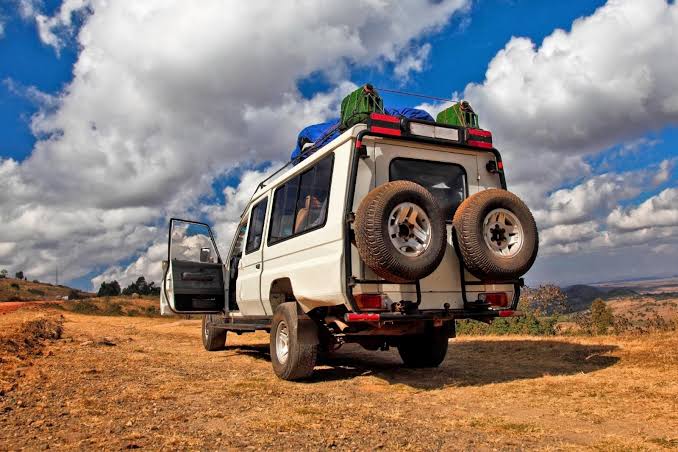
A four-wheel-drive safari vehicle is recommended, particularly for visitors travelling to Nkuringo, Ruhija and remote accommodation facilities.
Allow additional travelling time during rainy periods.
How Much Does a Kigali to Bwindi Transfer Cost?
Transfer prices depend on vehicle type, trekking sector, passenger numbers, fuel costs and whether you require a return journey.
| Transfer destination | Illustrative private transfer budget |
|---|---|
| Kigali to Rushaga | $180–$300 |
| Kigali to Nkuringo | $180–$300 |
| Kigali to Ruhija | $200–$350 |
| Kigali to Buhoma | $250–$400 |
| Return transfer package | $350–$700 |
These are estimated vehicle-level planning budgets rather than confirmed operator quotations.
A transfer package may include the vehicle, professional driver, fuel and border assistance. Accommodation, visas, gorilla permits and meals are generally separate unless specified.
Sharing a vehicle with other travellers can reduce the individual transport cost.
Private Transfers Versus Self-Drive Travel
Private transfers are generally more convenient for international visitors unfamiliar with southwestern Uganda’s road network.
An experienced driver understands border procedures, local road conditions and the different gorilla trekking sectors.
Self-drive travellers must confirm that their rental company permits international border crossings. Additional vehicle authorisation, temporary import documents and cross-border motor insurance may be necessary.
Never assume that a standard rental agreement automatically permits driving into Uganda from Rwanda.
Suggested Three-Day Kigali to Bwindi Itinerary
A three-day itinerary is suitable for travellers interested primarily in mountain gorilla trekking, provided current travel advice supports the journey.
| Day | Activity |
|---|---|
| Day 1 | Morning departure from Kigali, border crossing and transfer to Bwindi |
| Day 2 | Mountain gorilla trekking and afternoon relaxation |
| Day 3 | Return transfer to Kigali |
Arrive at your accommodation at least one day before gorilla trekking. Attempting to complete the international transfer and gorilla trekking on the same morning creates unnecessary risks of missing your scheduled briefing.
Is the Kigali to Bwindi Transfer Safe?
Under normal operating conditions, Kigali to Bwindi is an established tourism transfer route. However, current regional security and health concerns require careful consideration.
As of 27 November 2026, the United States maintains a Level 4 travel advisory recommending against travel to Uganda. Other governments provide different national and regional recommendations.
Travel State+2
Review official travel advisories for both countries before booking. Travelling with an experienced driver does not eliminate broader security or health risks.
Avoid overnight transfers, confirm border accessibility and ensure your travel insurance covers your intended itinerary.
Frequently Asked Questions
Which Bwindi sector is closest to Kigali?
Rushaga and Nkuringo are generally the most convenient Bwindi trekking sectors for travellers arriving from Kigali through Cyanika.
Can I travel from Kigali to Bwindi in one day?
Yes, under normal operating conditions. Allow approximately four to nine hours, depending on your destination and border processing times.
Do I need a Uganda visa when travelling from Rwanda?
Yes, unless your nationality qualifies for an exemption or you hold an applicable regional visa.
Can I return to Kigali after gorilla trekking?
Yes, provided you meet Rwanda’s re-entry requirements and current border conditions permit the journey.
Is Kigali closer to Bwindi than Entebbe?
Yes. Kigali generally provides shorter road transfers to southern Bwindi compared with Entebbe.
Can I visit Lake Bunyonyi during my transfer?
Yes. Travellers using the Gatuna/Katuna route can arrange a Lake Bunyonyi stop or overnight stay, depending on their schedule.
Kigali to Bwindi transfers provide a practical transport option for travellers planning mountain gorilla trekking in southwestern Uganda.
Choosing the correct border crossing, preparing immigration documents and accounting for the one-hour time difference can prevent unnecessary delays.
Confirm your trekking sector before booking transport, choose an experienced driver and allow sufficient time for border formalities. Always review current security and health advisories before confirming international travel arrangements.