

Patas Monkeys of Kidepo Valley National Park
Patas monkeys hold the distinction of being the fastest primate on earth, capable of reaching remarkable ground speeds across the open savannah terrain of Kidepo Valley National Park in Uganda’s remote, rugged northeast. Unlike most East African primates, which favor dense forest habitat, patas monkeys have adapted to a genuinely different ecological niche, open grassland and savannah, making Kidepo one of the best and most reliable places in the region to encounter this distinctive species. This guide covers what makes patas monkeys remarkable and how to spot them in Kidepo.
The World’s Fastest Primate
Patas monkeys can reach genuinely extraordinary ground speeds when fleeing predators, a physical adaptation shaped directly by their open savannah habitat, where dense forest cover simply isn’t available as an escape option the way it is for tree-dwelling primates elsewhere in East Africa. This speed represents one of the most remarkable physical adaptations found anywhere in the primate world.
Why Kidepo Suits Patas Monkeys So Well
Kidepo Valley’s rugged, semi-arid savannah landscape, dramatically different from the lush forest habitat associated with gorillas and chimpanzees elsewhere in Uganda, provides exactly the kind of open terrain patas monkeys have evolved to exploit, foraging across grassland and scattered acacia woodland rather than dense canopy forest.
Physical Characteristics of Patas Monkeys
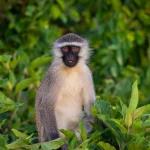
Patas monkeys display a distinctive reddish-brown coat that provides genuine camouflage against Kidepo’s dry savannah grasses, alongside a lean, long-limbed build clearly adapted for speed and ground-based movement rather than the arboreal agility that characterizes most of the region’s other primate species.
Social Structure and Behavior
Patas monkey groups typically consist of multiple females and their offspring alongside a single dominant male, foraging across a considerably larger home range than forest-dwelling primates require, a direct consequence of the sparser food distribution across open savannah habitat compared to fruit-rich forest environments.
Diet and Foraging Across Open Terrain
Patas monkeys forage across a genuinely wide home range compared to forest primates, consuming grasses, seeds, fruit, and insects scattered across Kidepo’s sparse savannah vegetation, a dietary pattern that requires them to cover considerably more ground daily than a typical forest-dwelling monkey confined to a smaller, resource-dense territory.
Where to Spot Patas Monkeys in Kidepo
Patas monkeys can be encountered across Kidepo’s open plains areas, often spotted during game drives alongside the park’s other savannah wildlife, making them a genuine bonus sighting for visitors primarily focused on Kidepo’s renowned big game and bird viewing rather than a dedicated primate-tracking activity.
What Kidepo’s Landscape Looks Like
Kidepo Valley’s dramatic scenery, rolling savannah framed by distant mountain ranges along the Uganda-South Sudan and Uganda-Kenya borders, offers a genuinely different visual backdrop from the dense forest scenery associated with the country’s gorilla and chimpanzee destinations, and patas monkey sightings here come framed by this distinctive open-horizon landscape.
Why Kidepo Remains an Underrated Destination
Kidepo Valley National Park’s remote location in Uganda’s far northeast has historically limited visitor numbers compared to the country’s more accessible southern parks, but this same remoteness has preserved a genuinely wild, uncrowded safari experience that includes patas monkeys among its distinctive wildlife offerings unavailable elsewhere in Uganda.
Combining Patas Monkey Sightings With Kidepo’s Big Game
A Kidepo safari typically centers on the park’s impressive big game populations, including lions, elephants, and a wide range of antelope species, with patas monkey sightings occurring naturally as part of broader game drives across the park’s open terrain rather than requiring a separate dedicated activity.
What Guides in Kidepo Say About Spotting Patas Monkeys
Experienced Kidepo guides often describe patas monkeys as a genuine highlight for repeat visitors specifically because the species is so rarely encountered elsewhere in Uganda, adding a distinctive checklist entry to trips already focused on the park’s exceptional big cat and elephant populations. Asking your guide directly about recent patas sightings during your game drive briefing often improves your odds of a successful encounter.
Photography Considerations for Patas Monkeys
Given their considerable speed and tendency to flee quickly across open terrain, photographers should keep cameras ready with fast shutter settings, since a genuinely sharp action shot of a patas monkey in motion ranks among the more challenging but rewarding wildlife photography opportunities available in Kidepo.
Combining Kidepo With a Broader Uganda Itinerary
Given the distance involved in reaching Kidepo, many travelers combine the park with the rest of a longer Uganda itinerary rather than visiting it as a standalone trip, pairing the remote northeastern savannah experience, patas monkeys included, with gorilla trekking in Bwindi or wildlife viewing in Queen Elizabeth National Park for a genuinely comprehensive picture of the country’s ecological diversity.
Conservation Status and Habitat Considerations
Patas monkeys face habitat pressure across parts of their broader African range as savannah landscapes convert to agricultural use, making protected areas like Kidepo genuinely important for maintaining stable populations of this ecologically distinctive species.
How Speed Shaped Patas Monkey Evolution
Living in open terrain without the canopy escape route available to forest primates forced patas monkeys to develop an entirely different survival strategy over evolutionary time, prioritizing raw ground speed and vigilance over the climbing agility that defines most of their primate relatives. This adaptation illustrates a genuinely striking example of how habitat directly shapes physical evolution within a single closely related group of species.
Why Vigilance Matters as Much as Speed
Beyond pure running speed, patas monkeys rely heavily on constant vigilance, often posting a lookout individual on elevated termite mounds or low tree branches to scan for approaching predators across Kidepo’s open terrain, a behavioral strategy that complements their physical speed advantage. This combination of watchfulness and explosive acceleration gives patas monkeys a genuinely effective survival toolkit suited precisely to their savannah habitat.
How Patas Monkeys Differ From Kidepo’s Other Primates
Kidepo also hosts olive baboons and vervet monkeys, both considerably more common across East Africa’s savannah parks, and comparing their behavior directly to patas monkeys during a single game drive offers visitors a genuinely interesting lesson in how closely related primate species can adopt such different survival strategies within the same broader habitat.
Best Time of Year for a Kidepo Safari
Kidepo’s dry season, roughly running from September through March, generally offers the best overall wildlife viewing conditions, including patas monkey sightings, as animals concentrate more predictably around remaining water sources during this period. Travelers with flexible dates should factor this seasonal pattern into their broader Kidepo trip planning.
Common Questions About Patas Monkeys
Visitors frequently ask exactly how fast patas monkeys can actually run, and while precise field measurements vary, the species is widely recognized among primatologists as the fastest-running primate on earth, an adaptation genuinely unmatched among tree-dwelling relatives. Travelers also ask whether patas monkeys can be seen anywhere else in Uganda besides Kidepo, and while their range does extend into parts of neighboring Karamoja region, Kidepo remains the most accessible and reliable protected area for a genuine sighting.
Why This Species Rewards a Trip to Kidepo
Beyond the practical rarity of the sighting itself, encountering patas monkeys in Kidepo offers travelers a genuinely different primate experience from the forest-based gorilla and chimpanzee trekking most visitors associate with Uganda, broadening their overall understanding of just how ecologically diverse the country’s primate population truly is.
How This Sighting Fits a Broader Uganda Wildlife Education
Travelers who take time to understand why patas monkeys evolved so differently from Uganda’s forest primates come away with a genuinely richer appreciation of how habitat shapes survival strategy, a lesson that adds real depth to what might otherwise be treated as a passing curiosity spotted during a game drive.
Why Kidepo’s Isolation Preserves Genuine Wildness
Given how few visitors make the journey to this remote corner of Uganda, Kidepo’s wildlife, patas monkeys included, retains a genuinely undisturbed character rarely found at the country’s more accessible, heavily visited parks.
How This Destination Rewards Travelers Willing to Go Further
Kidepo’s remote location means only genuinely committed travelers make the journey, and those who do consistently describe the experience as disproportionately rewarding relative to the extra effort required to get there.
Why This Sighting Rewards Genuine Patience During Game Drives
Given their tendency to flee quickly at the first sign of a vehicle, travelers who approach a potential patas monkey sighting with quiet patience, rather than rushing for an immediate photo, consistently get better, more extended views than those who react too eagerly.
Planning a Trip to Kidepo Valley
Given Kidepo’s remote location, planning a visit typically requires either a domestic flight or a genuinely long overland journey from Kampala, though the reward is access to Uganda’s most authentically wild, uncrowded savannah landscape, complete with patas monkeys and a remarkable range of other wildlife found nowhere else in the country’s park system, making the journey itself part of what makes this destination genuinely special and worth the extra planning it demands, rewarding those willing to make the trip with something few other Uganda destinations can offer.
Recommended Tours: 10 Days Ultimate Uganda Gorilla & Big Five Safari | 12-Day Uganda Gorilla Tours and Kenya Great Migration Safaris


















