There’s a particular kind of grin that shows up on quad biking clients’ faces around the twenty-minute mark, once the initial nervousness about the throttle has worn off and the terrain starts throwing up ruts, mud, and the occasional startled goat. Quad biking adventures in East Africa have grown from a Jinja novelty into a genuine regional activity, spreading from the Nile’s adrenaline capital to hillside villages and lakeshore trails further west. It rewards travellers who want a physical, hands-on way to see rural East Africa up close, at a pace slower than a car but considerably faster and dustier than walking.
Why Quad Biking Took Off in East Africa
The sport’s regional home is Jinja, Uganda, a town that built its tourism identity around the Nile’s white water and, once dams tamed some of the river’s more violent rapids, diversified into a wider menu of adrenaline activities. Quad bikes suited the surrounding terrain naturally: red dirt roads, sugarcane plantations, and steep river-adjacent tracks that are far more interesting on four wheels with real ground clearance than in a saloon car. From there, operators in other parts of Uganda, particularly around Lake Bunyonyi in the southwest, recognised the same appeal in their own hillier, more scenic terrain and built their own circuits.
What keeps the activity popular isn’t technical difficulty so much as access. A quad biking tour requires no special fitness, minimal prior experience, and gives even first-time riders a real sense of control within the first half hour, which makes it one of the more approachable adventure activities on a typical East Africa itinerary that might otherwise lean heavily on wildlife viewing from a vehicle.
Jinja: Quad Biking Alongside the Nile
Jinja’s quad biking routes run through village trails, sugarcane fields, and stretches of red dirt track with views down toward the river, often combined into half-day packages with village visits that give riders a chance to interact with local farmers and see how the crops passed on the ride actually get used. Operators here were among the first in the region to professionalise the activity, offering a full adrenaline circuit that pairs quad biking with white-water rafting, bungee jumping off the bridge near the old dam site, and kayaking, all centred on the town’s identity as the source of the Nile.
Most Jinja quad tours run two to three hours, long enough to cover a meaningful loop without exhausting riders unfamiliar with the vibration and physical engagement the activity demands. Morning departures avoid the worst of the midday heat and tend to catch village life at its most active, with markets setting up and children walking to school along the same tracks the quads use.
Lake Bunyonyi: Quad Biking Above Terraced Hills
Southwest of Jinja, in the cooler highland air around Lake Bunyonyi, quad biking takes on a different character. The terrain is steeper and more dramatic, with routes climbing ridgelines above the lake’s terraced hillsides and looping past homesteads perched at angles that make the region’s subsistence farming look almost impossible. Riders get panoramic views over Bunyonyi’s scattered islands that are difficult to replicate from any other vantage point short of a hike, and the altitude, over 1,900 metres, keeps conditions noticeably cooler than Jinja’s lower-lying, more tropical climate.
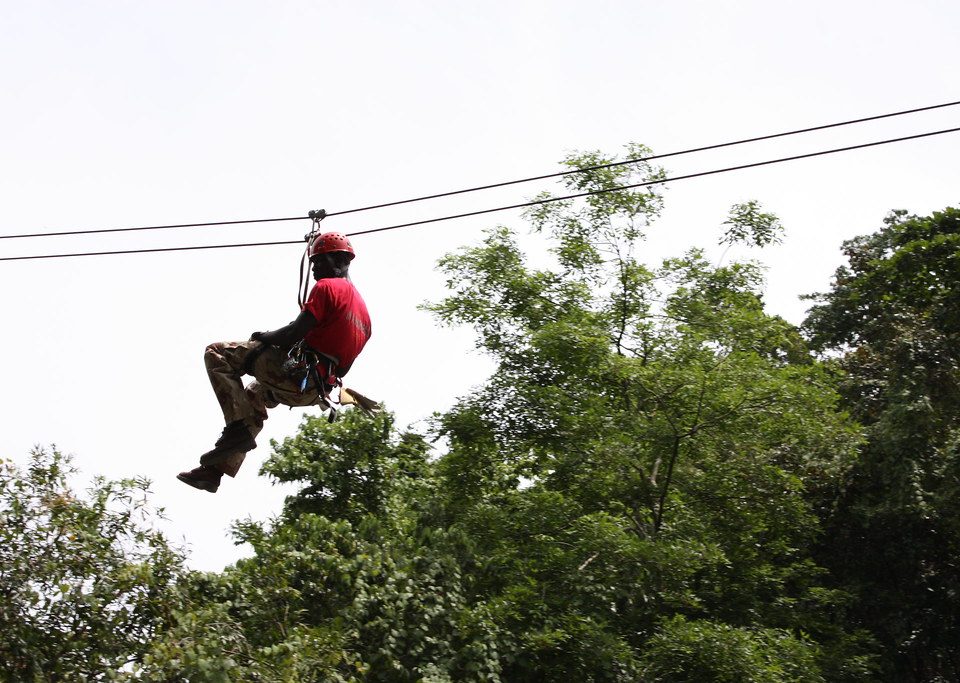
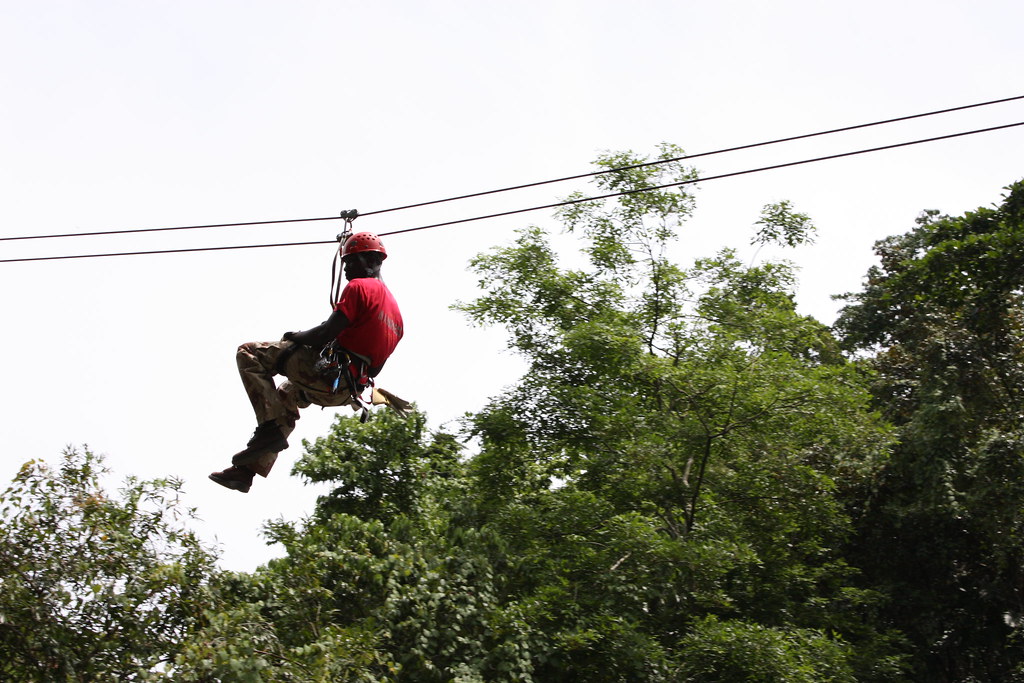
Bunyonyi’s routes are often bundled with zip-lining across sections of the same hillsides, giving visitors a two-activity adrenaline package that fits neatly into a stopover between gorilla trekking in Bwindi and onward travel toward Rwanda. Because the lake itself is free of crocodiles and hippos, it’s also one of the few places in Uganda where a quad biking excursion can end with a swim, something worth confirming with a specific operator rather than assuming as a blanket rule.
Best Time of Year to Ride
Uganda’s dry seasons, roughly December through February and June through September, keep quad biking tracks firm and considerably more predictable than during the heavier rains of March to May and October to November. Riding is still possible in the wetter months, and some operators argue the mud adds to the fun for riders who don’t mind arriving back thoroughly caked in red dirt, but visibility on trails can drop and certain steeper Bunyonyi routes become genuinely trickier to control safely. Travellers planning a quad biking stop as part of a tighter itinerary, particularly one built around fixed gorilla trekking permit dates, should build in a small weather buffer during the rainy months rather than assuming the activity will run exactly as scheduled regardless of conditions.
What a Quad Biking Session Actually Involves
Vehicles, Instruction, and Safety Gear
Operators typically run automatic quad bikes suited to inexperienced riders, with a short briefing and a practice loop before heading out onto the main trail. Helmets are standard and should be worn regardless of how casual a particular operator seems about enforcing it. Closed shoes and clothing that can get genuinely dirty are worth planning for; red Ugandan laterite dust has a way of finding its way into everything, and riders who cross any water crossings or muddy sections during rainy months will end a tour looking considerably worse than they started.
Fitness and Suitability
Quad biking demands less raw fitness than mountain biking or trekking, since the engine does the work of covering distance, but it does require enough core strength and coordination to control the vehicle over uneven ground for an extended period. Most operators set a minimum age, commonly around twelve for supervised riding on modified tracks, and require a full-size adult to pilot any quad carrying a child passenger rather than allowing children to ride solo.
Combining Quad Biking With the Rest of an East Africa Itinerary
Because Jinja sits roughly two to three hours from Kampala and on a natural route toward Uganda’s western parks, quad biking pairs easily with a broader itinerary that includes white-water rafting on the Nile or gorilla trekking further west. Bunyonyi’s quad routes work similarly well as a stopover activity for travellers heading between Bwindi Impenetrable Forest and the Rwandan border, breaking up long driving days with something more active than another few hours in a safari vehicle. Neither location requires advance booking as far ahead as gorilla permits do, which makes quad biking one of the easier activities to slot into an itinerary at relatively short notice, even a day or two before arrival in either town.
Beyond Uganda: Where Else Quad Biking Is Emerging
Uganda remains the region’s clear centre for quad biking, but the activity has started appearing in smaller pockets elsewhere, typically around beach resort areas on the Kenyan and Tanzanian coast where sandy tracks and dune terrain suit the vehicles well, and occasionally at private conservancies in Kenya’s Laikipia region offering it as one option among several adrenaline activities for guests staying multiple nights. These remain smaller-scale operations compared to Jinja and Bunyonyi’s established circuits, and riders should confirm vehicle condition and safety briefings carefully before booking with a less established outfit, since the professionalism that Uganda’s pioneering operators built up over more than a decade hasn’t necessarily transferred evenly across the wider region yet.
The Village Encounters That Set East African Quad Biking Apart
What separates a Uganda quad biking tour from similar activities in more purpose-built adventure destinations elsewhere is that the trails aren’t closed circuits built solely for tourism. Routes around Jinja pass working sugarcane estates that supply some of Uganda’s largest processing plants, and guides often stop to explain how the crop is harvested and transported, giving the ride an informal agricultural education alongside the adrenaline. Around Bunyonyi, the terraced slopes riders climb are still actively farmed with beans, sorghum, and sweet potato, and it’s common for children from nearby homesteads to run out and wave as a line of quads passes, turning what could be a purely mechanical thrill ride into something with genuine local texture.
This proximity to everyday rural life cuts both ways. Riders need to be conscious that they’re passing through people’s working land and home surroundings, not a theme park, which means following guide instructions about where to slow down, avoiding livestock on the track, and generally treating the communities along the route with the same respect expected on a walking village tour. Reputable operators brief clients on this before departure, and it’s worth choosing a company that takes the responsibility seriously rather than one focused purely on speed and thrill.
Practical Tips Before Booking a Quad Biking Tour
Sunscreen and sunglasses matter more than most first-time riders expect, since a moving quad bike generates its own wind but does nothing to blunt equatorial UV exposure over a two-hour tour. Cameras and phones are best left secured in a zipped pocket or left behind entirely; the vibration and dust make handheld photography difficult and risky, and most reputable operators offer photos taken by a guide riding alongside the group instead. Travellers with back or neck problems should mention this when booking, since sustained vibration over rough tracks can aggravate existing conditions in ways a short car ride wouldn’t. It’s also worth asking in advance whether a tour includes fuel top-ups and a mechanic on call, since a breakdown on a remote hillside track is a considerably bigger inconvenience than one on a paved road, and established operators plan for it as a matter of course rather than treating it as an edge case.
Pricing across the region has stayed relatively accessible compared with adrenaline activities in more developed adventure tourism markets, and most operators offer package discounts for combining quad biking with rafting, bungee jumping, or zip-lining on the same day, which is worth asking about directly rather than booking each activity separately. Booked through an established Jinja or Bunyonyi operator with good safety records, quad biking remains one of the most reliably fun, low-barrier adventure activities available anywhere on an East Africa itinerary, and one of the few that genuinely suits a family group spanning teenagers through to grandparents comfortable with a bit of dust and vibration.