Queen Elizabeth National Park: Tree-Climbing Lions and Kazinga Channel Cruises
Queen Elizabeth National Park is one of Uganda’s most popular wildlife safari destinations, famous for its tree-climbing lions, large herds of elephants, buffaloes, hippos and unforgettable boat cruises along the Kazinga Channel. Located in western Uganda, the park offers a remarkable combination of savannah landscapes, freshwater lakes, volcanic crater scenery and tropical forest habitats.
Covering approximately 1,978 square kilometres, Queen Elizabeth National Park is an excellent destination for travellers interested in traditional African game drives, wildlife photography, birdwatching and boat safaris.
The park’s two most famous attractions are the tree-climbing lions of the Ishasha Sector and the Kazinga Channel, a natural waterway connecting Lake Edward and Lake George.
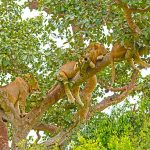
In Ishasha, visitors may encounter lions resting in the branches of large fig trees. Along the Kazinga Channel, boat cruises offer opportunities to observe hippos, Nile crocodiles, elephants, buffaloes and numerous waterbirds.
Queen Elizabeth National Park is also conveniently located between Kibale National Park and Bwindi Impenetrable National Park, making it an important destination on Uganda wildlife and gorilla trekking itineraries.
This complete visitor guide explains where Queen Elizabeth National Park is located, how to find the tree-climbing lions, what to expect on Kazinga Channel cruises, the best time to visit, accommodation options, safari costs and practical travel advice for 2027.
Where Is Queen Elizabeth National Park Located?
Queen Elizabeth National Park is situated in western Uganda, within the Albertine Rift Valley. The park extends across parts of Kasese, Rubirizi, Rukungiri and Kamwenge districts.
Its landscape includes open grassland, woodland, wetlands, lakes and forested areas.
The Rwenzori Mountains form a dramatic backdrop to parts of the park, particularly on clear days.
Queen Elizabeth National Park was established in 1952 as Kazinga National Park and renamed in 1954 following Queen Elizabeth II’s visit to Uganda.
Today, it is managed by the Uganda Wildlife Authority and remains an important protected area for wildlife conservation and tourism.
Quick Facts About Queen Elizabeth National Park
| Feature | Details |
|---|---|
| Country | Uganda |
| Region | Western Uganda |
| Park size | Approximately 1,978 km² |
| Established | 1952 |
| Main attractions | Tree-climbing lions and Kazinga Channel |
| Famous lion area | Ishasha Sector |
| Main boat safari | Kazinga Channel |
| Other activities | Game drives, chimpanzee tracking, birdwatching |
| Major lakes | Lake Edward and Lake George |
| Managing authority | Uganda Wildlife Authority |
| Recommended stay | 2–4 nights |
Tree-Climbing Lions in Queen Elizabeth National Park
The tree-climbing lions of Ishasha are among the most distinctive wildlife attractions in Uganda.
While lions elsewhere occasionally climb trees, the Ishasha area is particularly well known for this behaviour.
Visitors may find lions resting along large branches of fig trees, sometimes several metres above the ground.
Seeing a lion stretched across a tree branch is a memorable experience, especially for wildlife photographers.
However, not every game drive results in a sighting.
Lions are wild animals that move freely through the landscape, and their movements depend on feeding opportunities, weather and other natural factors.
Why Do Lions Climb Trees in Ishasha?
Researchers and safari guides have suggested several possible explanations for tree-climbing behaviour.
One explanation is that elevated branches may provide relief from insects around ground level.
Another possibility is that trees offer cooler resting places when conditions are hot.
Branches may also provide an elevated position for observing the surrounding landscape.
However, the exact reasons for this behaviour are not fully established.
Lions may climb trees for different reasons depending on environmental conditions.
Where Can You See Tree-Climbing Lions?
The best-known location is the Ishasha Sector, situated in the southern part of Queen Elizabeth National Park.
Ishasha contains open grassland, woodland and large fig trees that provide suitable resting places for lions.
Visitors explore the area through organised game drives.
An experienced safari guide may help locate lions by looking for tracks, movement and signs of recent activity.
However, sightings cannot be guaranteed, and travellers should allow enough time rather than expecting to find lions immediately.
Best Time to See Tree-Climbing Lions
Ishasha can be visited throughout the year.
Morning and late-afternoon game drives are often suitable because lions may be more active during cooler periods.
However, lions can rest in trees at different times of day.
The relatively dry months may provide easier driving conditions and improved visibility through shorter vegetation.
Tips for Photographing Tree-Climbing Lions
Carry a camera with a telephoto lens so you can photograph lions without approaching too closely.
A lens covering approximately 100–400 mm can be useful for many safari situations.
Ask your guide to position the vehicle safely and legally.
Avoid making loud noises or asking the driver to approach in ways that disturb the animals.
Be patient. Lions may remain still for long periods before changing position.
Kazinga Channel: Queen Elizabeth National Park’s Famous Waterway
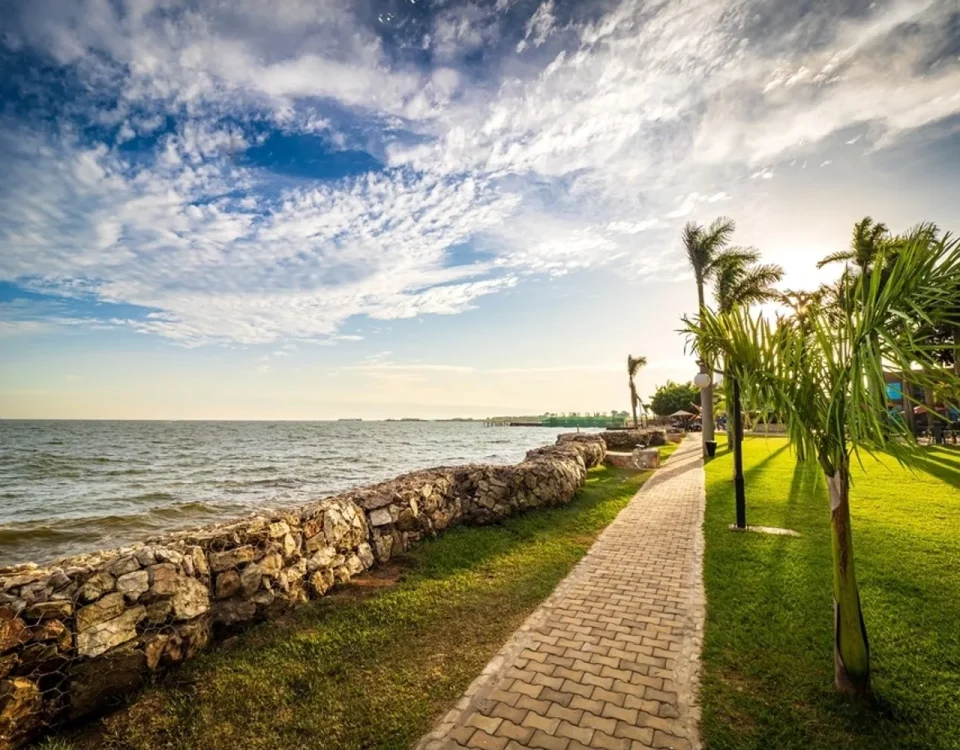
The Kazinga Channel is one of Uganda’s most rewarding locations for wildlife viewing.
This natural channel stretches approximately 32 kilometres between Lake George and Lake Edward.
Its banks attract numerous animals seeking water, food and suitable resting places.
The Kazinga Channel is particularly famous for its large concentration of hippos, although exact numbers change over time.
Visitors can also observe Nile crocodiles, elephants, buffaloes, waterbirds and other wildlife along the shoreline.
Unlike a traditional game drive, a boat safari allows you to view animals from the water.
This provides different photographic opportunities and an excellent chance to observe animals that spend much of their time near the channel.
What to Expect on a Kazinga Channel Boat Cruise
Kazinga Channel cruises generally depart from the Mweya area of Queen Elizabeth National Park.
A standard Uganda Wildlife Authority launch cruise normally lasts approximately two hours.
During the journey, visitors travel along part of the channel while observing wildlife along the banks and in the water.
The boat operator and guide provide instructions about wildlife viewing and safety.
Hippos Along the Channel
Hippos are among the most frequently observed animals during boat cruises.
They spend much of the day in water, where they regulate body temperature and rest.
Visitors may see groups of hippos close together, with only their eyes, ears and nostrils visible.
Occasionally, hippos open their mouths or move between resting places.
However, they can be dangerous, particularly when disturbed.
Remain inside the designated passenger area and follow the boat crew’s instructions.
Nile Crocodiles
Nile crocodiles are another major attraction.
Visitors may see crocodiles resting on exposed banks or partly submerged near the shoreline.
Their presence provides opportunities to observe one of Africa’s largest reptiles.
Do not assume that a motionless crocodile is harmless.
The boat should maintain an appropriate distance.
Elephants and Buffaloes
Elephants sometimes approach the channel to drink, bathe or move along the shoreline.
Buffaloes may also gather near the water, particularly during warmer conditions.
Watching these animals from a boat provides a different perspective from observing them during a game drive.
However, sightings vary according to season, time of day and wildlife movements.
Birds of the Kazinga Channel
Birdwatchers can enjoy species such as African fish eagles, pied kingfishers, cormorants, pelicans, herons and African jacanas.
Other birds may include African skimmers and various storks, depending on conditions and season.
The channel’s wetlands and shorelines support feeding and resting habitats for numerous species.
A pair of binoculars can improve your birdwatching experience.
Morning vs Afternoon Kazinga Channel Cruises
Both morning and afternoon boat cruises can provide rewarding wildlife encounters.
Morning trips often offer cooler conditions and attractive light for photography.
Afternoon trips may provide opportunities to observe animals approaching water as temperatures rise.
However, wildlife movements are unpredictable.
| Cruise period | Potential advantages |
|---|---|
| Morning | Cooler weather, bird activity and soft photography light |
| Afternoon | Good opportunities for shoreline wildlife and varied lighting |
| Private cruise | Greater scheduling flexibility, where available |
| Shared launch cruise | More affordable for individuals and couples |
Boat schedules and available services should be confirmed before travelling.
Private cruises may operate under different arrangements from standard Uganda Wildlife Authority launches.
Game Drives in Queen Elizabeth National Park
Game drives are among the park’s main activities.
Visitors travel through designated tracks in safari vehicles while searching for wildlife.
The park’s different habitats provide opportunities to observe mammals, birds and interesting landscapes.
Kasenyi Plains
The Kasenyi Plains are a popular game-drive area in the northern section of Queen Elizabeth National Park.
They contain open grassland and support Uganda kob, buffaloes, elephants and other wildlife.
Predators, including lions, may also be encountered.
Uganda kob are particularly important prey animals for lions.
Morning game drives are popular because animals may be more active before temperatures increase.
Mweya Peninsula
Mweya Peninsula is located near the Kazinga Channel and Lake Edward.
It provides accommodation, safari facilities and access to boat cruises.
The surrounding landscape offers opportunities to observe wildlife and enjoy views across the water.
Ishasha Game Drives
Ishasha is particularly suitable for travellers interested in tree-climbing lions.
The area is also home to elephants, buffaloes, Uganda kob and various birds.
Because Ishasha is some distance from the main Mweya tourism area, allowing sufficient travel time is important.
For a more relaxed safari, consider spending a night near Ishasha rather than treating it as a brief stop.
Other Wildlife in Queen Elizabeth National Park
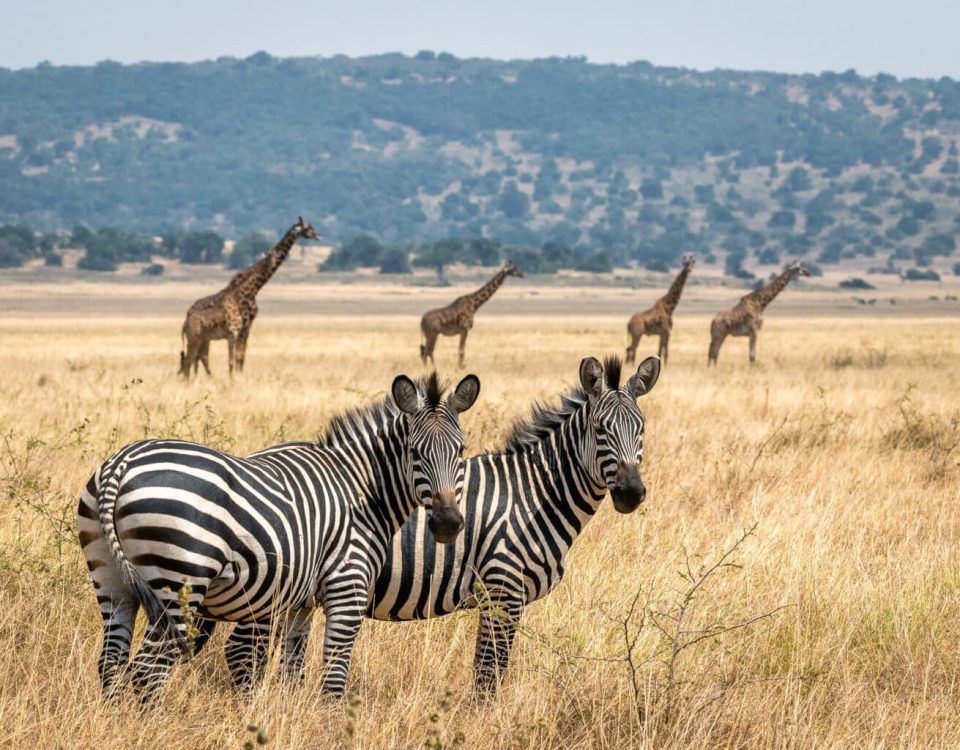
Although tree-climbing lions and hippos receive considerable attention, Queen Elizabeth National Park supports many other animals.
| Wildlife | Where sightings may occur |
|---|---|
| African elephants | Savannah areas and near water |
| African buffaloes | Grasslands and channel banks |
| Uganda kob | Kasenyi and other open habitats |
| Warthogs | Grassland and woodland |
| Spotted hyenas | Savannah habitats |
| Leopards | Woodland and bushy areas |
| Hippos | Kazinga Channel and lakes |
| Nile crocodiles | Channel and lakeshores |
| Chimpanzees | Kyambura Gorge |
| Forest monkeys | Forested areas |
Some species, particularly leopards and chimpanzees, can be difficult to observe.
Wildlife sightings depend on habitat, season and animal movement.
Chimpanzee Tracking in Kyambura Gorge
Kyambura Gorge is one of the park’s most interesting natural attractions.
The gorge contains a forest ecosystem surrounded by savannah.
Visitors can participate in authorised chimpanzee tracking activities with experienced guides.
The walk involves descending into the gorge and exploring forest trails.
Chimpanzees may be heard calling or moving through the vegetation.
However, sightings are not guaranteed.
Kyambura also provides opportunities to observe forest plants, birds and other primates.
The activity requires a separate booking and applicable fees.
Maramagambo Forest
Maramagambo Forest is another important habitat within Queen Elizabeth National Park.
It supports forest birds, monkeys and other wildlife.
Guided walks allow visitors to explore vegetation that differs considerably from the surrounding savannah.
The area is also associated with crater lakes and bat habitats.
Walks should be organised through authorised arrangements, and visitors should follow guidance about approaching caves or wildlife.
Crater Lakes and Scenic Landscapes
Queen Elizabeth National Park is famous for its volcanic landscape.
The Katwe explosion crater area contains numerous crater formations created by past volcanic activity.
Visitors can enjoy scenic drives and viewpoints overlooking lakes and surrounding hills.
Lake Katwe is particularly known for traditional salt extraction.
Community visits may provide opportunities to learn about the history and economic importance of salt production.
Always choose appropriate guided experiences and respect local workers.
Best Time to Visit Queen Elizabeth National Park
The park can be visited throughout the year.
However, seasonal rainfall influences road conditions, vegetation and wildlife visibility.
| Period | General conditions | Safari planning |
|---|---|---|
| December–February | Often relatively dry | Good for game drives and boat safaris |
| March–May | Generally wetter | Expect greener landscapes and muddy tracks |
| June–September | Popular relatively dry period | Suitable for wildlife viewing |
| October–November | Variable rainfall, often wetter | Prepare for changing road conditions |
The relatively dry periods are popular because wildlife may be easier to observe in open vegetation.
However, animals remain present throughout the year.
Kazinga Channel cruises can be rewarding during both wet and dry seasons.
Queen Elizabeth National Park Entry Fees for 2027
Uganda Wildlife Authority has published revised conservation tariffs for 2027–2028.
For Queen Elizabeth National Park, the published park entry rates include:
| Visitor category | Park entrance per person |
|---|---|
| Foreign non-resident | US$45 |
| Foreign resident | US$35 |
| Rest of Africa | US$35 |
| East African Community citizen | UGX 25,000 |
Park entry generally applies according to the authorised entrance period and tariff conditions.
Boat cruises, specialised tracking activities, vehicle charges and some guided experiences may require additional fees.
Do not assume the entrance ticket includes a Kazinga Channel cruise.
Ask for the current activity charges when requesting your safari quotation.
How Much Does a Queen Elizabeth National Park Safari Cost?
The total cost depends on your accommodation, transport, activities and number of travel days.
The following are illustrative three-day planning ranges per person for travellers sharing transport and accommodation.
| Safari category | Estimated total |
|---|---|
| Budget | US$450–750 |
| Mid-range | US$750–1,300 |
| Luxury | US$1,500–3,000+ |
These estimates are not confirmed operator prices.
They exclude international flights, visas and travel insurance.
A private safari for one person may cost considerably more because transport expenses are not shared.
When comparing packages, confirm whether the price includes park entrance, game drives, accommodation and Kazinga Channel boat tickets.
Accommodation in Queen Elizabeth National Park
The park offers a wide range of accommodation for different budgets.
Luxury Accommodation
Mweya Safari Lodge is one of the established properties within the park, known for its location near the Kazinga Channel.
Elephant Plains Lodge provides premium accommodation in the wider Queen Elizabeth safari area.
Ishasha Wilderness Camp is an established option for travellers focusing on southern Ishasha.
Mid-Range Accommodation
Visitors can consider properties such as Bush Lodge and other comfortable safari camps around the park.
Mid-range accommodation generally provides private rooms, meals and access to game-drive arrangements.
Budget Accommodation
Budget guesthouses and campsites are available in surrounding tourism centres.
These may suit travellers who prefer to spend more on activities than accommodation.
Choose your lodge according to the areas you intend to visit.
A property near Mweya is convenient for Kazinga Channel cruises, while accommodation in Ishasha is better suited to early morning lion searches.
How to Get to Queen Elizabeth National Park
From Entebbe or Kampala
Travellers can reach the park by road from Entebbe or Kampala.
Depending on the chosen route, traffic and stops, the journey generally takes approximately six to eight hours or longer.
Private safari vehicles are convenient for exploring the park after arrival.
From Kibale National Park
Queen Elizabeth National Park combines naturally with chimpanzee trekking in Kibale.
Visitors can travel south from the Fort Portal area towards the park.
This creates a popular itinerary combining primate tracking and savannah wildlife.
From Bwindi Impenetrable National Park
Travellers completing gorilla trekking in Bwindi can continue towards Queen Elizabeth National Park.
Buhoma is particularly convenient for itineraries connecting through Ishasha.
However, travel times vary depending on the Bwindi sector and road conditions.
By Domestic Flight
Domestic flights to airstrips serving the Queen Elizabeth region may be available from Entebbe.
Commonly used airstrips include Mweya and Kasese, depending on airline schedules.
Confirm flight services, baggage allowances and road transfers before booking.
Example Four-Day Queen Elizabeth National Park Safari
Day 1: Transfer to Queen Elizabeth National Park
Depart from Entebbe or Kampala towards western Uganda.
Enjoy scenic views of the countryside before arriving at your lodge.
Depending on arrival time, enjoy an evening game drive or relaxation.
Day 2: Kasenyi Game Drive and Kazinga Channel Cruise
Begin the morning with a game drive around Kasenyi.
Search for Uganda kob, elephants, buffaloes, lions and other wildlife.
Return for lunch before taking an afternoon boat cruise along the Kazinga Channel.
Observe hippos, crocodiles and birds along the shoreline.
Day 3: Ishasha Tree-Climbing Lions
Travel towards the southern Ishasha Sector.
Explore the game-drive tracks while searching for tree-climbing lions.
Spend time observing other wildlife and the surrounding savannah.
Stay overnight near Ishasha if your itinerary allows.
Day 4: Return or Continue to Bwindi
After breakfast, return towards Entebbe or continue to Bwindi Impenetrable National Park for gorilla trekking.
Travellers combining Queen Elizabeth and Bwindi should confirm the correct trekking sector before planning their road transfer.
What to Pack for Queen Elizabeth National Park
A Queen Elizabeth safari requires practical clothing and equipment rather than specialised trekking gear.
Pack lightweight, comfortable clothing in neutral colours, a wide-brimmed hat and sunscreen.
Bring binoculars for birdwatching and distant wildlife sightings.
A camera with a telephoto lens is useful for photographing lions and other animals.
Carry insect repellent, drinking water and prescribed medication.
A light jacket is helpful for early morning game drives.
If you plan to visit Kyambura Gorge, include suitable walking shoes with reliable grip.
Safety Tips for Game Drives and Boat Cruises
Always follow your safari guide’s instructions.
Remain inside the vehicle in areas where wildlife is present unless your guide confirms that leaving is permitted.
Do not approach lions, elephants, buffaloes or other wild animals.
Avoid feeding wildlife or throwing rubbish.
During Kazinga Channel cruises, follow the crew’s directions and use appropriate safety equipment.
Do not lean dangerously over the boat or attempt to touch animals in the water.
Hippos and crocodiles are dangerous and should be observed from a safe distance.
For self-drive travellers, follow park regulations and stay on authorised tracks.
Conservation and Local Communities
Queen Elizabeth National Park plays an important role in protecting western Uganda’s wildlife and habitats.
Uganda Wildlife Authority works with conservation partners to monitor animals, protect ecosystems and manage tourism.
The park faces conservation challenges, including human-wildlife conflict, habitat pressure and threats to carnivores.
The Ishasha lion population has experienced serious conservation concerns, including poisoning incidents.
Responsible tourism helps support wildlife management and local economic activity.
Visitors can contribute by using authorised guides, respecting wildlife regulations and supporting responsible community enterprises.
Frequently Asked Questions
1. Where can you see tree-climbing lions in Uganda?
The Ishasha Sector of Queen Elizabeth National Park is one of Uganda’s best-known locations for observing tree-climbing lions.
2. Are tree-climbing lions guaranteed in Ishasha?
No. Lions move freely, and sightings depend on their location and behaviour.
3. How long is the Kazinga Channel boat cruise?
A standard Uganda Wildlife Authority launch cruise generally lasts approximately two hours.
4. What animals can you see on the Kazinga Channel?
Visitors commonly observe hippos and waterbirds, with opportunities to see Nile crocodiles, elephants and buffaloes.
5. How many days do you need in Queen Elizabeth National Park?
Three to four days provide time for game drives, a Kazinga Channel cruise and an Ishasha visit.
6. Can you combine Queen Elizabeth National Park with gorilla trekking?
Yes. The park is commonly combined with Bwindi Impenetrable National Park on Uganda wildlife and gorilla safari itineraries.
7. Is Queen Elizabeth National Park suitable for families?
Yes. Families can enjoy game drives and boat cruises, subject to operator safety rules and any activity-specific age requirements.
8. Can you see chimpanzees in Queen Elizabeth National Park?
Yes. Authorised chimpanzee tracking is available in Kyambura Gorge, although sightings are not guaranteed.
9. Is the Kazinga Channel cruise included in park entry?
No. Boat cruises are generally charged separately from the ordinary park entrance fee.
10. Is Queen Elizabeth National Park worth visiting?
Yes. Its combination of tree-climbing lions, Kazinga Channel wildlife, scenic landscapes and convenient access to Bwindi makes it a rewarding Uganda safari destination.
Queen Elizabeth National Park offers one of Uganda’s most varied wildlife safari experiences, combining the famous tree-climbing lions of Ishasha with unforgettable Kazinga Channel boat cruises.
The park provides opportunities to observe elephants, buffaloes, hippos, Nile crocodiles, antelopes, lions and numerous bird species within different habitats.
Its location between Kibale and Bwindi also makes it an excellent addition to a longer Uganda safari featuring chimpanzee tracking and mountain gorilla trekking.
For the best experience, allow sufficient time to explore both the northern game-drive areas and the southern Ishasha Sector.
A three- or four-day visit provides a good balance between wildlife viewing, relaxation and travel.
Before booking, confirm accommodation, park entrance fees, boat cruise availability and transport arrangements.
Whether you are visiting Uganda for the first time or returning to discover more wildlife, Queen Elizabeth National Park deserves a place on your safari itinerary.