Red-Tailed Monkeys: Where to Spot Them in East Africa
Red-tailed monkeys rank among East Africa’s most widely distributed and reliably spotted forest primates, instantly recognizable by the distinctive white heart-shaped spot on their nose and the reddish-orange fur along their tail that gives the species its common name. Found across numerous forest habitats in Uganda and Rwanda, these agile, active monkeys offer travelers genuinely consistent viewing opportunities compared to some of the region’s shyer, less predictable primates, making them a reliable highlight of any forest walk. This guide covers what makes red-tailed monkeys distinctive and where to find them.
What Makes Red-Tailed Monkeys Instantly Recognizable
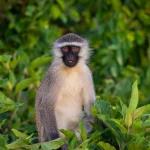
The species’ most distinctive feature, a bright white, heart-shaped patch on the nose set against otherwise dark facial fur, makes red-tailed monkeys genuinely easy to identify even during a brief, fleeting sighting. Combined with the reddish tail coloring visible as the animal moves through the canopy, these markings leave little doubt about identification for even first-time visitors unfamiliar with East Africa’s diverse primate species.
Where Red-Tailed Monkeys Are Found
Red-tailed monkeys inhabit forest habitat across a genuinely wide swath of Uganda and Rwanda, including Kibale Forest, Bwindi Impenetrable National Park, Nyungwe Forest, and numerous other protected forest areas, making them one of the more consistently encountered primate species across a standard multi-park East Africa itinerary.
Why This Species Is So Widely Distributed
Red-tailed monkeys’ adaptability across varied forest habitat types, from lowland to montane forest, contributes to their broad distribution and generally healthy population numbers compared to more habitat-specific primates. This ecological flexibility means travelers visiting almost any of the region’s major forest parks stand a genuinely good chance of at least one red-tailed monkey sighting.
Red-Tailed Monkey Behavior and Social Structure
These monkeys typically live in groups led by a single dominant male alongside multiple females and their offspring, foraging actively through the mid-to-upper canopy for fruit, leaves, and insects throughout the day. Their generally confident, active behavior around human observers makes for engaging, easily observed viewing compared to shyer species sharing the same forest.
Seasonal Patterns in Sighting Frequency
While red-tailed monkeys can be spotted year-round given their adaptable diet and habitat preferences, sighting frequency sometimes increases during periods of peak fruit availability, when groups forage more actively and visibly across accessible canopy areas rather than ranging more widely through denser, less visited forest sections. Asking your guide about current fruiting patterns can offer useful insight into when sightings are likely to be most frequent during your specific visit.
Best Locations for Reliable Sightings
Kibale Forest offers particularly consistent red-tailed monkey viewing given the park’s high overall primate density, while Bwindi’s forest trails, traversed during gorilla trekking or dedicated forest walks, frequently turn up sightings as an incidental bonus alongside the headline gorilla encounter.
How Climate and Elevation Affect Where You’ll Find Them
Red-tailed monkeys tolerate a genuinely wide range of elevations and forest types, from Kibale’s lower-lying tropical forest to higher-altitude montane habitat found in parts of Bwindi and Nyungwe, contributing directly to their broad distribution across the region. This adaptability contrasts with more elevation-specific species, giving red-tailed monkeys a genuinely wider ecological niche than many of their neighboring primates.
Red-Tailed Monkeys and Hybrid Populations
In certain areas where red-tailed monkey range overlaps with related species, researchers have documented natural hybridization, an interesting genetic phenomenon that adds scientific intrigue to what might otherwise seem like a straightforward, easily identified species. Guides familiar with local populations can sometimes point out these subtle hybrid characteristics to interested visitors.
What Guides Say Makes This Species Special
Despite lacking the star power of gorillas or chimpanzees, many experienced guides genuinely enjoy pointing out red-tailed monkeys to visitors, appreciating an opportunity to showcase the region’s broader biodiversity beyond the headline species most travelers arrive specifically to see. This enthusiasm often proves contagious, and many visitors leave with a genuine appreciation for a species they’d never heard of before their trip.
Photography Tips for Red-Tailed Monkeys
Given their active, often quick movement through the canopy, photographers benefit from a fast shutter speed and pre-adjusted camera settings, since red-tailed monkey sightings frequently happen quickly and require rapid reaction rather than leisurely composition.
Combining Red-Tailed Monkey Sightings With Other Activities
Because this species appears across so many of the region’s forest parks, dedicated red-tailed monkey viewing rarely requires a standalone activity, instead appearing naturally alongside gorilla trekking, chimpanzee tracking, or general forest walks throughout a typical East Africa itinerary.
Building a Complete Primate Checklist Around This Species
Because red-tailed monkeys appear so reliably across multiple parks, dedicated primate checklisters often use this species as a natural starting point for tracking broader sighting progress across an East Africa itinerary, confirming it early before moving on to rarer, more location-specific species encountered later in the trip. This practical approach helps travelers stay organized when pursuing a genuinely comprehensive primate-viewing goal across several parks.
Conservation Status
Red-tailed monkeys remain relatively secure compared to some of the region’s more threatened primates, though continued forest habitat protection across Uganda and Rwanda’s national parks remains essential to maintaining healthy population numbers for this and other resident species.
How Red-Tailed Monkeys Interact With Neighboring Species
Red-tailed monkeys are frequently observed foraging in mixed-species associations alongside other primates such as blue monkeys or colobus, a behavior thought to offer mutual benefits including improved predator detection and expanded access to different forest food resources. Witnessing this kind of multi-species interaction adds genuine behavioral interest for attentive observers beyond simply spotting the red-tailed monkeys themselves.
Vocal Communication and What to Listen For
Red-tailed monkeys use a range of calls to coordinate group movement and signal alarm at approaching threats, including distinctive chirps and staccato calls that experienced guides can often identify before any visual sighting occurs. Learning to recognize even a few of these vocal patterns adds a genuinely useful skill for travelers hoping to maximize sightings across multiple forest destinations.
What Sets Uganda’s Population Apart From Rwanda’s
While the species occurs across both countries, subtle regional variations in coloring and behavior have been documented between Uganda’s and Rwanda’s red-tailed monkey populations, reflecting the broader genetic diversity within this widely distributed species. Dedicated primate enthusiasts sometimes make a point of comparing sightings across both countries during a combined itinerary.
Why This Species Makes a Great Introduction to Primate Watching
For travelers new to primate observation, red-tailed monkeys offer a genuinely accessible entry point given their wide distribution, relatively confident behavior, and easily identifiable markings, making them an ideal species for building initial primate-spotting skills before tackling shyer or more elusive species elsewhere in the region.
Common Questions About Red-Tailed Monkeys
Travelers frequently ask whether red-tailed monkeys can be seen alongside gorillas during a standard trek, and yes, they’re a genuinely common incidental sighting along Bwindi’s forest trails, though rangers remain focused primarily on the gorilla family itself rather than pausing specifically for other primate sightings. Visitors also ask how red-tailed monkeys differ from the similarly sized blue monkey found in some of the same habitats, and the white nose spot and reddish tail provide the clearest distinguishing features between the two closely related species.
Why Guides Value This Species for First-Time Visitors
Experienced guides often use red-tailed monkey sightings as a genuinely effective way to build first-time visitors’ primate-spotting confidence early in a trip, given how reliably the species appears and how distinctive its markings are compared to some of the region’s more subtly differentiated primates. This early success often helps travelers feel more attuned and prepared for spotting rarer species later in their itinerary.
Why This Species Suits Travelers With Limited Forest Time
Given how consistently red-tailed monkeys appear even during brief forest walks, travelers with only a short window available for primate viewing can genuinely rely on this species delivering a satisfying sighting without requiring an extended, dedicated search.
How This Species Fits a Broader Primate Checklist Strategy
Serious checklisters pursuing all of Uganda’s primate species often treat red-tailed monkeys as an early, confidence-building confirmation before turning attention toward the considerably more challenging, elusive species that demand greater patience and specific habitat access later in the trip.
Why This Species Suits Travelers Photographing Across Multiple Parks
Given how consistently red-tailed monkeys appear across different forest habitats, photographers building a broader East Africa primate portfolio can genuinely count on capturing this species at multiple distinct locations, offering useful visual variety in vegetation and lighting across a single trip.
How This Species Reflects Broader Forest Health
A healthy, visible red-tailed monkey population within a given forest generally reflects broader ecosystem stability, since this species depends on the same fruit-tree diversity and habitat connectivity that supports numerous other resident primates and wildlife sharing the same protected area.
Planning Your Trip With This Species in Mind
Given how widely distributed red-tailed monkeys are across East Africa’s forest parks, travelers can expect genuinely reliable sightings throughout a standard gorilla trekking or broader primate-focused itinerary without needing to plan any specific activity around this particular species, a dependable highlight woven naturally into almost any forest-based day.
Recommended Tours: 4 Days Uganda Gorilla and Chimpanzee Tour | 7 Days Classic Rwanda Safari