

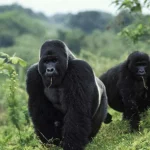
Few countries anywhere in the world have rebuilt their conservation landscape as dramatically or as quickly as Rwanda has since 1994. In the years immediately following the genocide, the country’s protected areas lay in ruins: wildlife populations decimated by years of instability and desperate subsistence poaching, park boundaries encroached upon by displaced communities with nowhere else to go, and international conservation funding largely absent from a country the world had written off as a humanitarian catastrophe rather than a viable wildlife destination. Three decades later, Rwanda stands as one of the continent’s genuine conservation success stories, its parks rebuilt, its flagship species recovering, and its model increasingly studied by conservation planners working in far less constrained circumstances elsewhere in Africa.
The Scale of the Postgenocide Collapse
The devastation facing Rwanda’s protected areas after 1994 was severe and multifaceted. Akagera National Park lost roughly half its protected land area when returning refugees and displaced populations settled within its former boundaries, while remaining wildlife faced intense poaching pressure from a population struggling with basic survival amid a shattered economy and collapsed institutions. Volcanoes National Park’s mountain gorilla population, already fragile before the genocide, faced renewed pressure from snare poaching and habitat disturbance as normal park management and ranger patrols broke down entirely during the years of conflict and its immediate aftermath. Nyungwe Forest, more remote and less immediately affected by settlement pressure, nonetheless suffered from reduced management capacity and weakened anti-poaching enforcement during this same period of institutional collapse.
Mountain Gorillas: A Population Pulled Back From the Brink
The mountain gorilla population’s recovery ranks among the most celebrated conservation achievements anywhere in the world, a species once projected toward likely extinction that has instead grown steadily for several consecutive decades, becoming the only great ape subspecies with an increasing rather than declining population trend. This recovery reflects the accumulated effect of consistent ranger patrols, veterinary intervention through programs addressing snare injuries and disease transmission risk, and the revenue-sharing and community engagement programs that transformed buffer zone communities from indifferent bystanders into active conservation stakeholders. Readers interested in the specific mechanics of how this daily protection work functions will find detail in coverage of how many rangers protect each gorilla family, which lays out the everyday infrastructure underpinning this broader population recovery story.
Akagera’s Remarkable Rebuild
Akagera’s transformation stands as perhaps the most dramatic single chapter within Rwanda’s broader conservation recovery, rebuilt through a partnership between Rwandan park authorities and the nonprofit conservation organization African Parks that began in 2010, bringing improved fencing, dramatically strengthened anti-poaching enforcement, and a series of ambitious species reintroductions that restored the park’s full Big Five status after decades without it. Lions were reintroduced in 2015 following a local extinction stretching back roughly twenty years, and eastern black rhinos followed in subsequent reintroductions, both programs requiring painstaking logistical planning, veterinary expertise, and sustained community engagement to succeed. A detailed account of this specific transformation is available in coverage of how Rwanda rebuilt Akagera National Park after the genocide, alongside dedicated looks at the park’s lion recovery and rhino reintroduction specifically.
The Community Partnership Model at the Core of the Recovery
What distinguishes Rwanda’s conservation recovery from a purely top-down enforcement story is the consistent emphasis placed on transforming the economic relationship between protected areas and the communities living along their boundaries. Revenue-sharing programs directing a defined percentage of park fees toward community infrastructure, employment opportunities in ranger, guide, and porter roles, and community-based tourism ventures have collectively given buffer zone populations a direct material stake in conservation success, addressing the underlying economic pressures that drove much of the postgenocide poaching crisis in the first place rather than relying solely on enforcement to suppress it. This model, visible in detail around Volcanoes National Park’s buffer zone villages, has become something of a template studied by conservation practitioners working in comparable postconflict or high-population-density settings elsewhere on the continent.
From Dian Fossey’s Era to Today’s Ranger Corps
Rwanda’s current conservation infrastructure traces a direct lineage back to the foundational, often confrontational anti-poaching work pioneered by researchers like Dian Fossey at Karisoke beginning in the 1960s, though contemporary conservation practice has evolved considerably beyond her era’s more combative approach toward the collaborative, community-integrated model now standard across the country’s parks. This evolution reflects hard-won lessons about the limitations of pure enforcement without addressing underlying community needs and incentives, lessons that Rwanda’s postgenocide reconstruction period forced conservation planners to internalize quickly given how directly community stability and conservation success became intertwined in the country’s recovery. Travelers interested in this specific historical throughline can find more detail in coverage of Dian Fossey’s legacy and the Karisoke Research Center today.
Nyungwe and Gishwati-Mukura: Extending the Model to Forest Habitat
Beyond the more widely publicized gorilla and Big Five recovery stories, Rwanda’s conservation success extends to its forest habitats as well, with Nyungwe Forest’s exceptional biodiversity protected through sustained management investment and Gishwati-Mukura, established as a national park only in 2015, representing active forest restoration on land severely degraded by decades of deforestation before conservation intervention began actively rebuilding habitat connectivity and reintroducing effective protection. These forest-focused conservation efforts receive less international attention than the mountain gorilla story but reflect the same underlying institutional capacity and community partnership approach that has driven success across every corner of Rwanda’s protected area system.
Why This Recovery Matters Beyond Rwanda’s Borders
Rwanda’s conservation trajectory carries significance well beyond its own borders, offering a genuine proof of concept that severely degraded ecosystems and depleted wildlife populations can recover meaningfully within a single generation given sufficient institutional commitment, international partnership, and community engagement. Conservation organizations and government agencies from other African nations facing their own postconflict or high-pressure conservation challenges have studied Rwanda’s specific policy mechanisms, from revenue-sharing formulas to reintroduction protocols, looking for lessons applicable to their own, often more geographically or politically complex circumstances. This influence extends Rwanda’s conservation story well beyond its role as a single successful national case study toward something closer to a genuine regional and continental reference point.
A Recovery Still Actively in Progress
It would be a mistake to treat Rwanda’s conservation success as a finished, static achievement rather than an ongoing, actively managed effort that continues to face real challenges, including climate pressure on habitat, the persistent economic tensions inherent in balancing dense human population growth against protected area boundaries, and the continuous funding requirements needed to sustain ranger patrols, veterinary programs, and community partnerships at their current effective scale. Conservation success of the kind visible across Rwanda’s parks requires sustained institutional commitment rather than a single dramatic turnaround, and the country’s continued investment in this infrastructure, even as other national priorities compete for the same limited resources, reflects a genuine, long-term policy commitment rather than a one-time recovery effort.
International Partnership as a Force Multiplier
None of Rwanda’s conservation recovery would have been achievable through domestic resources and expertise alone, and the country’s success reflects a deliberate, consistently maintained openness to international conservation partnership rather than an insistence on purely self-directed recovery. Organizations including African Parks, the Dian Fossey Gorilla Fund, and the Gorilla Doctors veterinary program have each played substantial roles in specific aspects of this recovery, bringing technical expertise, funding, and institutional capacity that complemented rather than replaced Rwandan government leadership and on-the-ground ranger and community engagement work. This willingness to partner closely with international conservation organizations, while maintaining clear domestic ownership and direction over national conservation policy, has proven to be one of the more replicable elements of Rwanda’s approach for other nations considering similar recovery efforts, since it demonstrates that meaningful national ownership and substantial international support are not mutually exclusive conditions.
Measuring Success Beyond Headline Species
While lions, rhinos, and mountain gorillas understandably dominate public discussion of Rwanda’s conservation recovery, the broader ecological picture includes considerably more than these headline species alone. Bird populations across Akagera’s wetlands, Nyungwe’s forest canopy, and Volcanoes National Park’s higher elevations have benefited from the same habitat protection and reduced human pressure that allowed larger mammal populations to recover, while smaller mammal and reptile populations, less visible to casual visitors but ecologically significant in their own right, have similarly stabilized as overall park management and anti-poaching enforcement improved across the system. This fuller ecological recovery, extending well beyond the specific flagship species that draw international headlines, represents the kind of comprehensive ecosystem health that conservation biologists consider the truest measure of a protected area’s genuine success.
What This Means for Travelers
Every visitor who treks to see mountain gorillas, drives through Akagera spotting lions and rhinos, or paddles across Lake Ihema watching hippos and crocodiles is participating directly in the financial mechanism that sustains this ongoing recovery, since trekking permits, park fees, and tourism spending collectively fund the ranger patrols, veterinary care, and community programs that make these encounters possible in the first place. Understanding this connection transforms a wildlife encounter from simple entertainment into something closer to direct participation in one of the most significant conservation turnarounds anywhere on the African continent, a recovery built, quite literally, from the ashes of one of the twentieth century’s worst catastrophes into one of its most genuinely hopeful conservation stories.













