

Secretary Birds: Where and When to See Them in East Africa
Secretary birds rank among East Africa’s most genuinely unique raptors, a tall, long-legged bird of prey that hunts primarily on foot across open grassland rather than from the air, using powerful, precise kicks to dispatch snakes and other prey in a display unlike any other bird species on the continent. Understanding where this striking, distinctive hunter concentrates helps travelers appreciate a genuinely uncommon behavioral sighting. This guide covers where and when to look, along with the remarkable hunting technique that sets this species apart from every other raptor in Africa.
Maasai Mara and Serengeti
Kenya and Tanzania’s classic open plains ecosystems offer genuinely suitable habitat for secretary birds, whose ground-hunting strategy depends on exactly this kind of expansive, unobstructed grassland.
Queen Elizabeth National Park, Uganda
Queen Elizabeth’s savannah sections support secretary bird sightings, offering Uganda travelers a chance at this distinctive species alongside the park’s broader wildlife.
Why Secretary Birds Need Open Grassland
Secretary birds’ ground-based hunting strategy requires genuinely open terrain to spot and pursue prey effectively, making them considerably less common in denser bush or forest habitat compared to expansive grassland ecosystems.
How Secretary Birds Got Their Distinctive Name
The species’ name is popularly attributed to its crest of long feathers resembling quill pens historically tucked behind a secretary’s ear, though the exact etymology remains debated among ornithologists.
The Genuinely Remarkable Hunting Technique
Secretary birds hunt by stamping and kicking prey, including venomous snakes, with genuinely powerful, precisely aimed strikes from their long legs, a hunting method found in no other raptor species and offering safari travelers a rare chance to witness genuinely unique predatory behavior.
Physical Characteristics
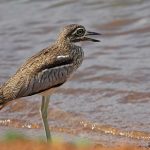
Standing genuinely tall for a bird of prey, secretary birds display long legs adapted for walking and striking, a distinctive facial pattern, and an overall silhouette instantly recognizable even at considerable distance across open plains.
Secretary Bird Flight Behavior
Despite their primarily ground-based hunting, secretary birds are genuinely capable fliers, and watching one take flight after a successful or unsuccessful hunt adds visual variety to an already distinctive sighting.
Best Time of Day for Secretary Bird Sightings
Secretary birds hunt primarily during daylight hours, making standard daytime game drives across open grassland genuinely well-suited to spotting this species going about its distinctive foot-based hunting routine.
Conservation Status
Secretary birds face genuine conservation concern due to habitat loss across parts of their African range, making East Africa’s protected grasslands increasingly important strongholds for the species.
The Genuine Force Behind Each Kick
Research into secretary bird hunting technique has measured genuinely remarkable striking force behind their kicks, several times the bird’s own body weight in impact, delivered with enough speed and precision to kill or incapacitate venomous snakes before the bird risks any dangerous retaliatory bite.
Secretary Birds and Snake Hunting Specifically
While secretary birds hunt a genuinely wide range of prey including insects, small mammals, and other birds, their specialized snake-hunting reputation has made them something of a folk hero in areas where venomous snakes pose real risk to local communities and livestock.
Secretary Bird Nesting and Breeding Behavior
Unlike their ground-based hunting habits, secretary birds build genuinely large stick nests high in flat-topped acacia trees, a behavioral contrast that reflects the species’ interesting dual life between terrestrial hunting and more conventional arboreal raptor nesting.
How Pairs Coordinate Territory and Hunting Range
Secretary birds typically maintain long-term monogamous pairs that patrol a genuinely defined territory together, often visible walking in loose tandem across open grassland as they methodically work through potential hunting ground.
Why Secretary Birds Rarely Compete Directly With Other Raptors
Given their entirely ground-based hunting method, secretary birds occupy a genuinely distinct ecological niche compared to eagles, hawks, and other aerial hunters sharing the same grassland habitat, minimizing direct competition despite overlapping territory and occasionally overlapping prey species.
How Secretary Birds Walk Their Hunting Ground
Observers often describe a hunting secretary bird’s deliberate, methodical walking pace as almost patrol-like, covering considerable ground steadily while scanning the grass ahead, a behavior that rewards travelers willing to watch for an extended stretch rather than expect immediate dramatic action.
Why Photographing a Hunting Strike Is Genuinely Difficult
Given how quickly the actual kicking strike happens once a secretary bird commits to an attack, capturing this specific moment on camera requires genuine anticipation and a fast shutter speed, since the strike itself lasts barely a fraction of a second within an otherwise slow, deliberate hunting sequence.
How Secretary Birds Compare to Other Ground-Hunting Birds
While a handful of other bird species occasionally hunt on foot, no other raptor anywhere in the world relies as completely and specifically on this striking, kick-based hunting method, making the secretary bird a genuinely singular case study in avian predatory adaptation.
Why Local Communities Have Long Valued This Species
Across parts of its African range, the secretary bird’s snake-hunting reputation has earned it genuine protection and goodwill from local communities who recognize its practical value in reducing dangerous snake encounters near settlements and grazing land.
Common Questions About Secretary Bird Sightings
Travelers frequently ask whether secretary birds are related to storks given their long legs, and no, despite superficial resemblance, they belong to their own distinct family within the broader raptor group, more closely related to eagles and hawks than to any wading bird. Visitors also ask whether witnessing an actual snake kill is common, and honestly, while the birds do hunt regularly, timing a sighting with an actual successful strike requires genuine luck alongside patient observation.
Why This Species Rewards a Longer Watch
Given how genuinely unusual their hunting method is compared to any other raptor, spending extra time observing a secretary bird patrol open grassland, rather than moving on after a brief glimpse, offers real potential to witness behavior found nowhere else in the bird world.
Why Guides Often Point Out This Species Immediately
Given its genuine rarity as a hunting behavior worth witnessing, experienced guides frequently prioritize stopping for a secretary bird sighting even during an otherwise packed game drive schedule, recognizing how disproportionately memorable this encounter tends to be for travelers afterward.
How Secretary Bird Chicks Develop Hunting Skills
Young secretary birds spend genuinely extended months in the nest before fledging, and even after leaving, juveniles require considerable additional time to develop the precise striking accuracy that adult hunting success depends on, a skill that appears to develop gradually through repeated practice rather than emerging fully formed from instinct alone.
Why Secretary Birds Face Genuine Threats From Habitat Conversion
As open grassland across parts of Africa continues converting to agricultural land, secretary birds lose genuinely essential hunting territory, making the protection of large, intact grassland ecosystems within East Africa’s national parks increasingly critical to the species’ long-term survival across the continent.
How Secretary Birds Interact With Grazing Herbivores
Secretary birds often forage in reasonably close proximity to grazing zebra, wildebeest, and other herbivores, since disturbed insects and small animals flushed by grazing activity genuinely improve hunting opportunities, an incidental but mutually tolerant relationship visible during many game drives.
Why Secretary Birds Rarely Flee From Vehicles
Having grown genuinely accustomed to regular tourist vehicle traffic across popular safari circuits, secretary birds typically continue their methodical hunting patrol at reasonably close range, offering considerably better and more sustained viewing opportunities than more easily startled grassland species.
What Makes This Species a Favorite Among Bird Photographers
Beyond the hunting behavior itself, the secretary bird’s genuinely striking silhouette, tall stance, distinctive facial markings, and dramatic crest, makes for compelling portrait photography even during quieter moments when the bird isn’t actively hunting.
How This Species Fits Into a Broader Raptor-Focused Safari
Travelers building a dedicated birds-of-prey itinerary across East Africa’s savannah parks often treat the secretary bird as a genuinely essential inclusion, given how starkly its ground-hunting method contrasts against the aerial hunting strategies of eagles, hawks, and vultures encountered during the same trip.
Why Early Morning Sightings Often Prove Most Rewarding
Secretary birds frequently begin their daily hunting patrol during the cooler early morning hours, making dawn game drives genuinely productive both for locating the species and for witnessing the full, unhurried hunting sequence before the day’s heat sets in.
Why This Species Captures Genuine Public Fascination
Beyond dedicated birders, the secretary bird’s unusual appearance and remarkable hunting method have made it a genuinely popular subject in wildlife documentaries and general safari marketing, meaning many travelers arrive already curious about a species they’ve only previously seen on screen.
Why This Encounter Often Surprises First-Time Safari Travelers
Many travelers arrive expecting East Africa’s headline sightings to center entirely on lions, elephants, and other large mammals, only to find that a secretary bird’s deliberate, almost theatrical hunting walk becomes one of the trip’s genuinely most talked-about moments once they’ve actually witnessed it firsthand.
Planning Your Secretary Bird-Focused Observation
Prioritizing open-plains game drives during your East Africa safari offers the best realistic chance of witnessing this genuinely unique hunting specialist in action, and an early departure specifically timed to catch morning hunting activity considerably improves your odds.
Recommended Tours: 12-Day Uganda Gorilla Tours and Kenya Great Migration Safaris | 10 Days Ultimate Uganda Gorilla & Big Five Safari


















