
About 15 km east of Kampala city, in a location known as the Namugongo, outskirts of Kampala city along Kampala – Jinja route, the Namugogo Martyrs Shrine stands. Here, on Kabaka Mwanga’s instructions, more than twenty catholic and Anglican victims were burned alive in June 1986. Consequently, Christians from eastern and central Africa and indeed the globe over swarm to Namugongo to pay their respects and reaffirm their faith by making pilgrimage to the martyrs on June 3rd, each year. Built in commemoration of the martyrs, a church was shaped like a classic Baganda hut (akasiisiira). Representing the 22 Catholic martyrs, it stands on 22 copper pillars. Underneath the altar, in front of the church’s main door, lies the site of Charles Lwanga’s burning on June 3, 1886.Pope Paul VI consecrated the church August 2, 1969.
History of the Namugongo martyrs shrine
In April 1875, English adventurer and writer Henry Stanley visited Buganda’s Kabaka, King Mutesa. Following the basic narrative of Christianity with King Mutesa, he become quite passionate about the faith and asked Stanley to draft a letter to English Queen Victoria calling for missionaries.
English Bishop James Hannington, the first Anglican Bishop of the Eastern Equatorial region, among the early martyrs of Uganda Bishop Hannington arrived in the Buganda Kingdom from the east. Unbeknownst to him, there was a Baganda notion that its rivals would enter the kingdom eastward. The Kabaka, monarch, dispatched fighters to meet this invading foe. “Tell the Kabaka (king), that I die for Uganda,” Hannington reportedly stated before he killed him on October 29, 1885. His grave, housed in the Namirembe Cathedral, has these words.
But King Mutesa’s successor, King Mwanga, “became increasingly furious as he realized that the first convert put Christ above the conventional loyalty to the king.” Martyrs started their journey in 1885. Mwanga originally forbid anyone to go near a Christian mission under pain of death, but finding himself unable to quiet the enthusiasm of the convert, vowed to wipe out Christianity.
King Mwanga directed the death of twenty-six of his pages, twelve Roman Catholics and thirteen Anglicans on June 3, 1886. Today, June 3rd, is observed as a public holiday honoring the Ugandan Martyrs. Traveling to the site of the martyrdom thousands of people from all across East Africa go to honor their bravery, sacrifice, and testimony-even till death.
Martyred at Namugongo, these early Christians came from Their martyrdom produced just the opposite of Mwanga’s intended outcome. Many of the onlookers impressed by these martyrs-who walked to their deaths chanting hymns and prayed for their enemies-started looking for guidance from the surviving Christians.
The first handful of convert had multiplied several times and extended out beyond the court within a few years. The martyrs had created a lasting image that Christianity was really African, not only the religion of a white man. Christianity grew steadily while most of the missionary activity was conducted by Africans instead of European missionaries. Now among all the countries in Africa, Uganda has the highest proportion of declared Christians.
Regarding what to do
Investigating the roots of religion in Uganda, fellowships, faith restoration.
Anyone interested in Uganda’s faith-based tourism while on their Uganda safari should definitely visit the shrine – the Uganda Martyrs Shrine. Rising tall with the grandeur of an old cathedral whose structural design finds inspiration in the African Hut With 22 copper pillars spanning more than 100 feet, this Basilica supports the shrine and can house 1000 people whose seating arrangement is circular. Its building got underway in 1967 and finished in 1975. The lake was dug in honor of the Martyrs and features a modern boat-shaped pavilion or island. It features a cabin beneath the altar bearing the Sacristy, a kitchen and bedroom Pope Francis soon occupied during his journey to Uganda in 2015, and a deck like feature where the altar for Holy Mass is found. Although the shrine covers a large area, its deeper significance is that it is the ground on where 15 of the 22 Martyrs were burned alive under Kabaka (King) Mwanga’s orders for their denial of their Christian religion. Under the pontificate of Pope Benedict XV, the Catholic young men and some boys, Kizito, John Mary Mzee, Balikudembe, Charles Lwanga, Buzabalyawo and Bruno Sserunkuuma among others, were subsequently beatified and canonized jointly as saints.
June three is not a typical day in Uganda. The sun may still rise from the east and water may still be the colourless liquid that quenches thirst; but, the mass of people visiting the Shrine will cause the streets, the people, the stores and their keepers to live a different version of events for a day or more.
Pilgrims from in and outside of Uganda travel to the Martyrs Shrine in Namugongo about this date. For some, the road is one walked barefooted for miles, from as far as Kenya, as a sacrifice in commemoration of the Martyrs, not one taken with the ease of a car. Usually, the environment is sweaty body upon body and pilgrims strolling with obvious tiredness yet alive on the spiritual inspiration gained from these courageous young men they come to honor. You won’t miss the sight of hawkers and sellers of everything from teddy bears to martyr trinkets. Many shops will also be close by offering cheap liquor for those who might have come to celebrate in different ways than the spiritual and pork, a local favourite.
When should one go to visit?
Any time of year, however get ready to get there before June 3rd (Martyrs’ day) of every year or visit the shrine at any moment of the year when you schedule for your Uganda safari trip.
Uganda Travel Guide – The Pearl of Africa
Uganda is one of Africa’s most rewarding and underrated destinations. Winston Churchill’s description of Uganda as the “Pearl of Africa” – inspired by its extraordinary combination of landscapes, wildlife, and people – remains as apt today as when he coined it in 1908. The country packs an astonishing range of experiences into a relatively compact area: snow-capped mountains, vast savannahs, dense tropical rainforests, the source of the Nile, and some of the world’s most remarkable wildlife.
Uganda shares borders with Kenya, Tanzania, Rwanda, the Democratic Republic of Congo, and South Sudan, and sits astride the equator in East-Central Africa. The capital, Kampala, is a vibrant, growing city that serves as the gateway to Uganda’s national parks. Most wildlife safaris begin and end in Kampala or at Entebbe International Airport, 45 minutes south of the city.
Uganda’s Key National Parks and Wildlife Areas
- Bwindi Impenetrable Forest: UNESCO World Heritage Site and home to over half the world’s mountain gorillas. Four trekking sectors: Buhoma, Ruhija, Rushaga, and Nkuringo.
- Queen Elizabeth National Park: Uganda’s most visited park, famous for tree-climbing lions in the Ishasha sector, boat cruises on the Kazinga Channel, and diverse savannah and forest habitats.
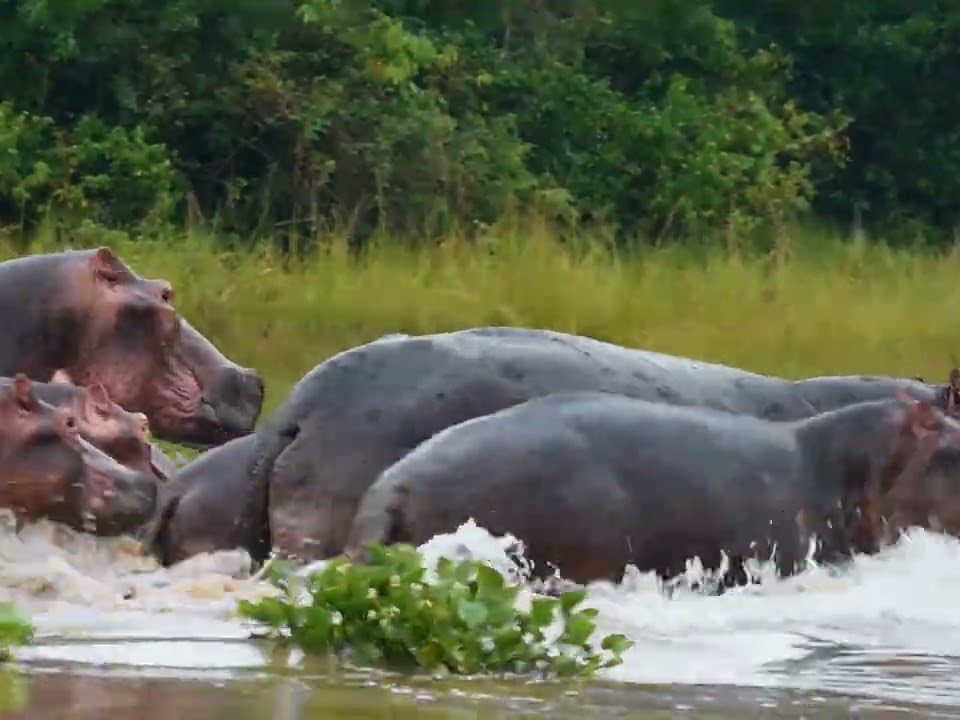
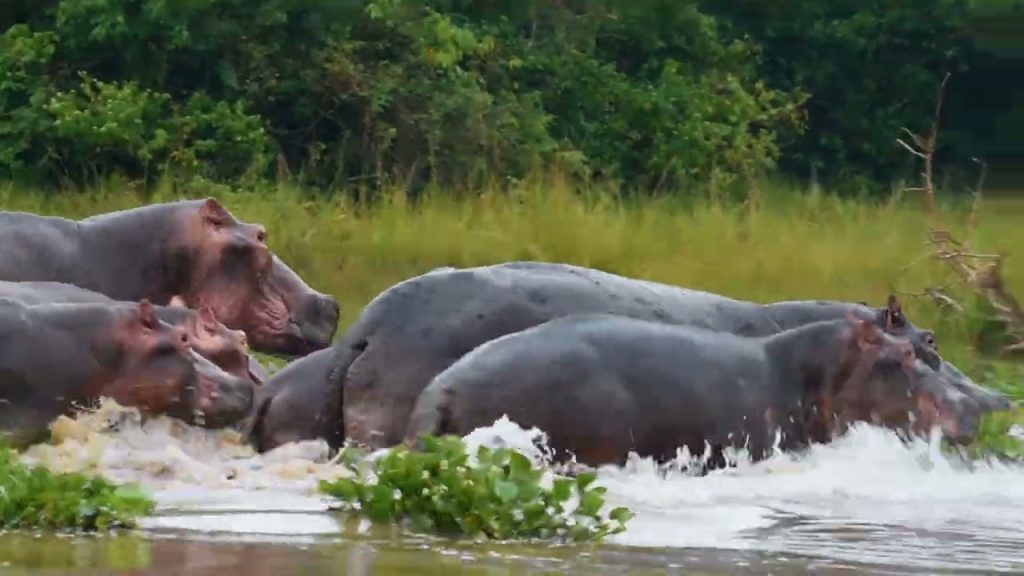
- Murchison Falls National Park: Uganda’s largest park, home to the world’s most powerful waterfall. Excellent for elephants, giraffes, buffalo, hippos, crocodiles, and shoebill storks on the Nile.
- Kibale Forest National Park: The world’s best chimpanzee trekking destination, also home to 12 other primate species and superb birdwatching.
- Kidepo Valley National Park: Uganda’s most remote and arguably most spectacular park, bordering South Sudan. Wild, untouched, and home to species found nowhere else in Uganda including cheetahs and caracals.
- Mgahinga Gorilla National Park: In the Virunga Mountains, offering gorilla trekking, golden monkey trekking, and volcano hiking in a compact, accessible park.
Practical Uganda Travel Information
Visa and entry requirements
Uganda offers an e-visa for most nationalities, applied online at visas.immigration.go.ug. East African Community citizens are exempt. The East Africa Tourist Visa (covering Uganda, Kenya, and Rwanda) is available at the point of entry. A yellow fever vaccination certificate is mandatory for entry.
Currency and costs
The Ugandan Shilling (UGX) is the local currency. USD is widely accepted in tourist areas. Mid-range safari lodges cost USD 150-350 per person per night. Budget accommodation in Kampala starts from USD 20-40. Gorilla permits (USD 800) are the single largest expense for most visitors.
Getting around Uganda
Most visitors use private safari vehicles (included in tour packages) or hire a driver-guide. Public minibus taxis (matatus) connect major towns but are not suitable for wildlife areas. Charter flights from Entebbe to Kihihi, Kisoro, Kasese, or Pakuba significantly reduce overland travel times on longer itineraries.
Recommended Tours: 9 Days Uganda Wildlife Safari | 7 Days Uganda Safari