Trekking the Simien Mountains: Routes, Wildlife & Permits
Simien Mountains trekking delivers some of the most dramatic high-altitude scenery anywhere in Africa, jagged basalt escarpments, deep river gorges, and rolling afro-alpine plateau, all within a UNESCO World Heritage Site in Ethiopia’s north. Less famous internationally than Kilimanjaro but arguably more visually spectacular, the Simien Mountains reward trekkers with genuinely close wildlife encounters alongside the scenery, most notably the gelada monkey, found nowhere else on earth. This guide covers the main routes, required permits, and what to expect on the trail.
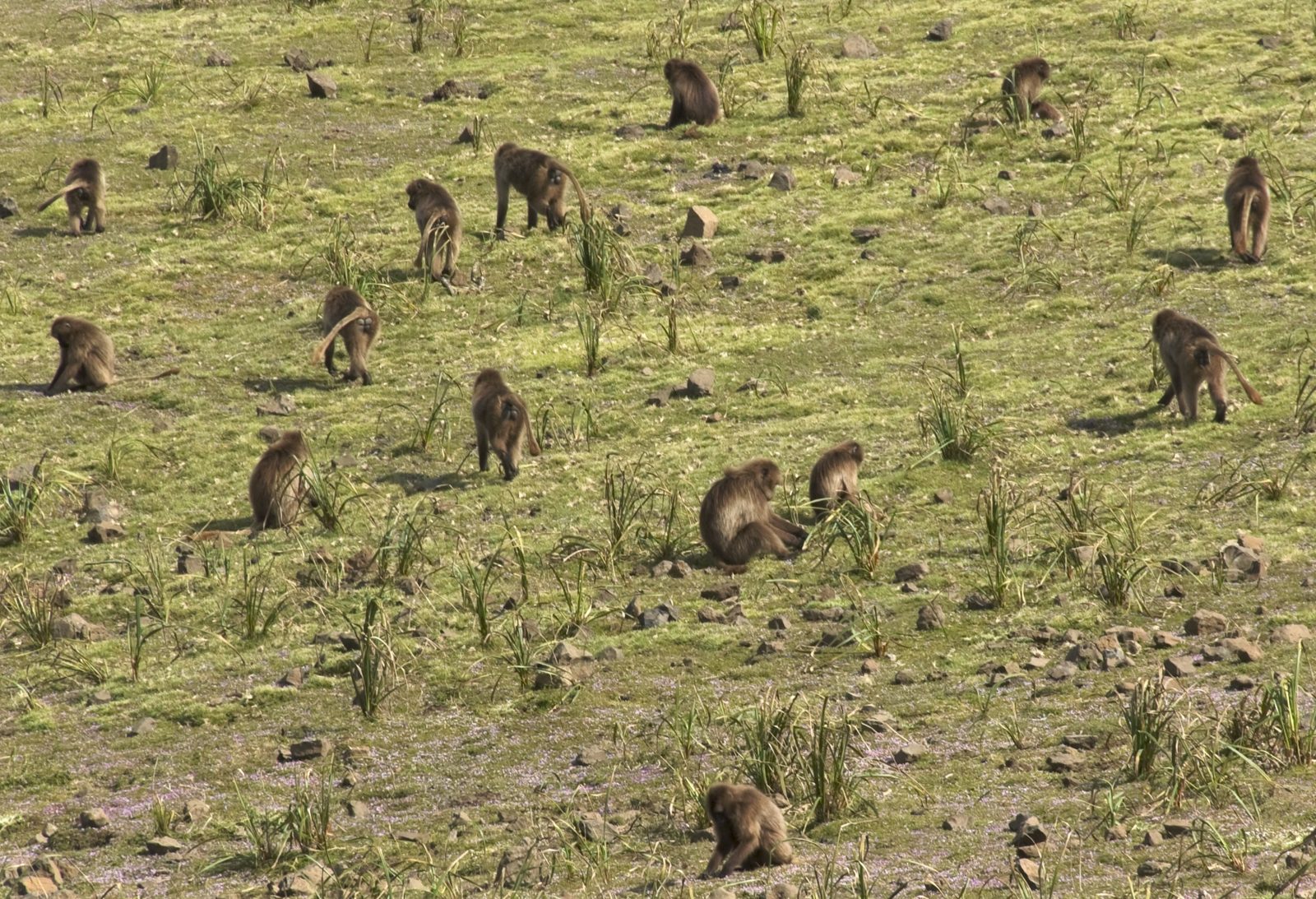
A troop of gelada monkeys grazing in the Simien Mountains, Ethiopia. Photo: A. Davey, CC BY 2.0, via Wikimedia Commons.
What Makes the Simien Mountains Worth Trekking
The range’s defining feature is its dramatic topography, sheer cliff faces dropping thousands of feet into river valleys below, created by millions of years of erosion carving through ancient volcanic rock. Unlike a single-peak climb, trekking here means walking along the edges of these escarpments for days at a time, with views that shift constantly as the trail winds along ridgelines and across high plateau. The scenery alone justifies the trip, but the range’s wildlife, particularly its endemic species found nowhere else on the planet, adds a dimension that few other African treks can match.
Meeting the Gelada Monkeys
Gelada monkeys, sometimes called bleeding-heart baboons for the distinctive red patch on their chest, live in large troops across the Simien plateau, and unlike most wild primates, they show minimal fear of trekkers passing through their grazing grounds. Troops numbering in the dozens or even hundreds can often be observed at close range as they forage on the grassland, offering a genuinely intimate wildlife encounter that requires no long lens or careful stalking, simply walking the trail at the right time of day. Geladas are the last surviving species of an otherwise extinct genus of grazing primates, adding a real sense of encountering something genuinely unique to the experience.
The Walia Ibex and Ethiopian Wolf
Beyond the geladas, the Simien Mountains protect two other headline endemic species. The Walia ibex, a wild goat with dramatically curved horns, once teetered close to extinction but has recovered under sustained conservation effort, and sightings, while less guaranteed than geladas, do happen on the range’s steeper cliff faces. The Ethiopian wolf, one of the rarest canids on earth, occasionally appears on the higher plateau areas, though spotting one requires genuine luck alongside a good guide who knows current pack territories, since the total wild population numbers only in the hundreds across all of Ethiopia, making any sighting a genuinely rare privilege rather than a routine trekking highlight.
Main Trekking Routes
Most Simien treks begin near Debark, the park’s main entry town, and follow established routes through key camps including Sankaber, Geech, and Chennek, each offering dramatically different views and terrain. Shorter treks of two to three days cover a meaningful stretch of the range’s best scenery and gelada territory without demanding the fitness or time commitment of a full traverse. Longer treks, five to eight days, push further into the range, often summiting Ras Dashen, Ethiopia’s highest peak at over four thousand five hundred meters, for trekkers wanting the complete Simien experience rather than a sampler.
Permits and Mandatory Guides
All Simien Mountains trekking requires a park entry permit along with a mandatory scout, an armed park ranger who accompanies every trekking group, a requirement that dates back to historical concerns about wildlife protection and has remained standard practice since. Most trekkers also hire a local guide separately from the mandatory scout, since scouts aren’t always trained specifically in interpretive guiding, and a good guide adds considerably to understanding the landscape, wildlife, and local Amhara culture along the route. Mules and muleteers are typically available to carry camping equipment and food, which most multi-day treks require given the limited facilities at trailside camps.
Fitness and Altitude Considerations
The Simien Mountains sit at consistently high elevation, with even the lower trekking routes running above three thousand meters and the higher camps and Ras Dashen itself pushing well past four thousand, so altitude acclimatization deserves real attention rather than an afterthought. Spending a day or two in Gondar or another moderate-elevation town before starting a trek helps the body adjust, and trekkers should watch for headaches, nausea, or unusual fatigue that might indicate altitude sickness, communicating any symptoms to guides promptly rather than pushing through discomfort. Good general fitness matters too, since daily trekking distances and elevation changes are genuinely demanding, particularly on longer multi-day routes.
When to Trek the Simiens
The dry season, October through May, offers the most reliable trekking conditions, with October and November particularly appealing since the landscape remains green from the preceding rains while trails have dried out enough for comfortable walking. The wet season, June through September, brings heavy rain that can make trails difficult and views obscured by cloud, making it the least favorable window for anyone specifically prioritizing the range’s dramatic long-distance views.
What to Pack for Simien Trekking
Layered clothing handles the significant temperature swing between warm midday sun and genuinely cold nights at altitude, and a proper sleeping bag rated for near-freezing conditions is essential for multi-day treks camping at the higher elevations. Sturdy, broken-in hiking boots, sun protection given the intense high-altitude sun, and a headlamp for camp mornings and evenings round out the core kit, alongside the standard travel health precautions relevant to Ethiopia more broadly.
Camping and Accommodation Along the Trail
Multi-day Simien treks typically camp at designated sites along the route, Sankaber, Geech, and Chennek among the most established, offering basic facilities like pit toilets and flat tent ground but little else, so trekkers should arrive with realistic expectations about comfort levels. A small number of community-run lodges have developed near the park entrance and at a few points along popular routes, offering a more comfortable alternative for shorter treks or for trekkers wanting a warm bed on the first or last night. Booking camping equipment and food supplies through an established trekking operator, rather than assuming gear is readily available to rent locally, is the more reliable approach for most international visitors.
Birdlife in the Simien Mountains
Beyond its headline mammals, the Simien Mountains support a genuinely impressive range of highland bird species, including the lammergeier, a massive bearded vulture often seen soaring along the escarpment edges, and several species found only in Ethiopia’s highland ecosystems. Birders visiting specifically for this reason should build extra time into their itinerary at lower speeds, since a rushed trekking pace focused purely on covering distance will miss much of what makes the range’s birdlife rewarding to observe.
Costs and Booking a Simien Trek
A multi-day Simien trek involves several cost components: the park entry permit, mandatory scout fees, a guide if hired separately, mule and muleteer costs for carrying gear, and camping equipment or food if not already owned. Booking through an established Ethiopia-focused trekking operator typically bundles these costs into one clear package, removing the need to negotiate separately with scouts, guides, and mule handlers on arrival in Debark, which is the more straightforward approach for most first-time visitors to the range.
Local Communities and Responsible Trekking
Villages within and around the park boundaries are home to Amhara farming communities who have lived on this land for generations, and responsible trekking here means respecting local customs, asking before photographing people directly, and supporting the local economy through fair payment to scouts, guides, and muleteers. Some operators contribute a portion of trekking fees toward community development and conservation projects, and choosing these operators when possible helps ensure tourism revenue genuinely benefits the people whose land trekkers pass through, rather than flowing entirely to outside companies.
Combining the Simiens With the Rest of Ethiopia
The Simien Mountains sit within reach of Gondar, itself home to well-preserved seventeenth-century castles, making it easy to combine a few days of trekking with Ethiopia’s other northern historical sites. Travelers building a full Ethiopia travel guide itinerary around the north often sequence Gondar, the Simiens, and Lalibela together as one connected historical and natural circuit, since domestic flights and reasonable road connections link all three without excessive backtracking, letting travelers experience Ethiopia’s mountains, monasteries, and medieval history within a single well-paced week or two.
Recommended Tours: 9 Days Uganda Gorilla Safaris & Jinja Nile Cultural Experience | 5 Days Double Gorilla Trekking Uganda