
North of Mombasa, past the long-established resort strips of Nyali and Diani, Kenya’s coastline shifts into a stretch that has spent the last decade quietly building a very different kind of reputation. Vipingo and Kilifi sit less than an hour apart along the same road, yet they’ve grown into almost opposite versions of coastal appeal: one a polished, purpose-built enclave organised around championship golf and private residences, the other a scruffier, creek-side town that has become an unlikely magnet for artists, remote workers, and travellers looking for something less scripted than a standard beach resort.
Vipingo Ridge: A Planned Coastal Enclave
Vipingo Ridge occupies roughly twenty-five hundred acres set back from the coast on raised ground north of Mombasa, developed as a five-star residential and golfing destination rather than a conventional resort town. Its centrepiece is an eighteen-hole championship golf course, the only PGA-accredited course in Africa, designed by former Kenya Open champion David Jones and built to take full advantage of the property’s elevated views over the Indian Ocean. The course has hosted the Magical Kenya Ladies Open on the Ladies European Tour, giving Vipingo a genuine competitive golf pedigree well beyond what most coastal destinations in the region can claim.
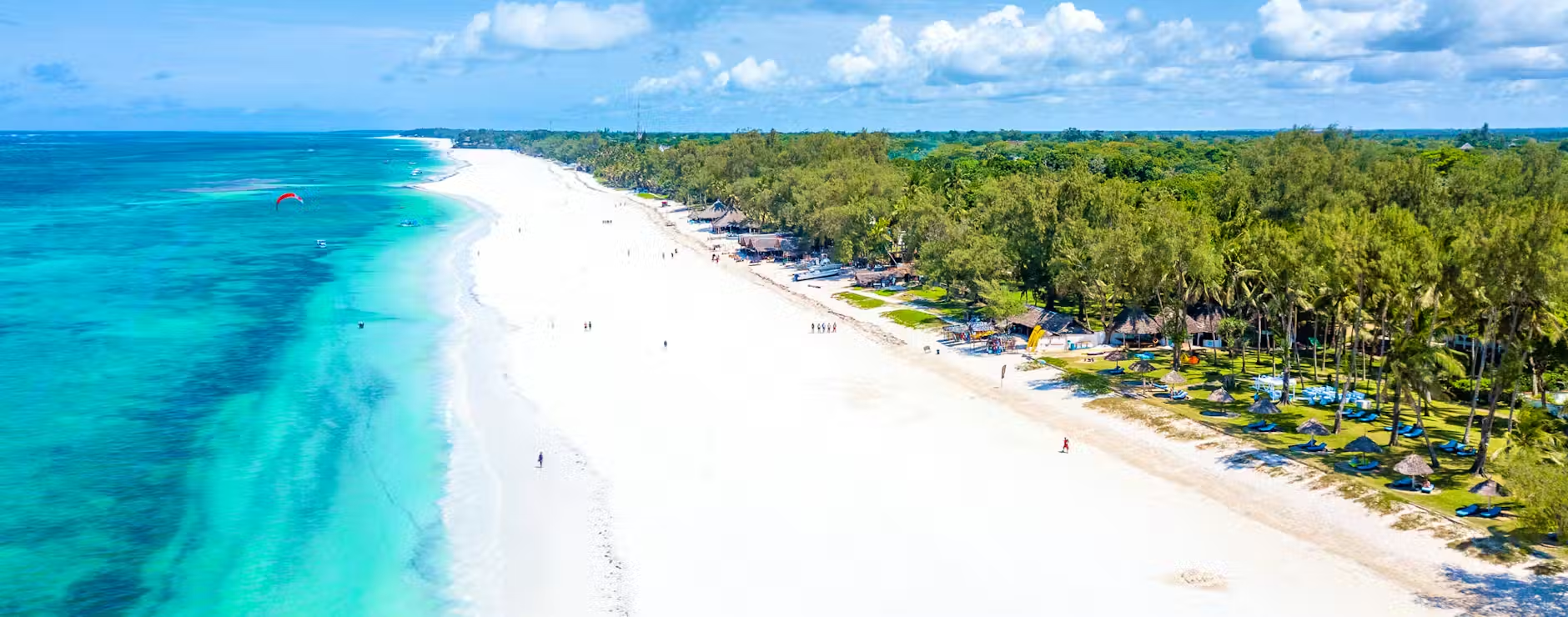
Beyond golf, the development includes a beach club and watersports centre on the coast itself, a private airstrip for guests flying in directly, and a substantial wildlife sanctuary spanning roughly two thousand acres where giraffe and other species roam freely within the property’s boundaries. Padel courts, tennis facilities, woodland trails, and a scattering of small lakes round out an amenity list built for residents and visitors who want resort-level polish combined with genuine outdoor space, a combination that’s relatively rare on this stretch of coast.
Conservation Behind the Polish
What distinguishes Vipingo from a purely commercial golf-and-villa development is a community-led marine conservation effort that predates much of the current resort infrastructure. A local initiative launched in 2005 worked to halt destructive fishing practices in the surrounding waters, and the resulting coral regeneration and ongoing beach clean-up efforts have measurably improved fish stocks and reef health along this section of coast. The development also draws heavily on local employment, with the large majority of its workforce coming from surrounding communities, a detail worth knowing for travellers weighing the broader impact of where they choose to stay.
Kilifi: The Boho Alternative on the Creek
A short drive north, Kilifi town offers a version of coastal Kenya that couldn’t feel more different from Vipingo’s manicured fairways. Built around a dramatic tidal creek that cuts inland from the ocean, Kilifi has developed a loose, creative community over the past decade, drawing artists, long-term travellers, and remote workers looking for an alternative to Kenya’s more established coastal hubs. Rather than resort infrastructure, Kilifi’s appeal rests on a handful of independently run guesthouses, eco-lodges, and social spaces that have built a genuine, if unpolished, community around shared meals, live music evenings, and a slower pace of life organised loosely around the creek itself.
The creek is Kilifi’s defining physical feature, a wide tidal inlet that separates the town from the coast road bridge crossing it, offering both striking cliff-top views and, after dark, occasional displays of bioluminescent plankton visible in the water on the right nights. Small boat trips and kayak excursions on the creek are among the more popular activities for visitors, offering a quieter, more intimate way to experience the water than the beach-and-snorkel routine found further south.
The Mnarani Ruins
Perched on a bluff directly overlooking Kilifi Creek, the Mnarani ruins offer one of the more overlooked historical sites on this stretch of coast. Founded by Swahili settlers in the early fourteenth century, the site once supported a thriving community centred around two coral-stone mosques and a cluster of tombs, before being abandoned in the early seventeenth century, likely due to a combination of freshwater shortages and pressure from neighbouring groups. Walking among the weathered coral-stone remains today, with the creek stretching out below, offers a quiet counterpoint to the more heavily visited historical sites further south in Mombasa’s Old Town and gives Kilifi a genuine layer of depth beyond its more recent reputation as a creative retreat.
Choosing Between the Two
Vipingo and Kilifi appeal to fundamentally different kinds of travellers, and the choice between them often comes down to what kind of coastal escape a trip is actually seeking. Visitors wanting a polished, amenity-rich stay with golf, structured activities, and resort-level service will find Vipingo delivers on a level few other Kenyan coastal destinations can match. Travellers drawn instead to a looser, more improvised kind of coastal life, built around independent guesthouses, communal meals, and genuine creative energy rather than curated luxury, will find Kilifi a far better fit, provided they’re comfortable trading polish for character.
It’s entirely possible to experience both within a single coastal itinerary, given how close the two sit to one another along the same coast road north of Mombasa. A few nights at Vipingo for golf and structured relaxation, followed by a stint in Kilifi exploring the creek and the Mnarani ruins, gives a genuinely rounded sense of how varied this section of the Kenyan coast has become in a relatively short span of years.
Getting There and Getting Around
Both destinations sit within roughly forty-five minutes to an hour’s drive north of Mombasa, making them accessible as either a standalone coastal stay or an easy addition to a longer Kenya itinerary that begins or ends on the coast. Vipingo’s private airstrip offers a direct flight option for guests staying within the development, while Kilifi is more commonly reached by road, whether self-driven, by taxi from Mombasa, or via the regular matatu services that run along the coast road. Once in Kilifi itself, much of the town’s social scene is compact enough to navigate on foot or by boda-boda motorcycle taxi, in keeping with its generally low-key, unhurried character.
Where to Stay in Each Destination
Accommodation in Vipingo runs almost entirely through the development itself, with a mix of private villa rentals, a small number of boutique hotel rooms, and residential properties available to guests on shorter stays. Because the entire area is a managed private estate, the accommodation experience tends to feel consistent and predictable, with the same level of service and facilities access whether staying in a golf-view villa or a smaller unit closer to the beach club. Booking generally happens well in advance, particularly around the Ladies European Tour event dates, when rooms and villas fill quickly with golf spectators and players alike.
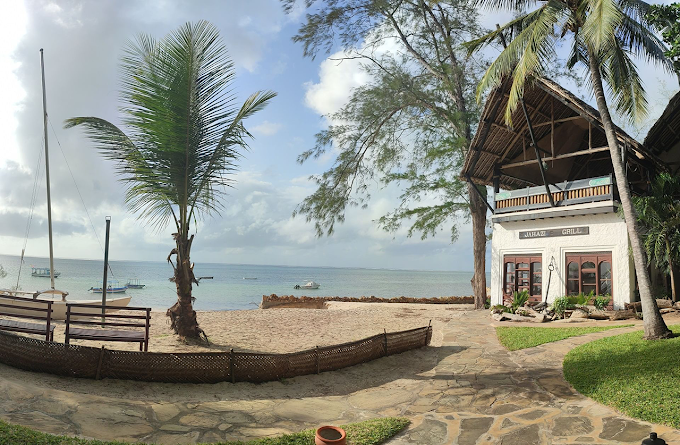
Kilifi’s accommodation scene looks almost nothing like Vipingo’s by comparison. Small, independently run guesthouses and eco-lodges scattered along the creek and coastline make up most of the options, ranging from simple budget rooms to more design-conscious boutique stays that lean into the area’s creative reputation. Distant Relatives Ecolodge has become something of a social anchor for the town’s traveller and remote-worker community, known for communal pizza nights and Sunday live-music sessions that double as an easy way for new arrivals to meet the wider Kilifi crowd within a day or two of arriving. Prices across Kilifi’s accommodation options tend to run considerably lower than Vipingo’s, in keeping with the town’s more informal, budget-conscious character.
Food and Daily Life
Dining at Vipingo centres largely around the development’s own restaurants and the beach club, offering a polished, resort-style food scene aimed at guests who rarely need to leave the property for a good meal. It’s a convenient setup for travellers who want their entire stay handled within one managed environment, though it does mean less exposure to independent local restaurants than a stay in a town like Kilifi would offer.
Kilifi’s food scene, by contrast, is scattered across a loose network of small cafes, beachside grills, and communal dinners hosted by guesthouses and lodges around town. Much of it leans casual and unpretentious, built around fresh seafood, wood-fired pizza, and shared tables rather than formal restaurant service, reflecting the same communal, low-key spirit that defines the rest of the town’s social life. For travellers who enjoy eating where locals and long-term residents actually eat, rather than within a single resort’s dining room, Kilifi offers considerably more variety and character, even if it asks for a bit more initiative in finding the best spots.
An Emerging Stretch of Coast Worth Watching
Ten years ago, neither Vipingo nor Kilifi featured prominently on most Kenya coast itineraries, which tended to concentrate almost entirely on Mombasa, Diani, and Malindi. That’s changed considerably, and both destinations now represent genuine, distinct alternatives to the more established coastal circuit, whether the draw is championship golf and private wildlife trails or a creek-side town that has quietly built one of the more interesting creative communities anywhere on the East African coast. For travellers who’ve already covered the classic Kenyan beach destinations, this stretch of coast offers something genuinely new to explore, and both Vipingo and Kilifi seem likely to keep growing their respective reputations over the coming years rather than fade back into the background.