
Before East Africa’s histories were written down, they were spoken, sung, and performed, passed from one generation to the next through storytellers whose role in their communities carried weight far beyond simple entertainment. East African storytelling and oral tradition remain genuinely living practices today, not relics preserved only in academic collections, and understanding how they work reveals a great deal about how these societies have recorded history, taught values, and maintained identity across centuries without relying on the written word.
Why Oral Tradition Still Matters in East Africa
In societies where literacy spread relatively recently and unevenly, oral tradition functioned as the primary mechanism for transmitting history, law, genealogy, and moral instruction, placing enormous cultural weight on memory, performance skill, and the careful, faithful transmission of stories from teacher to listener. Even as formal education and written record-keeping have expanded dramatically across the region over the past century, oral tradition has not simply been replaced; it continues operating alongside newer forms of documentation, often carrying information, particularly clan histories, spiritual beliefs, and localized cultural knowledge, that written records never fully captured in the first place.
The Role of the Storyteller
Elders as Keepers of Memory
Across most East African societies, elders traditionally hold primary responsibility for preserving and transmitting oral history, a role that carries genuine social authority since a community’s understanding of its own past depends directly on what elders remember and choose to pass on. This responsibility is rarely distributed evenly; specific elders, often those recognized for exceptional memory or performance skill, become the de facto custodians of particular stories, genealogies, or ceremonial knowledge, and their death without having transmitted that knowledge to a successor represents a genuine, irrecoverable loss to community memory.
Griot-Like Figures and Praise Singers
While the formal griot tradition, hereditary musician-historians who memorize and perform extensive oral genealogies, is more strongly associated with West Africa, East African societies maintain their own related figures, praise singers and court historians who performed similar functions within centralized kingdoms such as Buganda, Bunyoro, and the historical courts of the interlacustrine region. These performers combined music, poetry, and historical recitation into a single performance form, often accompanying themselves on instruments such as the endingidi or adungu, and their praise poetry served simultaneously as entertainment, historical record, and public reinforcement of a ruler’s legitimacy and lineage.
Folktales That Teach as Much as They Entertain
Trickster Tales and the Hare
Trickster narratives, in which a physically weaker character outwits larger, more powerful animals through cunning rather than strength, recur throughout East African folktale traditions, with the hare serving as a particularly common trickster figure across multiple language groups. These stories function on at least two levels simultaneously, offering straightforward entertainment through clever plotting while also carrying subtler lessons about the value of wit over brute force, a message with obvious resonance in societies where less powerful individuals or groups regularly needed to navigate relationships with more dominant neighbors or authorities.
Origin Stories and Sacred Landscapes
Many East African communities maintain origin narratives explaining how specific landscapes, waterfalls, forests, or mountains came to hold their current form or significance, stories that simultaneously entertain and reinforce a community’s spiritual and historical connection to particular places. Uganda’s own Sezibwa Falls and its associated cultural legends offer a well-documented example of this pattern, where a specific natural feature carries layered mythological meaning that a visitor would never guess from the waterfall’s physical appearance alone. Similar sacred-landscape narratives appear throughout the region, often explaining natural phenomena through stories involving ancestral figures, spirits, or the direct intervention of a creator deity.
Proverbs, Riddles, and the Language of Indirection
Proverbs and riddles form a distinct but closely related branch of East African oral tradition, condensing accumulated social wisdom into memorable, often metaphorical phrases used in everyday conversation, dispute mediation, and formal ceremonial speech alike. Their value lies partly in their indirection, allowing a speaker to make a pointed observation, offer criticism, or teach a lesson without stating it as bluntly as direct speech would require, a communicative style valued across many East African cultures as a mark of eloquence and social skill. This particular thread of oral tradition runs deep enough to merit its own dedicated exploration of specific proverbs and their layered meanings across different East African cultures.
Regional Forms: Epic Poetry, Court Verse, and Sung Narrative
Beyond the fireside folktale, East Africa developed considerably more formal oral literary genres, several of which required years of specialized training to perform correctly. Along the Swahili coast, the utenzi, a long narrative poem composed in strict metrical form and traditionally recounting religious, historical, or moral subject matter, represents one of the region’s most structurally sophisticated oral and written poetic traditions, with skilled poets composing utenzi that could run to hundreds of verses while maintaining consistent rhyme and meter throughout. Rwanda’s historic royal court maintained its own specialized oral genre, ibisigo, dynastic poetry composed and performed by trained court poets to commemorate the king’s lineage, military victories, and royal cattle, a tradition requiring years of apprenticeship before a poet was considered capable of performing in front of the court itself. Acholi and Langi communities in northern Uganda similarly maintained sung narrative traditions accompanying communal dance and work activities, using call-and-response structures that allowed an entire community, rather than a single trained performer, to participate directly in a story’s telling. These more formalized genres sat alongside, rather than replaced, the everyday folktale tradition practiced within individual households, together forming a considerably broader oral literary landscape than the term storytelling alone tends to suggest to outside observers.
Oral Tradition in Practice: When and How Stories Are Told
Storytelling traditionally followed specific social patterns rather than happening at random moments, with many communities reserving formal narrative performance for evening hours after the day’s work was complete, when children and adults gathered around a household fire and an experienced storyteller took the lead. Certain categories of story, particularly those involving spirits, death, or sacred history, were often restricted to specific times, seasons, or audiences, reflecting an understanding that not all knowledge was appropriate for all listeners at all times, a distinction that traditional custodians of oral history took, and in many communities continue to take, genuinely seriously. Communities practicing traditional storytelling as part of guided cultural encounters, such as the evening sessions covered in our piece on the Buhoma community walk near Bwindi, give visitors a genuine, if necessarily abbreviated, sense of how this tradition actually unfolds within a community setting.
From Fireside to Page: Documenting a Living Tradition
Academic and community-led documentation projects across East Africa have worked over recent decades to record oral histories, folktales, and praise poetry before elderly custodians pass away without transmitting their knowledge, a genuinely urgent effort given how much specific, localized cultural knowledge exists only within individual memory. The Batwa communities of southwestern Uganda, whose displacement from the forest disrupted much of their traditional way of life, have worked with cultural tourism initiatives, including the Batwa Trail experience, partly as a mechanism for keeping their oral history and forest knowledge actively transmitted to younger generations rather than allowed to fade after displacement. These documentation efforts inevitably involve difficult trade-offs, since transcription and translation can flatten performative elements, tone, gesture, audience interaction, that are genuinely part of a story’s original meaning, a tension oral historians across the continent continue to navigate rather than fully resolve.
Storytelling Today: Festivals, Radio, and Digital Revival
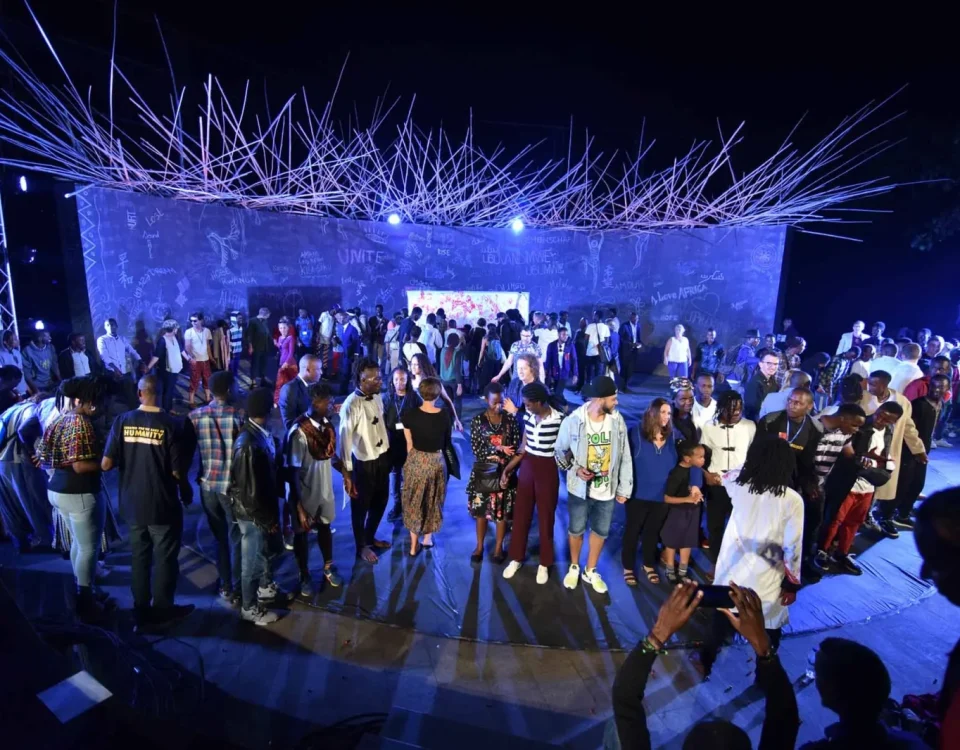
Contemporary East Africa has developed new platforms for oral tradition that would have been unimaginable to earlier generations of storytellers, including radio programs featuring traditional narrators, storytelling festivals held in Nairobi, Kampala, and elsewhere, and social media accounts run by younger cultural custodians actively working to keep specific traditions visible to audiences who might otherwise never encounter them. Some of this digital-era storytelling stays close to traditional form and content, while other efforts consciously adapt old narrative structures to address contemporary themes, a natural evolution for a tradition that has always adjusted its content, while preserving its underlying techniques, to remain relevant to each new generation of listeners.
Experiencing Oral Tradition as a Visitor
Travelers genuinely interested in East African oral tradition find their richest encounters through community visits specifically built around storytelling, rather than expecting to stumble across an authentic performance informally, since much of the tradition’s most meaningful content is reserved for family and community contexts rather than performed for outside audiences on demand. Asking a guide directly about a story’s origin, its intended audience, and whether it carries meaning beyond its surface plot generally produces a considerably richer exchange than simply enjoying the narrative as entertainment alone, and many communities welcome that kind of genuine curiosity far more warmly than a passive audience simply waiting to be entertained. Travelers who set aside a single wildlife-free evening for a storytelling encounter, rather than treating it as a brief stop between game drives, tend to come away with a noticeably fuller understanding of the region than photographs of landscapes and animals alone could ever provide. For readers wanting deeper academic grounding in African oral tradition as a documented field of study, the UNESCO overview of oral traditions and expressions as intangible cultural heritage offers useful further context on how such traditions are recognized and safeguarded worldwide.