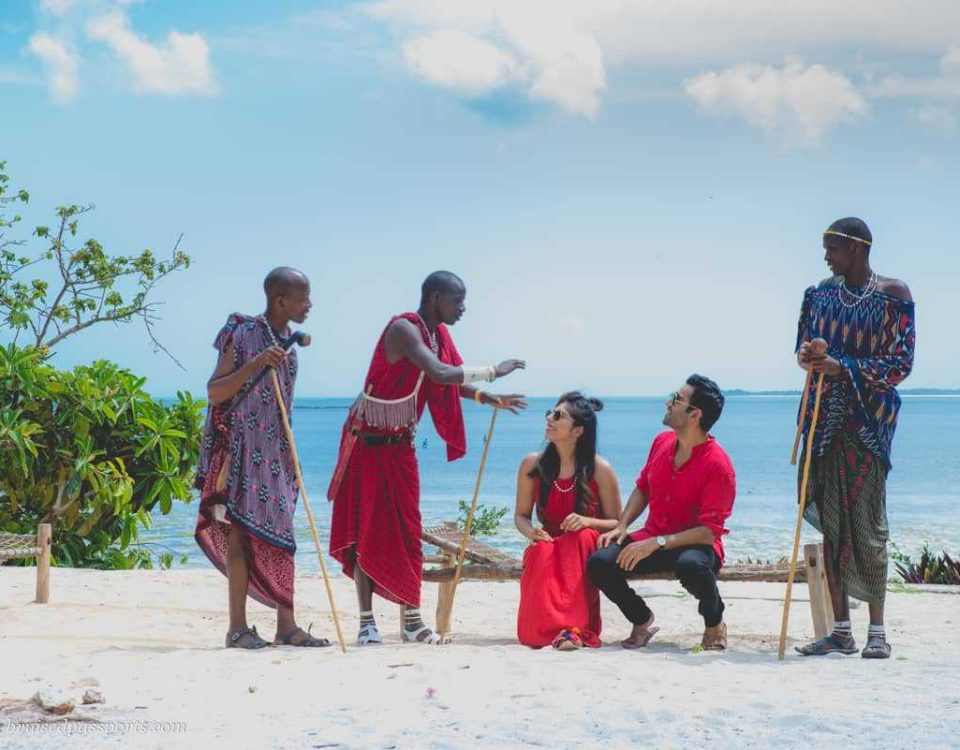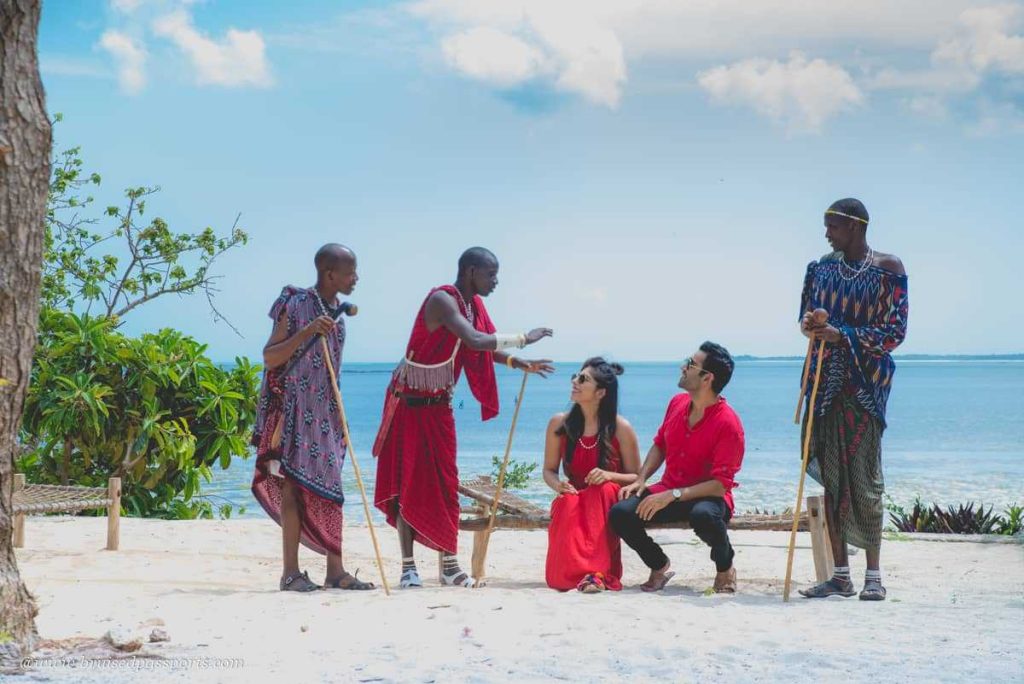

Ask a Maasai elder his age in years and he may struggle to answer precisely; ask which age-set he belongs to and the answer comes instantly, along with a clear sense of his social rank, his responsibilities, and his relationship to every other man in his community. East Africa’s age-set systems represent one of the region’s most distinctive forms of social organization, structuring authority, responsibility, and identity around shared generational membership rather than around family lineage or chronological age alone. Found in varying forms among the Maasai, Samburu, Kalenjin, Kikuyu, and several other communities, these systems reward closer examination on their own terms, as a structural principle rather than a single ethnic group’s custom.
What an Age-Set System Actually Is
An age-set is a formally recognized group of individuals, traditionally men, though some communities maintain parallel female age-sets, who are initiated together within a defined period and who then move through a shared sequence of life stages as a cohort, rather than as individuals progressing at their own pace. Membership in a specific age-set is permanent and lifelong; a man remains part of his original set regardless of where he lives or how his personal circumstances change, and that membership continues determining his social rank relative to other men throughout his life. This differs fundamentally from clan or lineage systems, which organize society around descent from a common ancestor, since age-sets instead organize society horizontally, around shared generational experience, creating bonds and obligations that cut directly across family and clan lines.
How Initiation Creates a Generation
Formal initiation, historically centered on circumcision for both young men and, in some communities, young women, though female cutting is now illegal across Kenya and Tanzania and increasingly replaced by alternative rites, marks the specific moment an individual formally joins an age-set and leaves childhood behind. Initiation ceremonies for a given age-set typically occur within a defined multi-year window rather than a single day, meaning a cohort can include individuals born several years apart who were nonetheless initiated closely enough together to share full age-set membership. The specific timing and naming of each new age-set is traditionally determined by councils of existing elders, who decide when circumstances are appropriate to open initiation to a new generation, a decision historically influenced by factors including drought, conflict, and the practical needs of the existing warrior generation.
Moving Through Life Stages Together
From Warriorhood to Elderhood
After initiation, an age-set typically enters a warrior stage, historically associated with defending livestock and territory, during which its members share communal responsibilities, sometimes communal living arrangements, and a strong sense of collective identity reinforced through shared training, ceremony, and, in earlier generations, shared risk. After a period lasting roughly a decade in many traditions, a further ceremony formally elevates the entire age-set to junior elder status, granting members the right to marry and take on greater decision-making authority within the community. Later transitions move a set through senior elder status, at which point its members typically hold the greatest social authority, their counsel carrying particular weight in resolving disputes and interpreting custom precisely because they have themselves passed through every stage the system recognizes.
Why the System Rewards Collective Identity
Because every member of an age-set moves through these transitions together, the system builds an intense form of peer solidarity that persists across an entire lifetime, with age-mates traditionally expected to support one another, defer to shared decisions, and maintain particular forms of mutual respect and obligation that outsiders, including younger or older men from the same broader ethnic community, do not share. This horizontal bond functions as a genuine parallel structure to family and clan loyalty, occasionally even superseding it in specific ceremonial or decision-making contexts, and it gives age-set societies a form of social cohesion that cuts directly across the more familiar organizing principles of family, wealth, and geography.
Variations Across East African Communities
While the Maasai and their linguistic relatives the Samburu maintain perhaps the most widely documented age-set systems, similar structures appear, with meaningful local variation, among the Kalenjin-speaking communities of Kenya’s Rift Valley, including the Nandi and Kipsigis, who historically organized as many as seven or eight rotating age-set names cycling across generations, and among the Kikuyu, whose traditional age-grade system shaped both social organization and, in the colonial and independence eras, elements of political mobilization. Our dedicated guide to Samburu culture and traditional life explores how the Samburu’s specific version of this system operates in considerably more community-specific detail, including the particular ceremonies marking each transition. Pastoralist communities further north and east, including Uganda’s Karamojong, maintain their own related age-set traditions structuring warrior status and elder authority within a broadly similar cattle-centered social framework, a subject our separate coverage of Karamojong culture addresses directly.
Cyclical Naming and Shared Regional Calendars
One of the more striking features of several East African age-set systems is their use of cyclical rather than continuously new names, with a fixed sequence of age-set names repeating every seven or eight generational cycles rather than each new generation inventing an entirely new label. Kalenjin-speaking communities, including the Nandi, Kipsigis, Tugen, and Keiyo, historically shared a coordinated version of this cyclical system, with related groups initiating members into corresponding age-sets during roughly the same historical period despite living across a considerable geographic spread, evidence of long-standing communication and coordination between communities that modern national borders and administrative divisions can obscure. This shared regional calendar meant that a man’s age-set name carried meaning recognizable well beyond his immediate community, functioning as a kind of common generational language across related but politically distinct groups.
Age-Sets and Gender
Traditional age-set systems have historically centered primarily on men’s social organization, though many of the same communities maintain parallel, if less publicly documented, structures organizing women’s transitions through girlhood, marriageable age, and married status, often marked through distinct ceremonies, dress, and social expectations running alongside, rather than identical to, the men’s system. Women’s status within these societies has traditionally been shaped more heavily by marriage and household position than by formal age-set membership in the same structured sense men experience, though this pattern varies meaningfully between communities and has shifted further as formal education and changing economic roles have altered women’s social position across the region more broadly.
Age-Sets, Dispute Resolution, and Political Life
Beyond structuring ceremony and social rank, age-sets traditionally functioned as a genuine mechanism for governance, with councils of elders drawn from senior age-sets holding real authority to mediate disputes, allocate grazing rights, and set community-wide policy on matters ranging from cattle raiding to marriage negotiations. This governance role gave age-set systems a political dimension that colonial administrations often struggled to accommodate within imposed chieftaincy structures designed around individual appointed leaders rather than collective generational councils, and the resulting friction between traditional age-set authority and introduced colonial or post-independence governance structures shaped political developments in several East African communities well into the twentieth century. Among the Kikuyu, for instance, traditional age-grade organization intersected in complex, well-documented ways with the social and political mobilization of the mid-twentieth-century independence struggle, illustrating how deeply these generational structures could shape events reaching far beyond ceremonial life alone. Even today, where formal government structures have long since taken over most official administrative functions, elder councils rooted in age-set seniority often retain genuine informal authority within their communities, particularly around matters of custom, land, and family dispute that formal courts are not always well positioned to resolve in ways the community itself finds satisfying.
Why Age-Set Systems Persist Alongside Modern Life
Formal schooling, wage labor, and the declining practical need for organized cattle-defending warrior groups have all reduced how completely younger generations experience traditional age-set transitions compared to their grandfathers, and many young men today combine partial participation in ceremonial transitions with lives shaped considerably more by classrooms and formal employment than by communal warriorhood. Yet the underlying structure has proven remarkably resilient rather than simply fading away, since age-set membership continues to carry genuine social meaning even for men whose daily lives look nothing like their ancestors’, and ceremonial transitions, while sometimes compressed or adapted, remain significant community events rather than abandoned formalities. Government policy in several countries has periodically intersected uneasily with traditional age-set authority, particularly where formal legal and political structures compete with elder councils for decision-making legitimacy within the same community.
Witnessing Age-Set Ceremonies Respectfully
Travelers occasionally have the opportunity to witness elements of age-set ceremonies, particularly larger community celebrations marking a generational transition, through carefully arranged community visits, though these events are fundamentally community occasions rather than tourism performances staged for outside audiences. Approaching such an opportunity, when it genuinely arises, with the understanding that a visitor is witnessing something of deep internal significance to the community, rather than a cultural show organized primarily for entertainment, makes a meaningful difference to how the encounter is experienced by everyone present. For readers wanting further academic grounding in how age-set systems function as a distinct form of social organization, the Encyclopaedia Britannica’s entry on age-sets offers a useful comparative overview extending beyond East Africa alone.