Long before any modern clinic reached rural East Africa, communities relied on healers whose knowledge of medicinal plants, ritual practice, and social diagnosis addressed illness in ways that treated the body, the community, and the spiritual world as genuinely interconnected rather than as separate concerns requiring entirely different specialists. East Africa’s traditional healers and medicine remain a significant, actively used part of regional healthcare today, not a historical relic replaced entirely by modern hospitals, and understanding this parallel health system, its methods, its social role, and its genuine limitations, offers real insight into how millions of East Africans actually navigate illness and wellbeing.
A Parallel Health System Still Widely Used
Traditional healers remain a primary or supplementary source of healthcare for a substantial share of East Africa’s population, particularly in rural areas where formal clinics may be distant, expensive, or perceived as less attuned to illnesses understood locally as having social or spiritual, rather than purely biological, origins. Studies in Uganda have found that a clear majority of the population consults traditional healers at some point, whether as a first response to illness, a complement to formal medical treatment, or a resource specifically for conditions, including certain mental health concerns and disputes believed to involve witchcraft or ancestral displeasure, that many communities do not consider well addressed by conventional clinical medicine alone.
Categories of Traditional Healers
Herbalists and Plant Medicine
Herbalists, sometimes the most straightforwardly comparable category to Western conceptions of a healer, specialize in identifying and administering medicinal plants, roots, and preparations for specific physical ailments, typically following a diagnostic conversation with the patient rather than the laboratory testing formal medicine relies upon. This knowledge, built from an intimate, generations-deep familiarity with local flora, its properties, and appropriate dosing, represents a genuinely sophisticated body of applied botanical knowledge, even though it has historically been transmitted entirely through apprenticeship and oral instruction rather than formal scientific documentation. Some of this plant knowledge has since attracted genuine scientific interest, with researchers documenting traditional remedies and, in certain cases, investigating the active compounds responsible for their observed effects, though systematic study of East African medicinal plants remains far less extensive than the depth of accumulated traditional knowledge would justify.
Spiritual and Diviner Healers
A second broad category of healer works primarily through spiritual and divinatory means, diagnosing illness as connected to ancestral spirits, witchcraft, or broken social and ritual obligations, and prescribing treatment that can include ritual ceremony, communication with ancestors, or specific behavioral and social remedies alongside or instead of physical treatment. Among the Baganda, healers in this category, sometimes referred to as balubaale healers, engage ancestral and spiritual forces as a core part of their diagnostic and healing practice, reflecting a broader regional pattern in which illness is frequently understood as having causes that extend well beyond the purely physical.
How Someone Becomes a Healer
Training to become a recognized traditional healer typically involves an extended apprenticeship under an established practitioner, often a family member, during which the trainee learns plant identification and preparation, diagnostic technique, and, for spiritual healers, the specific ritual knowledge their practice requires. In many traditions, spiritual healers describe their calling as involving a formative personal experience, frequently a significant illness or a perceived encounter with ancestral spirits, that marks the beginning of their path, followed by years of guided training culminating in a public ceremony, witnessed by family and community, formally recognizing the new healer’s competence and standing.
Plant Knowledge and Its Ecological Roots
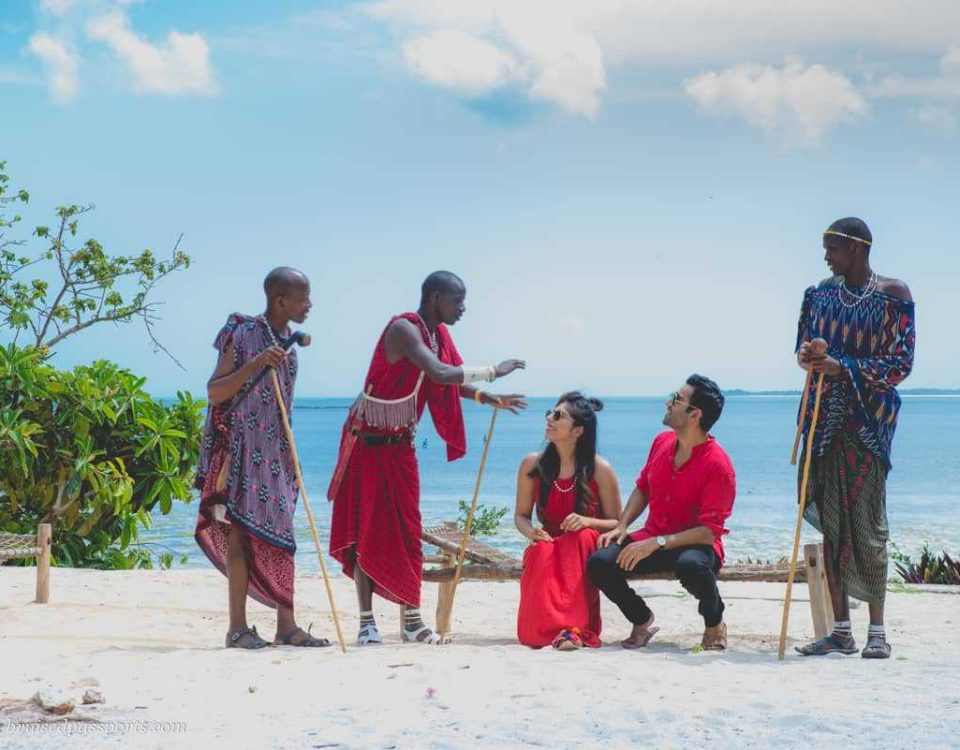
Traditional medicine’s plant knowledge is inseparable from the specific ecosystems healers draw upon, and forest areas with long histories of community stewardship often hold particular significance as sources of medicinal plants alongside their broader ecological and spiritual value. Kenya’s Loita Hills, home to the Naimina Enkiyio Forest explored in our dedicated piece on the Loita Hills as a Maasai sacred forest, illustrates this connection directly, its understory long relied upon by Maasai traditional medicine even as the forest holds separate, deeper spiritual significance within Maasai cosmology. This link between forest conservation and traditional medicine gives healers and the communities relying on them a genuine practical stake in protecting the specific landscapes their pharmacopeia depends upon, a connection increasingly recognized within broader regional conservation conversations.
Healers, Communities, and the Question of Trust
A traditional healer’s authority within their community rests heavily on accumulated reputation and demonstrated results, built over years of practice within a specific, often quite localized area, rather than on formal credentialing of the kind modern medical licensing provides. This reputation-based system carries real limitations, including inconsistent quality between practitioners and the genuine risk of harmful practice from poorly trained or outright fraudulent individuals claiming healer status, a concern serious enough that legitimate traditional healer associations in several East African countries have pushed for clearer professional standards and registration to distinguish trained, reputable practitioners from opportunistic pretenders.
Traditional Healing and Mental Health
Traditional healers frequently play a significant, if under-documented, role in addressing mental health concerns across East African communities, offering a culturally grounded framework, often centered on ancestral spirits, social disruption, or ritual imbalance, for conditions that formal biomedical psychiatry, still critically under-resourced across much of the region, frames in quite different diagnostic terms. This is not a straightforward story of traditional healing simply filling gaps left by inadequate formal mental healthcare infrastructure, though that dynamic is real; it also reflects a genuinely different, community-embedded understanding of psychological distress that many patients and families find more culturally coherent and socially supportive than an unfamiliar clinical framework offered by a stranger in a formal medical setting. Researchers and public health practitioners increasingly recognize this reality, and some collaborative mental health programs in the region have begun deliberately incorporating traditional healers as recognized partners rather than treating their involvement as an obstacle to proper care.
Distinguishing Genuine Practice From Exploitation
Not every individual claiming healer status operates with genuine training, community accountability, or good intent, and East African communities themselves are often the sharpest critics of opportunistic figures who exploit illness, fear, or desperation for financial gain without the accumulated knowledge and community standing legitimate traditional healers have earned over years of accountable practice. Established, reputable healers typically maintain visible, long-term relationships within a specific community, are known personally to the families they treat, and build their reputation through consistent, observable results over time, a genuinely different profile from itinerant figures making sweeping promises to strangers, a distinction local communities themselves generally navigate far more effectively than outside visitors could ever hope to on a short visit.
Traditional Medicine and the Formal Healthcare System
The relationship between traditional healing and formal biomedical healthcare across East Africa has evolved from historical mutual suspicion toward a more pragmatic, if still uneasy, coexistence, with several national health ministries now exploring formal referral pathways and collaborative frameworks that acknowledge traditional healers’ deep community trust and reach, particularly in underserved rural areas formal healthcare infrastructure has not fully penetrated. Genuine tension remains, however, particularly around conditions where delayed access to biomedical treatment, HIV, tuberculosis, and certain acute emergencies prominent among them, can carry serious consequences, and public health campaigns across the region have worked to encourage complementary rather than purely substitutive use of traditional healing for these specific conditions.
Cultural Sensitivities Worth Understanding
Traditional healing practices touch on genuinely sacred and, in some cases, sensitive territory within the communities that maintain them, including specific beliefs about ancestral spirits, witchcraft, and ritual practices that outsiders should approach with real care rather than casual curiosity or, worse, dismissive skepticism voiced openly to a host community. Some healing knowledge and ceremony is specifically restricted to initiated practitioners or particular community members, and respecting those boundaries, rather than treating every aspect of traditional medicine as available for outside observation or explanation, reflects the same basic respect any visitor should extend to a community’s religious and spiritual life more broadly.
Encountering Traditional Medicine as a Visitor
Travelers with genuine interest in traditional East African medicine find their richest, most respectful encounters through guided community visits specifically arranged around this subject, ideally led by operators with established relationships allowing a healer to speak candidly about their practice rather than performing a simplified demonstration for a passing tour group. Approaching the subject with genuine curiosity about plant knowledge, training, and a healer’s actual role within their community, rather than framing the encounter around exoticized notions of witch doctors, produces both a more accurate understanding and a considerably more respectful exchange for the practitioners sharing their knowledge. It is also worth remembering that traditional healers themselves are rarely eager to perform for an audience unfamiliar with their practice, and a healer willing to speak openly with a visiting guest is typically extending a genuine courtesy rather than fulfilling an expected tourism role, a distinction worth keeping in mind when deciding how much to ask and how to phrase the questions raised during any such encounter. For readers interested in how international health bodies engage with traditional medicine systems globally, the World Health Organization’s overview of traditional, complementary, and integrative medicine offers useful further context on this complex, evolving field.