Kyaninga Crater Lake Near Fort Portal: Swimming and Hiking Options
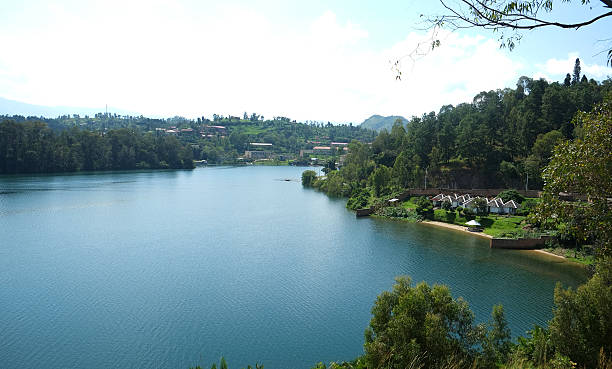
Kyaninga Crater Lake is one of the most attractive natural destinations near Fort Portal in western Uganda. Surrounded by steep green slopes, forest vegetation and beautiful countryside, the lake offers opportunities for photography, guided walking and peaceful relaxation.
Its location near Fort Portal makes it convenient for travellers exploring the region’s crater lakes, tea plantations and Kibale National Park.
Unlike larger lakes where visitors focus on boat cruises and fishing, Kyaninga attracts people interested in its volcanic landscape and impressive views.
This Kyaninga Crater Lake guide explains the available swimming and hiking options, how to reach the lake and what to consider before visiting. It also provides practical information about accommodation, photography and safety.
Where Is Kyaninga Crater Lake Located?
Kyaninga Crater Lake lies near Fort Portal in Kabarole District, western Uganda.
The lake occupies a volcanic crater surrounded by steep, vegetated slopes.
Its elevated position provides attractive views of the surrounding countryside and, during clear weather, the distant Rwenzori Mountains.
Visitors can reach the area by road from Fort Portal.
The journey is relatively short, although travelling times depend on your accommodation and the condition of the access road.
Several hospitality properties around the crater offer accommodation and organised activities.
Before travelling, confirm which entrance and facilities are available to day visitors.
Understanding Kyaninga’s Volcanic Landscape
Kyaninga is one of several crater lakes associated with volcanic activity in western Uganda.
Crater lakes form when volcanic processes create depressions that eventually fill with water.
Over time, vegetation develops around the surrounding slopes.
Kyaninga’s steep crater walls and deep water give it a distinctive appearance.
The lake looks particularly attractive when sunlight reaches the surface and the surrounding hills reflect in the water.
Visitors can appreciate these geological features from viewpoints around the crater rim.
A local guide can explain the area’s volcanic history and the natural processes that shaped the landscape.
Main Activities at Kyaninga Crater Lake
Kyaninga offers several outdoor activities suited to visitors with different interests.
| Activity | Suggested duration | Best suited for |
|---|---|---|
| Crater rim walk | Around 1.5 hours | Nature lovers and photographers |
| Guided forest walk | 1–2 hours | Birdwatchers and active travellers |
| Lake viewpoint visit | 30–60 minutes | Short visits |
| Nature photography | Flexible | Couples and photographers |
| Swimming | Subject to safety advice | Experienced swimmers |
| Lakeside relaxation | 1–3 hours | Visitors seeking quiet surroundings |
Activity availability and access arrangements depend on the operator or property managing your visit.
1. Hiking Around Kyaninga Crater Lake
The Crater Rim Walking Trail
One of Kyaninga’s main attractions is the walking route around the crater rim.
A guided circuit generally takes approximately one and a half hours, depending on your pace and the number of stops.
The walk provides opportunities to observe the lake from different angles.
As you move around the crater, the scenery changes between open viewpoints, wooded sections and surrounding farmland.
You may also enjoy distant views of the Rwenzori Mountains when conditions are clear.
How Difficult Is the Walk?
The crater rim walk is manageable for many visitors with reasonable fitness.
However, some sections involve uneven ground, slopes and exposed edges.
Walking conditions may become slippery after rainfall.
Wear comfortable shoes with reliable grip.
A local guide can help you follow the appropriate route and avoid unsafe sections.
Do not approach steep drops simply to obtain a better photograph.
2. Guided Forest Walks
Vegetation around Kyaninga provides opportunities for shorter nature walks.
The surrounding forest habitats support birds, insects and small mammals.
Guided walks allow visitors to explore the vegetation while learning about the area’s ecology.
Depending on the route and time of day, you may encounter monkeys or hear birds calling from the canopy.
Birdwatching Around Kyaninga
Birdwatching can be included in a guided nature walk.
The mixture of forest vegetation, open areas and nearby agricultural land attracts different bird species.
Early morning is generally a convenient time for observing birds.
Carry binoculars if you want to identify species at a distance.
A knowledgeable guide can help recognise calls and locate birds hidden among the branches.
Remain quiet and avoid disturbing nesting areas.
3. Swimming at Kyaninga Crater Lake
Can Visitors Swim in the Lake?
Swimming is one of the activities sometimes promoted around Kyaninga Crater Lake.
Some local accommodation providers describe the lake as suitable for swimming and offer access to designated areas.
However, visitors should understand the difference between local swimming practices and independent health advice.
Uganda has freshwater environments where schistosomiasis, also called bilharzia, can occur.
International travel health authorities recommend avoiding swimming or wading in untreated freshwater where exposure risks cannot be reliably excluded.
Therefore, you should not assume that Kyaninga is completely free from waterborne health risks.
Important Swimming Precautions
If you are considering swimming, first obtain current advice from a qualified health professional and the responsible local operator.
Consider the following precautions:
-
Confirm whether swimming is officially permitted.
-
Ask about recent water safety assessments.
-
Avoid entering the lake alone.
-
Never dive into unfamiliar water.
-
Keep children away from steep shoreline sections.
-
Avoid swimming during storms or strong winds.
-
Do not swim after consuming alcohol.
-
Use a properly maintained swimming pool when available.
The lake’s steep crater slopes may also make water access difficult.
Visitors who prefer a lower-risk option can enjoy the scenery without entering the water.
4. Photography at Kyaninga Crater Lake
Kyaninga offers excellent opportunities for landscape photography.
The lake’s position within a steep crater creates interesting views, particularly from elevated walking routes.
Morning light can produce attractive reflections, while late afternoon may provide warmer colours.
Clouds occasionally create dramatic changes in the surrounding scenery.
Best Photography Locations
Viewpoints along authorised walking routes provide opportunities to capture the lake and surrounding hills.
Some accommodation properties also offer attractive views from designated public areas.
However, access may be restricted to paying guests.
Ask permission before entering private property.
A wide-angle lens is useful for capturing the complete crater landscape.
A smartphone can also produce good results when lighting conditions are favourable.
Avoid standing near unstable edges.
5. Relaxing Around the Lake
You do not need to complete a demanding walk to appreciate Kyaninga.
Visitors can enjoy quiet time at designated viewpoints or hospitality facilities overlooking the crater.
The natural surroundings make the area suitable for couples, families and travellers recovering from longer safari activities.
Some properties offer gardens, restaurant facilities or seating areas.
However, day visitor access and spending requirements vary.
Confirm arrangements before travelling.
If your main interest is relaxation, consider allowing two or three hours rather than rushing through a brief photography stop.
Best Time to Visit Kyaninga Crater Lake
Kyaninga can be visited throughout the year.
However, rainfall influences trail conditions and outdoor comfort.
Dry Seasons
The relatively drier periods commonly include December to February and June to August.
These months may provide more comfortable conditions for walking.
Trails are often less muddy, and clear weather can improve distant mountain views.
Nevertheless, rainfall remains possible throughout the year.
Rainy Seasons
Rainfall generally increases during March to May and September to November.
During wetter periods, the surrounding vegetation becomes greener.
However, paths can become slippery and cloud cover may reduce visibility.
Carry waterproof clothing and discuss trail conditions with your guide.
Best Time of Day
Early morning is a good choice for visitors interested in walking and birdwatching.
Temperatures are often comfortable, and the surroundings may be quieter.
Late afternoon can be attractive for photography.
Allow enough time to finish your walk before darkness.
How to Reach Kyaninga From Fort Portal
Most visitors approach Kyaninga by road from Fort Portal.
Private transport is convenient because the lake lies outside the busiest parts of the city.
A hired vehicle with a driver is suitable for travellers unfamiliar with the surrounding roads.
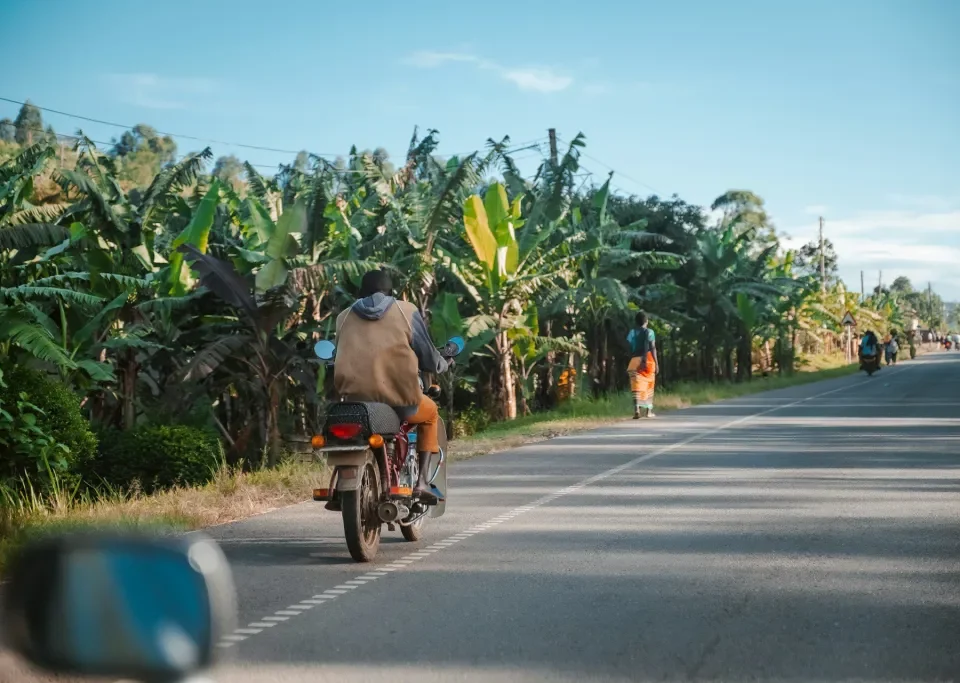
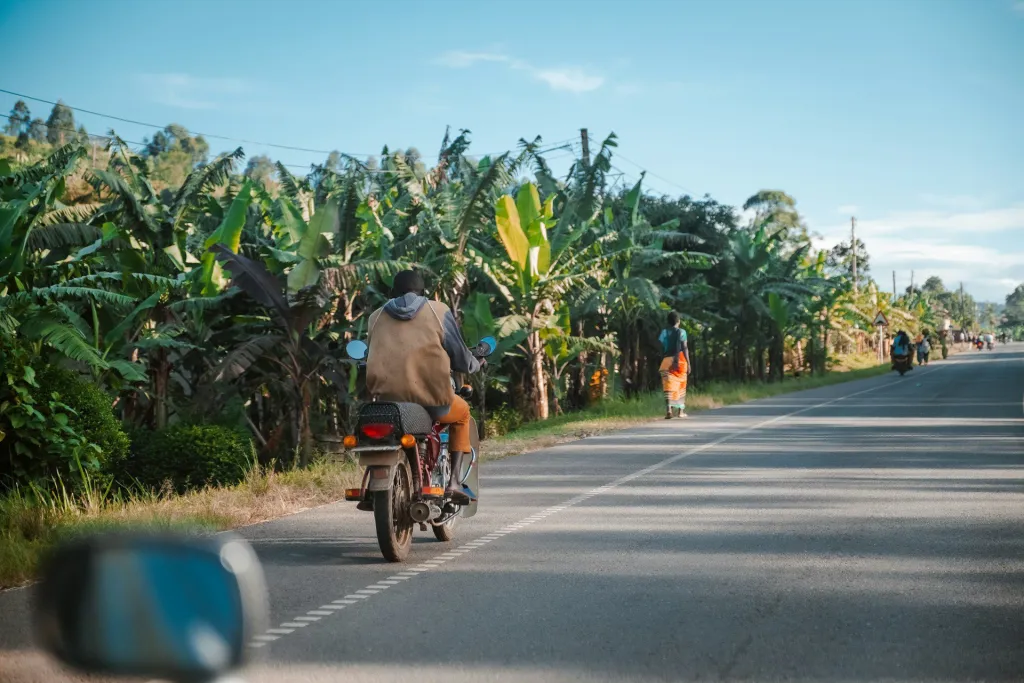
If using a motorcycle taxi for a local transfer, choose a reputable service and wear a helmet.
Some access roads may be uneven, particularly after rainfall.
Ask your accommodation provider for directions to the correct entrance.
Do not assume every road leading towards the crater provides public access.
Combining Kyaninga With Nearby Attractions
Kyaninga can fit comfortably into a longer visit to Fort Portal and western Uganda.
Kibale National Park
Kibale National Park is famous for chimpanzee tracking and forest wildlife.
Travellers visiting the park can include Kyaninga as a relaxing activity before or after their forest experience.
However, chimpanzee tracking requires advance arrangements and sufficient time.
Avoid scheduling a demanding crater walk immediately before an early trekking briefing if you are already tired.
Fort Portal Crater Lakes
The Fort Portal region contains numerous crater lakes and scenic viewpoints.
A guided excursion can introduce you to different landscapes and local communities.
Kyaninga is particularly suitable for visitors interested in a combination of walking and photography.
Rwenzori Mountains
The Rwenzori Mountains provide additional hiking opportunities in western Uganda.
Visitors planning longer mountain expeditions may appreciate a shorter walk around Kyaninga before attempting more demanding routes.
Practical Tips for Visiting Kyaninga
Preparation can improve your experience.
Bring comfortable walking shoes, drinking water and a waterproof jacket.
Carry sunscreen and insect repellent.
If you plan to photograph birds, binoculars can also be useful.
Confirm guiding fees and access arrangements before arriving.
Follow designated paths and avoid damaging vegetation.
Keep the area clean by taking your rubbish with you.
Families should supervise children carefully because of the steep crater landscape.
Frequently Asked Questions
How far is Kyaninga Crater Lake from Fort Portal?
Kyaninga is located a short drive outside Fort Portal. The exact journey depends on your starting point and chosen access road.
Can you walk around Kyaninga Crater Lake?
Yes. Guided crater rim walks are available, with a typical circuit taking approximately one and a half hours.
Is swimming at Kyaninga completely safe?
No freshwater swimming location should be assumed completely safe. Seek current professional health advice and confirm local conditions before entering the lake.
Is Kyaninga suitable for families?
Yes. Families can enjoy viewpoints and selected guided walks, provided children remain supervised near steep slopes and water.
How much time should you spend at Kyaninga?
Two to three hours are suitable for a guided walk and photography. Visitors seeking relaxation may prefer a longer stay.
Kyaninga Crater Lake offers beautiful scenery and rewarding walking opportunities near Fort Portal.
Its steep volcanic landscape, green surroundings and distant mountain views make it attractive to photographers and nature lovers.
The crater rim walk is particularly worthwhile for visitors who want to appreciate the lake from several viewpoints.
Although swimming is sometimes offered locally, visitors should consider freshwater health risks and obtain reliable safety advice.
With suitable preparation, experienced guiding and realistic expectations, Kyaninga can be an enjoyable addition to your western Uganda safari.