
What happens if a gorilla charges? Staying calm in the forest
Imagine trekking through the thick vegetation of Bwindi Impenetrable National Park in Uganda. After several hours of walking, your ranger signals that a gorilla family is nearby. You move quietly through the forest and suddenly see a large silverback sitting among the trees. He watches your group for a moment, beats his chest and begins moving towards you.
Your heart starts racing. The gorilla suddenly runs forward, making loud sounds and crashing through the vegetation. For a few seconds, it may look as though he intends to attack.
This is one of the situations that can make gorilla trekking feel intimidating, particularly for first-time visitors. However, a gorilla charge does not always mean that the animal intends to make physical contact. It can be a warning display intended to communicate discomfort, protect family members or establish dominance.
The most important thing is to remain calm, avoid sudden movements and follow your ranger’s instructions. Running, screaming or attempting to confront the animal can make the situation more dangerous.
Mountain gorillas are powerful wild animals, and visitors must respect their space. Understanding why they charge, recognising warning signs and knowing how to respond can help you feel more prepared before entering the forest.
Do gorillas really charge at tourists?
Yes. Mountain gorillas sometimes charge or display aggressive behaviour towards visitors during trekking. However, such incidents are not the normal experience of a gorilla trek.
Most habituated gorilla families tolerate the presence of small groups of visitors. They often continue feeding, resting, grooming and playing while people observe them from the recommended distance.
A charge may happen when a gorilla feels uncomfortable with the position or behaviour of visitors. A silverback may also react when he believes that a member of his family is threatened.
Some charges are displays rather than attempts to attack. The gorilla may run towards the group, make loud vocalisations, beat his chest or tear vegetation before stopping or changing direction.
This behaviour can be frightening because a silverback is large, muscular and capable of moving quickly through dense forest. Even when a charge stops short, the experience can leave visitors shaken.
You should never assume that a charge is harmless, however. Every display requires a calm response and immediate attention to the ranger’s instructions.
Why does a silverback charge?
A silverback is the dominant adult male in a gorilla family. He plays an important role in protecting the group, managing social relationships and responding to potential threats.
When he charges, he may be communicating that visitors have moved too close, disturbed the family or entered an uncomfortable position.
Several situations can contribute to this behaviour.
Visitors getting too close
Maintaining the recommended viewing distance is one of the most important gorilla trekking rules. Visitors should not deliberately approach a gorilla for a better photograph or a closer view.
When people move too close, a silverback may respond with warning behaviour. This can include staring, vocalising, beating his chest or charging.
Protecting an infant
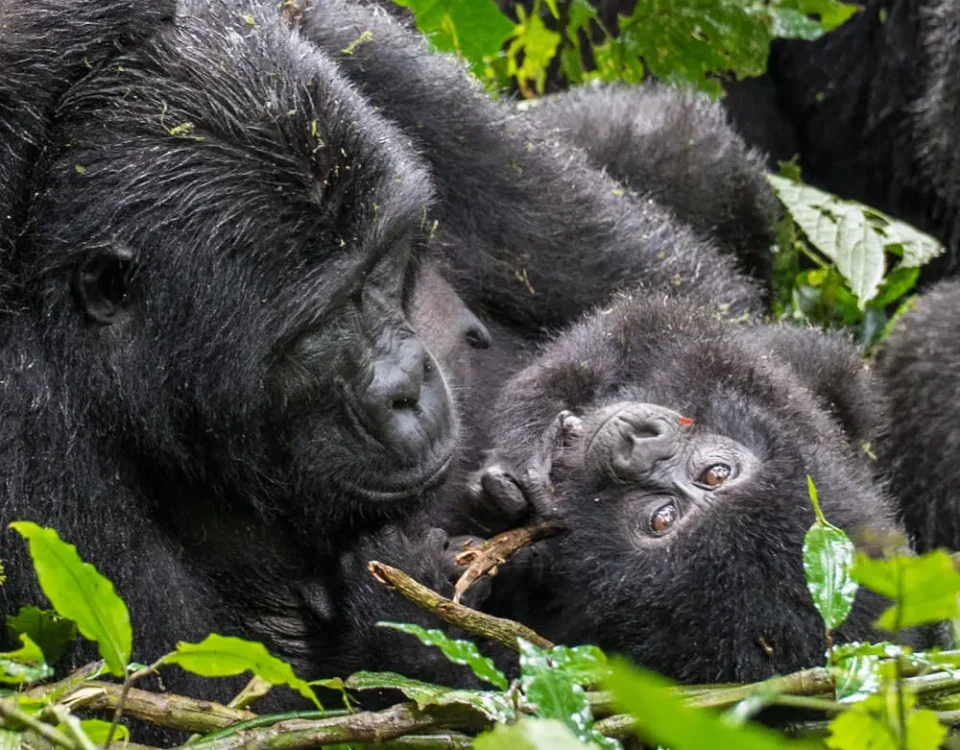
Gorilla mothers maintain close relationships with their young. A silverback may become defensive if he believes that visitors are approaching an infant or interfering with the mother.
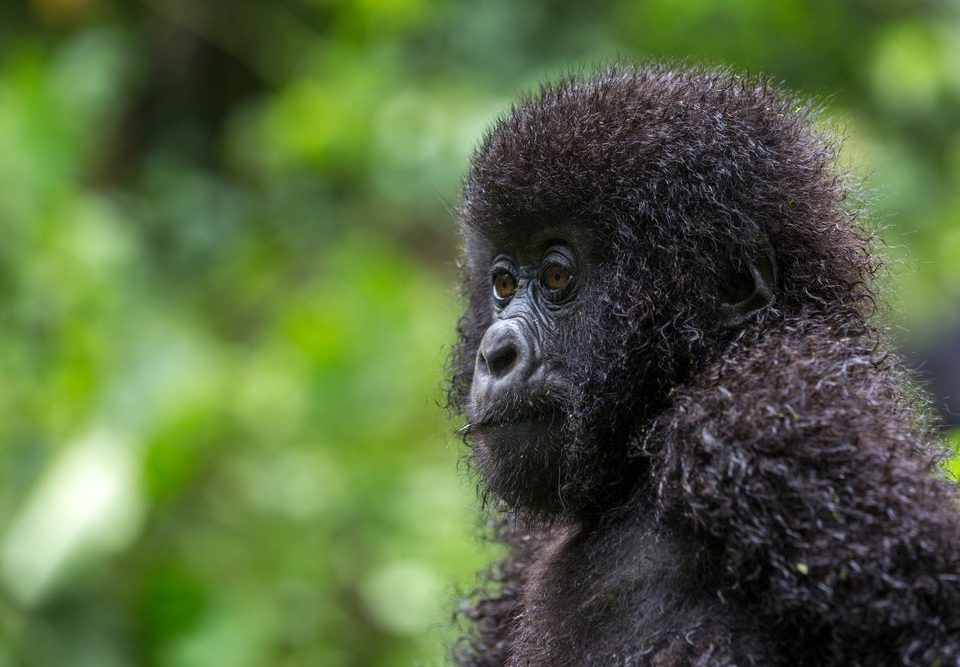
Never move towards a baby gorilla, even if it appears to be playing or exploring. Allow the family to move naturally and follow your guide’s instructions.
Sudden movements and loud noises
Shouting, running, waving your arms or dropping equipment can disturb gorillas. A sudden movement may attract attention and make the animals uncomfortable.
This is why visitors are instructed to keep their voices low and move carefully during the encounter.
Visitors spreading around the family
A group of tourists should remain together in the position selected by the ranger. Spreading out can make gorillas feel surrounded, especially in dense vegetation where they cannot easily see everyone.
Stay close to your group and never move behind the animals to find a better viewing position.
Unexpected encounters in thick vegetation
Mountain gorillas live in forests where visibility is often limited. A gorilla may suddenly appear close to visitors while feeding or moving through the vegetation.
Sometimes the animal’s reaction is caused by the unexpected closeness rather than deliberate visitor behaviour. Your ranger will assess the situation and guide the group.
What does a gorilla charge look like?
Recognising gorilla warning behaviour can help you understand what is happening during an encounter.
A silverback may display several signs before charging. These behaviours do not always occur in the same order, and some displays happen very quickly.
Chest beating
The silverback may stand upright and strike his chest repeatedly with cupped hands. This creates a loud sound that can carry through the forest.
Chest beating is a form of communication. It can demonstrate strength, attract attention and warn other gorillas or visitors.
Loud vocalisations
A gorilla may produce deep grunts, roars, hoots or other loud sounds. These vocalisations can indicate excitement, discomfort or agitation.
Do not respond by shouting or attempting to imitate the animal. Remain quiet and watch your ranger.
Tearing and throwing vegetation
A silverback may pull branches, tear leaves or throw vegetation while displaying. This can make the animal appear larger and more intimidating.
Avoid reacting with sudden movements. Keep your hands close to your body and follow the ranger’s instructions.
Moving on all fours towards visitors
During a charge, a silverback may rush forward on all fours. He can move surprisingly fast, particularly through open sections of forest.
Some charges stop before reaching the group. Others may involve the gorilla moving very close to visitors.
Do not try to predict where the animal will stop. Respond as though the situation requires immediate caution.
Stiff body posture
A gorilla may stand upright, move sideways or hold its body in a tense position. These actions can form part of a display.
Your ranger is trained to observe gorilla behaviour and identify when the group should change position or end the encounter.
What should you do if a gorilla charges?
The most important response is to remain calm and follow the ranger’s instructions. Do not run, scream or attempt to fight the gorilla.
If a gorilla charges, use these basic safety principles.
Stop moving. Do not run towards another visitor or attempt to escape through the vegetation. Sudden movement can increase confusion and may make the situation worse.
Crouch down slowly. Lower your body gradually when instructed. Avoid dropping suddenly, falling backwards or making exaggerated movements.
Lower your head and avoid direct eye contact. Prolonged direct staring can be interpreted as a challenge. Look down and maintain a calm posture while remaining aware of the ranger’s instructions.
Stay quiet. Do not scream, shout, clap or make unnecessary sounds. Keep your voice low and allow the ranger to manage the encounter.
Do not reach towards the gorilla. Never attempt to touch, push or hold the animal. Even if it comes very close, keep your hands to yourself.
Wait for the ranger’s instructions. Do not stand up or move away until the guide indicates that it is safe. The ranger will assess the gorilla’s behaviour and decide what the group should do next.
Do not attempt to take photographs. Lower your camera and concentrate on safety. A photograph is never more important than following the ranger’s instructions.
These actions help reduce unnecessary movement and prevent visitors from making the encounter more stressful.
Why you should never run from a charging gorilla
Running is one of the worst reactions during a gorilla charge.
When a large animal suddenly moves towards you, your natural instinct may be to escape. However, running can increase confusion and create additional danger for you and the other visitors.
You may trip over roots, slip on wet ground or collide with someone in your group. Bwindi and Mgahinga have steep slopes, thick vegetation and uneven forest trails, making sudden movement particularly risky.
Running can also cause you to separate from the group and move into an area where the ranger cannot easily manage your position.
Instead, stop and follow the ranger’s instructions. Crouch slowly when directed, lower your head and remain quiet.
Remember that the ranger has experience observing the behaviour of the assigned gorilla family. Your best response is to cooperate with the person managing the encounter.
Should you look a silverback in the eyes?
You should avoid prolonged direct eye contact with a silverback, particularly when he is displaying or charging.
In a tense encounter, staring directly at the animal may be interpreted as a challenge. Lower your gaze and follow the ranger’s instructions.
However, avoid turning your back and running away. Remain aware of your surroundings and listen carefully to the guide.
The aim is to adopt a calm, non-threatening posture without making sudden movements.
What does the ranger do during a gorilla charge?
Your ranger plays an important role in managing visitor safety and protecting the gorilla family.
Before the trek begins, the ranger explains the rules and tells visitors how to behave when they reach the animals. During the encounter, the guide monitors the gorillas’ movements and positions the group where the animals can see them without feeling surrounded.
If a silverback begins displaying, the ranger assesses the behaviour and may reposition the visitors. The guide may use familiar vocalisations or other established techniques to manage the situation.
Visitors should not attempt to copy these techniques independently. Rangers understand the behaviour of the gorilla families they monitor and know how to respond in different situations.
If the animal charges, the ranger will direct the group on whether to remain still, crouch or move away slowly.
The guide may also decide to end the viewing session early if the family remains unsettled. The standard one-hour viewing period is a maximum, not a requirement to remain with the gorillas regardless of their behaviour.
Can a gorilla charge more than once?
Yes. A gorilla may display or charge more than once during an encounter.
After an initial charge, the silverback may return to feeding or resting before displaying again. Another member of the family may also behave defensively, particularly if the group changes position or moves too close.
Do not assume that the situation is over simply because the gorilla has moved away.
Remain in your assigned position and continue following the ranger’s instructions. Do not stand up suddenly, start talking loudly or begin walking around to take photographs.
The ranger will decide when the group can safely resume observation or leave the area.
Are young gorillas capable of charging?
Yes. Young gorillas can sometimes run towards visitors or display playful and energetic behaviour.
Juveniles are naturally curious. They spend much of their time climbing, wrestling, chasing one another and exploring their surroundings.
Some young males may perform displays that resemble those of adult silverbacks. Their behaviour can look like a game, but visitors must still treat it seriously.
Never encourage a young gorilla to approach you. Do not reach out, attempt to play with it or move towards it for a photograph.
An infant or juvenile is usually close to other family members, including its mother and the dominant silverback. Your ranger will help you maintain the correct position.
Can a gorilla attack a tourist during a charge?
A gorilla can physically injure a person, although serious incidents during properly managed mountain gorilla trekking are uncommon.
A silverback has considerable strength, and an encounter can become dangerous if visitors ignore instructions, provoke the animal or attempt to run away.
It is important to distinguish between a warning display and an actual physical attack. Some charges stop short, while others involve the gorilla moving very close to the group.
You should never rely on the assumption that a silverback will stop before reaching you. Treat every charge seriously and follow the safety procedures explained during the briefing.
Rangers are trained to manage these encounters, but no wildlife experience is completely without risk.
How can you avoid provoking a gorilla?
Good behaviour before and during the encounter reduces the likelihood of disturbing the animals.
Start by listening carefully during the morning briefing. The ranger will explain the rules, the expected behaviour and the procedures to follow if a gorilla becomes uncomfortable.
Keep the recommended distance. Depending on the applicable park guidance, this is commonly around seven metres, although some Uganda Wildlife Authority materials specify 10 metres. Follow the current instructions given by your ranger.
Remain in a tight group and avoid moving around the gorillas. Do not position yourself between family members or block their natural movement.
Keep your voice low. Avoid shouting, laughing loudly or making noises to attract the animals’ attention.
Switch off your camera flash before reaching the gorillas. Move carefully when taking photographs and lower your camera if the ranger asks you to do so.
Never feed the gorillas, touch them or attempt to attract their attention with food. Do not eat, drink or smoke during the close encounter.
You should also avoid trekking when you have a contagious illness. Gorillas are vulnerable to human respiratory infections, and even a common cold can pose a serious conservation risk.
Does gorilla habituation make charges less likely?
Habituation is the gradual process of helping wild gorillas become accustomed to the presence of humans under controlled conditions.
In Uganda and Rwanda, visitors are allowed to observe selected gorilla families that have undergone habituation. This allows the animals to continue their natural activities while small groups of tourists watch them.
However, habituation does not make gorillas tame or remove their natural defensive behaviour.
A habituated silverback can still display, charge or react when he feels uncomfortable. The animals retain their social structure, territorial behaviour and protective instincts.
The Gorilla Habituation Experience in Uganda involves spending more time observing a gorilla family that is still undergoing the habituation process. These encounters require visitors to follow the researchers’ and rangers’ instructions carefully.
Whether you participate in standard gorilla trekking or a habituation experience, you must never assume that a gorilla will tolerate every human action.
What happens after a gorilla charge?
Once the silverback stops displaying or moves away, the ranger will assess the situation before allowing the group to continue.
Visitors should remain quiet and wait for instructions. The guide may reposition the group to maintain a safe distance or move the visitors away from the family.
If the gorillas settle down, the ranger may allow the viewing session to continue, provided conditions remain suitable.
If the family stays agitated or the ranger considers the situation unsafe, the encounter may end before the full viewing period.
Do not pressure the guide to continue because you want to use the remaining time for photographs. The animals’ welfare and visitor safety must come first.
After leaving the gorillas, you may feel nervous or excited about what happened. This is a normal reaction to a close wildlife encounter.
Other safety risks during gorilla trekking
Although gorilla behaviour receives much attention, the forest itself presents several practical challenges.
The trails in Bwindi Impenetrable National Park can be steep, muddy and slippery. Rain can make the ground difficult to navigate, while thick vegetation may hide roots and uneven surfaces.
Wear sturdy hiking boots with good grip. Carry a walking stick if provided, and consider hiring a porter to help with your backpack and provide support on difficult sections.
Long trousers, long-sleeved clothing and gardening gloves can protect your skin from thorny plants and stinging vegetation.
You should also carry drinking water, a rain jacket and a small amount of personal medication. Keep your equipment secure and avoid carrying unnecessary items.
Listen to the ranger throughout the trek. Do not leave the group or attempt to explore the forest independently.
Is gorilla trekking safe for first-time visitors?
Yes. Gorilla trekking is suitable for many first-time visitors who are physically prepared and willing to follow the rules.
The activity takes place under the supervision of trained guides and park staff. Visitors receive a briefing before entering the forest, and each group is accompanied by an authorised ranger.
The gorilla families visited by tourists are habituated to human presence. This makes controlled observation possible, although it does not eliminate the risks associated with wildlife encounters.
You should prepare for uneven terrain, changing weather and several hours of walking. Your ranger will determine the route and guide the group according to the location of the gorillas.
If you feel nervous about encountering a silverback, tell your guide before the trek begins. Understanding the safety procedures can help you approach the experience with greater confidence.
Frequently asked questions about gorilla charges
Do silverbacks charge every tourist group?
No. Most gorilla trekking encounters are calm. A silverback may display or charge if he feels disturbed, threatened or uncomfortable, but this is not an expected part of every trek.
Will a gorilla chase me if I run?
Running is strongly discouraged because it can increase confusion and place you at greater risk. Stop moving, remain calm and follow the ranger’s instructions.
Should I lie flat on the ground when a gorilla charges?
Do not assume that lying flat is the correct response. Follow the specific instructions given by your ranger. Visitors are generally advised to crouch slowly, lower their heads and remain still.
Can I scream if a gorilla charges?
No. Avoid screaming or shouting. Loud noises can increase disturbance and make the encounter more difficult to manage.
Should I take a photograph of a charging silverback?
No. Lower your camera and concentrate on safety. Do not attempt to photograph the animal while it is charging.
Can a gorilla charge without warning?
Yes. Some displays happen quickly, especially in thick vegetation where visibility is limited. This is why visitors must remain with the group and listen to the ranger throughout the encounter.
Will the ranger protect visitors during a charge?
The ranger is trained to manage gorilla encounters and guide visitors through unexpected behaviour. Follow the guide’s instructions rather than attempting to handle the situation independently.
Does a gorilla charge mean the trek is over?
Not necessarily. The ranger may allow the encounter to continue if the gorillas settle and conditions remain safe. However, the guide can end the visit early if necessary.
Entering the forest with confidence and respect
A gorilla charge can be frightening, but understanding the animals’ behaviour helps you respond more calmly. Mountain gorillas are powerful wild animals, and their displays should always be taken seriously. However, a charge does not automatically mean that an attack will follow.
Before your trek, learn the basic safety instructions. During the encounter, maintain the required distance, stay together, keep your voice low and avoid sudden movements. If a gorilla charges, stop, crouch slowly when instructed, lower your head and wait for the ranger’s directions. Never run or attempt to confront the animal.
Whether you trek in Bwindi, Mgahinga or Volcanoes National Park, your ranger is your main source of guidance in the forest. Respect the instructions, give the gorillas space and allow them to continue their natural behaviour.
A successful gorilla trek is one in which visitors observe these remarkable animals responsibly while protecting their safety and the future of the gorilla families.