Can you touch a gorilla? The truth about distance and safety
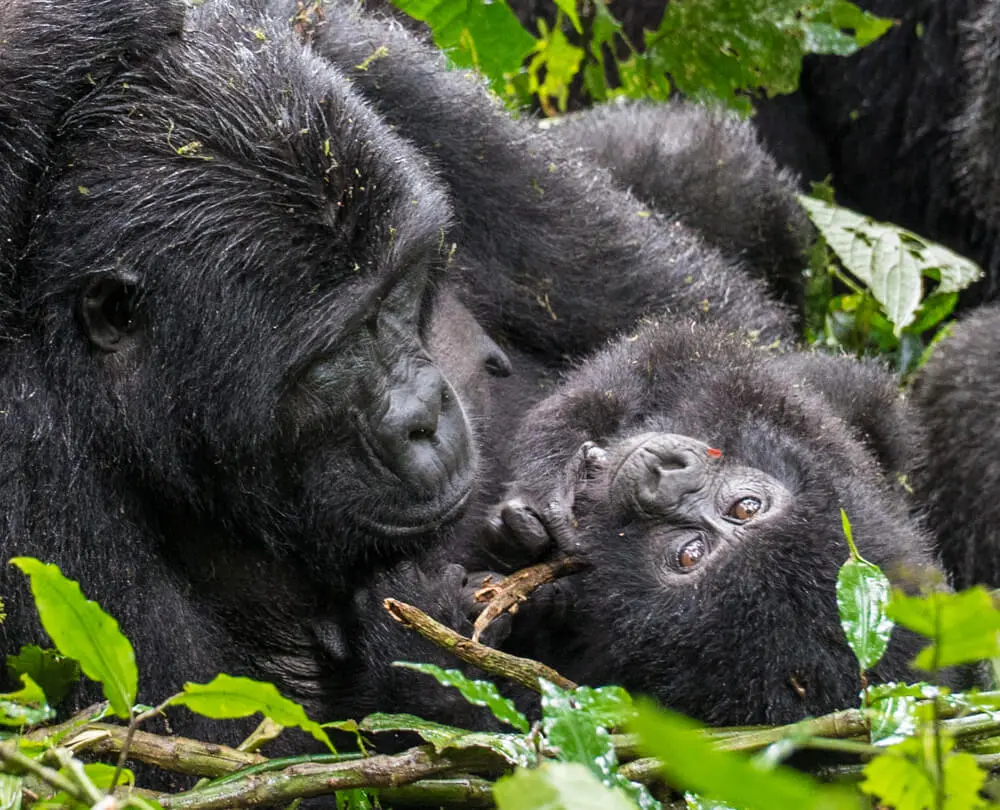
Seeing a mountain gorilla in its natural habitat is one of the most memorable experiences you can have in Africa. During a trek in Uganda’s Bwindi Impenetrable National Park or Mgahinga Gorilla National Park, you may find yourself standing within a short distance of a silverback, watching a mother care for her infant or observing young gorillas playing among the trees. Their human-like expressions and familiar behaviour can make the encounter feel surprisingly personal.
This closeness often raises an important question: Can you touch a gorilla during a trek?
The answer is no. Visitors must never deliberately touch, stroke, feed or attempt to interact physically with mountain gorillas. Even when a gorilla approaches you, you must resist the temptation to reach out. The rules protect both visitors and gorillas, particularly because these endangered animals are vulnerable to human diseases.
Understanding the distance rules, gorilla behaviour and safety procedures before your trek helps you enjoy the experience responsibly. It also prepares you for unexpected moments when a gorilla may walk close enough for you to see its facial expressions clearly.
Why you are not allowed to touch a gorilla
Mountain gorillas are wild animals, even when they belong to families that have become accustomed to the presence of human visitors. Habituation allows researchers and tourists to observe them without causing excessive disturbance, but it does not turn gorillas into domestic animals.
Touching a gorilla creates several risks.
The first concern is disease transmission. Gorillas are closely related to humans and can catch many of the same respiratory infections. A common cold, flu or other contagious illness that causes mild symptoms in a person can seriously affect a gorilla. An infection may spread through a family, including young gorillas and individuals with weaker immune systems.
Physical contact increases opportunities for transferring bacteria, viruses and other pathogens. Your hands, clothing and personal belongings may carry microorganisms that could affect the animals. Even a brief touch can create unnecessary exposure.
The second concern is animal behaviour. A gorilla may tolerate your presence while you remain quiet and maintain an appropriate distance. However, reaching towards it can be interpreted as an unwanted or threatening action. A sudden movement may startle the animal, particularly if you approach an infant or move close to a silverback.
The third concern is visitor safety. Gorillas are extremely powerful animals. An adult male can weigh more than 150 kilograms, and even a female can be considerably stronger than an average person. A gorilla does not need to intend to injure you for an accidental collision or defensive reaction to cause serious harm.
For these reasons, touching is prohibited throughout the encounter.
How close can you get to a mountain gorilla?
Gorilla trekking guidelines generally require visitors to maintain a minimum distance of approximately seven metres from the animals. This is around 23 feet.
The precise instruction can vary depending on the destination and current conservation guidance. Some Uganda Wildlife Authority materials have specified a distance of 10 metres, while Rwanda’s published guidance commonly refers to seven metres. Your ranger will explain the applicable requirements during the briefing and direct you during the encounter.
The safest approach is to follow the distance instructed by your park authorities rather than assuming that one measurement applies everywhere.
Maintaining space helps reduce disease transmission and gives gorillas room to move naturally. It also prevents visitors from surrounding animals or blocking their movement.
However, gorillas do not understand visitor distance rules. They may walk towards your group while feeding, travelling through the forest or interacting with other members of their family.
A young gorilla might approach out of curiosity. A female may walk past you while searching for food. A silverback may move through the vegetation without changing direction simply because visitors are standing nearby.
When this happens, do not reach out or attempt to touch the animal. Follow the ranger’s instructions and move back slowly when there is enough space.
What happens if a gorilla touches you?
Although visitors are not allowed to touch gorillas, accidental contact can occasionally happen. A gorilla may walk very close, brush against someone’s clothing or pass between members of a trekking group.
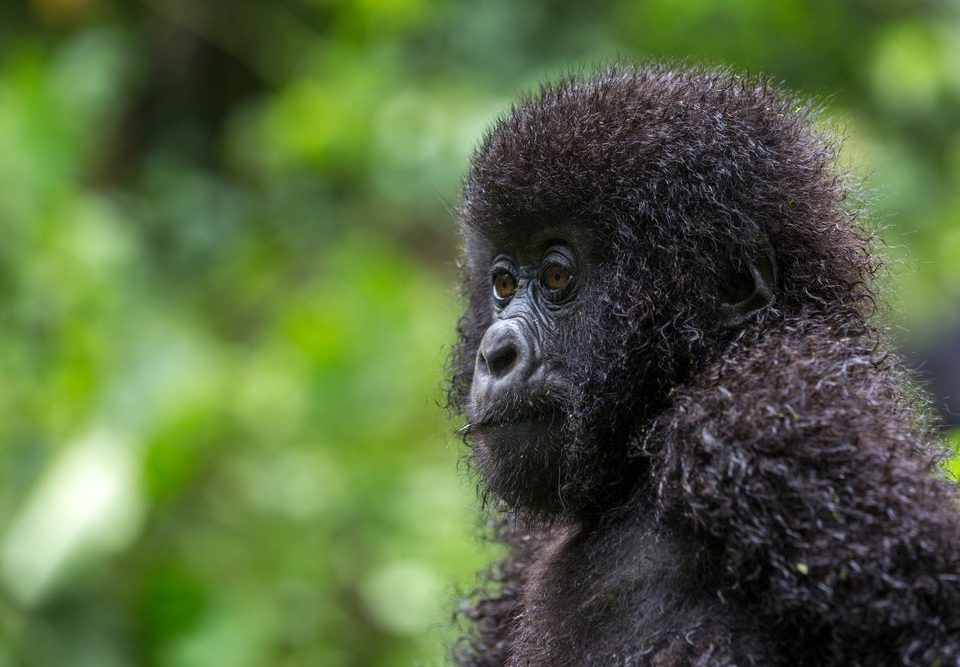
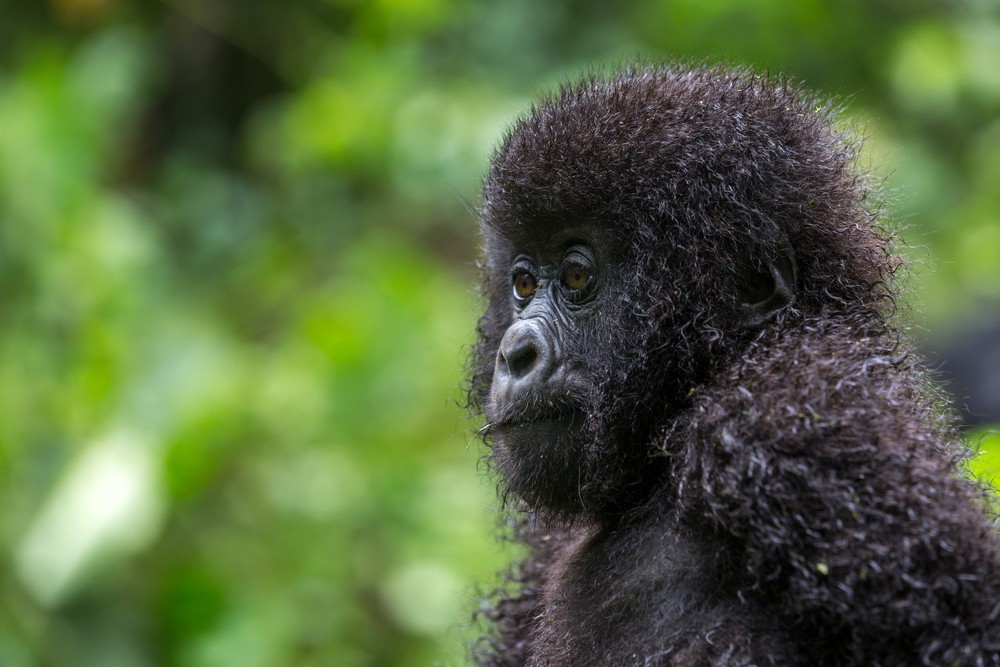
Young gorillas are particularly curious. They sometimes approach visitors while playing or exploring their surroundings. Their behaviour can make people feel tempted to respond by extending a hand or trying to stroke them.
You must not do this.
If a gorilla brushes against you, remain calm and avoid sudden movements. Do not grab it, push it away or attempt to hold it. Give the animal space to continue moving and follow the ranger’s instructions.
If a gorilla comes so close that you cannot maintain the recommended distance, do not panic. The ranger understands that visitors cannot control the movement of wild animals. Your responsibility is to avoid approaching, touching or deliberately blocking the gorilla.
Accidental contact does not mean you have permission to interact with the animal. You should never use the opportunity to take a selfie by touching it or placing your arm around it.
Why gorillas sometimes approach visitors
Mountain gorillas that are visited by tourists have undergone a process called habituation. This involves gradually introducing gorillas to the presence of humans under controlled conditions until they can tolerate regular observation.
Habituated gorillas may continue feeding, resting, grooming and playing while visitors watch them. They generally do not treat a quiet trekking group as an immediate threat.
However, habituation does not remove their natural instincts. Gorillas remain independent wild animals with their own social relationships, feeding patterns and defensive behaviours.
Several situations can bring them close to visitors.
Curiosity among young gorillas
Young gorillas spend much of their time playing, climbing and exploring. They may approach a visitor because they are curious about unfamiliar objects, clothing or movement. Their behaviour can look friendly, but you should never encourage physical interaction.
Movement through dense vegetation
Mountain gorillas live in thick forest where visibility can be limited. A gorilla may need to pass through the exact area where your group is standing. Your ranger will help the group respond without disturbing the animal.
Feeding and searching for food
Gorillas spend a significant part of the day feeding on leaves, stems, shoots and other vegetation. When they move between feeding areas, they may pass close to visitors.
Family activities
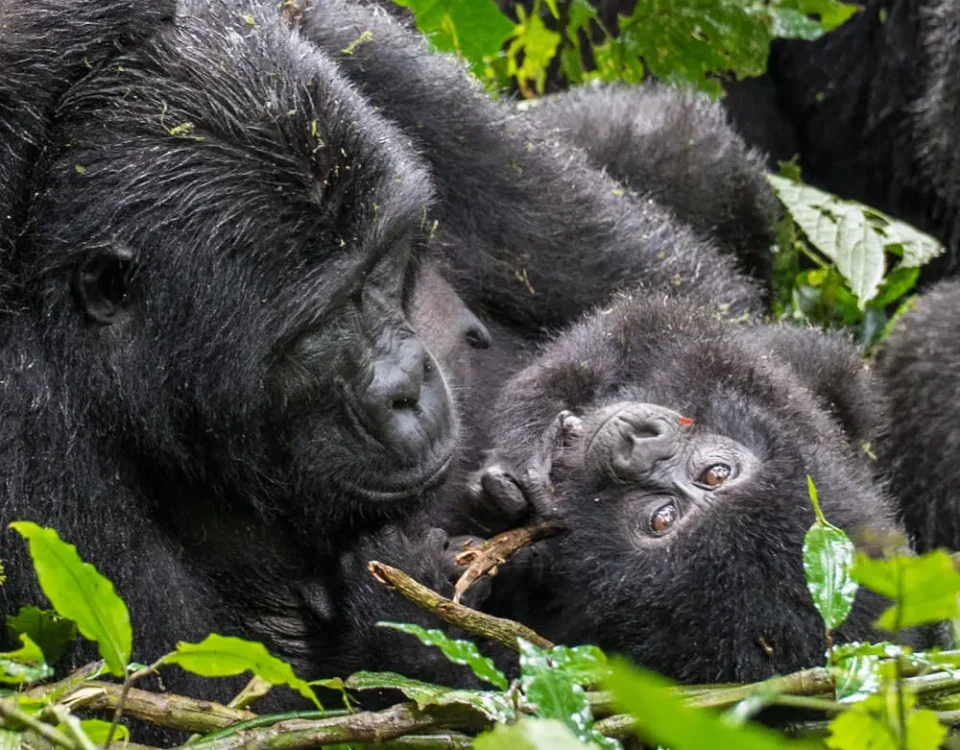
Gorilla families maintain close social relationships. A female may move with her infant, juveniles may play nearby and the silverback may reposition himself to observe the group. These ordinary activities can bring different members of the family close to your viewing position.
The important point is that a gorilla approaching you is not an invitation to touch it. Allow the animal to move freely and follow your guide.
Is it dangerous to stand close to a gorilla?
Gorilla trekking is carefully managed, but it takes place in the natural habitat of powerful wild animals. There is always some risk when observing wildlife at close range.
Most habituated mountain gorilla encounters are calm. Visitors regularly observe gorillas feeding, resting, grooming and interacting with their families. The animals often appear uninterested in the people watching them.
However, their behaviour can change. A gorilla may become uncomfortable if visitors move too quickly, make loud noises, approach too closely or interfere with its space.
A silverback may display strength by beating his chest, making loud vocalisations, standing upright or moving towards visitors. These actions can be intimidating, but they do not always mean that an attack will follow.
Your ranger monitors the family’s behaviour and understands the signs that indicate discomfort or agitation. This is why you must remain with the group and follow instructions throughout the encounter.
Never attempt to approach a gorilla for a better photograph or move away from your group to get a different viewing angle.
What should you do if a gorilla approaches you?
A close encounter can happen without warning. A gorilla may walk towards your group, pass behind you or move through the space between visitors.
Your reaction should remain calm and controlled.
First, avoid sudden movements. Do not scream, run, jump backwards or wave your arms. These actions can attract attention and increase tension.
Second, follow your ranger’s instructions. The guide may ask you to move slowly, crouch or remain where you are. Do not make independent decisions that could place you in the animal’s path.
Third, avoid reaching out. Even if a young gorilla comes within touching distance, keep your hands to yourself. Do not attempt to pet it, hold it or move it away.
Fourth, give the animal room to pass. If the ranger directs you to step backwards, do so slowly and carefully. Avoid stumbling over vegetation, roots or other visitors.
Finally, keep your voice low. Loud shouting can disturb the gorillas and make an already tense encounter more difficult to manage.
The ranger’s instructions take priority because the correct response depends on the gorilla’s position and behaviour.
What should you do if a gorilla charges?
A gorilla charge can be one of the most frightening moments during a trek. A silverback may suddenly move towards visitors, beat his chest, vocalise loudly or make a dramatic display.
Although such behaviour can be intimidating, some charges are displays rather than attempts to make physical contact. You should still treat every charge seriously.
Do not run away. Running may trigger further pursuit or create confusion among the group.
Follow your ranger’s example. Visitors are generally instructed to crouch down slowly, lower their heads and avoid direct eye contact. Remain quiet and wait for the ranger to indicate when it is safe to move.
Do not attempt to photograph the charge. Put your camera down and concentrate on following instructions.
Never stand up suddenly, shout at the gorilla or attempt to defend yourself through aggressive gestures. Your ranger has experience interpreting gorilla behaviour and will guide the group through the situation.
Once the animal moves away, remain calm. Wait for the guide to confirm that the encounter can continue or that the group should leave.
Why the seven-metre distance protects gorillas
Many visitors assume that distance rules exist mainly to protect people from aggressive animals. During gorilla trekking, one of the most important reasons is actually the protection of the gorillas themselves.
Mountain gorillas share many biological similarities with humans. This makes them vulnerable to certain human infections, especially respiratory illnesses.
A visitor with a cough, cold or flu can introduce an infection into a gorilla population. Because gorillas live in close family groups, one infected individual may expose other members through regular contact.
A disease outbreak can affect several gorillas and create serious conservation problems.
Maintaining distance reduces the possibility of transmitting infections through respiratory droplets and accidental physical contact. It also limits the disturbance caused by human presence.
This is particularly important for infants, older gorillas and individuals that may already be vulnerable to illness.
The distance rule is therefore part of a wider conservation system that includes health screening, visitor limits, short viewing periods and strict behaviour guidelines.
Can you take a selfie with a gorilla?
You can take photographs during a gorilla trek, but you cannot deliberately touch a gorilla or position yourself beside it for a physical-contact photograph.
A selfie may be possible if your ranger allows it and you can take the photograph without approaching the animal, moving out of position or disturbing the family.
However, you should avoid trying to place a gorilla directly behind your shoulder or moving closer to create a more dramatic picture.
A good gorilla photograph does not require physical contact. A camera with a suitable zoom can capture facial expressions, family interactions and details of the animals while you remain at the required distance.
Turn off your camera flash before reaching the gorillas. Move slowly when taking pictures and avoid sudden changes in position.
You should also listen when the ranger asks visitors to lower their cameras. Some moments require attention to the animals rather than photography.
Can you feed a gorilla during a trek?
No. Feeding gorillas is strictly prohibited.
Mountain gorillas have natural diets that include leaves, shoots, stems, fruits and other vegetation available in their forest habitat. They do not need food from visitors.
Giving a gorilla food can change its behaviour and encourage it to associate humans with feeding opportunities. It may also expose the animal to bacteria or other contaminants carried on food and packaging.
Never offer bananas, biscuits, sweets, fruit or any other food. Do not throw food towards a gorilla or leave snacks where the animals can find them.
Visitors are also prohibited from eating or drinking during the close encounter. Food and drink should remain packed away until the ranger confirms that the group has moved far enough from the gorillas.
Can you talk to a gorilla?
You should not attempt to communicate with gorillas by calling, shouting, imitating their sounds or making gestures to attract their attention.
Visitors must keep their voices low during the encounter. You can ask your ranger questions, but avoid unnecessary conversation while the gorillas are nearby.
Gorillas communicate through vocalisations, facial expressions, body posture and physical behaviour. Their communication is part of their natural social life, and visitors should observe it without attempting to participate.
Never beat your chest to imitate a silverback. Do not make loud noises to encourage a gorilla to look towards your camera.
A quiet visitor group gives the animals a better opportunity to continue their normal activities.
What if you accidentally move closer than the required distance?
Dense vegetation can make it difficult to judge distances accurately. A gorilla may also move unexpectedly, leaving little room between the animal and your group.
If you realise that you are too close, do not make a sudden movement. Look towards your ranger and follow the instructions given.
The ranger may ask you to step backwards slowly, change position or remain still until the gorilla moves away.
Do not attempt to measure the distance yourself while the animal is nearby. Your guide is responsible for managing the encounter and deciding where the group should stand.
Visitors are expected to make a reasonable effort to maintain the required distance. The rules recognise that wild animals move freely and cannot be instructed to remain in one place.
Health rules that help prevent disease transmission
Distance is only one part of gorilla protection. Visitors must also follow health requirements before and during the trek.
If you have a cold, flu, persistent cough, fever or another contagious illness, inform the park authorities before entering the forest. You may be prevented from visiting the gorillas to reduce the risk of infection.
Do not hide symptoms because you have already paid for your permit. A sick visitor can place an entire gorilla family at risk.
Wash or sanitise your hands as instructed during the briefing. Wear a face mask when required by the park authorities, particularly during close observation.
If you need to cough or sneeze while near the gorillas, turn away from them and cover your mouth and nose. Follow the ranger’s instructions about moving away from the group if necessary.
Never leave tissues, food wrappers, bottles or other rubbish in the forest. If you need to use the toilet during the trek, ask your guide for assistance and follow the park’s sanitation procedures.
These measures reduce the chance of introducing infections into the forest environment.
Does the no-touching rule apply in Uganda and Rwanda?
Yes. Visitors must not deliberately touch mountain gorillas in either Uganda or Rwanda.
In Uganda, gorilla trekking takes place mainly in Bwindi Impenetrable National Park and Mgahinga Gorilla National Park. In Rwanda, visitors trek in Volcanoes National Park.
Both countries use guided trekking systems designed to protect gorillas and manage human contact. Visitors receive a briefing before entering the forest and must follow the instructions of their assigned guides and rangers.
The recommended minimum viewing distance is commonly around seven metres in published guidance, although some official materials specify 10 metres. The ranger’s current instructions should always take priority.
Both destinations also restrict visitor numbers, prohibit feeding and touching, discourage loud behaviour and limit the time visitors can spend with a gorilla family.
The main difference between Uganda and Rwanda is not permission to touch. There is no such permission in either country.
How long can you stay with gorillas?
A standard mountain gorilla trekking encounter allows visitors up to one hour with the assigned gorilla family.
The viewing period begins when the group reaches the gorillas and the ranger confirms that the observation can start. Visitors use this time to watch the animals, take photographs and learn about their behaviour.
The one-hour limit helps manage the amount of human exposure experienced by each gorilla family. It also prevents visitors from remaining around the animals for extended periods.
The ranger may end the encounter earlier if the gorillas become unsettled, move away or show signs that continued observation could cause disturbance.
Visitors cannot request additional time by offering to pay more or by asking the guide to extend the encounter.
How to enjoy a close gorilla encounter without touching
You do not need to touch a gorilla to experience an unforgettable encounter. Watching a silverback calmly observe his family, seeing an infant cling to its mother or listening to gorillas communicate through the forest can provide an exceptional wildlife experience.
Prepare your camera before reaching the family so that you do not waste time adjusting settings. Use a suitable zoom lens or phone camera, switch off the flash and keep your equipment ready.
Listen to the ranger’s explanations. Guides can help you understand the differences between individuals, recognise family relationships and interpret common behaviours.
Remain in your assigned position and avoid blocking other visitors. If a gorilla moves closer, stay calm and let the ranger manage the situation.
Most importantly, remember that you are visiting the gorillas in their natural home. You are there to observe their lives, not to make them interact with you.
Common mistakes visitors should avoid
Some visitors become so excited during their first gorilla encounter that they forget basic trekking rules. A few common mistakes can create unnecessary risks.
Reaching towards a young gorilla is one of the most serious mistakes. An infant may look harmless, but its mother and other family members remain nearby. Never attempt to stroke or hold it.
Moving closer for photographs is another mistake. A photograph is not worth disturbing a gorilla or ignoring the ranger’s instructions.
Some visitors also make loud noises to attract attention. This can interfere with the animals’ behaviour and make the encounter uncomfortable.
Standing directly in a gorilla’s path can also create problems. Always allow animals to move freely and follow your guide when repositioning.
Finally, do not assume that a calm gorilla is inviting physical contact. Habituated animals may tolerate human presence, but they remain wild.
Frequently asked questions about touching gorillas
Can a gorilla touch a tourist?
Yes, accidental contact can happen when a gorilla walks close to a visitor. You must remain calm, avoid touching it in return and follow the ranger’s instructions.
Can I shake hands with a gorilla?
No. You must never offer your hand or attempt to establish physical contact with a gorilla.
What happens if a baby gorilla touches me?
Do not react by touching, holding or pushing it away. Remain calm and follow the guide’s instructions. Allow the young gorilla to move away naturally.
Are mountain gorillas friendly to humans?
Habituated gorillas tolerate the presence of carefully managed visitor groups. However, they are wild animals and should never be treated as pets or assumed to be friendly.
Can I stand closer than seven metres if the gorilla approaches me?
You should not deliberately move closer. If the gorilla approaches, remain calm, give it room and follow your ranger’s instructions. The animal’s movement may make the recommended distance impossible to maintain temporarily.
Can I touch a gorilla during a special habituation experience?
No. Gorilla habituation experiences allow visitors to spend longer observing gorillas under controlled conditions, but they do not permit touching or physical interaction.
Is it safe to look a silverback in the eyes?
Avoid prolonged direct eye contact, especially if a gorilla displays signs of agitation. Keep your posture relaxed, look down when instructed and follow your ranger’s example.
Can I visit gorillas if I have a mild cough?
You should report the cough to the park authorities. Even mild respiratory symptoms can pose a risk to gorillas, and officials may prevent you from participating.
Respecting gorillas makes the experience safer
The opportunity to see mountain gorillas in Uganda or Rwanda is a privilege that depends on responsible wildlife tourism and long-term conservation work. Every visitor has a role in protecting the animals during a trek.
You cannot touch, feed or deliberately interact physically with a gorilla, even if it approaches you. Maintain the required distance, keep your voice low, avoid sudden movements and follow your ranger’s instructions.
If a gorilla walks close, remain calm and allow it to pass. If it displays or charges, do not run. Follow the guide’s example and wait for instructions.
The best gorilla encounter is one in which the animals continue their natural behaviour while visitors observe quietly. You can take photographs, watch family interactions and appreciate the intelligence and social relationships of these remarkable primates without making physical contact.