Is gorilla trekking worth the money? A real traveler’s verdict
Gorilla trekking is one of the most expensive wildlife experiences in Africa. A single permit can cost hundreds or even more than a thousand US dollars, depending on the country and visitor category. You must also budget for transport, accommodation, meals, guiding arrangements and other safari expenses. For some travellers, the price is difficult to justify for an experience that usually allows only one hour with a gorilla family.
Yet many people who complete the trek describe it as the highlight of their African holiday. Standing in a rainforest and watching a wild mountain gorilla family at close range is very different from seeing elephants, lions or buffalo from a safari vehicle. You walk through the gorillas’ natural habitat, follow their movements and observe their behaviour under the guidance of trained park rangers.
So, is gorilla trekking worth the money? The honest answer is yes for travellers who value rare wildlife encounters, conservation and memorable experiences. However, it may not be the right choice for everyone. Your budget, expectations, physical fitness and interest in primates should influence your decision.
What makes gorilla trekking so expensive?
The first thing to understand is that a gorilla trekking permit is not an ordinary park entrance ticket. It gives you access to a carefully managed wildlife experience involving habituated mountain gorillas, trained rangers, trackers and strict conservation controls.
Mountain gorillas live in a limited range of high-altitude forests in Uganda, Rwanda and the Democratic Republic of Congo. Tourism authorities restrict the number of visitors who can see each habituated family. In standard trekking programmes, a maximum of eight tourists can visit one family in a day, with a viewing period of up to one hour.
This low visitor limit means that parks cannot sell unlimited permits to increase revenue. The price helps support the management of a rare wildlife experience that requires continuous monitoring and protection.
Permit revenue contributes to conservation activities, including ranger operations, gorilla monitoring, habitat protection and park management. Tourism also creates employment for guides, trackers, drivers, porters, lodge staff and other people living around the protected areas.
The price therefore covers more than the time you spend looking at gorillas. It supports the system that makes responsible gorilla tourism possible.
How much does gorilla trekking cost in Uganda and Rwanda?
Uganda and Rwanda are the two main destinations for travellers planning a mountain gorilla trekking experience. Both offer access to habituated gorilla families, but their permit prices and travel arrangements differ.
In Uganda, international visitors generally pay US$800 for a standard gorilla trekking permit. Eligible low-season permits have been offered at US$600 for April, May and November. These discounted rates are subject to the applicable Uganda Wildlife Authority conditions and should be confirmed before booking.
Uganda offers trekking in Bwindi Impenetrable National Park and Mgahinga Gorilla National Park. Bwindi has four main trekking sectors: Buhoma, Ruhija, Rushaga and Nkuringo. The choice of sector affects your accommodation, road transfers and the overall safari arrangement.
Rwanda charges US$1,500 for a standard mountain gorilla trekking permit for international visitors. The activity takes place in Volcanoes National Park, with visitors reporting to the park headquarters near Kinigi for the morning briefing.
The permit price is only one part of the total safari cost. You must also consider accommodation, transport, meals and other arrangements. A short trip in Rwanda can involve fewer road-transfer hours, while reaching Bwindi from Entebbe or Kampala usually requires a longer journey or a domestic flight.
Permit rates and eligibility categories can change. Always confirm the current price with the relevant wildlife authority before making a payment.
What do you actually get for the money?
The value of gorilla trekking becomes clearer when you understand what the experience involves.
Your day normally begins with a morning briefing at the park headquarters. Rangers explain the trekking rules, safety procedures and expected behaviour around the gorillas. Visitors are then allocated to trekking groups and assigned a habituated family.
Trackers usually enter the forest early to locate the gorillas and communicate their position to the ranger teams. Your guide leads you along forest trails, through thick vegetation and sometimes across steep or muddy slopes.
The trek can take less than an hour or several hours, depending on where the family has moved. Once you find the gorillas, your group receives up to one hour to observe them.
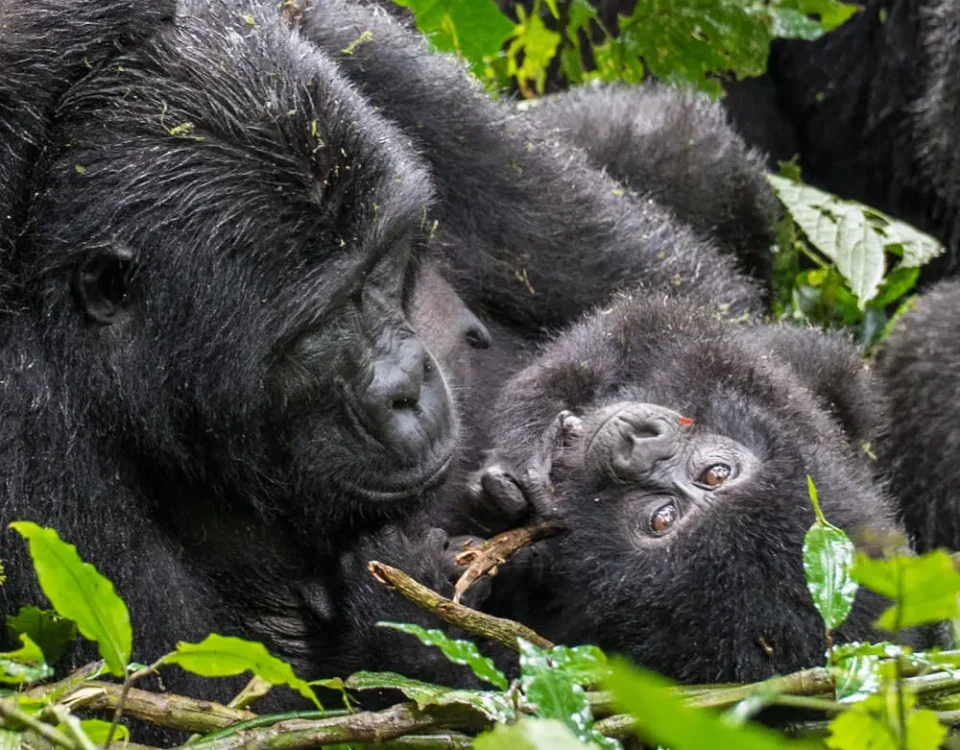
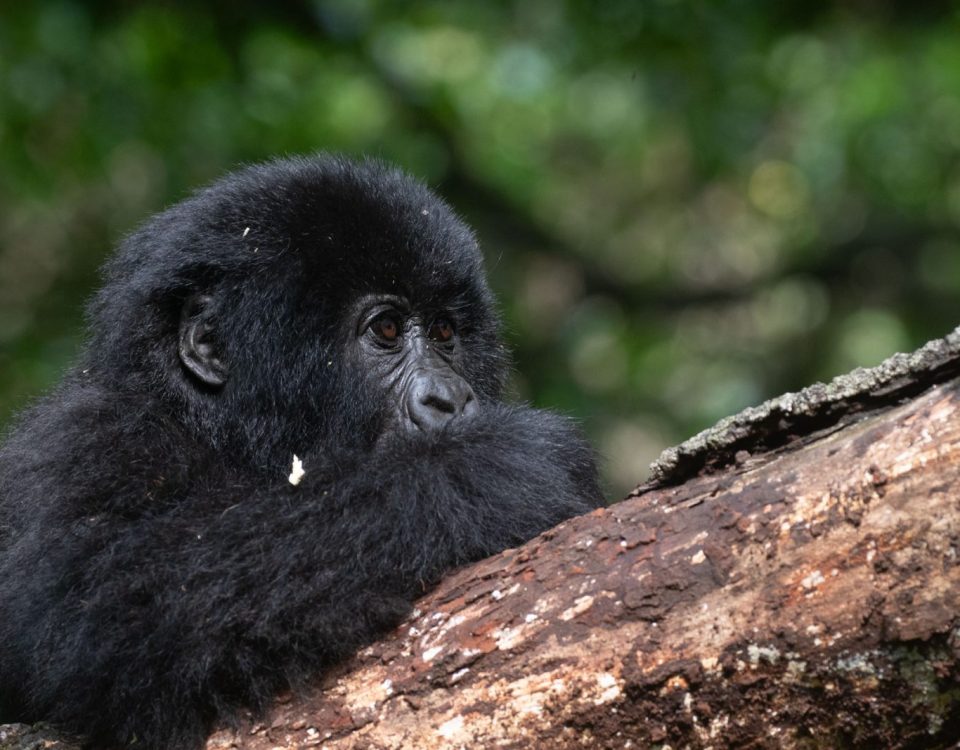
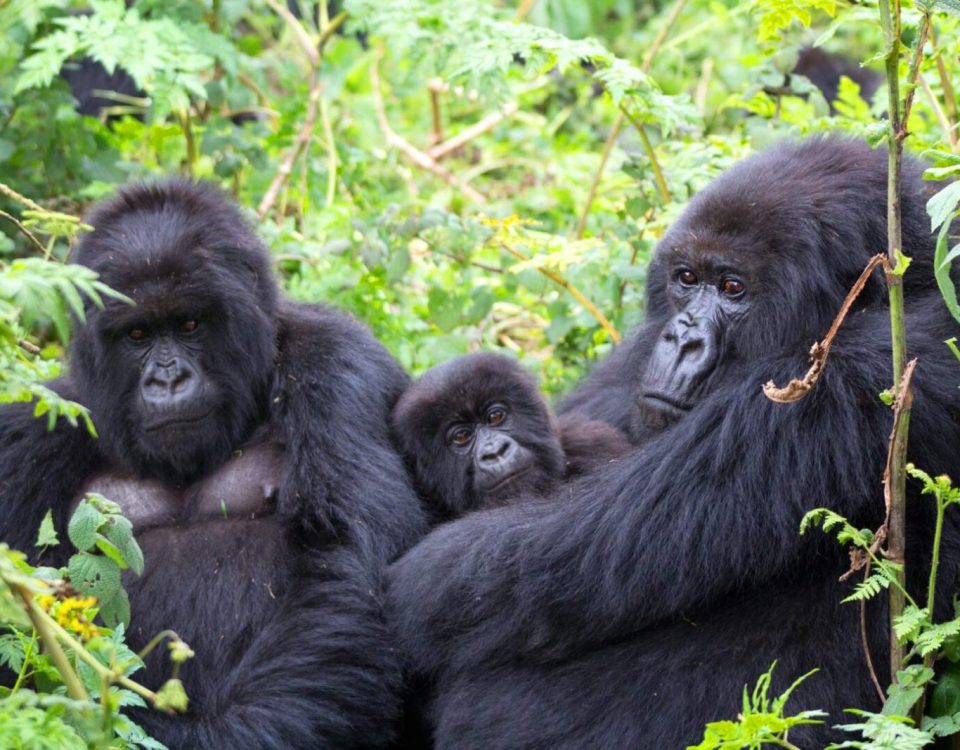
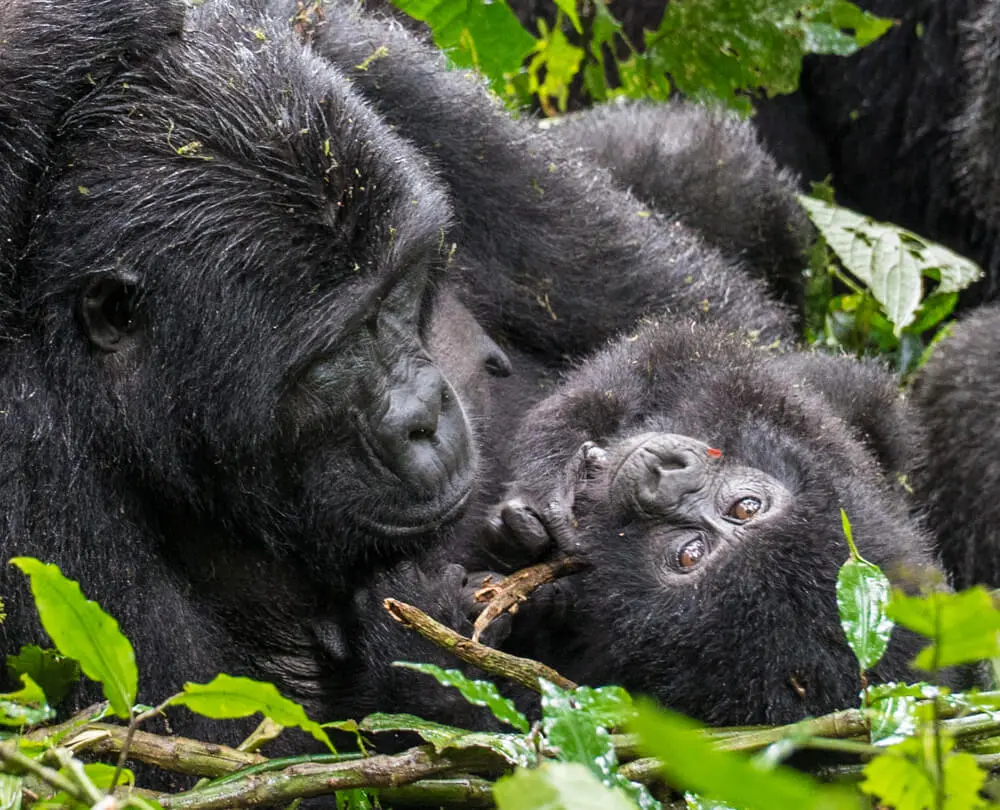
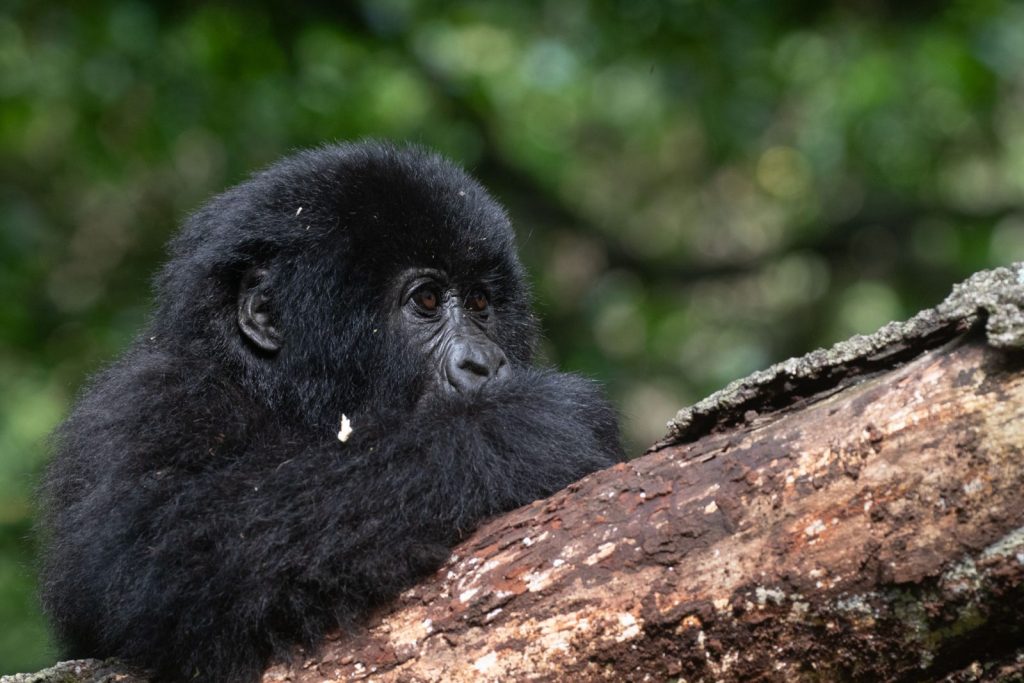
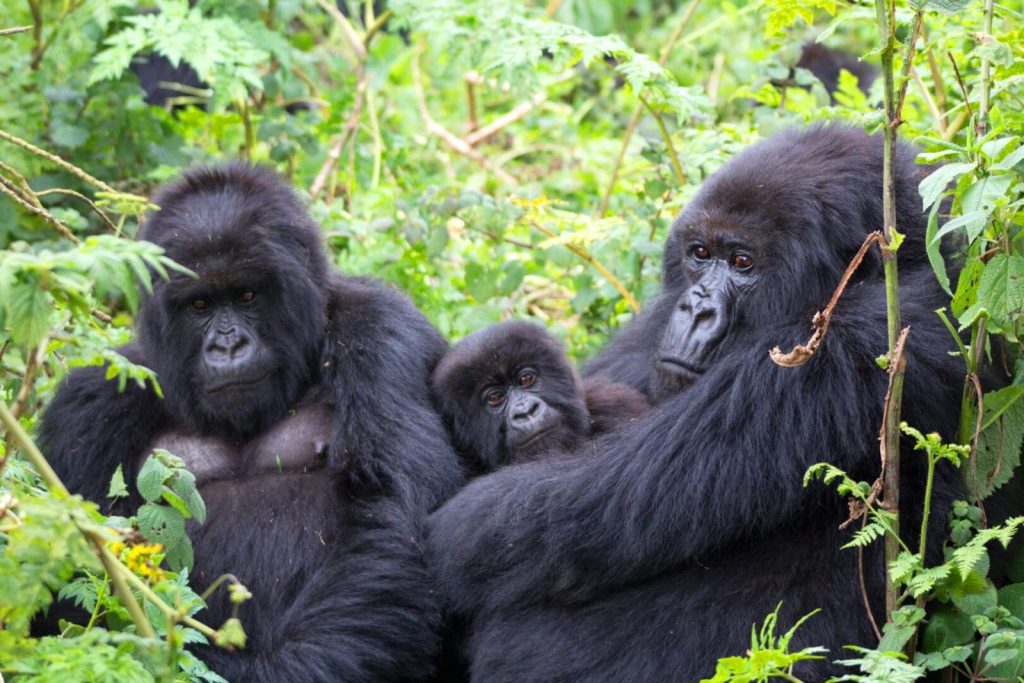
During this time, you may see a silverback resting, females feeding, young gorillas playing or family members grooming one another. You might watch a mother caring for her baby or a juvenile climbing through the vegetation. Every family has its own social relationships and daily activities, so no two encounters are exactly the same.
Your permit also covers the authorised park guiding and tracking arrangements associated with the activity. It does not normally cover your accommodation, transport to the park, porter fees, tips or personal expenses.
Why many travellers believe it is worth the money
The strongest argument for gorilla trekking is the opportunity to observe wild mountain gorillas at close range in their natural habitat.
A traditional game drive allows you to see wildlife from a vehicle. You may spend hours watching elephants cross a track, lions resting under trees or giraffes feeding in open woodland. Gorilla trekking gives you a different experience because you leave the vehicle behind and enter the forest on foot.
The encounter can be particularly memorable when a family is active. Young gorillas may play around one another, adults may feed quietly and the silverback may remain nearby, monitoring the group. These ordinary moments reveal how gorillas interact within their family structure.
The experience also involves anticipation. You do not know exactly how far you will walk or what the family will be doing when you arrive. Your trackers follow signs such as feeding remains, nests and fresh movement through the vegetation.
For wildlife enthusiasts, photographers and people interested in primates, this combination of trekking and observation can justify the high price.
Another reason travellers value the experience is its conservation contribution. Responsible tourism generates income that supports protected areas and provides employment for communities around gorilla habitats. When tourism benefits local people, it can strengthen support for protecting forests and wildlife.
The one-hour viewing period: Is it enough?
One of the biggest concerns travellers raise is the short viewing period. After paying a substantial permit fee and travelling a long distance, spending only one hour with the gorillas may seem disappointing.
However, the one-hour rule is part of the conservation system. It limits the duration of human exposure and reduces the risk of disease transmission and disturbance.
The hour can also feel longer than expected because the encounter is usually active. You are not simply standing in one place watching a single animal. The family may move, feed, interact or rest in different parts of the forest.
You may spend several minutes observing a young gorilla playing, then turn your attention to a female feeding nearby. The silverback may move through the vegetation while other members continue their activities.
The experience can feel brief when the gorillas are particularly active. It can also feel quieter if the family spends much of the hour resting or feeding. You should therefore avoid expecting a continuous display of dramatic behaviour.
If you want more time with gorillas, Uganda offers the Gorilla Habituation Experience in Bwindi. This activity allows a smaller group of visitors to accompany authorised personnel and spend up to four hours with a gorilla family undergoing habituation. It costs more than standard trekking and follows different permit arrangements.
What if the trek is difficult?
The physical challenge is another factor that determines whether gorilla trekking offers good value.
Bwindi and Mgahinga are mountainous forest environments. Trails can be steep, slippery and uneven, especially after rain. Some visitors reach their assigned family after a relatively short walk, while others spend several hours climbing through dense vegetation.
The difficulty depends on the location of the gorillas, the terrain and your own fitness. You cannot select a guaranteed easy trek simply by choosing a particular park or sector.
If you have concerns about walking long distances, communicate them before the trek. Park staff may consider your fitness and mobility when allocating trekking groups, although they cannot guarantee a particular walking distance.
Hiring a porter is another useful option. Porters carry your backpack, assist you on difficult sections and provide practical support on steep trails. This creates additional local employment and can make the trek more manageable.
You should prepare by walking regularly before your safari, wearing suitable hiking boots and carrying enough drinking water. A walking stick can also help with balance on muddy or uneven trails.
For travellers who cannot comfortably manage a demanding forest walk, the cost may be difficult to justify. It is better to assess your mobility honestly before purchasing a permit.
Uganda vs Rwanda: Which offers better value?
The choice between Uganda and Rwanda can significantly affect your budget.
Uganda has the lower standard permit price for international visitors. Its US$800 permit is considerably cheaper than Rwanda’s US$1,500 rate. Eligible low-season permits can make Uganda even more affordable.
However, the full cost comparison is more complicated. Reaching Bwindi from Entebbe or Kampala involves a long road journey, often requiring an overnight stop or several days of travel. Domestic flights can reduce travel time but add to the budget.
Rwanda offers a shorter transfer from Kigali to Volcanoes National Park. This makes it attractive to visitors with limited time who want to combine gorilla trekking with a short stay in the country.
For example, a traveller with only three or four days may find Rwanda convenient because the journey from Kigali to the gorilla trekking area is relatively short. Someone planning a longer East African safari may find Uganda more economical, particularly when combining gorilla trekking with Queen Elizabeth National Park, Kibale Forest or Murchison Falls.
Uganda also offers the Gorilla Habituation Experience, which gives visitors a longer encounter under a different programme.
There is no universal winner. Uganda generally offers a lower permit cost, while Rwanda can offer greater convenience for short trips. Compare the complete itinerary rather than choosing a destination based only on the permit price.
When gorilla trekking may not be worth the money
Although many travellers consider gorilla trekking a once-in-a-lifetime experience, there are situations where the expense may not suit your priorities.
When the cost puts pressure on your finances
You should not spend your entire holiday budget on a gorilla permit if it leaves you unable to afford transport, accommodation, meals or other essential travel expenses. A safari should remain financially comfortable.
If the cost feels excessive, consider a longer saving period, an eligible low-season permit or a different wildlife destination.
When you expect guaranteed close-up photographs
Gorillas live in dense forests, and vegetation can obstruct your view. Rangers manage the distance between visitors and animals, so you cannot approach them simply to improve a photograph.
You may get excellent viewing opportunities, but there is no guarantee that every gorilla will remain in an open position throughout the hour.
When you dislike hiking
The trek can involve steep climbs, mud, thick vegetation and several hours of walking. If you strongly dislike physical outdoor activities, the journey may become more difficult than enjoyable.
When you have very little interest in primates
If your main interest is seeing lions hunting, large elephant herds or the Great Migration, a savannah safari may offer better value for your preferences. Gorilla trekking is a specialised wildlife experience, and you should choose it because you genuinely want to see mountain gorillas.
When you expect luxury throughout the experience
The permit is expensive, but the forest remains a wild environment. You may encounter rain, insects, muddy trails and basic forest facilities. The experience is about wildlife observation, not luxury service in the forest.
How to make gorilla trekking more affordable
You can reduce the total cost without compromising the conservation rules or the quality of the experience.
Start by considering Uganda, where the standard permit is less expensive than Rwanda’s international visitor rate. If your travel dates are flexible, check whether eligible low-season permits are available in April, May or November.
Choose accommodation that matches your budget. Bwindi has budget guesthouses, comfortable mid-range lodges and luxury forest properties. Staying near your assigned trekking sector can reduce early-morning travel and make the experience easier to organise.
Travelling with other people can also lower the cost per person. A private vehicle and driver-guide are shared expenses when several travellers use the same safari arrangements.
Plan your route carefully. If you are already visiting Queen Elizabeth National Park or Kibale Forest, adding gorilla trekking may create a more efficient itinerary than organising a separate trip from Kampala or Entebbe.
Avoid unnecessary accommodation changes and long detours. Choose a lodge that is reasonably close to your trekking starting point, and confirm the sector printed on your permit before booking your stay.
You should also budget for a porter, tips and personal expenses rather than treating them as unexpected costs. A realistic budget makes it easier to enjoy the experience without worrying about every additional payment.
Can you combine gorilla trekking with a wildlife safari?
Combining gorilla trekking with a traditional safari is one of the best ways to increase the value of an East African holiday.
In Uganda, you can combine Bwindi with Queen Elizabeth National Park. This gives you the opportunity to track gorillas in the forest and enjoy game drives in savannah landscapes. You can also take a boat trip along the Kazinga Channel, where hippos, crocodiles, elephants and numerous waterbirds are commonly seen.
Another option is to combine gorilla trekking with chimpanzee tracking in Kibale Forest. This creates a primate-focused safari with opportunities to observe two of Africa’s most interesting great apes in different habitats.
Travellers with more time can include Murchison Falls National Park, known for its wildlife, Nile boat trips and dramatic waterfall scenery.
In Rwanda, you can combine Volcanoes National Park with Nyungwe National Park for chimpanzee tracking and forest activities, or visit Akagera National Park for savannah wildlife and boat trips.
These combinations make the long-distance journey more worthwhile and provide a wider range of experiences beyond the gorilla encounter.
What does a real traveler need to expect?
A realistic expectation is essential when deciding whether gorilla trekking is worth the money.
You should expect an early start, a forest walk of unpredictable length, physical effort and a strictly controlled viewing period. You should also expect to follow instructions from rangers and maintain the required distance from the gorillas.
Do not expect a zoo-style experience where animals remain in one place for photographs. These are wild animals moving through their natural habitat. Their behaviour determines what you see.
You should also understand that sightings are not formally guaranteed. Trackers search for the assigned family each morning, and gorilla sightings on standard treks are generally very successful. However, wildlife encounters always involve some uncertainty.
The most satisfying approach is to appreciate the whole experience: the rainforest, the trackers, the trek, the sounds of the forest and the opportunity to observe a gorilla family.
Frequently asked questions about whether gorilla trekking is worth it
Is gorilla trekking worth US$800 in Uganda?
For travellers who value rare wildlife encounters and can comfortably afford the trip, it can be worth the cost. The permit supports a controlled conservation programme and provides access to a closely managed encounter with wild mountain gorillas.
Is Rwanda worth paying US$1,500 for gorilla trekking?
Rwanda may be worth the higher permit price if you value convenient access from Kigali, have limited travel time or want to combine trekking with other Rwandan experiences. However, Uganda is generally less expensive for the permit itself.
Is one hour with gorillas really enough?
One hour can provide a memorable encounter, especially when the family is active. The limit protects the gorillas by reducing the duration of human exposure.
Are you guaranteed to see gorillas after paying?
No wildlife sighting is formally guaranteed. However, trackers locate the habituated families each morning, making successful encounters very common.
Is gorilla trekking better than a traditional safari?
Neither experience is automatically better. Gorilla trekking offers an intimate forest encounter with mountain gorillas, while a traditional safari offers opportunities to observe many wildlife species across larger landscapes.
Can you visit gorillas without buying a permit?
No. You need an authorised permit to participate in gorilla trekking. Visitors cannot enter the forest independently to search for habituated gorilla families.
The final verdict: Is gorilla trekking worth the money?
For most wildlife enthusiasts, the answer is yes. Gorilla trekking offers a rare opportunity to observe mountain gorillas in their natural habitat, learn about their family behaviour and experience the forests where conservation teams work to protect them.
The price is high, the trek can be physically demanding and the viewing period is limited. You should understand these conditions before booking rather than expecting a perfect wildlife encounter.
Uganda is generally the better option if permit price is your main concern. Rwanda is attractive if you have limited time and prefer a shorter transfer from Kigali. Both destinations offer a carefully managed experience that supports mountain gorilla conservation.
If seeing mountain gorillas is one of your main travel goals, the experience can justify the expense. If your budget is tight or your interests focus mainly on savannah wildlife, there are other East African safari experiences that may offer better value.
The best decision is to choose gorilla trekking because you genuinely want the experience and can afford the complete trip comfortably. When those conditions are met, the opportunity to spend an hour observing a wild mountain gorilla family can become one of the most memorable parts of your journey through Africa.