Morning vs Afternoon Game Drives: When Do You See More Animals?
Choose an early morning game drive if you have only one outing and no recent advice from your guide. Cooler conditions can give you a better chance of seeing animals moving or feeding before the heat builds. But a late afternoon drive can be just as rewarding, especially if your guide knows which riverbanks, tracks or open grasslands have been productive at that time.
The choice between morning vs afternoon game drives depends on what you mean by more animals. Do you want to count more species, see a large herd or watch animals do something other than rest? Those are different goals. A morning drive may reveal fresh tracks and animals on the move. An afternoon drive might give you longer views of elephants near water or better light for photographing giraffes. If you have time for both, ask your guide to vary the route as well as the departure time.
Morning vs Afternoon Game Drives at a Glance
| What matters to you | Early morning drive | Late afternoon drive |
|---|---|---|
| Watching animals move | Cooler conditions can favour feeding and movement. Fresh tracks may help your guide decide where to look. | Animals may become more active as the heat eases. Open ground and water sources can be worth checking. |
| Photography | Soft light can suit wide views and wildlife portraits, though the first part of the drive may be too dark for fast action. | Low light can bring out texture and colour, but you may have less time before you need to leave. |
| Comfort | Expect an early start and a cool ride in an open vehicle. | You may leave in the heat and need a layer by the time you return. |
| Time limits | Gate opening times and the distance from your lodge affect how early you reach the viewing area. | Gate closing times and the drive back affect how long you can stay at a late sighting. |
What You Might See on a Morning Game Drive
The morning can be a productive time to look for wildlife in open country. Grazing animals may be feeding, and a guide may use tracks on the road to decide which direction to search. On the northern game tracks in Murchison Falls National Park, for example, an early drive gives you time to explore several stretches of savannah before the day warms up. If your lodge is some distance away, ask when you’ll reach the tracks, not simply when the vehicle leaves reception.
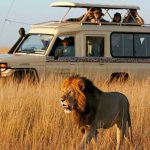
A morning drive does not guarantee active predators. A lion may be asleep by the time you find it, and tracks can tell a guide that an animal passed without telling you where it is now. If your main goal is to watch behaviour, say so at the briefing. You might prefer twenty minutes with a herd feeding and interacting over a longer search for a cat you may only see asleep.
Pack a light layer if you’ll be in an open vehicle. If you take photographs, have your camera ready but don’t spend the entire first hour watching through the viewfinder. Scan with your eyes first. Movement at the edge of your view can be easier to notice that way.
What You Might See on an Afternoon Game Drive
Late afternoon matters more than the word afternoon
A drive that leaves soon after lunch may spend much of its time in strong sun. A later departure may catch cooler conditions and softer light. When a lodge offers an afternoon drive, ask what time you’ll reach the main viewing area and when you have to turn back. Those two times tell you how much of the late afternoon you’ll actually spend watching wildlife.
In a park such as Tarangire in Tanzania, the river and other available water can help shape the route, especially in dry conditions. That does not mean elephants or other animals arrive on a fixed schedule. Ask your guide whether the river has been productive recently and which stretch they would look at. If there’s been rain and animals have more places to drink, a different route may be more useful than waiting at one spot.
Allow enough time for a good sighting
Evening light can be excellent for photographs, but a last-minute sighting can leave you with only a few minutes to watch. If your vehicle must leave the park by a certain time, your guide needs to allow for the return journey. A private booking may let you adjust the route or spend longer at an earlier stop, but it does not change the park’s closing time.
An afternoon outing can also work well on arrival day. If you check in with enough time to reach good habitat before sunset, take the drive rather than assuming it’s better to wait until morning. After a long transfer, though, a short outing close to camp may suit your group better than an ambitious drive to a distant part of the park.
Do Animals Disappear in the Middle of the Day?
No. Heat can change what animals do and where you need to look. Some rest in shade, which can make them harder to spot from the road. Once found, a resting animal can be easier to observe than one moving through tall grass. In a Serengeti study, lion and cheetah sightings were most frequent around midday, reflecting their use of shaded resting sites. That distinction matters. Seeing an animal and seeing it active are not the same thing.
If you’re on a full-day drive, use the middle hours to look in different habitats or stop for lunch at a designated site. Ask your guide to scan beneath trees and along shaded banks instead of driving past them on the way to open ground. Stay in the vehicle unless your guide tells you it’s safe and permitted to get out.
Midday can also make sense if the area you want to visit is far from your lodge. A full-day outing may give you more time there than two shorter drives that each spend much of the journey on the same access road.
What Can Matter More Than the Time of Day?
The habitat you visit. If you drive the same track twice, you may see some of the same animals. A morning on open plains and an afternoon along a river give you different places to look. Ask which habitats each drive will cover, particularly if seeing a wider variety of species matters to you.
Recent weather and water. A hot, clear day can feel very different from a cool, overcast one. Recent rain can also change where animals find water and where vehicles can go. Your guide’s advice about the last few days is more useful than a general rule about mornings and afternoons.
Where you’re staying. An early start only helps if you can reach the viewing area early. If your lodge sits outside the park, include the gate and the drive beyond it when comparing outings. Ask the same question about the afternoon. You may need to turn back well before sunset if you have a long drive to the exit.
What you want to watch. If you’re looking for one species, tell your guide before departure. If your priority is variety, ask to cover more than one habitat. If you hope to photograph a particular animal, ask where you’re likely to have a clear view and favourable light. A good guide can plan for those conditions without promising the animal will be there.
How to Plan Your Safari Drives
With one drive, start with the morning unless your guide has a good reason to suggest the afternoon. You might switch if the wildlife area is far from the gate, your group won’t manage an early start or recent sightings favour a particular late afternoon route.
With two drives, try one in the morning and one in the late afternoon. Ask your guide to explain where each will go. If you’re staying two nights, you can use the afternoon after arrival for a first look and keep the next morning for whatever you most want to revisit. If the first drive was quiet, ask about a different area rather than simply leaving earlier.
With three or more drives, use what you’ve already seen to plan the next outing. If you’ve spent plenty of time with giraffes and zebras on open ground, ask to explore woodland or water next. That’s often a better way to add variety than repeating the same schedule in the hope of a different result.
Frequently Asked Questions
Are lions easier to see in the morning or afternoon?
Either can work. Morning and late afternoon can be good times to look for movement, while a resting pride may be visible in shade during the day. Ask where lions have been seen recently rather than relying on the clock alone.
Is an afternoon game drive worth doing after a morning drive?
Yes, especially if it covers a different habitat or takes you back to an area at a more useful time. If you’ve already followed one stretch of river that morning, ask what the afternoon route will add.
Is an afternoon drive the same as a night drive?
No. An afternoon drive takes place in daylight and may finish around dusk, depending on local rules. A night drive is a separate activity where permitted. Confirm that it’s available at your destination before building it into your plans.