
Stargazing on Safari: Best Places for Clear Night Skies in East Africa
For stargazing on safari, choose a lodge or camp with a dark, open viewing area you can use after dinner. A remote location helps, but bright lights outside your room or a thick canopy overhead can hide much of the sky. Before booking, ask where guests actually sit to watch the stars and whether staff can take you there after dark.
Loisaba in Kenya is a good choice if you want to sleep outdoors in a bed set up for the experience. If you’re already visiting Ruaha in Tanzania, Kidepo in Uganda or Akagera in Rwanda, you can look for a dark viewing spot at your accommodation without adding a separate trip. Wherever you stay, check when the Moon rises and sets. A clear hour without moonlight can make more difference than a change of lodge.
Best Places for Stargazing on Safari in East Africa
| Destination | Why it’s worth considering | What to ask before booking |
|---|---|---|
| Loisaba Conservancy, Kenya | A dedicated star-bed experience in northern Laikipia | Can the bed be moved under cover if it rains or the wind picks up? |
| Ruaha National Park, Tanzania | Remote camps and a dry-season period worth considering for clearer evenings | Is there an open area away from bright lights where guests may sit after dinner? |
| Kidepo Valley National Park, Uganda | Broad views in a remote part of north-eastern Uganda | Which part of the sky is visible from the lodge or camp, and are escorts required? |
| Akagera National Park, Rwanda | Lakeside and ridge settings that fit into a wildlife itinerary | Does the property have an approved viewing spot with a clear view above the trees? |
These are places to consider, not a ranking based on measured sky darkness. Cloud, moonlight and the layout of your accommodation affect what you’ll see on the night.
Loisaba, Kenya: Sleep outside on a star bed
At Loisaba Star Beds in Laikipia, guests can sleep in beds rolled out onto open decks. It’s a useful choice if the night sky is a priority and you want the outdoor setup handled for you. Ask what happens in rain, wind or heavy cloud, and whether staff can bring the bed back under cover. Also check whether your reservation is specifically for a star bed. Other properties in the conservancy offer different accommodation.
If you mainly want to watch the stars for an hour, you may not need an outdoor bed. Ask whether your camp has a terrace or another approved spot with a broad view. You can spend time outside and then return to a room if you prefer to sleep indoors.
Ruaha, Tanzania: Choose the campsite as carefully as the season
Ruaha is a good fit if you’re already planning a southern Tanzania safari. The dry months, broadly June to October, are a useful starting point when you want to reduce the chance of rain interrupting your evening. That does not guarantee clear skies. On any given night, haze, cloud or moonlight may still affect the view.
Tell the camp whether you want to look at the sky with the naked eye or set up a camera. An open terrace might work for both, while a room beneath trees may give you little space to see overhead. If you’re staying several nights, keep the evening flexible and use the first clear, dark window instead of relying on your last night.
Kidepo Valley, Uganda: Make use of the open views
Kidepo Valley National Park lies in Uganda’s remote north-east. If you’re staying in the Apoka area, ask whether your accommodation has a suitable deck or common area for watching the sky. A broad daytime view over the valley is promising, but it doesn’t tell you whether lights are left on at night or whether guests can sit in the same spot after dinner.
Kidepo takes planning to reach, so it makes sense to choose it for the wildlife trip as well as the stars. If you’re already staying more than one night, check conditions each evening. Even if your first night is cloudy, you may get another chance without changing your safari route.
Akagera, Rwanda: Look for a clear view from camp
In Akagera, you can watch the sky as part of an overnight wildlife trip. Ruzizi Tented Lodge is on Lake Ihema, while Karenge Bush Camp sits on a ridge in the north of the park. The two settings offer different views. Ask which areas guests can use at night rather than assuming a lakeshore or ridge is open for walking after dark.
If you’re planning a boat trip or game drive, keep the evening simple. A short session from an approved viewing area can fit comfortably after dinner. You don’t need to book a night drive unless you want a separate wildlife outing.
How to Choose the Best Night for Stargazing
Check moonrise and moonset as well as moon phase
If your main goal is to see the Milky Way, start by looking at dates near the new moon. Then check the local moonrise and moonset times. Even if the Moon is more than a thin crescent, you may have a dark window before it rises or after it sets. Checking the times can save you from shifting your whole trip when a suitable evening is already on your itinerary.
A bright Moon can wash out fainter stars, but it gives you something else to look at. Binoculars can reveal craters and detail along the boundary between the bright and shadowed parts of the Moon. If you’re travelling near a full moon, plan to observe it rather than expecting the same Milky Way view you’d get on a moonless night.
Check the forecast for the hours after dark
A dry afternoon does not guarantee a clear evening. Look at the hourly cloud forecast for the area where you’ll sleep, and ask camp staff what they expect. If the sky clears later in the night, ask whether the viewing area will still be open and whether an escort is available. Your best viewing window is the one you can actually use.
Let the sky darken properly after sunset. A patch of stars visible just after dinner may become easier to see later, once twilight has faded. If everyone is tired after an early game drive, don’t force a late night. A short session on a clear evening is worthwhile, even if you only recognise one constellation.
What to Pack and How to Get a Better View
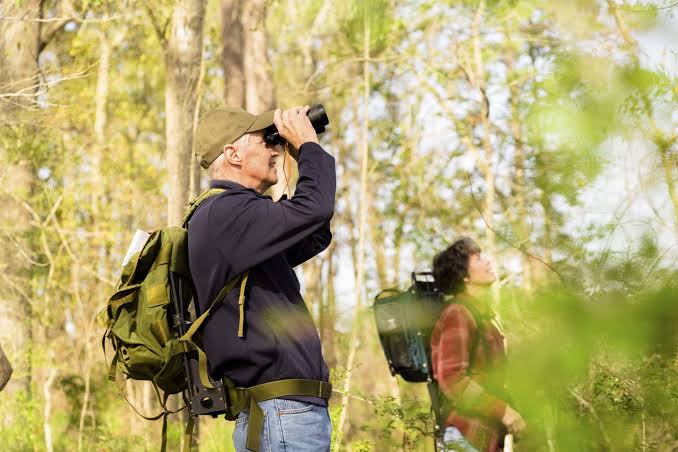
Start with your eyes, then try binoculars. Give yourself about 20 to 30 minutes away from bright lights to adjust to the dark. Put your phone away or turn its brightness down before you step outside. If you already carry binoculars for birds or wildlife, use them to look at the Moon or inspect a small patch of sky. You don’t need a telescope for a first session.
Download a sky map before travelling. Try it offline and make sure it uses the correct location, date and time. Pick one or two objects to find rather than spending the evening looking at your screen. If you want to see the Southern Cross or the brightest part of the Milky Way, check whether it will be above your horizon during the time you plan to watch.
Pack a warm layer and ask about lighting. A night at camp can feel cooler than an afternoon in the vehicle. Use a dim red light for reading a chart if staff say it’s appropriate, but use whatever lighting they require when moving between buildings or tents. Never leave the area your host has approved to find a darker spot. If you’re bringing a tripod, check where you can set it up without blocking a path.
Frequently Asked Questions
Can you see the Milky Way on safari in East Africa?
Yes, when it’s above the horizon and the sky is dark enough. Your view depends on the date, time, cloud cover and moonlight. Check all four for your exact location rather than assuming the Milky Way will be visible every evening.
Do you need to book a star bed to go stargazing?
No. A dark, approved terrace or seating area can be enough. Book a star bed if you want to sleep outside. If you simply want to watch the sky after dinner, ask what your current accommodation offers before changing your itinerary.
Is stargazing the same as a night game drive?
No. Stargazing can take place from a designated area at your accommodation. A night game drive is a separate guided wildlife activity and depends on local rules. If you want to do both, confirm each one separately.