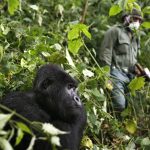
Gorilla Birth and Infant Development: The First Years of a Baby Gorilla
Gorilla birth and infant development are fascinating aspects of mountain gorilla behaviour. Like humans, gorillas experience a relatively long pregnancy, give birth to vulnerable infants and provide extensive parental care during the first years of life.
A newborn mountain gorilla depends almost entirely on its mother for nourishment, warmth, protection and transportation. As the infant grows, it gradually learns to crawl, walk, climb vegetation, eat solid food and interact with other members of its family.
The first few years are particularly important because young gorillas must develop the physical abilities and social skills necessary for surviving in mountain rainforests.
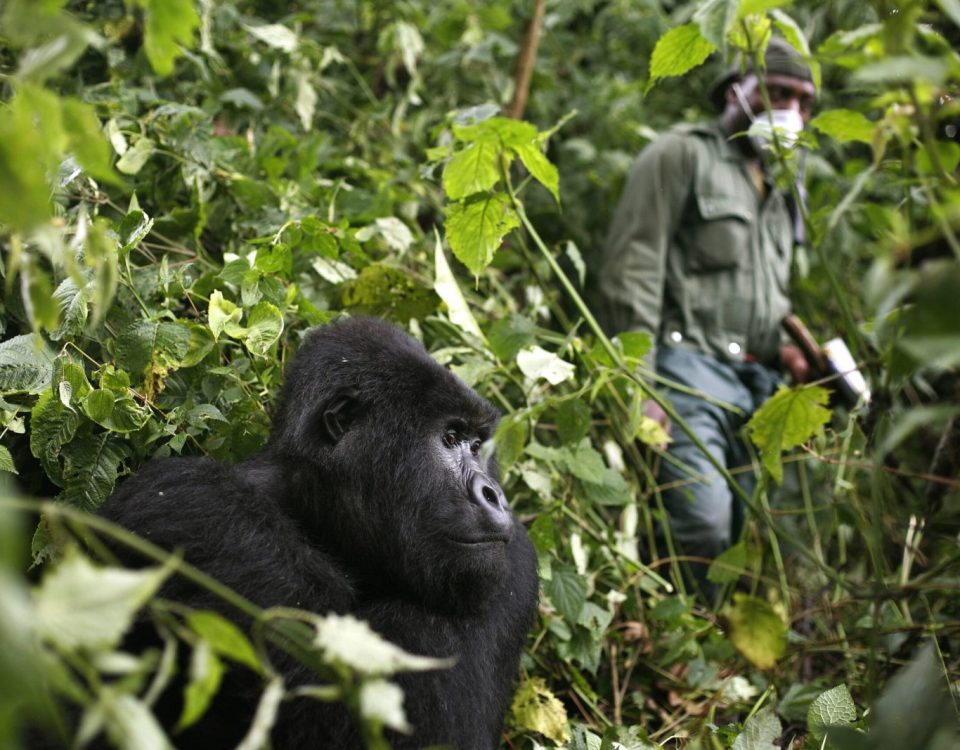
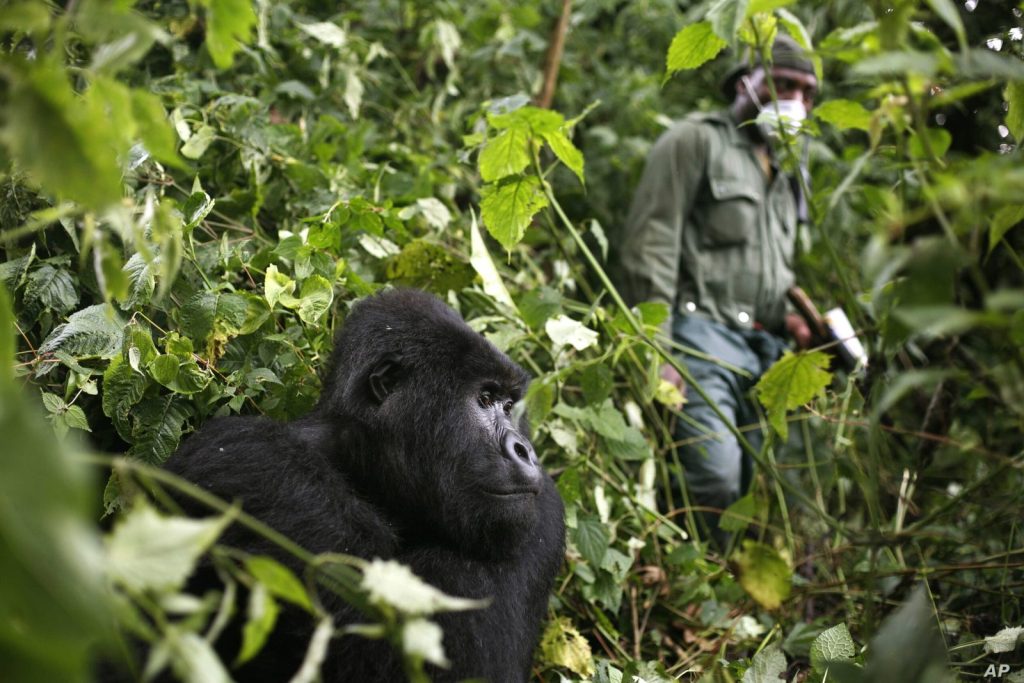
Visitors undertaking gorilla trekking in Uganda or Rwanda may encounter mothers nursing their infants, carrying them through dense vegetation or watching them play with older siblings.
Understanding these developmental stages provides a greater appreciation of gorilla family relationships, maternal care and the conservation efforts required to protect future generations of mountain gorillas.
How Mountain Gorillas Reproduce in the Wild
Mountain gorillas reproduce slowly compared with many other wildlife species. Female gorillas generally reach reproductive maturity before males and often give birth to their first infant at approximately ten years of age.
Adult females may produce another infant every four to five years, although this interval varies depending on maternal health, infant survival and environmental conditions.
This relatively slow reproductive cycle makes every successful birth important for mountain gorilla conservation.
| Reproductive characteristic | Approximate details |
|---|---|
| Female reproductive maturity | 7–9 years |
| Average age at first birth | Around 10 years |
| Pregnancy duration | 8.5 months |
| Number of infants per birth | Usually one |
| Interval between births | Approximately 4–5 years |
| Weaning age | Generally 3–4 years, sometimes later |
| Twin births | Rare |
These figures represent general biological patterns rather than fixed developmental schedules.
New England Primate Conservancy+2
Gorilla Pregnancy and Birth
How Long Is a Mountain Gorilla Pregnant?
A female mountain gorilla carries her developing infant for approximately eight and a half months, making gorilla pregnancy slightly shorter than a typical human pregnancy.
Throughout pregnancy, the female generally continues travelling, feeding and resting alongside other members of her family.
Researchers monitor reproductive behaviour and physical changes to help identify pregnancies. Hormonal analysis of dung samples can also provide reproductive information without physically disturbing the animals.
How Do Mountain Gorillas Give Birth?
Mountain gorillas give birth naturally within their forest habitats. Births may occur during the night or when researchers are not present, making direct observations relatively uncommon.
After delivery, the mother begins caring for her newborn, maintaining close physical contact and providing access to milk.
Most gorilla births produce a single infant. Twin births are unusual and can present additional challenges because the mother must feed, carry and protect two vulnerable newborns simultaneously.
What Does a Newborn Mountain Gorilla Look Like?
A newborn gorilla is remarkably small compared with its parents. Its body is covered with fine hair, while its face, hands and feet have relatively little hair.
Newborn infants have limited physical independence and cannot travel through the forest without assistance.
Their fingers and toes possess grasping abilities that help them maintain contact with their mother’s body.
During the first weeks, mothers provide nearly continuous physical care, ensuring that their infants remain warm, protected and adequately nourished.
Gorilla Birth and Infant Development: The First Five Years
Young mountain gorillas experience several developmental stages before becoming increasingly independent.
| Age | Typical developmental changes |
|---|---|
| Birth to 1 month | Nursing and close maternal contact |
| 1–3 months | Improved movement and awareness |
| 3–6 months | Early crawling, exploration and play |
| 6–12 months | Increasing mobility and tasting solid food |
| 1–2 years | Active play and greater plant consumption |
| 2–3 years | Increasing physical and social independence |
| 3–4 years | Gradual weaning in many individuals |
| 4–5 years | Juvenile development and increasing independence |
Development varies between individuals, particularly regarding mobility, nursing and weaning.
The First Three Months of a Baby Gorilla’s Life
The earliest months represent one of the most vulnerable periods in a mountain gorilla’s life.
During this stage, infants depend heavily on their mothers for food, transportation and protection.
The mother usually carries her newborn against her chest or abdomen while moving through the forest. This position provides warmth and allows the infant to nurse easily.
As its muscles develop, the infant becomes increasingly capable of holding onto its mother’s hair and adjusting its position.
Young gorillas also begin responding more actively to surrounding sounds, movements and other members of their family.
Baby Gorillas Between Three and Six Months
Between approximately three and six months, young gorillas begin developing greater physical independence.
They may crawl short distances, explore nearby vegetation and practise movements while remaining close to their mothers.
As their strength and coordination improve, they begin riding on their mother’s back.
This behaviour becomes particularly useful when the family travels through dense vegetation and across uneven mountain terrain.
Early play also helps infants develop balance, coordination and awareness of their surroundings.
Baby Gorillas Between Six Months and One Year
During the second half of their first year, infant gorillas become increasingly curious about their environment.
They spend more time exploring plants, interacting with other gorillas and practising climbing.
At approximately seven to eight months, many infants begin experimenting with solid foods, although their mother’s milk remains an important nutritional source.
Young gorillas observe how adults select leaves, remove tough plant coverings and consume softer vegetation.
These observations help them develop essential feeding skills.
Gorilla Development Between One and Two Years
By their second year, mountain gorillas generally become more active and socially adventurous.
They may spend considerable time playing with siblings and other young gorillas.
Common play activities include chasing, wrestling, climbing, rolling and practising chest beating.
Although infants become increasingly mobile, they continue relying on their mothers for nursing, reassurance and assistance during difficult journeys.
Their consumption of vegetation also increases as their digestive systems develop.
Gorilla Development Between Three and Five Years
Between three and five years, many mountain gorillas gradually transition from infancy into the juvenile stage.
They become increasingly capable of finding and processing their own food, travelling independently and building sleeping nests.
Weaning does not occur at exactly the same age in every gorilla. Research in Bwindi has documented considerable variation, with some individuals continuing to nurse beyond four years.
Even after weaning, young gorillas may remain socially close to their mothers for several additional years.
PubMed+2
What Do Baby Mountain Gorillas Eat?
Mother’s milk provides the primary nourishment during early infancy.
As young gorillas mature, they gradually consume increasing quantities of natural vegetation.
| Food | Importance during development |
|---|---|
| Mother’s milk | Primary nourishment during early infancy |
| Young leaves | Protein and other nutrients |
| Soft plant stems | Moisture and fibre |
| Bamboo shoots | Seasonal nutritional resources |
| Wild fruits | Natural sugars and energy |
| Plant pith | Soft, digestible plant material |
| Flowers | Additional seasonal nutrients |
Learning to identify suitable food is an important part of growing up in the rainforest.
Young gorillas acquire feeding skills through observation, experimentation and repeated interactions with experienced family members.
The Role of Mother Gorillas in Infant Development
Female gorillas invest several years in raising their offspring.
Mothers provide nourishment, transportation, grooming, protection and emotional reassurance during infancy.
They also help young gorillas become familiar with their surroundings and gradually develop independence.
When the family moves through difficult terrain, mothers may carry infants that cannot comfortably complete the journey themselves.
Maternal care becomes less intensive as young gorillas develop stronger muscles, improved coordination and greater feeding independence.
However, the relationship between mother and offspring can remain important well beyond infancy.
How Silverbacks Protect Baby Gorillas
Silverbacks play an important role in protecting young mountain gorillas.
Their responsibilities include defending family members against external threats and maintaining stability within the group.
Adult males may also interact directly with infants through grooming, resting together and play. These interactions are not necessarily restricted to their biological offspring.
Scientific research has identified positive relationships between infant care and the reproductive success of male mountain gorillas.
A stable gorilla family can provide young individuals with additional social support throughout their development.
Nature+1
Why Play Is Important for Baby Gorillas
Play is an essential part of gorilla infant development.
Through playful activities, young gorillas strengthen their muscles, improve coordination and develop social skills.
Wrestling allows them to practise controlling their strength, while climbing helps develop balance and physical confidence.
Interactions with other young gorillas also provide opportunities to learn communication signals and appropriate social behaviour.
During gorilla trekking, visitors may observe youngsters chasing each other, tumbling through vegetation or performing small chest-beating displays.
These activities represent important developmental experiences rather than simple entertainment.
What Happens When a Baby Gorilla Loses Its Mother?
Losing a mother can be particularly dangerous for an infant that still depends on nursing.
However, older infants and juvenile mountain gorillas may receive support from other members of their family.
Research has documented situations where silverbacks, siblings and other group members provide social companionship and protection following maternal loss.
Studies involving long-term observations in Rwanda suggest that strong social relationships can help reduce some negative consequences of losing a mother after early infancy.
Nevertheless, the survival of very young, unweaned infants remains particularly challenging.
PubMed Central (PMC)+1
Major Threats to Baby Mountain Gorillas
Young mountain gorillas face several challenges during their early development.
| Threat | Potential consequences |
|---|---|
| Respiratory infections | Serious illness |
| Loss of maternal care | Reduced nourishment and protection |
| Illegal snares | Physical injuries and infections |
| Infanticide | Death during certain group conflicts |
| Habitat destruction | Reduced food availability |
| Accidental injuries | Physical harm during exploration |
| Human disturbance | Increased stress and disease exposure |
Specialist veterinary teams, including Gorilla Doctors, monitor mountain gorilla health and intervene when serious injuries or illnesses threaten individual animals.
Protecting infants is particularly important because mountain gorillas reproduce slowly.
Observing Baby Gorillas During Gorilla Trekking
Visitors can encounter young mountain gorillas in Uganda’s Bwindi Impenetrable National Park, Mgahinga Gorilla National Park and Rwanda’s Volcanoes National Park.
Baby gorillas may be seen nursing, riding on their mothers’ backs, playing with siblings or exploring surrounding vegetation.
Although their playful behaviour can be particularly attractive to photographers, visitors must respect wildlife regulations.
Never approach, touch or feed a baby gorilla. Maintain the required viewing distance, avoid flash photography and follow your ranger’s instructions.
If you are suffering from a contagious respiratory illness, postpone your trek to protect vulnerable infants and other family members.
Frequently Asked Questions
How long is a mountain gorilla pregnant?
Mountain gorilla pregnancy lasts approximately eight and a half months.
How many babies does a gorilla have at once?
Mountain gorillas generally give birth to one infant. Twin births are rare.
When do baby gorillas start walking?
Infants begin experimenting with independent movement within their first few months, gradually improving their walking abilities as they grow.
How long do baby gorillas drink their mother’s milk?
Many mountain gorillas nurse for approximately three to four years, although some continue for longer.
Do silverbacks care for baby gorillas?
Yes. Silverbacks provide protection and may interact with infants through grooming, play and social companionship.
When do baby gorillas become independent?
Young gorillas develop substantial feeding and movement independence during their juvenile years, although social dependence continues for longer.
Can tourists hold baby mountain gorillas?
No. Physical contact with wild mountain gorillas is prohibited because it threatens wildlife health and visitor safety.
Gorilla birth and infant development reveal the remarkable social relationships, maternal care and learning processes that characterise mountain gorilla families.
During their first years, baby gorillas gradually develop the physical strength, feeding abilities and social skills necessary for surviving independently within mountain forests.
Mothers, silverbacks and other family members contribute to their development through protection, nourishment, companionship and social interaction.
Because mountain gorillas reproduce slowly, every surviving infant contributes to the future of this endangered subspecies.
When undertaking gorilla trekking in Uganda or Rwanda, observing young gorillas provides an excellent opportunity to appreciate their complex family relationships and understand the importance of continued wildlife conservation.