

Which Five Tanzanian National Parks Are the Smallest?

Tanzania draws travelers with its rich culture and exceptional wildlife, from the famous wildebeest migration to some of Africa’s most biodiverse landscapes. Alongside its giants like the Serengeti, the country also protects several much smaller parks, each with its own specialty. Here are Tanzania’s five smallest national parks.
Gombe Stream National Park
Gombe Stream National Park sits on the shore of Lake Tanganyika in western Tanzania and is the smallest national park in the country, covering roughly 52 square kilometers. Tanzania gazetted the park in 1968 specifically to protect its wild chimpanzee population, and it’s best known for the decades of chimpanzee research Jane Goodall conducted here, work that reshaped scientific understanding of primate behavior.
Steep forested hills define the park’s terrain, which also supports more than 200 bird species and several primate species, including olive baboon, vervet monkey, red-tailed monkey, and blue monkey. Chimpanzees remain the park’s biggest draw, and visitors can hike to Jane Goodall’s former research site, track chimpanzees, go birdwatching, or cruise along the Lake Tanganyika shoreline.
Kitulo National Park
Kitulo National Park sits in the Njombe region of Tanzania’s southern highlands, covering about 412.9 square kilometers of montane forest and grassland on the Kitulo Plateau. Its wildflower displays, especially the many native orchid species that bloom during the rainy season, have earned it the nickname the “Serengeti of Flowers.”
Beyond its flowers, Kitulo supports antelope, elephant, and a range of bird species, including the endangered yellow-breasted cuckoo, tiny grebe, harlequin quail, and red-winged francolin. Visitors come for game viewing, mountain climbing, birdwatching, and the plateau’s wildflower displays.
Rubondo Island National Park
Rubondo Island National Park is one of two national parks on the Tanzanian side of Lake Victoria, alongside Saanane Island National Park. The towns of Mwanza and Bukoba serve as the main entry points, and the park itself sits about 150 kilometers west of Mwanza, closest to Ukerewe Island to its east. Eleven islets, none larger than two square kilometers, make up the park alongside the main island, together covering 457 square kilometers.
The park’s biodiversity includes marshland, dense forest, and sandy beaches, home to the shoebill stork, African grey parrot, and the elusive sitatunga antelope, along with hippo, crocodile, several monkey species, and abundant birdlife around the lakeshore. Conservationists introduced chimpanzees to the islands decades ago as part of a rehabilitation program, and they remain one of the park’s best-known residents today. Rubondo offers a genuinely quiet setting for hiking, fishing, and birdwatching on a Tanzania safari.
Arusha National Park
Arusha National Park sits in Tanzania’s north, in the shadow of Mount Meru, a dormant volcano reaching roughly 4,566 meters that dominates the park’s skyline and offers some of its best hiking. Tanzania gazetted the park in 1960 to protect the area’s rich biodiversity. At about 137 square kilometers, it ranks among the country’s smallest national parks, managed by the Tanzania National Parks Authority.
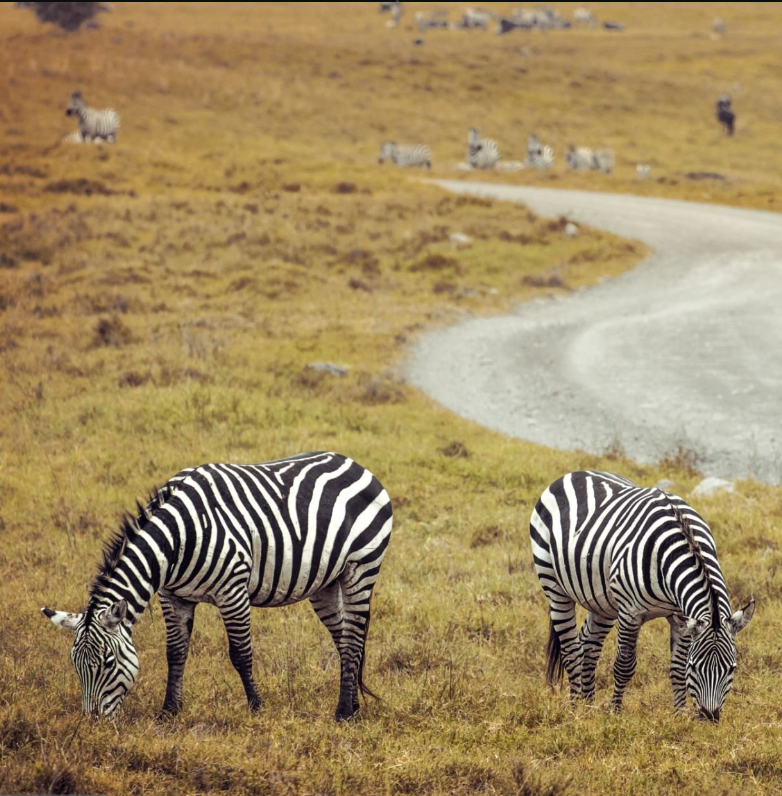
Despite its size, Arusha National Park draws an estimated 66,808 visitors a year, thanks to its scenery and wildlife. Over 400 bird species have been recorded here, alongside resident giraffe, zebra, and buffalo. The park also functions as a gateway to the Serengeti and Ngorongoro Crater, making it a natural stop before heading to Tanzania’s larger parks.
Ibanda-Kyerwa National Park
Ibanda-Kyerwa National Park sits in Tanzania’s Kagera region, covering about 200 square kilometers (77 square miles) of rolling hills, valleys, and acacia savannah. The park is one of western Tanzania’s least-visited destinations, and its open plains make for reliably good sunrise and sunset views. Wildlife here includes hippo, antelope, impala, eland, and baboon.
The Kagera River supplies most of the park’s water, feeding the lakes and swamps that divide its central basin and drawing wildlife throughout the year. Tanzania first set the area aside in 1974 and formally gazetted it as a national park in 2019 in recognition of its conservation value. As a national park, hunting is not permitted here; visitors instead come for game drives, birdwatching, and the park’s remote, undisturbed character.
Related reading: Lake Manyara National Park’s tourist attractions and Getting to Serengeti National Park from Arusha, Tanzania.
Ready to see it for yourself? Explore our Tanzania safari tours, including the 6 Days Tanzania Wildlife Safari itinerary, or get in touch with our safari experts to start planning your trip.













