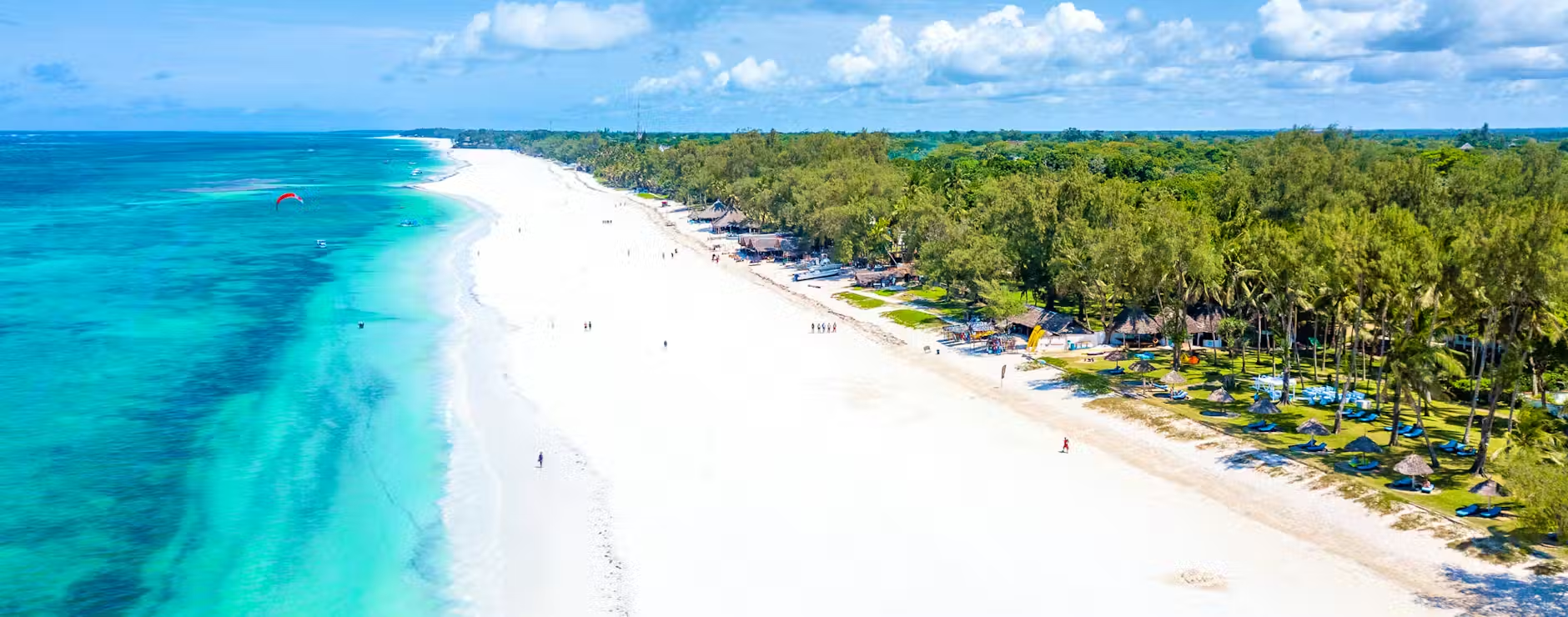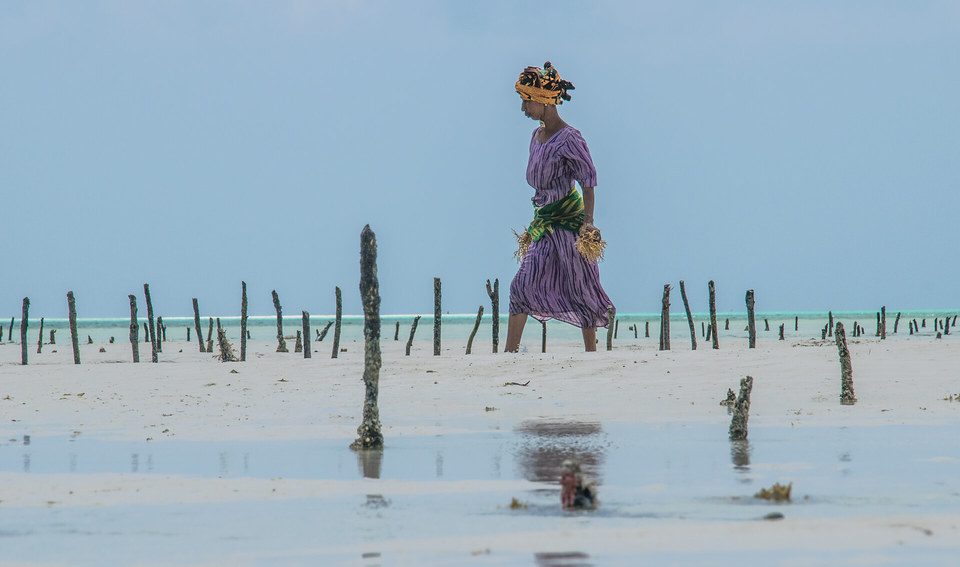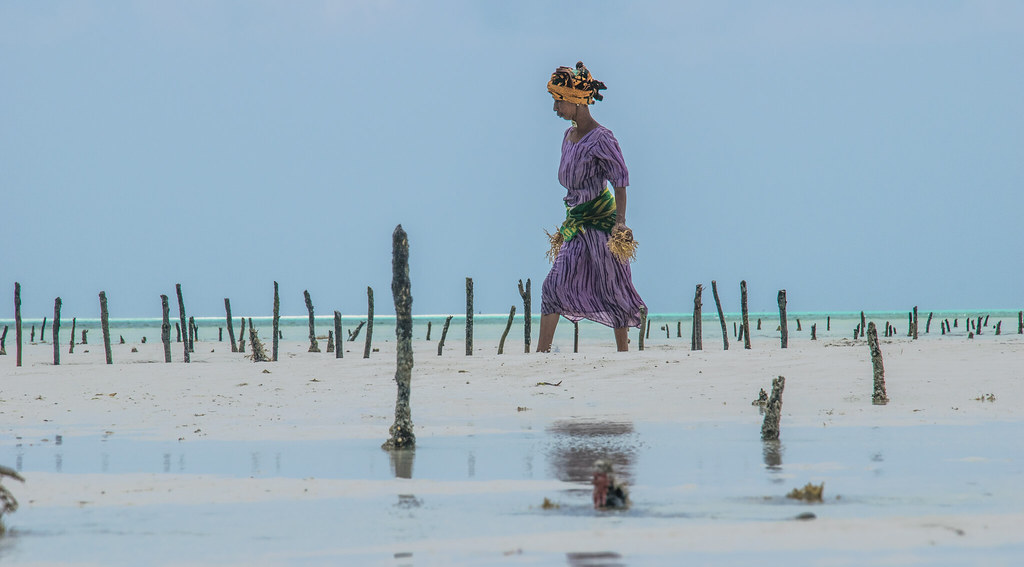
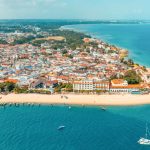
Walk along Zanzibar’s east coast at low tide, past the kite schools of Paje and the quieter sands further south toward Jambiani, and the shallow lagoon reveals rows of wooden stakes stretching out toward the reef, each row strung with rope and dotted with clumps of dark, glossy seaweed. It’s an easy sight to photograph and move past on the way to a swim, but behind those rows of stakes sits one of Zanzibar’s most significant and least visible industries, one that has quietly reshaped the economic lives of tens of thousands of coastal women over the past three decades.
How Seaweed Farming Began in Zanzibar
Commercial seaweed farming on the island dates back to 1989, when private entrepreneurs set up the first experimental farms along the east coast in Paje and Jambiani. The crop, a fast-growing red algae used in the production of carrageenan, a gelling and thickening agent found in everything from toothpaste to processed food, found ideal growing conditions in Zanzibar’s warm, shallow, tidally exposed lagoons. Within a few years, the practice had proven successful enough to expand well beyond its original villages, spreading to the Tanzanian mainland around Tanga and Bagamoyo by the mid-1990s and reaching further south to Mtwara, Lindi, and Kilwa soon after.
What started as a small commercial experiment grew into a genuine coastal industry within a single generation. Today, Zanzibar’s seaweed sector involves roughly twenty-three thousand workers, and it accounts for around ninety per cent of the islands’ marine export products, a remarkable figure for a crop that most visitors barely notice while walking past it on the beach.
The Seaweed Mamas of Paje and Jambiani
The overwhelming majority of Zanzibar’s seaweed farmers are women, a fact that has earned them the affectionate local nickname of “seaweed mamas.” Surveys of the industry have found that the large majority of married women in farming communities along the east coast take part in seaweed cultivation, most commonly women in their thirties with a primary-level education, working in loose cooperatives that share equipment, knowledge, and labour during the physically demanding tasks of planting and harvesting. Some of the largest and most established of these cooperatives operate out of Paje and the neighbouring village of Jambiani, where the shallow, gently sloping lagoon and dependable tidal exposure make for particularly good growing conditions.
The work itself follows the rhythm of the tide rather than the clock. Farmers wade out into the lagoon during low water, tying small cuttings of seaweed onto lengths of rope strung between wooden stakes driven into the sandy seabed. Over the following weeks, the plants grow steadily in the warm, nutrient-rich shallows before being harvested by hand, again during low tide, and carried back to shore to dry in the sun ahead of sale to buyers who process it for export.
A Shift in Social and Economic Life
The rise of the seaweed industry has done more than provide income; it has measurably shifted the social position of women in the communities where it took hold. Cooperative structures have allowed many women to co-own land and equipment for the first time, a genuine departure from older patterns of land ownership on the island, and the steady income from seaweed sales has given many households a second earner where previously there was often only one. That economic shift has rippled outward into how younger generations think about their futures, with daughters in farming families increasingly imagining paths that extend well beyond early marriage and domestic work, something researchers studying the industry have noted as one of its most significant, if less immediately visible, effects.
Visiting a Seaweed Farming Village
For travellers curious about this side of Zanzibar’s coastal economy, several of the cooperatives around Paje and Jambiani welcome visitors for guided tours that walk through the entire process, from planting to drying to the small-scale processing that turns raw seaweed into soap, scrubs, and other cosmetic products sold locally. These visits typically involve wading out into the shallow lagoon alongside a farmer to see the growing lines up close, followed by a stop at a drying area or small workshop where the harvested seaweed is processed by hand.
It’s a markedly different kind of coastal activity from the kitesurfing lessons and beach lounging that dominate most itineraries along this stretch of coast, and it offers a rare, direct window into the working side of a village that tourism has otherwise reshaped considerably. Because seaweed farming depends entirely on the tide, timing a visit around low water is essential; a cooperative or local guide can advise on the right window for a given day, since the schedule shifts by roughly an hour daily in line with the moon.
What a Tour Typically Covers
A well-run seaweed tour generally begins with an explanation of how the industry developed locally, often delivered by one of the cooperative’s own members, before moving into the practical demonstration of tying cuttings, checking growth lines, and harvesting mature seaweed. Visitors are usually invited to try the planting technique themselves, which turns out to be trickier than it looks, since securing a cutting firmly enough to survive weeks of tidal movement takes a practised hand. Tours often close with a chance to buy soap, scrubs, or other seaweed-based products made by the cooperative, offering a direct way for visitors to support the same women running the farms rather than a generic souvenir shop in Stone Town.
Challenges Facing the Industry
Seaweed farming in Zanzibar isn’t without its difficulties. Rising sea temperatures linked to climate change have made some farming areas less reliable than they once were, with warmer water contributing to a plant disease known locally as “ice-ice” that can wipe out entire growing lines within days. Some cooperatives have responded by experimenting with deeper-water farming techniques or different seaweed strains better suited to warmer conditions, though these adaptations often require more capital and technical support than smallholder farmers can easily access on their own.
Market prices for raw seaweed have also stayed relatively low for years, which has pushed some cooperatives to focus more heavily on value-added products like soap and cosmetics, where the profit margin is considerably higher than selling dried raw seaweed to exporters. Tourism revenue from village tours has become an increasingly important supplementary income for cooperatives able to organise it, adding a second, more stable source of earnings alongside the more volatile export market.
Supporting the Industry as a Visitor
Travellers wanting to support Zanzibar’s seaweed farmers in a meaningful way can do so fairly directly, whether by booking a village tour through a cooperative rather than a generic tour operator, buying seaweed-based soaps and cosmetics directly from the women who make them, or simply asking questions and showing genuine interest during a visit. Given how closely the industry is tied to the same beaches that draw the bulk of Zanzibar’s tourism, it’s one of the more accessible ways for a beach holiday to translate into direct, visible support for the local economy.
Where Seaweed Farming Fits Into an East Coast Itinerary
The villages most associated with seaweed farming, Paje and Jambiani, sit along the same stretch of east coast that has become Zanzibar’s main hub for kitesurfing and beach tourism, which makes a farming village tour an easy addition to a trip already built around this part of the island. Travellers staying in Paje for the wind sports covered in our guide to Paje Beach’s kitesurfing scene often find that a half-day seaweed tour fits naturally into a rest day between kite sessions, offering a change of pace from the beach and lagoon without requiring a long transfer elsewhere on the island.
Jambiani, a short drive south of Paje, has its own long-established seaweed farming tradition and a slightly quieter, more local feel than its busier neighbour, making it worth the short trip for travellers who want to see the industry away from the areas most shaped by tourism. Several guesthouses in both villages can arrange a farm visit directly, often through a family connection to one of the local cooperatives, which tends to make for a more personal and less scripted experience than booking through a larger tour operator based in Stone Town.
Respecting the Community During a Visit
Because seaweed farming remains, first and foremost, a livelihood rather than a tourist performance, a bit of basic etiquette goes a long way during a visit. Modest clothing suited to a working village rather than a beach day, asking permission before photographing individual farmers, and treating the visit as an opportunity to listen rather than simply observe all help keep these tours respectful of the women whose daily work visitors are there to see. Tipping guides directly and buying products from the cooperative itself, rather than a resale shop elsewhere, ensures that money from the visit reaches the farmers rather than being absorbed entirely by an intermediary.
A Working Coast Behind the Postcard View
The rows of stakes visible from Paje’s kite beaches or Jambiani’s quieter sands are easy to overlook amid the turquoise water and white sand that draw most visitors to this coast in the first place. But for the thousands of women who tend those lines every low tide, the lagoon represents something considerably more significant than scenery: a livelihood, a cooperative structure that has reshaped their economic standing, and an industry that, despite real challenges, remains one of the quieter success stories along Zanzibar’s coastline. A short visit to a seaweed farming village adds a dimension to a beach holiday that few other coastal activities on the island can match.