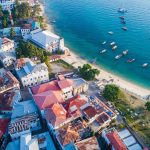

Every evening in Stone Town follows the same quiet transformation. As the light over the harbour turns gold and then fades, a stretch of waterfront parkland along the old town’s seafront edge fills with charcoal smoke, folding tables, and the clatter of grills being set up for the night. By the time the sun has properly set, Forodhani Gardens has become one of the liveliest, most genuinely communal food markets anywhere on the East African coast, and for many visitors it ends up as the single most memorable meal of an entire Zanzibar trip.
A Park With Its Own History
Forodhani Gardens wasn’t always a food market. The park was laid out in 1936 to mark the Silver Jubilee of Sultan Khalifa’s twenty-five-year reign, a formal green space positioned along Stone Town’s seafront directly in front of the Old Fort and the Palace Museum. For decades it served as exactly that: a shaded public garden where residents came to sit by the water rather than the nightly street food spectacle it’s known for today.
The gardens underwent a significant restoration in 2009, led by the Aga Khan Trust for Culture as part of a broader effort to preserve Stone Town’s historic waterfront. The roughly three-million-dollar project modernised the park’s infrastructure and improved lighting for safety, while deliberately preserving the sea wall and the site’s historical character rather than replacing it with something more generic. That restoration is a large part of why the market today feels both well-organised and genuinely rooted in the old town, rather than a recent tourist add-on bolted onto a historic site.
What Happens Each Evening
As sunset approaches, vendors begin setting up rows of stalls along the park’s paved walkways, each lit by strings of bulbs and lined with charcoal grills that stay busy well into the night. What makes Forodhani distinct from a typical tourist night market is how central it remains to local life alongside its role as a visitor attraction. Families come to eat dinner together on the low garden walls facing the water, groups of friends gather around shared plates, and the low hum of Swahili conversation mixes with the sizzle of grills and the calls of vendors describing the night’s offerings. It functions, in a very real sense, as Stone Town’s communal living room after dark, a place where locals and travellers end up sharing the same benches and the same food rather than existing in separate tourist and resident tracks.
Finding Your Way Around the Stalls
The market has no fixed entrance or single starting point; visitors generally wander the length of the gardens, comparing what each stall is grilling before settling on a first plate. Most vendors specialise in one or two dishes rather than offering a full menu, which means building a proper meal usually means visiting several stalls rather than ordering everything from one spot. It’s worth arriving with a bit of patience and an appetite for grazing rather than a single sit-down order, since half the appeal of Forodhani is the slow circuit through smoke and smells before deciding what to eat.
Zanzibar Pizza: The Market’s Signature Dish
No dish is more closely associated with Forodhani than Zanzibar pizza, a street food invention that owes very little to its Italian namesake. A thin sheet of dough is filled with a savoury mixture, typically minced meat, egg, cheese, and finely chopped vegetables, folded into a neat square, and fried on a flat griddle until the outside turns crisp while the filling stays soft and molten inside. Sweet versions exist too, usually built around banana and melted chocolate, and it isn’t unusual to see travellers order one of each to split between a group.
Watching a Zanzibar pizza get made is part of the appeal in itself. Vendors work quickly, spreading the dough paper-thin on a hot griddle, layering in the filling, folding the parcel with practised speed, and flipping it to crisp both sides before it ever reaches a plate. Because each one is cooked to order, there’s a short wait at busier stalls, but the freshness more than makes up for the queue.
Urojo: Zanzibar’s Beloved Street Soup
Alongside the pizza, urojo holds its own devoted following among regular visitors to the market. It’s a thick, tangy soup built on a potato-based broth, often brightened with mango and tamarind for a sour-sweet edge that’s distinct from anything else on the East African coast. A proper bowl comes loaded with crispy potato bhajias, spiced potato balls known as kachoris, shredded potato for texture, and often a grilled meat skewer on the side, finished with a drizzle of spicy coconut chutney that ties the whole dish together. It’s messier and more involved than the pizza, and correspondingly more rewarding for anyone willing to eat it properly with the provided spoon rather than trying to keep things tidy.
Seafood, Skewers, and Sugarcane Juice
Beyond the two signature dishes, Forodhani’s stalls turn out a wide spread of grilled seafood skewers, ranging from octopus and squid to king fish and prawns, seasoned simply and cooked fast over open charcoal. Vendors selling fresh sugarcane juice, pressed to order through hand-cranked machines, are a fixture throughout the market and offer a refreshing, naturally sweet counterpoint to the richer fried dishes elsewhere on the strip. Fresh fruit, samosas, and grilled corn round out the options for anyone looking for something lighter between the heavier stalls.
Food Safety and Practical Tips
Forodhani’s popularity with both locals and tourists works in visitors’ favour when it comes to food safety, since high turnover at the busiest stalls generally means fresher ingredients and food that hasn’t been sitting out for long. Choosing stalls with a visible queue of local customers rather than the emptiest table is usually a reliable way to judge quality. It’s sensible to stick to freshly cooked, hot food rather than anything that’s been prepared ahead of time, and to drink bottled or otherwise treated water alongside the meal. Our broader guide answering what street food to try across Zanzibar covers similar ground for travellers exploring beyond Forodhani during the day.
Timing a Visit
The market typically comes alive as the sun sets, generally around six in the evening given Zanzibar’s position near the equator, and stays busy for several hours afterward. Arriving right at sunset means catching the best light for photos over the harbour and the Old Fort before the crowds build, while a slightly later arrival, closer to seven or eight, usually finds the market at its most atmospheric, fully lit and busiest with both vendors and diners. Weekends and the peak tourist months tend to draw larger crowds, though the market never feels overwhelming given how much open space the gardens provide.
The Vendors Who Run the Market
Behind every stall at Forodhani is a small family business, often run by the same vendors night after night for years, building a regular clientele of locals who know exactly which stall makes the best urojo or the crispiest pizza. Many of these vendors learned their trade from parents or older relatives who worked the same stretch of gardens decades earlier, and that continuity shows in how practised and unhurried the cooking looks even during the market’s busiest hours. For a number of Stone Town families, the nightly market represents a primary source of income, and the steady flow of both local and international customers has helped keep that informal economy stable even as the rest of the old town’s tourism industry has shifted over the years.
Prices at Forodhani remain firmly aimed at a local market rather than a tourist one, which is part of why the food stays so affordable compared with sit-down restaurants elsewhere in Stone Town. A full meal built from two or three stalls, including a Zanzibar pizza, a skewer, and a fresh juice, typically costs a fraction of what a comparable meal would run at a proper restaurant, making the market as practical a dinner option for budget-conscious travellers as it is a cultural experience in its own right.
Making Forodhani Part of a Bigger Evening
Because of its central location directly on Stone Town’s seafront, Forodhani slots naturally into a broader evening out in the old town. Many visitors pair an early dinner at the market with a rooftop drink beforehand at one of Stone Town’s sunset bars, timing their walk down to the gardens for after the crowds from the rooftop terraces have thinned out. Others treat Forodhani as the main event of the evening, arriving hungry and spending a couple of hours slowly working through stalls rather than rushing off to a formal restaurant afterward.
Either way, a visit to Forodhani Gardens after dark captures something that few other single stops in Zanzibar manage: a genuinely shared space where the island’s food, history, and daily rhythm of life all come together in one evening, against a backdrop that has watched over Stone Town’s waterfront for nearly a century.
For travellers piecing together a longer Stone Town itinerary, it’s worth treating Forodhani not as a one-off novelty but as a place worth returning to more than once during a stay. The market’s character shifts subtly from night to night depending on the crowd, the weather, and simply which vendors happen to be working a particular stretch of the gardens, and a second or third visit often turns up a favourite stall that a single rushed evening would have missed entirely.