Big Five Safari in Akagera: Rwanda’s Wildlife Comeback Story
The term “Big Five” originally referred to the most dangerous animals for hunters to track on foot, but today it represents the crown jewels of any African safari. This elite group consists of the lion, leopard, elephant, buffalo, and rhino. For decades, Akagera could not claim this prestigious title. Civil war, poaching, and a lack of resources had devastated the park’s large mammal populations. The fact that visitors can now see all five in a single day is not just a marketing triumph but a testament to one of the most inspiring conservation recoveries in modern African history. Rwanda, a country better known for its mountain gorillas, has quietly built a savannah safari experience that rivals its more famous neighbours.
The Low Point: A Park on the Brink
To understand the comeback, one must appreciate the depths of the crisis. Following the 1994 genocide against the Tutsi, Rwanda’s national parks were largely abandoned. Refugees and returnees settled within Akagera’s boundaries, and poaching escalated to catastrophic levels. Professional poachers armed with automatic weapons decimated the rhino population to the point of local extinction. Lions were hunted out of existence by 1999, with the last known individual killed by cattle herders protecting their livestock. Elephants were reduced to a few hundred, and even the hardy buffalo were severely depleted. By the early 2000s, Akagera was a shadow of its former self, a park existing only on paper with little active management or protection.
The Turning Point: The African Parks Partnership
The renaissance began in 2010 when the Rwandan government entered into a groundbreaking partnership with African Parks, a non-profit conservation organisation known for taking over and reviving failing protected areas across the continent. This was a bold move, placing a national treasure under international management. African Parks brought immediate and decisive changes. They deployed highly trained anti-poaching units, equipped with tracking technology and supported by a dedicated canine unit. They established a 24-hour radio communication network and began aerial surveillance using helicopters. Fences were reinforced along the Tanzanian border to prevent livestock incursions and illegal hunting. Within a few years, poaching was reduced by over ninety percent, creating the safe conditions necessary for wildlife to recover and for reintroductions to succeed.
The Return of the Lion
Big Five Safari in Akagera
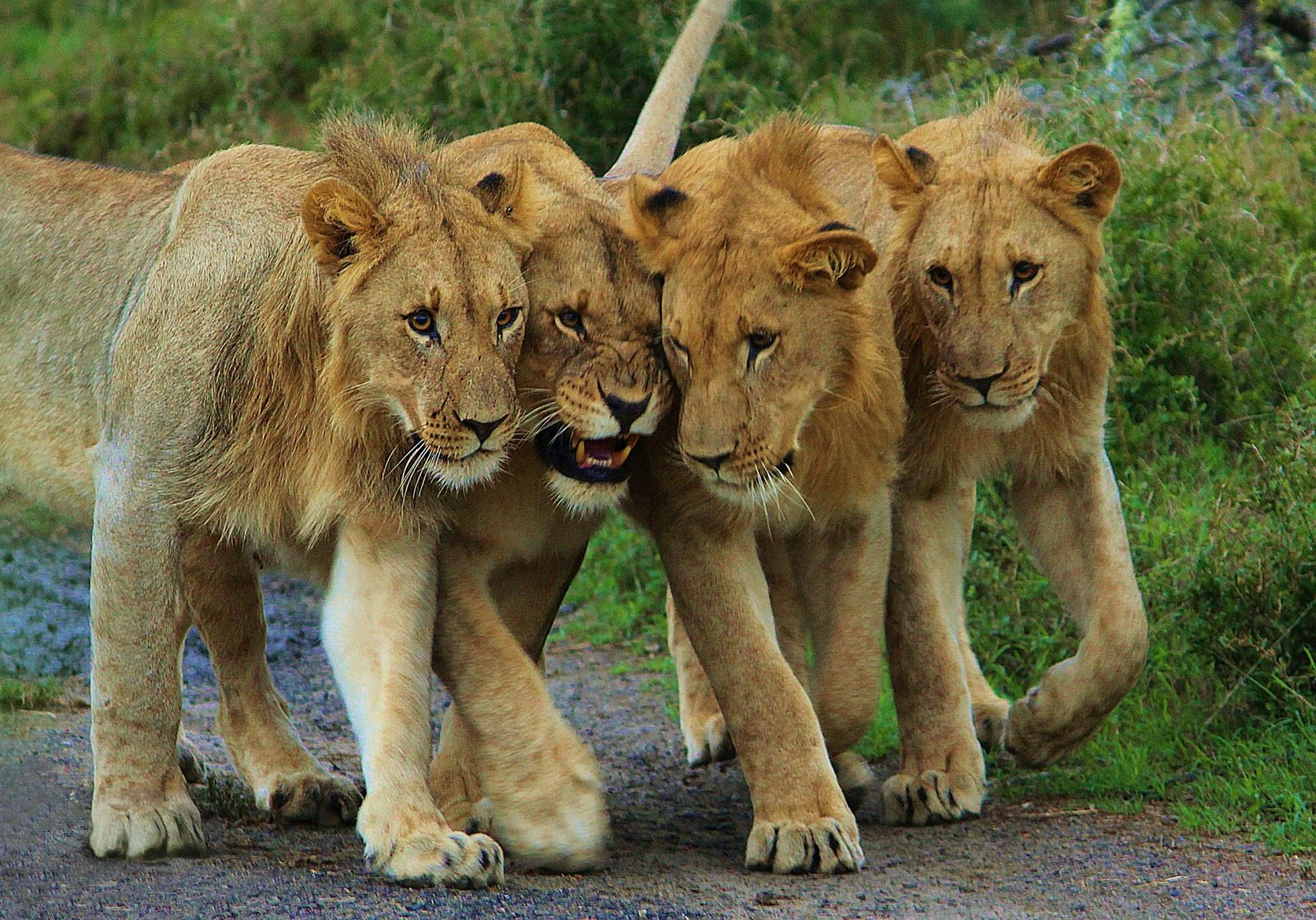
The lion was the first major missing piece to be restored. In 2015, African Parks and the Rwandan Development Board translocated seven lions from South Africa, consisting of two males and five females. The animals were released into a secure boma, or enclosure, within the park to acclimatise before being fully released into the wild. The operation was delicate and risky, but the lions adapted remarkably well. They bred quickly, and today the population has grown to over forty individuals, spreading across the northern plains and establishing several prides. Visitors now regularly witness these apex predators hunting zebra and buffalo, a sight that had been absent from Rwanda for nearly two decades. The lions have become the symbolic heart of the park’s recovery, proving that Rwanda can sustain top predators.
The Reintroduction of the Black Rhino
The return of the eastern black rhino in 2017 was an even more ambitious undertaking. Seventeen rhinos were transported from South Africa in a massive operation involving chartered aircraft and armed escorts. These critically endangered animals were fitted with satellite tracking collars and assigned round-the-clock armed guards. The rhino reintroduction faced significant challenges, including adapting to new vegetation types and avoiding conflict with the resident elephant population. However, the rhinos thrived, and the first calf was born in the park in 2018, a powerful symbol of hope. Today, the rhino population continues to grow, and they are frequently sighted in the northern sector of the park. Visitors should be aware that these animals are closely protected, and sightings are conducted with strict protocols to ensure their safety and minimise stress.
The Ever-Present Elephant and Buffalo
Unlike the lions and rhinos, elephants and buffalo never completely disappeared from Akagera, though their numbers were severely reduced. The elephant population, which once numbered in the thousands, had fallen to just a few hundred scattered individuals. With the end of poaching, the elephants have rebounded spectacularly. Herds of over one hundred individuals are now common, often seen crossing the plains or bathing in the lakes. The buffalo population has similarly exploded, with massive herds of several hundred animals grazing the central grasslands. These two species form the backbone of the Big Five experience, providing reliable and dramatic sightings for every visitor. Their recovery demonstrates that given adequate protection, large herbivores can bounce back with remarkable speed.
The Elusive Leopard
The leopard remains the most challenging member of the Big Five to spot. These solitary, nocturnal, and incredibly stealthy predators were always present in Akagera, even during the darkest days of the park’s decline. Their adaptability and secretive nature allowed them to survive when lions and rhinos could not. Sightings are most likely during night game drives, when a spotlight might catch the reflection of a leopard’s eyes in a tree. Occasionally, one might be seen at dawn or dusk, crossing a track or dragging a kill into the branches. Spotting a leopard is considered a special prize, a moment of pure luck combined with a skilled guide’s expertise. The growing leopard population is a sign of a healthy, balanced ecosystem with sufficient prey and minimal human disturbance.
Where to Find the Big Five in the Park
The park is broadly divided into two sectors, each with its own strengths for Big Five viewing. The northern sector, particularly the area around the Kagogo hills, is the prime zone for both lions and black rhinos. This region consists of rolling hills and open plains where predators can be spotted scanning for prey from elevated positions. The southern sector, dominated by the vast Lake Ihema and its shoreline, is the best area for elephants, buffalo, and hippos. The lakeshore vegetation provides abundant food and water, attracting large herds. Leopards can be found throughout the park but are more frequently reported in the woodlands and rocky outcrops of the central region. A well-planned itinerary that covers both the northern and southern areas over two to three days maximises your chances of completing the Big Five set.
The Best Times for Big Five Sightings
The dry seasons, from June to September and December to February, are optimal for finding the Big Five. As water sources shrink, animals are forced to concentrate around the remaining lakes and rivers, making them much more predictable and visible. The roads are also drier and more accessible, allowing game drives to reach the most remote corners of the park. Early morning drives, starting at dawn, are particularly productive as lions and leopards are still active from the night. Late afternoon drives, continuing until sunset, offer another peak activity period. The wet season presents more challenges as animals disperse widely, but it also offers lush scenery and fewer tourists. Dedicated safari enthusiasts visiting in the wet season are often rewarded with dramatic storm-light photography and the rare experience of seeing a black rhino framed by green vegetation.
The Experience of a Big Five Drive
A typical game drive in Akagera is a patient and immersive experience. You sit in an open-sided vehicle, scanning the horizon with binoculars while your guide listens for alarm calls from birds and monkeys that might betray a predator’s presence. The roads are bumpy and dusty, but every bend brings potential discovery. You might round a corner to find an elephant bull blocking the track, or crest a hill to see a pride of lions sleeping under an acacia tree. The armed ranger provides commentary, explaining the animals’ behaviour and the park’s history. The silence of the savannah is punctuated by the grunts of hippos in the distance and the cry of fish eagles overhead. A successful Big Five drive is not a checklist exercise; it is a profound connection with a restored wilderness.
The Night Drive for Leopards
Because leopards are so difficult to see during the day, the night game drive is often the key to ticking this box. Available for an additional fee, these two-hour excursions depart after dinner and explore the park’s tracks under the cover of darkness. A powerful handheld spotlight is used to sweep the bush, catching the reflections of animal eyes. Hippos emerge from the water to graze, genets and civets dart across the road, and the night air fills with the calls of nocturnal birds. Then comes the magic moment when the spotlight reveals the unmistakable silhouette of a leopard, either stretched on a branch or slinking along a dry riverbed. This experience is intensely atmospheric and is often the highlight for seasoned safari-goers.
The Boat Safari: Elephants and Buffalo from the Water
The boat safari on Lake Ihema provides a completely different perspective on two members of the Big Five. While elephants and buffalo are usually seen on land, the boat trip brings you to the water’s edge where these animals come to drink and bathe. You will watch herds of buffalo wading into the shallows and elephants sucking up water with their trunks. The proximity is thrilling, and the water level offers unobstructed views for photography. The boat also provides an unparalleled vantage point for hippos and crocodiles, which are not part of the Big Five but are equally impressive. This activity is usually included in the standard park itinerary and should never be missed.
The Conservation Fees and Your Impact
The entry fees and activity charges in Akagera are structured to directly fund conservation. Every dollar paid by a visitor contributes to anti-poaching patrols, ranger salaries, community development projects, and wildlife monitoring. When you pay for a night drive or a boat trip, you are financing the continued protection of lions and rhinos. This model, known as conservation tourism, is the primary reason the comeback story is financially sustainable. Unlike some parks that rely on government subsidies, Akagera is increasingly self-sufficient through tourism revenue. Your visit is not just a holiday; it is an active contribution to preserving Rwanda’s natural heritage.
The Future of the Big Five in Rwanda
The comeback story is far from complete. African Parks and the Rwandan government have ambitious plans for the future. There are discussions about increasing the rhino population further, possibly introducing white rhinos alongside the existing black rhinos. The lion population is expected to continue growing, and corridors are being explored to connect Akagera with other protected areas in Tanzania, allowing for natural genetic exchange. Community engagement programs are expanding, ensuring that local people benefit directly from tourism through employment, business opportunities, and education. The ultimate goal is a thriving, self-sustaining ecosystem where the Big Five are not just protected but are an integral part of the landscape for generations to come.
Final Reflection on the Comeback Story
Akagera’s transformation is one of the most hopeful conservation narratives of the twenty-first century. It proves that even after near-total collapse, a wilderness can be resurrected with strategic investment, dedicated protection, and international cooperation. The park is a living museum of resilience, where the scars of the past are healing under the watchful eyes of committed rangers. For travellers, witnessing a lion hunt or a rhino grazing in the Rwandan savannah is not merely a thrilling safari moment; it is bearing witness to a miracle of restoration. The Big Five are back, and their presence is a powerful statement that Rwanda values its wildlife and is determined to protect it. Your safari in Akagera is therefore a journey into the heart of hope, an experience that will stay with you long after you have left the savannah behind.
Recommended Tours: 4 Days Rwanda Gorilla Trekking Safari | 3 Days Rwanda Gorilla Tour & Golden Monkeys