Cultural Experiences in Uganda: Dance, Craft and Village Visits
Cultural experiences in Uganda provide travellers with opportunities to understand the country’s traditions, languages, history and everyday community life. Although Uganda is internationally recognised for mountain gorillas, chimpanzees and savannah wildlife, its cultural diversity is equally deserving of attention.
Uganda is home to numerous ethnic communities, each with distinctive music, traditional dances, food, craftsmanship and social customs. Visitors can participate in community-guided village walks, watch traditional dance performances, learn basket weaving and discover how local families prepare traditional meals.
Cultural tourism also provides opportunities to explore historic kingdoms, agricultural communities and Indigenous traditions that have developed over generations.
Combining cultural encounters with wildlife safaris allows you to develop a broader understanding of Uganda while supporting local businesses and community tourism initiatives.
Whether you visit the villages surrounding Bwindi, explore the Buganda Kingdom or spend time with pastoral communities in Karamoja, Uganda offers meaningful cultural experiences beyond its national parks.
Understanding Uganda’s Cultural Diversity
Uganda has more than 50 ethnic communities, with cultural traditions that vary considerably between regions.
Central Uganda is historically associated with the Buganda Kingdom, while western Uganda contains communities connected to the kingdoms of Bunyoro and Tooro, alongside the Banyankole, Bakiga and other groups.
Northern Uganda is home to the Acholi, Langi and several other communities. Eastern Uganda includes the Basoga, Bagisu, Iteso and Sabiny, while the Karamojong occupy parts of northeastern Uganda.
Each region offers different cultural experiences.
| Region | Cultural communities | Popular experiences |
|---|---|---|
| Central Uganda | Baganda | Royal heritage, drumming and barkcloth making |
| Western Uganda | Banyankole, Banyoro and Batooro | Cattle keeping, traditional food and royal history |
| Southwestern Uganda | Bakiga, Bafumbira and Batwa | Traditional dances, basket weaving and forest heritage |
| Northern Uganda | Acholi and Langi | Traditional music, storytelling and village visits |
| Eastern Uganda | Basoga, Bagisu and Sabiny | Cultural dances, coffee farming and agricultural tours |
| Northeastern Uganda | Karamojong | Pastoral traditions, beadwork and community visits |
These traditions continue developing as communities adapt to modern education, technology and economic opportunities.
Traditional Dances You Can Experience in Uganda
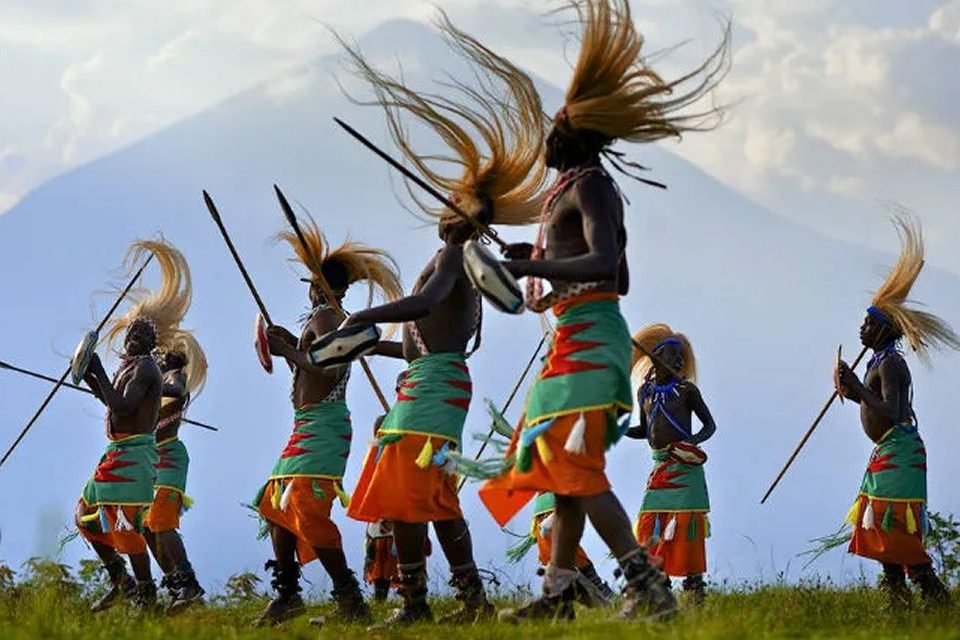
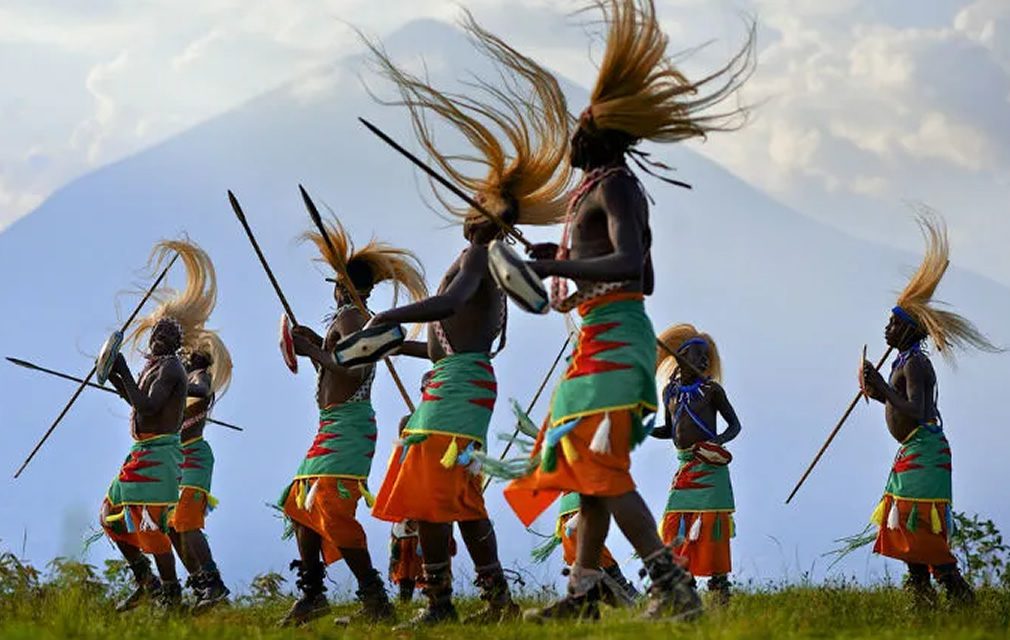
Traditional dancing remains an important part of Ugandan celebrations, weddings, cultural ceremonies and community gatherings.
Different communities use dance to communicate stories, celebrate achievements and express their cultural identity.
Bakisimba Dance
Bakisimba is one of the best-known traditional dances associated with the Baganda people of central Uganda.
The performance combines rhythmic drumming with controlled waist movements and coordinated steps.
Traditional instruments provide the rhythm, while dancers respond to changes in the music.
Visitors can experience Bakisimba performances at cultural centres, organised community events and selected tourism establishments.
Ekitaguriro Dance
Ekitaguriro is traditionally associated with the Banyankole people of western Uganda.
The dance features energetic foot movements and raised arms that reflect the cultural significance of Ankole long-horned cattle.
It provides an interesting introduction to the relationship between pastoral communities, cattle keeping and cultural identity.
Ekizino Dance
Ekizino is a traditional dance associated with the Bakiga people of southwestern Uganda.
Its energetic movements and powerful foot stamping make it particularly entertaining to watch.
Visitors travelling towards Bwindi Impenetrable National Park may encounter Ekizino during organised community performances.
The dance requires considerable physical energy and coordination between participants.
Kadodi Dance
Kadodi is traditionally associated with the Bagisu people living around Mount Elgon in eastern Uganda.
Its energetic drumming and coordinated movements are closely connected to Imbalu cultural celebrations.
Visitors can enjoy organised Kadodi performances while learning about the cultural importance of music and community gatherings in the region.
Larakaraka Dance
Larakaraka is a traditional Acholi courtship dance originating from northern Uganda.
The performance combines rhythmic movements, singing and percussion instruments.
It historically provided opportunities for young adults to interact during community celebrations.
Today, organised cultural performances help introduce visitors to Acholi musical traditions.
Traditional Music and Instruments in Uganda
Music plays an important role in Ugandan cultural life. Traditional instruments vary between communities and are used during ceremonies, celebrations and storytelling performances.
| Traditional instrument | Description |
|---|---|
| Engoma | Traditional drums used during performances and ceremonies |
| Endongo | Traditional bowl lyre |
| Adungu | Stringed instrument associated with northwestern Uganda |
| Amadinda | Wooden xylophone associated with Buganda |
| Endingidi | Traditional single-string fiddle |
| Akogo | Thumb piano associated with eastern Uganda |
| Ebinyege | Leg rattles used during traditional dancing |
Participating in a guided drumming session can help you understand how musicians coordinate rhythms and communicate with dancers.
Traditional Handicrafts in Uganda
Uganda’s handicrafts reflect generations of artistic knowledge, practical skills and locally available materials.
Many artisans produce items for household use, cultural ceremonies and commercial sale.
Basket Weaving
Basket weaving is widely practised across Uganda, particularly within agricultural communities.
Artisans use materials such as papyrus, raffia, banana fibres and grasses to create baskets of different sizes and designs.
Traditional baskets may be used for storing food, carrying agricultural produce and decorating homes.
Visitors can participate in weaving demonstrations around Bwindi, Kibale and other community tourism destinations.
Barkcloth Making
Barkcloth making is an ancient cultural practice associated with the Baganda people.
Craftspeople harvest bark from the Mutuba tree and carefully beat it until it becomes a soft textile.
Historically, barkcloth served as clothing and played an important role in royal and spiritual ceremonies.
UNESCO inscribed Uganda’s barkcloth-making tradition on its Representative List of the Intangible Cultural Heritage of Humanity in 2008.
Watching an experienced craftsperson prepare barkcloth provides an appreciation of the patience and technical knowledge required.
Traditional Pottery
Pottery remains an important traditional craft in several Ugandan communities.
Artisans shape clay into cooking pots, water containers and decorative objects before drying and firing them.
A guided pottery workshop allows visitors to learn about traditional manufacturing methods and the practical uses of clay vessels.
Wood Carving
Ugandan woodcarvers produce decorative sculptures, musical instruments, household objects and cultural items.
When purchasing wooden souvenirs, ask about the origin of the materials and avoid products made from protected tree species.
Beadwork and Jewellery
Beadwork is particularly significant among pastoral communities in northeastern Uganda.
Colourful necklaces, bracelets and other decorative items can express personal identity, cultural preferences and social relationships.
Purchasing directly from artisans helps ensure that craftspeople receive a greater share of tourism income.
Best Places for Cultural Experiences in Uganda
1. Ndere Cultural Centre in Kampala
Ndere Cultural Centre is an excellent starting point for visitors interested in Uganda’s traditional music and dance.
Performances bring together musical traditions and dances associated with different communities.
It is particularly suitable for travellers who have limited time in Kampala before beginning a wildlife safari.
Confirm performance dates before arranging your visit.
2. Kasubi Royal Tombs
The Kasubi Royal Tombs in Kampala are an important cultural and spiritual site associated with the Buganda Kingdom.
Recognised as a UNESCO World Heritage Site, the tombs preserve traditional architecture, royal history and cultural practices.
Visitors can learn about the historical significance of the Kabaka, traditional building techniques and the spiritual importance of the burial grounds.
Appropriate clothing and respectful behaviour are essential when visiting.
3. Batwa Cultural Experiences Near Bwindi
The Batwa are Indigenous people with historical and ancestral connections to the forests of southwestern Uganda.
Their traditional knowledge includes forest plants, wildlife behaviour, medicinal resources and methods of obtaining food.
Community-led cultural experiences allow visitors to learn about this heritage through storytelling, demonstrations and guided walks.
These visits also provide opportunities to understand the displacement and economic challenges experienced by Batwa communities following forest conservation changes.
Choose experiences where Batwa community members actively manage the programme and receive meaningful financial benefits.
4. Bigodi Village Near Kibale National Park
Bigodi is a popular community tourism destination near Kibale National Park.
Village walks may include traditional food preparation, coffee processing, craft demonstrations and discussions about local farming practices.
Visitors can also explore the nearby Bigodi Wetland Sanctuary, combining cultural tourism with nature observation.
Spending an afternoon in Bigodi is an excellent way to complement chimpanzee trekking.
5. Karamojong Cultural Visits
The Karamoja region offers opportunities to learn about pastoral traditions and community life in northeastern Uganda.
Cattle have historically played an important role in local livelihoods, cultural practices and social relationships.
Community-guided visits may include traditional homesteads, beadwork demonstrations, storytelling and organised dance performances.
These experiences can be combined with wildlife safaris in Kidepo Valley National Park.
6. Ankole Cultural Experiences
Western Uganda offers opportunities to learn about traditional Ankole cattle keeping.
The famous Ankole long-horned cattle are recognised for their impressive horns and cultural significance.
Visitors may participate in guided farm experiences involving traditional milking, milk processing and discussions about livestock management.
These experiences are particularly convenient when travelling around Mbarara and Lake Mburo National Park.
7. Sipi Coffee and Village Tours
The communities surrounding Sipi Falls and Mount Elgon provide excellent agricultural tourism experiences.
Guided coffee tours introduce visitors to Arabica coffee cultivation, harvesting, roasting and preparation.
Village walks also provide opportunities to learn about traditional farming, local food and highland community life.
Traditional Ugandan Food to Try During Village Visits
Food provides one of the most practical ways to experience Uganda’s cultural diversity.
Many traditional meals use locally cultivated crops, freshwater fish, dairy products and vegetables.
| Traditional dish | Description |
|---|---|
| Matooke | Steamed or cooked green bananas |
| Luwombo | Meat, mushrooms or groundnut sauce cooked in banana leaves |
| Eshabwe | Traditional Ankole ghee-based sauce |
| Kalo | Millet-based staple food |
| Malakwang | Traditional northern Ugandan vegetable dish |
| Groundnut sauce | Sauce made using groundnuts |
| Malewa | Bamboo shoots traditionally prepared in eastern Uganda |
| Rolex | Chapati rolled with eggs and vegetables |
| Smoked fish | Traditionally preserved freshwater fish |
A community-led cooking experience allows you to learn how ingredients are prepared using traditional methods.
Always communicate dietary requirements and food allergies before participating.
What to Expect During a Ugandan Village Visit
A village visit normally lasts between two and four hours, although some communities offer extended experiences.
Your local guide may introduce you to farmers, artisans, community leaders and other residents who have agreed to participate.
Activities depend on the community and may include agricultural demonstrations, storytelling, traditional cooking and craft workshops.
Remember that villages are people’s homes and workplaces. Residents should have the freedom to decide whether and how they participate in tourism activities.
Avoid expecting every community to perform traditional dances or wear ceremonial clothing during ordinary daily activities.
How Cultural Tourism Supports Local Communities
Responsible cultural tourism creates opportunities for households to earn additional income through guiding, craft production, performances, accommodation and food preparation.
It can also support the preservation of traditional knowledge by encouraging younger generations to learn from experienced artisans and community elders.
However, cultural tourism is most beneficial when residents control how their traditions are presented and how tourism income is distributed.
Visitors should prioritise community-owned enterprises and purchase products directly from local producers whenever possible.
Cultural Etiquette When Visiting Uganda
Respectful behaviour can make cultural encounters more enjoyable for visitors and their hosts.
Follow these practical guidelines during your visit:
-
Greet people politely before beginning a conversation.
-
Ask permission before photographing individuals.
-
Dress modestly when visiting religious or royal sites.
-
Respect private homes and agricultural property.
-
Avoid interrupting traditional ceremonies.
-
Follow instructions provided by community guides.
-
Pay agreed prices for performances and handicrafts.
-
Avoid distributing money or sweets directly to children.
-
Respect cultural differences without making negative comparisons.
-
Participate in activities only when invited.
Learning a few greetings in the local language can also help establish friendly communication.
Combining Cultural Experiences With a Uganda Safari
Cultural activities can fit naturally into a traditional wildlife safari without requiring extensive additional travel.
| Safari destination | Recommended cultural experience |
|---|---|
| Kampala | Traditional dance performances and royal heritage |
| Murchison Falls | Community storytelling and craft demonstrations |
| Kibale National Park | Bigodi village walks |
| Queen Elizabeth National Park | Community visits and local agricultural experiences |
| Bwindi Impenetrable National Park | Batwa heritage and basket weaving |
| Lake Mburo National Park | Ankole cattle and traditional dairy production |
| Kidepo Valley National Park | Karamojong cultural visits |
| Mount Elgon | Coffee farming and traditional dances |
| Jinja | Historical walks, markets and local food |
Allow at least half a day for cultural activities at selected destinations rather than rushing through every experience.
Frequently Asked Questions
What are the best cultural experiences in Uganda?
Traditional dance performances, Batwa cultural visits, barkcloth making, Ankole cattle experiences, basket weaving and community-guided village walks are among the most rewarding activities.
Where can I watch traditional Ugandan dancing?
Ndere Cultural Centre in Kampala and organised community tourism programmes throughout Uganda offer opportunities to watch traditional dancing.
Can tourists participate in traditional dances?
Yes. Some performers invite visitors to participate and learn basic dance movements.
Are village visits suitable for children?
Yes. Craft demonstrations, cooking activities, farming experiences and storytelling can provide enjoyable educational opportunities for children.
Can I combine cultural tourism with gorilla trekking?
Yes. Communities around Bwindi offer cultural activities that can be enjoyed before or after mountain gorilla trekking.
Is it appropriate to purchase handicrafts directly from villagers?
Yes. Purchasing directly from artisans can support household income and encourage the continuation of traditional craftsmanship.
Cultural experiences in Uganda provide opportunities to understand the people, traditions and history behind the country’s famous tourism destinations.
Traditional dances, basket weaving, barkcloth making, village visits and local food preparation introduce travellers to different aspects of Ugandan life.
Combining these activities with wildlife safaris creates a more varied and educational holiday while supporting community-owned tourism enterprises.
When planning your Uganda safari, reserve time for cultural encounters in Kampala, Bwindi, Kibale, Karamoja or the Mount Elgon region.
Travel respectfully, listen to local guides and support communities that share their knowledge and traditions with visitors.