Rwandan Culture and History: Visiting the Genocide Memorials Respectfully
Exploring Rwandan culture and history provides travellers with a deeper understanding of the country’s identity, traditions and experiences. While Rwanda is internationally recognised for mountain gorilla trekking, beautiful highlands and wildlife conservation, understanding its history remains an important part of visiting the country.
The 1994 Genocide against the Tutsi represents one of the most painful chapters in Rwanda’s history. Approximately one million people, overwhelmingly Tutsi, were murdered during roughly 100 days of violence. Moderate Hutu and others who opposed the genocide were also killed.
Today, genocide memorials preserve historical records, honour victims, provide educational resources and support remembrance.
Visiting these memorials requires sensitivity, appropriate behaviour and respect for survivors, bereaved families and the wider Rwandan community.
Travellers should also recognise that Rwanda’s identity extends far beyond the genocide. Its traditional music, craftsmanship, language, food, agricultural practices and cultural heritage provide additional opportunities to understand the country.
Understanding Rwanda’s History Before Visiting
Rwanda has a long history of organised kingdoms, agricultural communities, cattle keeping and cultural traditions that existed centuries before European colonial rule.
The country developed under a centralised monarchy, with traditional institutions influencing political authority, social relationships and economic activities.
German colonial administration began in the late nineteenth century, followed by Belgian administration after the First World War. Colonial authorities reinforced existing social divisions and increasingly treated Hutu, Tutsi and Twa identities as rigid ethnic classifications.
Rwanda gained independence on 1 July 1962. However, political instability, discrimination, forced displacement and violence continued during subsequent decades.
Understanding this historical background helps visitors appreciate the events that contributed to the genocide and the challenges Rwanda faced afterwards.
Understanding the 1994 Genocide Against the Tutsi
Between April and July 1994, extremist political leaders and their supporters organised and carried out a genocide targeting Rwanda’s Tutsi population.
Years of discrimination, extremist propaganda and political manipulation contributed to the violence.
The international community failed to intervene effectively despite warnings about the growing danger.
The genocide ended in July 1994 following the military victory of the Rwandan Patriotic Front.
Rwanda subsequently faced enormous challenges, including supporting survivors, rebuilding institutions, addressing accountability and helping displaced communities.
Memorials preserve historical evidence and provide educational resources to help future generations recognise the dangers of hatred, discrimination and genocide.
Major Genocide Memorials to Visit in Rwanda
In 2023, UNESCO recognised four Rwandan genocide memorial sites as World Heritage Sites because of their historical significance and contribution to remembrance.
These include Gisozi, Nyamata, Murambi and Bisesero. Several other memorials throughout Rwanda also preserve important local histories.
| Memorial site | Location | Main historical focus |
|---|---|---|
| Kigali Genocide Memorial | Gisozi, Kigali | National history, remembrance and education |
| Nyamata Genocide Memorial | Bugesera District | Victims’ experiences and remembrance |
| Ntarama Genocide Memorial | Bugesera District | Local community history |
| Murambi Genocide Memorial | Nyamagabe District | Historical evidence and commemoration |
| Bisesero Genocide Memorial | Karongi District | Resistance and remembrance |
| Nyarubuye Genocide Memorial | Kirehe District | Regional experiences of the genocide |
1. Kigali Genocide Memorial
The Kigali Genocide Memorial in Gisozi is an important starting point for travellers seeking to understand Rwanda’s recent history.
It serves as a burial site, educational institution and place of remembrance.
Visitors can explore exhibitions covering Rwanda’s historical background, the development of discriminatory policies, the genocide and subsequent reconstruction efforts.
Personal photographs, historical documents and recorded testimonies help visitors understand the experiences of individuals and families.
The memorial also contains gardens where visitors can spend time in quiet reflection.
Allow approximately two hours for your visit, with additional time if you wish to study the exhibitions carefully.
2. Nyamata Genocide Memorial
Nyamata Genocide Memorial is located in Bugesera District, south of Kigali.
The memorial occupies a former church and preserves important evidence of the genocide against the Tutsi.
Visitors can learn about the experiences of local communities through historical interpretation, preserved personal belongings and guided explanations.
The site remains deeply significant to survivors and families whose relatives are buried there.
Maintain respectful behaviour throughout your visit and follow all instructions concerning photography and access to particular areas.
3. Ntarama Genocide Memorial
Ntarama Genocide Memorial is another important remembrance site in Bugesera District.
It provides historical context concerning the persecution of Tutsi communities and preserves evidence connected to their experiences.
The memorial is relatively accessible from Kigali and can be visited during a carefully planned historical excursion.
Some visitors combine Nyamata and Ntarama in one day. However, allowing sufficient time between visits can help you process the information without feeling rushed.
4. Murambi Genocide Memorial
Murambi Genocide Memorial is located near Nyamagabe in southern Rwanda.
Situated at a former technical school, the memorial preserves historical evidence and provides educational information about the genocide.
Some exhibitions contain human remains and sensitive material that visitors may find deeply distressing.
There is no obligation to enter every exhibition area. Speak with the memorial staff if you prefer to avoid particularly confronting displays.
Approach the visit with sensitivity and remember that the site represents the lives and memories of real people.
5. Bisesero Genocide Memorial
Bisesero Genocide Memorial lies in the mountainous countryside of western Rwanda, within Karongi District.
The memorial honours Tutsi communities who resisted genocidal persecution despite overwhelming danger.
Its historical interpretation provides opportunities to understand courage, collective resistance and the experiences of survivors.
The surrounding hills form part of the site’s geographical and historical context.
Visitors travelling around Lake Kivu can arrange a visit to Bisesero while exploring the region’s history.
How to Visit Rwanda’s Genocide Memorials Respectfully
Genocide memorials are places of remembrance, burial and education. They should never be treated in the same manner as ordinary entertainment attractions.
Dress Appropriately
Wear clean, modest clothing that respects the significance of the memorial.
Clothing covering your shoulders and knees is a considerate choice. Avoid excessively revealing clothing or garments displaying offensive messages.
Maintain Quiet and Respectful Behaviour
Speak quietly, silence your mobile phone and avoid unnecessary noise.
Some visitors may be survivors or relatives of people buried at the memorial. Their presence deserves particular consideration.
Avoid laughing loudly, playing music or engaging in unrelated entertainment activities within memorial grounds.
Follow Photography Guidelines
Photography restrictions differ between memorial sites and individual exhibition areas.
Ask permission before taking photographs and respect any instructions prohibiting photography.
Avoid selfies beside graves, human remains or emotionally sensitive displays. Never photograph grieving individuals without their explicit permission.
Listen Carefully to Memorial Guides
Memorial guides provide historical explanations that help visitors understand the significance of each location.
Listen attentively and ask questions respectfully.
Avoid challenging survivors about their personal experiences or asking them to describe traumatic events for your curiosity.
Individuals have the right to decide whether they wish to discuss their experiences.
Use Respectful Historical Language
Use the recognised historical description, the 1994 Genocide against the Tutsi.
Avoid language that denies, minimises or misrepresents the genocide.
If you are uncertain about historical terminology, ask an authorised guide or consult educational materials provided at the memorial.
Visiting Rwanda During Kwibuka
Kwibuka is Rwanda’s annual period of remembrance for the victims of the genocide against the Tutsi. The Kinyarwanda word means remembrance.
The national commemoration begins on 7 April, followed by a 100-day remembrance period.
The first week is particularly significant, with remembrance ceremonies, educational programmes and community gatherings taking place throughout the country.
Visitors travelling during this period should expect possible changes to entertainment schedules, memorial opening hours and certain public activities.
Avoid treating commemorative ceremonies as sightseeing opportunities. Attend only when public participation is permitted and behave according to the organisers’ instructions.
Discovering Rwandan Culture Beyond the Genocide
Understanding Rwanda requires learning about its broader cultural identity, including traditions that existed long before 1994 and continue developing today.
Traditional Rwandan Dance
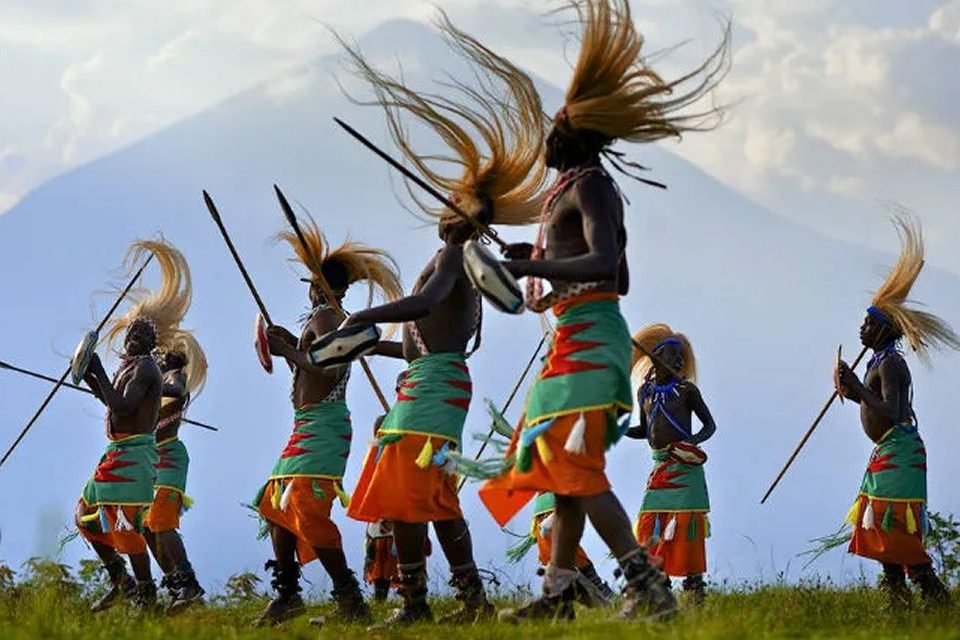
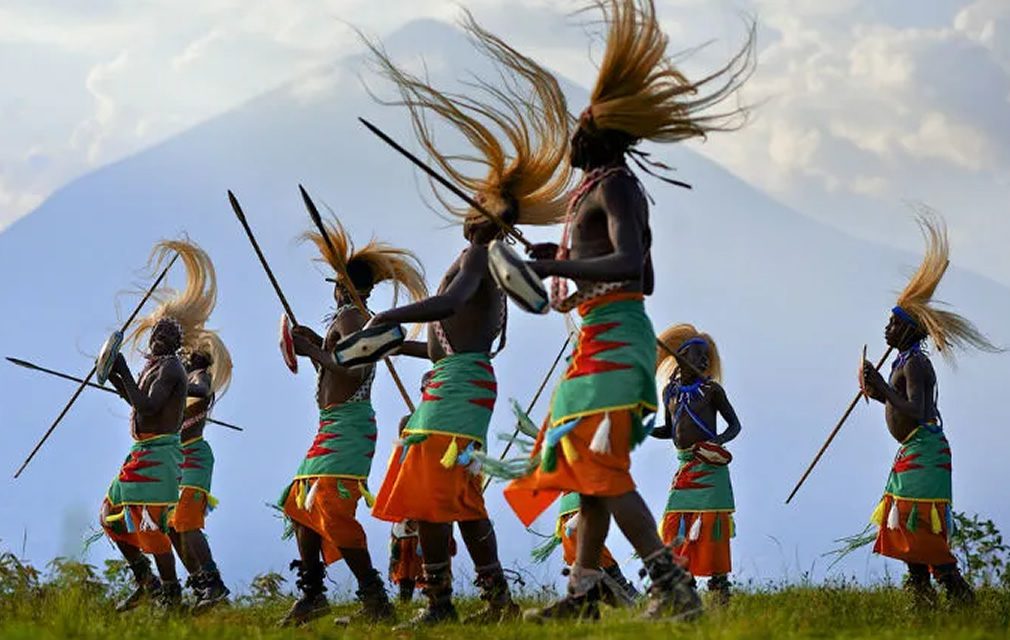
Intore dancing is among Rwanda’s best-known traditional performing arts.
Performances combine coordinated movements, drumming, singing and traditional clothing.
Historically associated with royal traditions and expressions of courage, Intore dancing remains an important cultural practice.
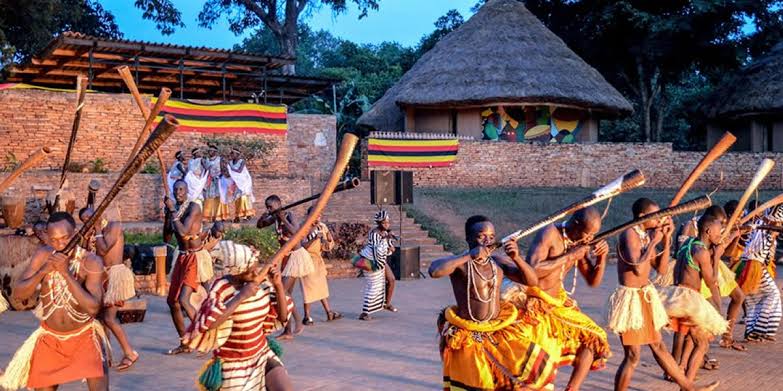
Visitors can enjoy organised performances at cultural centres, community tourism establishments and selected accommodation facilities.
Agaseke Basket Weaving
Agaseke baskets are among Rwanda’s most recognisable traditional handicrafts.
Artisans weave natural fibres into decorative baskets featuring intricate geometric patterns.
These baskets carry cultural associations with hospitality, generosity and friendship.
Purchasing directly from weaving cooperatives can support local artisans and household livelihoods.
Imigongo Traditional Art
Imigongo is a distinctive Rwandan decorative art associated particularly with eastern Rwanda.
Traditional production uses processed cow dung to create raised geometric designs before applying decorative colours.
Visitors can learn about this artistic tradition through workshops and community craft demonstrations.
Traditional Rwandan Food
Rwandan cuisine reflects the country’s agricultural traditions and regional diversity.
| Traditional food | Description |
|---|---|
| Isombe | Cooked cassava leaves |
| Ugali | Thick flour-based staple |
| Ibihaza | Pumpkin, sometimes prepared with beans |
| Ibitoki | Cooked green bananas |
| Brochettes | Grilled meat skewers |
| Ikivuguto | Traditionally fermented milk |
| Akabenz | Popular pork preparation |
| Rwandan coffee | Locally grown and processed coffee |
Community cooking experiences provide opportunities to understand traditional ingredients and preparation techniques.
Other Cultural and Historical Places to Visit in Rwanda
King’s Palace Museum in Nyanza
The King’s Palace Museum provides an introduction to Rwanda’s traditional monarchy and royal heritage.
Visitors can explore reconstructed royal architecture and learn about historical leadership structures.
The museum is also known for its Inyambo cattle, distinguished by their long horns and historical association with royal traditions.
Ethnographic Museum in Huye
The Ethnographic Museum preserves collections relating to Rwanda’s traditional craftsmanship, agriculture, social organisation and cultural history.
Its exhibitions provide important context for understanding Rwandan society before and during colonial rule.
Iby’Iwacu Cultural Experiences
The Gorilla Guardians Village, historically known as Iby’Iwacu Cultural Village, provides cultural experiences near Volcanoes National Park.
Visitors can enjoy traditional music, dance, craft demonstrations and interpretations of royal heritage.
The experience can complement mountain gorilla trekking while supporting community tourism.
Nyamirambo Cultural Walks
Nyamirambo is a lively neighbourhood in Kigali known for its cultural diversity and independent businesses.
Community-guided walking tours introduce visitors to local markets, traditional food, small enterprises and everyday urban life.
These excursions provide opportunities to understand contemporary Rwanda through direct interaction with residents.
Suggested Five-Day Rwanda Cultural and Historical Itinerary
| Day | Suggested activities |
|---|---|
| Day 1 | Arrival in Kigali and introductory city tour |
| Day 2 | Kigali Genocide Memorial and quiet personal reflection |
| Day 3 | King’s Palace Museum and cultural exploration in Nyanza |
| Day 4 | Ethnographic Museum in Huye and community experiences |
| Day 5 | Return to Kigali, craft shopping and departure |
Travellers with additional time can extend their itinerary towards Lake Kivu, Nyungwe Forest or Volcanoes National Park.
Avoid scheduling too many memorial visits within a short period, as the historical content can be emotionally demanding.
Frequently Asked Questions
Is visiting a genocide memorial in Rwanda appropriate for tourists?
Yes. Memorials welcome visitors who wish to learn about Rwanda’s history, honour victims and approach remembrance respectfully.
Is the Kigali Genocide Memorial free to visit?
General admission is normally free, although donations are encouraged. Certain guided services and additional visitor experiences may carry charges.
Can children visit genocide memorials?
Suitability depends on the child’s age, emotional maturity and the content displayed. Parents should consult memorial staff before visiting with children.
Can I take photographs inside genocide memorials?
Photography rules vary. Always request permission and follow instructions provided by memorial employees.
What should I wear when visiting a genocide memorial?
Modest, respectful clothing is recommended. Choose comfortable garments covering your shoulders and knees.
What is the best time to visit Rwanda’s genocide memorials?
Memorials can generally be visited throughout the year. However, opening arrangements may change during national remembrance ceremonies.
Can I combine cultural tourism with gorilla trekking?
Yes. Kigali’s historical attractions, traditional cultural experiences and mountain gorilla trekking can be included within a Rwanda safari itinerary.
Exploring Rwandan culture and history requires sensitivity, curiosity and respect for the country’s people.
Visiting genocide memorials provides an opportunity to honour victims, understand historical events and recognise the consequences of discrimination and organised hatred.
Rwanda’s broader cultural heritage also deserves attention. Traditional dancing, basket weaving, royal architecture, local cuisine and contemporary community life reveal important aspects of its national identity.
When planning your Rwanda safari, dedicate sufficient time to historical education and meaningful cultural encounters. Listen respectfully, support community-owned enterprises and recognise that memorials remain deeply personal places for many Rwandans.
A considerate approach allows you to appreciate Rwanda’s history, cultural diversity and continuing efforts towards peace and reconciliation.