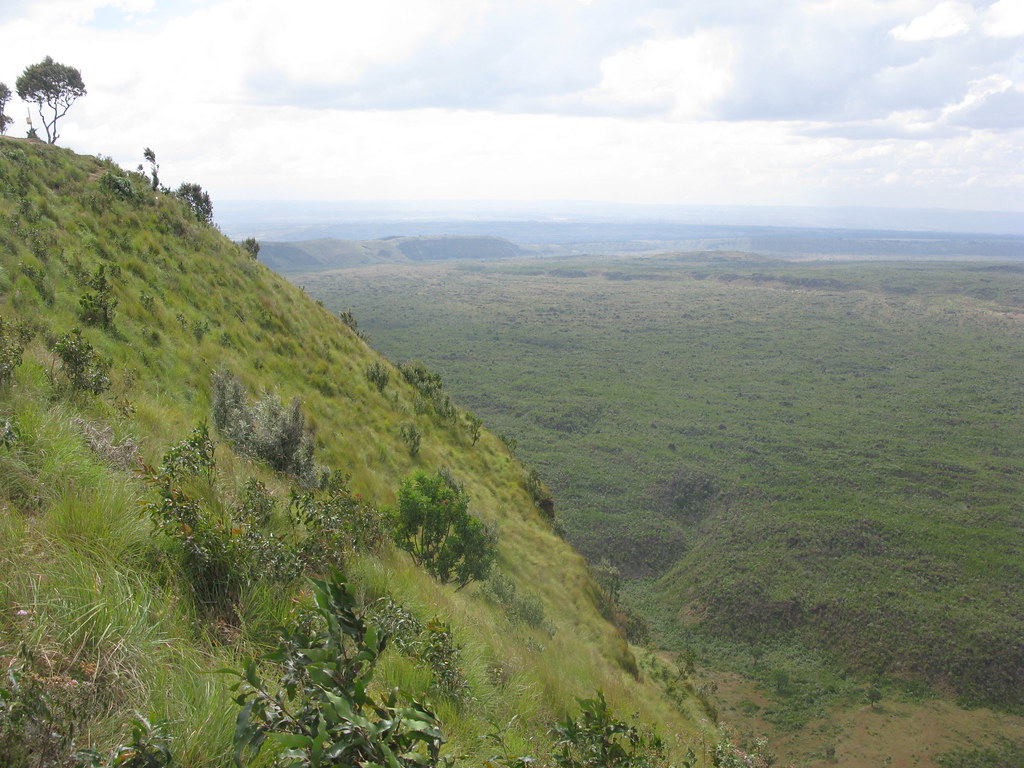
How to get to Murchison Falls National Park: According to Uganda Wildlife Safaris, Murchison Falls National Park is one of the most popular safari destinations for seeing wildlife. Furthermore, it is the biggest and oldest game park in Uganda.
Established in 1952, Murchison Falls is one of Uganda’s first national parks, spanning around 3840 square kilometers and home to over 144 mammals, 556 bird species, 51 reptiles, and 51 amphibians.
All year long, the park is breathtaking. The shoebill is the most prevalent bird along the river section that approaches the Albert, and the park is home to a variety of profolic bird species, making it the best bird checklist.
White-crowned turacos, red-winged grey warblers, long-tailed nightjars, long-toed lapwings, Denham’s bustards, Senegal thick-knees, Abyssinian ground hornbills, and Malachite kingfishers are among the most frequently spotted birds. Nevertheless, the Uganda Wildlife Authority, the government agency in charge of the protected region, is in charge of overseeing Murchison Falls National Park.
The park is bordered by areas such as Nwoya, Bulisa, Kiryandongo, and Masindi. Birdwatching, community tours, nature walks, boat excursions, Top of the Falls visits, and game drives are among the things to do.
How to Travel by Road to Murchison Falls National Park’s Game Drive
The travel from Kampala to the headquarters of Murchison Falls National Park at Paraa, which is “85 kilometers from Masindi,” takes between 4 to 6 hours.
The “Kichumbanyobo and Masindi South Gate” in the south is the most direct way to get from Kampala to Murchison National Park.
The northern gates, Purongo or Takigate-Packwach, provide an additional choice. Alternatively, you can choose to go directly to the park’s most fascinating areas.
By Air
You might decide to travel to the park by use of rented aircraft or the daily scheduled trip from Entebbe Airport or Kajjansi Airfield near Kampala.
Due to its close proximity to the park headquarters and the primary lodgings, it is the most convenient airstrip to reach Pakuba.
An alternative is to take a plane to Bugundu or Chobe.
It should be noted that there are daily flights to and from Murchison Falls, with stops at several airport locations within and surrounding the park, such as Pakuba, Chobe, or Bugundu. It takes an hour to fly.
Activities and Attractions at Murchison Falls National Park
Game drives
In Murchison Falls National Park, this is the most popular safari activity. Game drives are best appreciated in 4WD safari vehicles, and they are best conducted in the morning, afternoon, and at night, when nocturnal animal species are most visible.
Before they return to their hiding places, lions, hyenas, leopards, and other creatures including elephants, buffaloes, waterbucks, giraffes, warthogs, Uganda kobs, Jackson’s hartebeest, bushbucks, oribis, and many more can be seen during a morning game drive. Game drives after midday are just as rewarding as those in the morning.
Cruise by boat
This is an amazing activity that is done to the bottom of the falls. As you cruise the calm waters of the Victoria Nile, you will be able to see aquatic bird species along the shores, including the African Jacana, African fish eagle, giant kingfisher, grey-headed kingfisher, Senegal thick knee, swamp flycatcher, blue-headed coucal, ancient shoebill stork, saddle-bellied stork, open-billed stork, and Goliath heron.
You can take pictures, cruise close to Devil’s Cauldron, and take in the breathtaking scenery. The morning session begins at 9 a.m., while the afternoon session begins at 2 p.m.
Nature hikes
Visitors have the opportunity to see wildlife species like chimpanzees, black and white colobus monkeys, and red-tailed monkeys during this unforgettable safari experience that travels through the Kaniyo Pabidi and Rabongo forests.
Uganda Travel Guide – The Pearl of Africa
Uganda is one of Africa’s most rewarding and underrated destinations. Winston Churchill’s description of Uganda as the “Pearl of Africa” – inspired by its extraordinary combination of landscapes, wildlife, and people – remains as apt today as when he coined it in 1908. The country packs an astonishing range of experiences into a relatively compact area: snow-capped mountains, vast savannahs, dense tropical rainforests, the source of the Nile, and some of the world’s most remarkable wildlife.
Uganda shares borders with Kenya, Tanzania, Rwanda, the Democratic Republic of Congo, and South Sudan, and sits astride the equator in East-Central Africa. The capital, Kampala, is a vibrant, growing city that serves as the gateway to Uganda’s national parks. Most wildlife safaris begin and end in Kampala or at Entebbe International Airport, 45 minutes south of the city.
Uganda’s Key National Parks and Wildlife Areas
- Bwindi Impenetrable Forest: UNESCO World Heritage Site and home to over half the world’s mountain gorillas. Four trekking sectors: Buhoma, Ruhija, Rushaga, and Nkuringo.
- Queen Elizabeth National Park: Uganda’s most visited park, famous for tree-climbing lions in the Ishasha sector, boat cruises on the Kazinga Channel, and diverse savannah and forest habitats.
- Murchison Falls National Park: Uganda’s largest park, home to the world’s most powerful waterfall. Excellent for elephants, giraffes, buffalo, hippos, crocodiles, and shoebill storks on the Nile.
- Kibale Forest National Park: The world’s best chimpanzee trekking destination, also home to 12 other primate species and superb birdwatching.
- Kidepo Valley National Park: Uganda’s most remote and arguably most spectacular park, bordering South Sudan. Wild, untouched, and home to species found nowhere else in Uganda including cheetahs and caracals.
- Mgahinga Gorilla National Park: In the Virunga Mountains, offering gorilla trekking, golden monkey trekking, and volcano hiking in a compact, accessible park.
Practical Uganda Travel Information
Visa and entry requirements
Uganda offers an e-visa for most nationalities, applied online at visas.immigration.go.ug. East African Community citizens are exempt. The East Africa Tourist Visa (covering Uganda, Kenya, and Rwanda) is available at the point of entry. A yellow fever vaccination certificate is mandatory for entry.
Currency and costs
The Ugandan Shilling (UGX) is the local currency. USD is widely accepted in tourist areas. Mid-range safari lodges cost USD 150-350 per person per night. Budget accommodation in Kampala starts from USD 20-40. Gorilla permits (USD 800) are the single largest expense for most visitors.
Getting around Uganda
Most visitors use private safari vehicles (included in tour packages) or hire a driver-guide. Public minibus taxis (matatus) connect major towns but are not suitable for wildlife areas. Charter flights from Entebbe to Kihihi, Kisoro, Kasese, or Pakuba significantly reduce overland travel times on longer itineraries.
Recommended Tours: 9 Days Uganda Wildlife Safari | 7 Days Uganda Safari