The gorilla habituation experience unfolds over a full day rather than the compressed single hour of standard trekking, and understanding what that day actually looks like hour by hour helps prospective participants grasp exactly what they are signing up for, beyond the simple marketing description of extended access to a semi-habituated family. Available only in Uganda’s Bwindi Rushaga sector, this experience follows researchers and trackers as they work with a gorilla family still in the multi-year process of becoming fully accustomed to human presence, offering a considerably deeper, if more physically demanding, encounter than standard trekking provides.
This guide walks through a typical habituation day from pre-dawn briefing to evening return, based on how the experience is actually structured on the ground.
5:30 to 6:30 AM: Pre-Dawn Preparation
Most habituation participants wake well before sunrise, since the day begins earlier than standard trekking to maximise available daylight for the extended encounter ahead. A quick breakfast, final gear check and transfer to Rushaga sector headquarters typically fills this early window, with many lodges in the area specifically accommodating this earlier start with pre-arranged early breakfast service for habituation participants.
Nerves and anticipation tend to run noticeably higher during this pre-dawn period than for a standard trek departure, participants frequently report, given both the earlier hour and the accumulated awareness that the day ahead will be considerably longer and more demanding than a typical single-hour encounter.
6:30 to 7:30 AM: Briefing and Group Assignment
At Rushaga headquarters, the small habituation group, capped at just four participants, receives a detailed briefing from rangers covering the specific family being visited, safety protocols, and what to expect from a family still in the habituation process rather than one fully accustomed to visitors. This briefing tends to be more detailed and specific than standard trekking briefings, reflecting the slightly higher behavioural unpredictability of a family not yet fully habituated.
Why Group Size Matters So Much Here
The deliberately small four-person cap, half the standard trekking group size, allows for a more intimate, controlled experience appropriate to a family still adjusting to consistent human presence, and participants often note the noticeably more personal, less rushed atmosphere compared to larger standard trekking groups.
7:30 AM to Midday: The Approach and First Contact
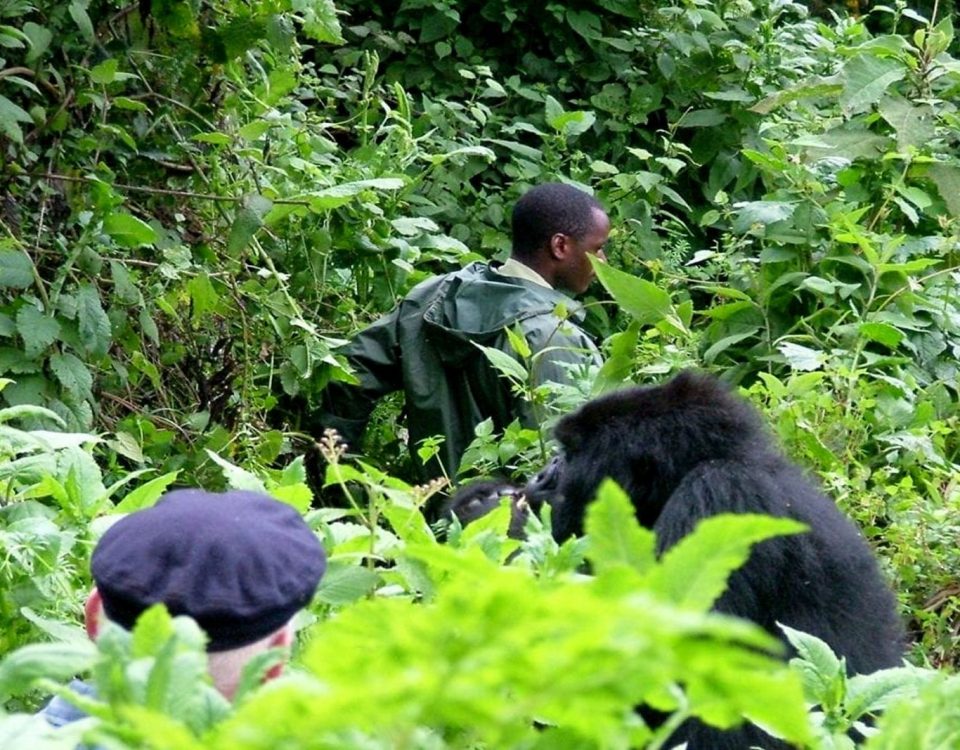
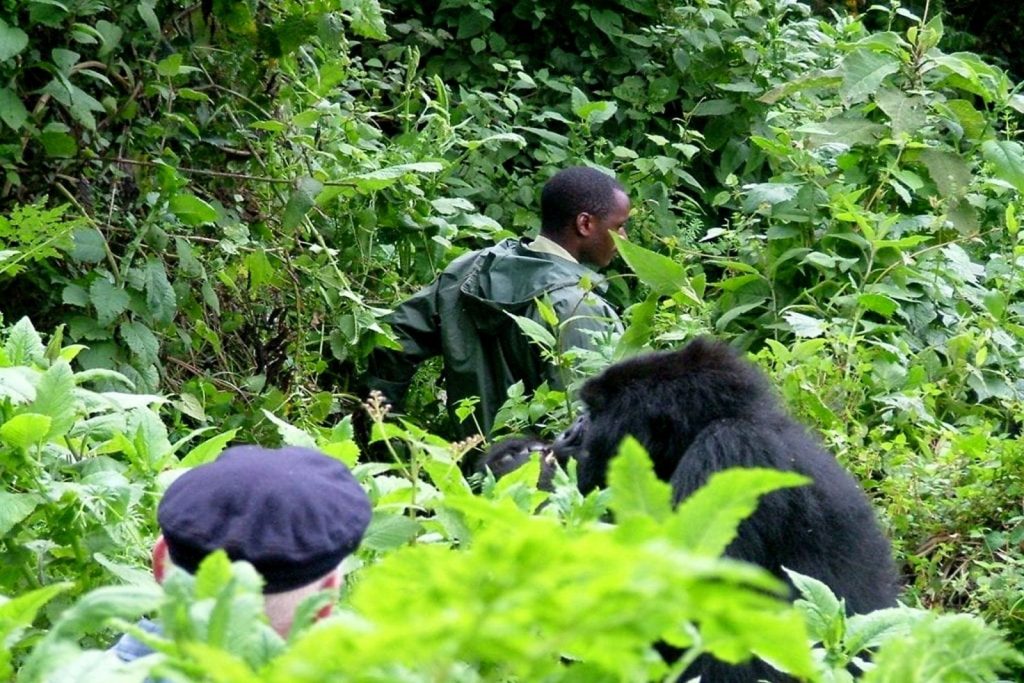
Trackers who have monitored the family since the previous evening guide the group toward the family’s approximate location, an approach that can take anywhere from one to several hours depending on how far the family has moved overnight. Once located, the group begins the extended observation period, considerably different in character from standard trekking’s compressed hour, allowing genuine time to settle into quiet, patient observation rather than a rushed, checklist-style viewing experience.
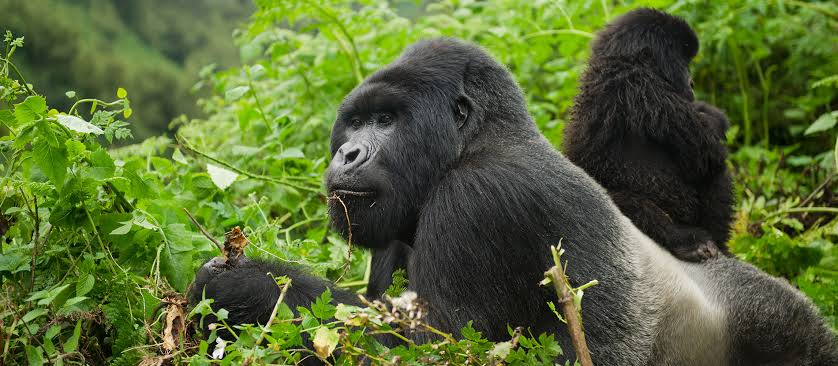
This extended morning period often includes observing the family’s own morning routine, feeding, grooming and general movement, offering insight into natural behavioural patterns that a standard trek’s single hour rarely has time to fully capture.
Midday: Lunch in the Forest
A packed lunch, eaten within the forest itself at a safe, appropriate distance from the family, breaks up the day and gives participants a chance to rest and rehydrate before the afternoon observation period continues. This midday break also offers an opportunity for researchers and rangers accompanying the group to share additional context and answer questions, deepening the educational dimension of the experience beyond pure observation.
Weather Considerations During the Midday Break
Midday often brings the day’s warmest temperatures and, during wetter months, the highest chance of rain, making appropriate layering and rain protection particularly important to manage comfortably through this stretch of the day without needing to cut the experience short.
Early to Mid-Afternoon: Continued Observation
The afternoon session typically continues the same pattern of following and observing the family, often capturing different behaviour than the morning session as the family’s activity naturally shifts through the day, from active feeding periods toward more restful, settled behaviour as afternoon progresses. Participants frequently describe this stretch as when the deeper, more immersive value of the habituation experience becomes most apparent, since the extended time allows behavioural patterns and family dynamics to become genuinely visible in a way a single compressed hour cannot achieve.
Late Afternoon: Beginning the Return Journey
As the family begins settling toward its evening nesting behaviour, typically in the late afternoon, the group begins its own return journey out of the forest, timed to ensure a safe exit before darkness falls. This return hike, while physically tiring after a full day already spent following the family, is often described as a reflective, quieter portion of the day as participants process the extended encounter they have just experienced.
What Researchers Are Doing Throughout the Day
Unlike standard trekking guides, whose primary role is visitor management and interpretation, the researchers and trackers accompanying a habituation group are simultaneously conducting their own ongoing work throughout the day, recording behavioural observations, monitoring the family’s health and progress toward full habituation, and documenting the kind of data that will eventually inform decisions about when this specific family is ready to transition to either standard tourist trekking status or continue receiving research-focused visits. Participants often find this dual purpose, tourism experience layered directly on top of genuine ongoing research, adds a meaningful sense of purpose to the day beyond simple wildlife viewing, since visitor fees directly fund the very research and monitoring work happening in front of them throughout the encounter.
Evening: Arrival Back at Headquarters
Most habituation groups arrive back at Rushaga headquarters as dusk approaches, having spent up to twelve hours in the forest depending on how far the family ranged during the day. Participants typically receive a closing debrief from their guides before transferring back to their accommodation, tired but, by most accounts, deeply satisfied with the depth of access and understanding gained over the course of the full day.
How This Day Compares to Standard Trekking’s Structure
Standard gorilla trekking, by comparison, typically involves a briefing around 7 or 8 AM, an approach hike of variable length, a strictly enforced single hour with the family, and a return journey that usually has the group back at headquarters by early to mid-afternoon at the latest. The habituation day’s roughly doubled or tripled total time commitment, and its considerably later finish, means participants should plan their entire remaining day, including dinner timing and any evening plans, around a return that may not happen until close to sunset, a scheduling reality worth discussing with your lodge in advance so a late arrival does not create unnecessary complications with dinner service or other plans.
How to Choose Between Habituation and Standard Trekking
Deciding between the two experiences ultimately comes down to how much value a traveller places on depth versus efficiency. Someone with limited time, a lower tolerance for physical exertion, or simply a desire for the classic, well-established gorilla trekking experience is generally better served by a standard permit, while someone with genuine curiosity about gorilla behaviour, research and family dynamics, and the physical readiness for a considerably longer day, is likely to find the habituation experience the more rewarding of the two options despite its higher cost and greater demands.
What Makes Certain Days Longer Than Others
Just as with standard trekking, the specific family’s overnight movement determines much of how the day actually unfolds, and a family that has ranged far from the trailhead can push both the morning approach and the evening return considerably longer than the more typical scenario outlined above. Participants should mentally prepare for the full twelve-hour scenario as a realistic possibility rather than assuming the shorter, more convenient version of the day described in optimistic marketing material, applying the same honest, worst-case preparation mindset that serves standard trekkers well when planning for potentially difficult terrain and distance.
Preparing for the Full Arc of the Day
Understanding this hour-by-hour structure helps prospective participants pack, plan and mentally prepare appropriately for a day considerably longer and more varied than standard gorilla trekking. Our guides on what to pack for a full-day gorilla habituation trek and gorilla habituation versus standard trekking cover the practical preparation this extended day demands. Our overview of gorilla habituation permit pricing explained covers the cost structure behind this considerably longer, more immersive experience.
Few single-day wildlife activities anywhere in Africa offer this kind of sustained, hour-by-hour access to a great ape family’s daily rhythm, and participants who go in with realistic expectations of a genuinely long, physically demanding but deeply rewarding day consistently report it as one of the standout experiences of their entire trip, well worth the earlier wake-up call and the later, more tired return to their lodge that evening, long after the sun has dropped behind the Rushaga hills and the forest has gone quiet for the night, leaving behind a single, unhurried day that most participants continue describing, in remarkably vivid detail, for years and years afterward, long after most of the other, smaller details of the wider trip have quietly and understandably faded from memory over the many passing years that inevitably follow such a trip.