Kingdom of Buganda History: Kings, Kabakas, and Cultural Sites
At the Kasubi Tombs in Kampala, the building that houses the graves of four Buganda kings began as a royal palace. That change in purpose tells you something about the history of Buganda. A place built for a reigning king became a burial site, and the site remains sacred to the kingdom today.
Other places tell different parts of the story. Bulange houses the kingdom’s council. The Lubiri palace grounds recall a crisis that changed Uganda’s government in 1966. At Naggalabi Buddo, the coronation of Ronald Muwenda Mutebi II in 1993 marked the return of the monarchy as a cultural institution. Understanding what happened at each place makes a visit more rewarding than simply seeing the buildings.
The History of Buganda: A Timeline
| Period or year | What happened |
|---|---|
| Early kingdom | Buganda’s royal tradition remembers Kintu as its founding Kabaka. Accounts differ on the dates of the earliest reigns. |
| Nineteenth century | Under Muteesa I, Buganda’s court dealt with traders, explorers and Christian missionaries. |
| 1897 | Daudi Chwa II became Kabaka as a child after Mwanga II was deposed. |
| 1900 | The Buganda Agreement reshaped landholding and government within the British protectorate. |
| 1962–1963 | Uganda gained independence in 1962. Kabaka Muteesa II became the country’s first president in 1963. |
| 1966–1967 | Government forces attacked the palace at Mengo in 1966. Uganda’s 1967 Constitution abolished the kingdoms. |
| 1993 | Ronald Muwenda Mutebi II was crowned at Naggalabi Buddo after the restoration of traditional monarchies. |
What Is Buganda, and What Does Kabaka Mean?
Buganda is a historic kingdom in central Uganda. Baganda refers to its people, and Luganda is their language. The similar names can be confusing on a first visit. Uganda is the country. Buganda is one of its historic kingdoms, and its king is called the Kabaka.
Buganda developed its own institutions before British rule. The royal court worked with chiefs and clans, whose responsibilities and influence changed over time. Royal burial grounds and coronation sites mattered because they gave public and ceremonial form to the relationship between the king and the people he led.
The kingdom’s royal tradition places Kintu at the beginning of its line of kings. Early accounts draw on oral history, so the dates attached to those reigns do not have the same documentary footing as the 1900 Agreement or the 1993 coronation. If you hear different versions of a founding story, ask your guide which tradition they are recounting. The differences can tell you how a story has been passed down.
The Kabakas Who Shaped Buganda’s History
Muteesa I and the nineteenth-century court
Muteesa I ruled during a period when traders and missionaries were becoming more active in the region. Protestant missionaries arrived in 1877, followed by Catholic missionaries in 1879. Their arrival mattered because the court was a place where alliances were made and disputed. Religious affiliation could affect whom people trusted or supported, especially in the years after Muteesa’s death.
Muteesa I built his palace at Kasubi in 1882. After his death in 1884, it became his burial place. That is why you may hear a guide refer to Kasubi as both a palace site and a royal burial ground. Both descriptions are correct, but they refer to different stages in its history.
Mwanga II, Daudi Chwa II and British rule
Mwanga II succeeded his father, Muteesa I. His reign saw conflict at court, the execution of Christian converts remembered among the Uganda Martyrs, and growing British intervention. He was deposed in 1897. His young son Daudi Chwa II became Kabaka, with regents governing during his childhood.
The 1900 Buganda Agreement was signed while Daudi Chwa II was still a child. It left Buganda with considerable internal autonomy under British rule and changed how land was allocated and held. Its land provisions helped establish the system known as mailo tenure. If a guide mentions mailo during a discussion of modern Kampala, this agreement explains why a colonial-era land arrangement still comes up in conversations about property.
Muteesa II, independence and the Mengo crisis
Sir Edward Muteesa II was both Kabaka of Buganda and Uganda’s first president, but the two roles were separate. Uganda became independent in October 1962. Muteesa became president in 1963 while Milton Obote held the office of prime minister. Their political alliance broke down as disputes over the distribution of power intensified.
In May 1966, government forces attacked the Kabaka’s palace at Mengo. Muteesa escaped and went into exile in Britain, where he died in 1969. Uganda’s 1967 Constitution abolished the kingdoms. Keeping the two dates separate helps make sense of the history. The palace attack happened in 1966. The constitutional abolition followed in 1967.
Ronald Muwenda Mutebi II and the restoration
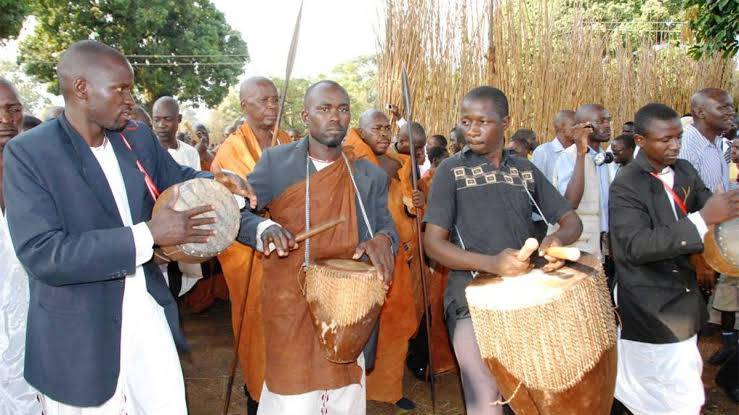
Ronald Muwenda Mutebi II, the son of Muteesa II, was crowned on 31 July 1993 at Naggalabi Buddo. Buganda recognises him as its 36th Kabaka. The restoration brought back the monarchy as a traditional and cultural institution. Uganda’s Constitution recognises cultural leaders but does not give them the powers of government. This is why Bulange can house Buganda’s council without being Uganda’s national Parliament.
Buganda Cultural Sites and What They Tell You
Kasubi Tombs: Four kings and a sacred burial ground
The four Kabakas buried at Kasubi are Muteesa I, Mwanga II, Daudi Chwa II and Muteesa II. The main structure, known as Muzibu Azaala Mpanga, is notable for its large thatched roof and traditional construction. Ask your guide about the people responsible for caring for the site as well as the kings buried there. Their work helps explain why Kasubi is more than a historic building.
UNESCO added Kasubi to the World Heritage List in 2001. A fire destroyed its main building in 2010. After reconstruction, UNESCO removed the site from its List of World Heritage in Danger in 2023. Kasubi remains a World Heritage Site. Confirm which areas visitors can enter on your planned day, and ask before taking photographs.
Bulange and the Lubiri: Two different functions in Mengo
Bulange houses the Lukiiko, Buganda’s council, and the kingdom’s offices. The Lubiri is the royal palace compound. The Royal Mile, also known as Kabaka Anjagala Road, connects the two. Seeing them in relation to each other helps distinguish the kingdom’s administrative centre from the palace grounds.
At the Lubiri, ask which parts of the compound are included in the visit. A tour of the grounds does not necessarily include the palace interior. The site is also associated with painful events in Uganda’s political history, including the 1966 attack. Give yourself time to hear that part of the account rather than treating the visit as a quick photo stop.
Naggalabi Buddo: Where a Kabaka is crowned
Naggalabi Buddo is associated with the coronation of Buganda’s kings. It is where Mutebi II was crowned in 1993. The site helps explain a different royal tradition from what you see at Kasubi. One marks the formal beginning of a reign. The other is a place of burial and remembrance.
When arranging a visit, ask whether a guide is available and which areas are open. Allow separate travel time if you are combining Buddo with sites in central Kampala.
Frequently Asked Questions
Is the Kabaka the president of Uganda?
No. The Kabaka is Buganda’s traditional and cultural leader. Muteesa II held both titles in the 1960s, but the presidency was a separate public office.
Are all Buganda kings buried at Kasubi?
No. Kasubi holds the graves of four Kabakas. Buganda has other royal burial sites, so Kasubi represents one part of the kingdom’s longer history.
Can visitors take photographs at royal sites?
Ask the custodian or guide first. Permission to enter a site does not necessarily cover photography in sacred or restricted areas. Check separately before photographing ceremonies or identifiable people.
If you have time for only one visit, choose the site that answers your main question. Kasubi is the clearest introduction to royal burial and traditional architecture. Bulange and the Lubiri help explain how the kingdom’s institutions developed and why Mengo mattered in 1966. At Buddo, the events of 1993 are the starting point for understanding what the monarchy’s restoration meant.