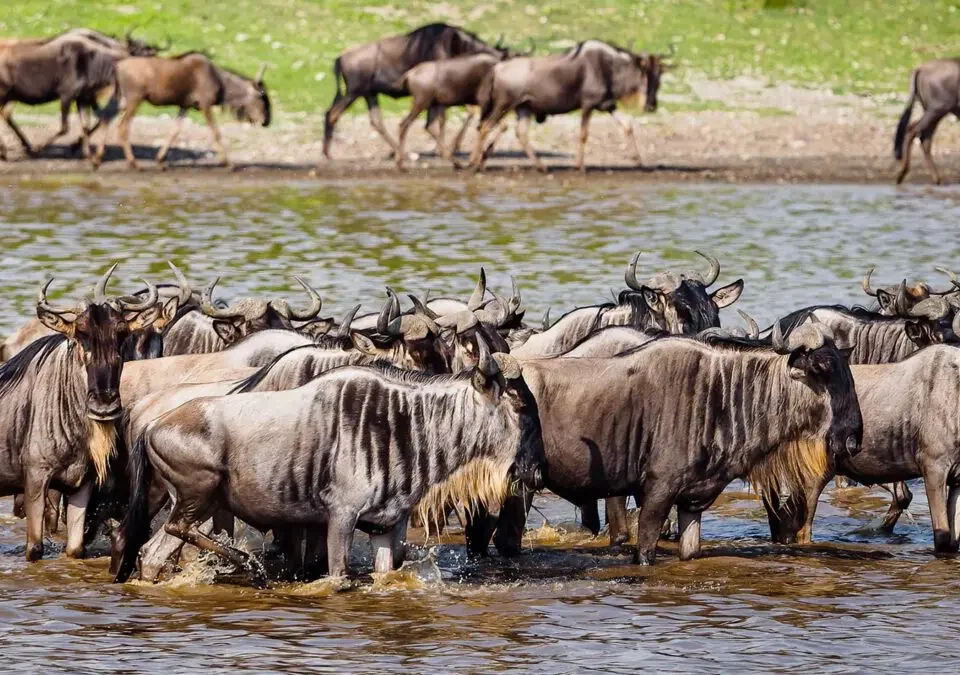
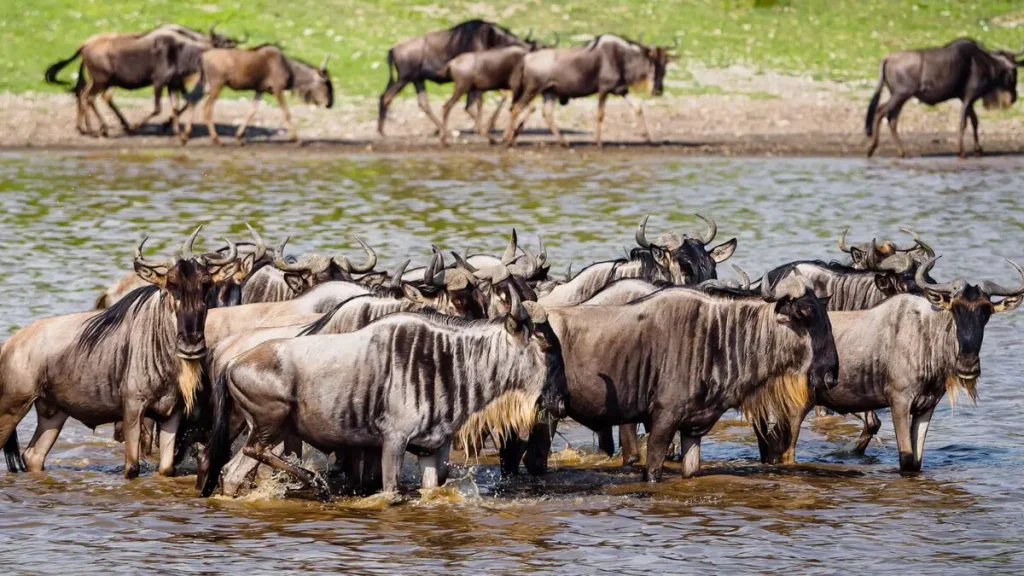
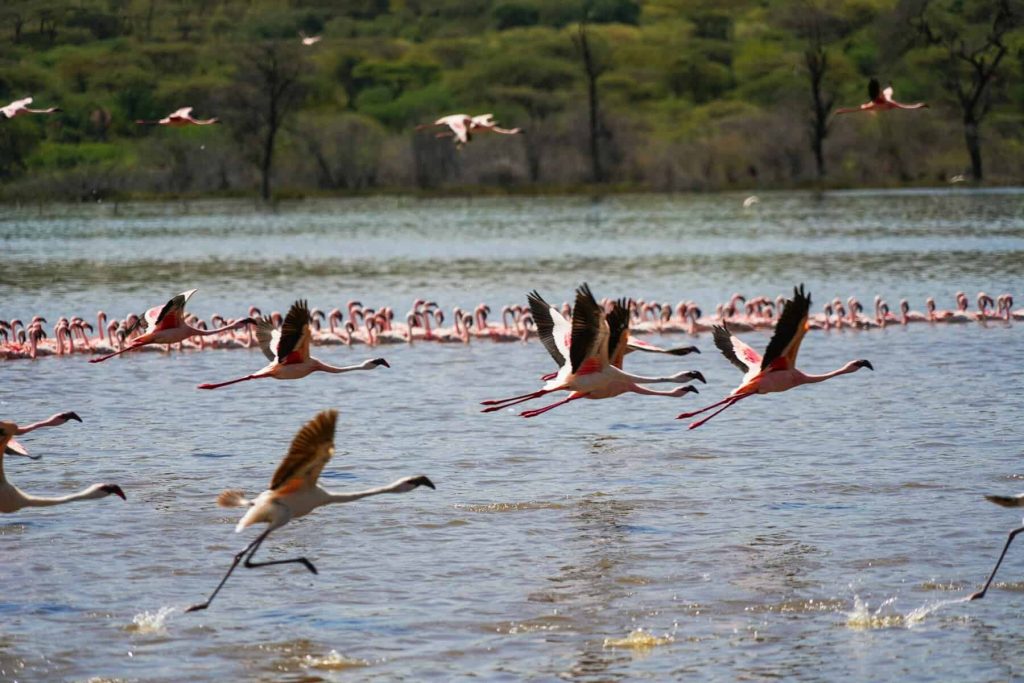
Animals of Lake Mburo National Park: The game safari at Lake Mburo National Park boasts a greater diversity of wildlife, including 68 mammal species and a high concentration of antelope species, including impala, topi, duiker, Bohor reedbuck, Klipspringer, herds of buffaloes, zebras, and Rothschild’s giraffes, as well as hyenas and leopards. Lake Mburo is home to crocodiles and hippos.
Life of Birds
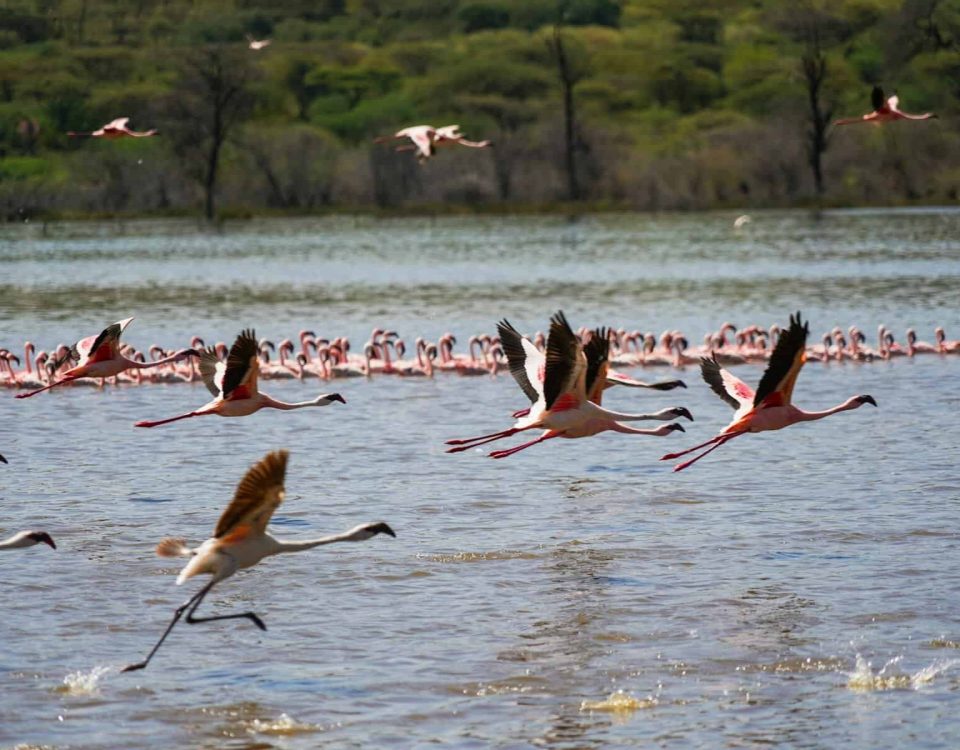
With more than 350 species identified to date, the park is a haven for birds. Among them are the following: Southern ground hornbill, White winged swamp warbler, Red-faced barbet, Blue-headed coucal, African Finfoot, rare Shoebill, Tabora long-tailed Cisticola, African Scoop Owl, Abyssinian Ground Hornbill, White-winged Warbler, Blue-breasted Kingfisher, Hairy-breasted Barbet, Yellow-rumped Tinker bird, Mosque swallow, Greater painted snipe, Southern ground hornbill, and Blue-breasted kingfishers, among others. The Rubanga forest is home to a variety of forest and acacia woodland bird species.
The closest national park to Kampala is Lake Mburo, which is situated in Kirukura region and is roughly three to four hours’ drive from Kampala Road. The park has a sizable wetland region and shelters several mammal species, including as zebras and impalas, that are unique to Uganda.
Among the more than 350 bird species are the endangered African Finfoot and Shoebill Stork. The park features a variety of landscapes and habitats, such as grasslands, woodlands, season and permanent marshes, and valleys with abundant acacia trees.
There are a number of lakes in the park, but the largest one, Mburo, offers fantastic views of several hippos lazing in the water and massive crocodiles that hide along the beaches. Cormorants, pelicans, fish eagles, and herons are a few of the water birds that can be seen.
The Best Time to See Wildlife
All year long, Lake Mburo National Park offers highlights for wildlife viewing. The dry seasons of June through September and December through February are the greatest times to enjoy all of the activities here. During these times, many animals can be observed congregating along rivers and waterholes. A greater variety of species can be observed in the open valleys during the wet season, which runs from March to May and September to November.
In addition to animals, Lake Mburo National Park offers a variety of activities, some of which are listed below:
There is a good probability of seeing leopards during a nighttime game safari.
The greatest method to get up close to the animals on a safari is to walk.
Taking a boat tour on Lake Mburo is a great way to see crocodiles, hippos, and birds.
A variety of vegetation and animals can be found in the dry slope, rocky outcrops, bushes, open and wooded savannah, woodland, lakes, and swamps where safaris and game drives can be conducted.
The finest spot to see leopards in Uganda is Lake Mburo Game Park, especially during night game drives.
Lake Mburo National Park birdwatching
The Best Time to Visit Lake Mburo National Park to See Wildlife
All year long, Lake Mburo National Park is open. The greatest time to see animals, however, is during the dry seasons, which run from June to September. From December to February, animals congregate around lakes and other water sources to drink. Wildlife viewing is still possible during the rainy seasons of March through May and September through November, when the park is beautiful and lush.
Accommodations for Safari Travel to Lake Mburo National Park
The park offers a variety of luxurious and affordable lodging options to ensure your comfortable stay, including Rwakobo Rock, Eagle’s Nest Lodge, Mantana Tented Camp, Arcadia Cottages, Lake Mburo Safari Lodge, and Rwonyo Rest Camp. You don’t need to worry about where to stay while on safari in Lake Mburo National Park.
Uganda Travel Guide – The Pearl of Africa
Uganda is one of Africa’s most rewarding and underrated destinations. Winston Churchill’s description of Uganda as the “Pearl of Africa” – inspired by its extraordinary combination of landscapes, wildlife, and people – remains as apt today as when he coined it in 1908. The country packs an astonishing range of experiences into a relatively compact area: snow-capped mountains, vast savannahs, dense tropical rainforests, the source of the Nile, and some of the world’s most remarkable wildlife.
Uganda shares borders with Kenya, Tanzania, Rwanda, the Democratic Republic of Congo, and South Sudan, and sits astride the equator in East-Central Africa. The capital, Kampala, is a vibrant, growing city that serves as the gateway to Uganda’s national parks. Most wildlife safaris begin and end in Kampala or at Entebbe International Airport, 45 minutes south of the city.
Uganda’s Key National Parks and Wildlife Areas
- Bwindi Impenetrable Forest: UNESCO World Heritage Site and home to over half the world’s mountain gorillas. Four trekking sectors: Buhoma, Ruhija, Rushaga, and Nkuringo.
- Queen Elizabeth National Park: Uganda’s most visited park, famous for tree-climbing lions in the Ishasha sector, boat cruises on the Kazinga Channel, and diverse savannah and forest habitats.
- Murchison Falls National Park: Uganda’s largest park, home to the world’s most powerful waterfall. Excellent for elephants, giraffes, buffalo, hippos, crocodiles, and shoebill storks on the Nile.
- Kibale Forest National Park: The world’s best chimpanzee trekking destination, also home to 12 other primate species and superb birdwatching.
- Kidepo Valley National Park: Uganda’s most remote and arguably most spectacular park, bordering South Sudan. Wild, untouched, and home to species found nowhere else in Uganda including cheetahs and caracals.
- Mgahinga Gorilla National Park: In the Virunga Mountains, offering gorilla trekking, golden monkey trekking, and volcano hiking in a compact, accessible park.
Practical Uganda Travel Information
Visa and entry requirements
Uganda offers an e-visa for most nationalities, applied online at visas.immigration.go.ug. East African Community citizens are exempt. The East Africa Tourist Visa (covering Uganda, Kenya, and Rwanda) is available at the point of entry. A yellow fever vaccination certificate is mandatory for entry.
Currency and costs
The Ugandan Shilling (UGX) is the local currency. USD is widely accepted in tourist areas. Mid-range safari lodges cost USD 150-350 per person per night. Budget accommodation in Kampala starts from USD 20-40. Gorilla permits (USD 800) are the single largest expense for most visitors.
Getting around Uganda
Most visitors use private safari vehicles (included in tour packages) or hire a driver-guide. Public minibus taxis (matatus) connect major towns but are not suitable for wildlife areas. Charter flights from Entebbe to Kihihi, Kisoro, Kasese, or Pakuba significantly reduce overland travel times on longer itineraries.
Recommended Tours: 9 Days Uganda Wildlife Safari | 7 Days Uganda Safari