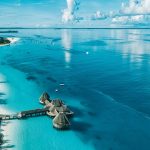

South of Zanzibar, reached by a short flight rather than a road, Mafia Island remains one of the least visited corners of Tanzania’s coastline despite protecting one of the richest stretches of marine habitat anywhere in the western Indian Ocean. Mafia Island Marine Park, Tanzania’s first marine protected area, covers a vast stretch of reef, seagrass, and mangrove-lined channel around the island, and its relative obscurity compared with Zanzibar has kept both its reefs and its visitor numbers refreshingly manageable.
A Park Established Ahead of Its Time
Mafia Island Marine Park was formally established in 1995, making it Tanzania’s first marine national park and a genuine pioneer in East African marine conservation policy at a time when protected marine areas were still a relatively new concept regionally. The park covers roughly eight hundred and twenty square kilometres, an unusually large protected area by regional standards, with more than three-quarters of that total lying below the high-water mark, underscoring just how much of the park’s ecological value sits underwater rather than on the island’s beaches and shoreline.
The main island of Mafia itself stretches roughly forty-eight kilometres in length and up to seventeen kilometres across at its widest point, ringed by smaller islets, sandbanks, and a network of mangrove channels that together support one of the most biodiverse marine ecosystems on the Tanzanian coast. Seagrass beds, extensive coral reef systems, and mangrove forests all fall within the park’s boundaries, each supporting a different layer of marine life, from small reef fish and invertebrates through to the whale sharks that have made Mafia internationally known among divers and snorkellers.
What Makes the Marine Park Worth Visiting
Mafia’s reputation today rests heavily on its whale shark season, when the world’s largest fish species gathers seasonally in the plankton-rich waters off the island’s coast, drawing snorkellers hoping for an in-water encounter with an animal that can grow well over ten metres long. That seasonal spectacle deserves its own detailed coverage, and our dedicated guide to Mafia Island’s whale shark season explains the timing, viewing etiquette, and booking details for anyone planning a trip specifically around that experience.
Beyond the whale sharks, the park’s reef systems support consistently good diving and snorkelling across most of the year, with healthy coral cover, frequent turtle sightings, and a density of reef fish that compares favourably with more heavily promoted dive destinations elsewhere in the region. Because Mafia sees a fraction of the visitor traffic that Zanzibar’s dive sites do, many of its reefs have avoided the physical damage that comes with high snorkelling and diving volume, giving the park a noticeably undisturbed feel even at its more accessible sites.
Kua Ruins and the Island’s Trading Past
Mafia’s history stretches back considerably further than its current identity as a marine park and diving destination. During the era of the Kilwa Sultanate, the island served as a stopover point for trading ships travelling the East African coast, and the ruins of Kua, a substantial settlement on Juani Island within the archipelago, still bear witness to that earlier trading prominence. Overgrown coral-stone structures and old mosque ruins at Kua make for an interesting, largely unvisited historical side trip for travellers whose primary reason for coming to Mafia is the diving, offering a quieter, more overgrown counterpart to the better-known ruins found at Kilwa Kisiwani on the mainland.
Practical Details for Visiting
Entry to the marine park requires a daily park fee, currently in the range of twenty-four US dollars per person per day, payable at the entrance gate and typically arranged through a lodge or dive operator as part of a broader package rather than paid independently. This fee structure is standard across Tanzania’s protected areas and funds the ongoing conservation and ranger presence that has helped keep the park’s reefs in relatively good condition compared with less protected stretches of coast elsewhere in the region.
Mafia sits roughly one hundred and twenty kilometres south of Dar es Salaam and around twenty kilometres offshore from the mouth of the Rufiji River, reachable by a short domestic flight from Dar es Salaam or Zanzibar rather than any road connection. Flight schedules are limited compared with the frequent services connecting Tanzania’s more established tourist hubs, so booking flights well in advance and building some flexibility into a Mafia itinerary is generally a wise precaution, particularly during the busiest whale shark viewing months when demand for seats rises noticeably.
Where to Stay on Mafia Island
Accommodation on Mafia splits fairly clearly between two main areas. Kilindoni, the island’s main town near the airstrip, offers more budget-friendly guesthouses and simpler lodging aimed at backpackers and travellers on tighter budgets, though with fewer amenities and a more basic overall standard than what’s available elsewhere on the island. Utende, closer to the marine park’s core diving and snorkelling sites, is where most of the island’s dive-focused and higher-end lodges are concentrated, offering easier access to boats and dive operations for visitors prioritising time in the water over budget considerations.
Given the island’s remoteness and limited flight schedule, most visitors book accommodation as part of a package that includes airport transfers, diving or snorkelling excursions, and meals, rather than arranging each element independently as might be more typical on a more heavily trafficked island like Zanzibar.
Best Time to Visit
Mafia’s climate follows Tanzania’s broader coastal pattern, with the driest, most reliable diving conditions generally falling between June and October and again from December through February. Whale shark season runs primarily from October through March, with sightings typically peaking around November and December, so travellers specifically hoping to combine whale shark encounters with good general diving conditions often find the earlier part of that window, roughly October and November, offers the best overlap between the two. The long rains between March and May can bring rougher seas and reduced visibility, and some dive operators scale back trips during the wettest weeks of that period.
Combining Mafia With the Rest of a Tanzania Trip
Because of its remoteness and limited flight connections, Mafia works best as a deliberate addition to a broader Tanzania itinerary rather than a spontaneous side trip. Many visitors combine Mafia with time in Zanzibar, treating the two islands as complementary rather than competing destinations, given how different their respective atmospheres and infrastructure levels are. Others route Mafia in after a mainland safari through the Serengeti or Selous, using the island’s quiet, under-visited reefs as a genuine decompression, in every sense, from a busier safari itinerary before flying home.
Marine Life Beyond the Whale Sharks
While whale sharks draw the most attention, Mafia’s reefs and seagrass beds support a far broader range of marine life worth knowing about before a visit. Green and hawksbill turtles nest on several of the park’s beaches and are commonly spotted while diving or snorkelling around the reef systems, while dolphins are regularly seen from boats travelling between dive sites, particularly in the calmer waters closer to shore. Reef sharks, rays, and a dense variety of tropical fish round out the underwater scene, and divers who spend several days in the park often report more consistent large-animal sightings here than at some of Zanzibar’s more heavily dived sites further north.
The park’s mangrove channels, less glamorous than its coral reefs but ecologically just as important, support their own distinct set of species and play a critical role in the broader health of the marine ecosystem, filtering water and providing nursery habitat for juvenile fish before they move out onto the open reef. Guided boat trips through these channels, often combined with birdwatching given the range of coastal and wading bird species that favour this habitat, offer a quieter, slower-paced alternative to the diving and snorkelling that otherwise dominates most Mafia itineraries.
An Underrated Corner of Tanzania’s Coast
Mafia Island Marine Park rewards travellers willing to accept a bit more logistical effort in exchange for a genuinely quieter, less commercialised version of Tanzania’s coastal appeal. Between its pioneering conservation history, its healthy reef systems, the overgrown ruins at Kua, and its position as one of the world’s more reliable whale shark viewing destinations, the park offers a depth of experience that belies how little attention it receives compared with Zanzibar just to the north. For travellers who’ve already done the island’s more famous beaches and want somewhere less crowded to explore next, Mafia remains one of the more rewarding, if less publicised, additions to a Tanzania coastal itinerary.
The extra effort required to reach Mafia, a domestic flight rather than a straightforward road transfer, works in its favour as much as against it, filtering out the larger crowds that have reshaped parts of Zanzibar’s coastline over the past two decades. Travellers who make the trip generally come away describing exactly that trade-off as the whole point: a smaller, quieter, less developed marine park that still delivers world-class diving, healthy reefs, and genuine solitude on a stretch of Tanzanian coast that has largely avoided the pressures of mass tourism so far, at least for now.