Mobile Camping vs Lodge Safaris: Comfort, Cost, and Closeness
Choose a mobile camp if its location puts you near the wildlife area you want to explore and you’re happy with the facilities. Choose a lodge if a reliable shower, an easy route to your room or a comfortable place to rest between drives will make each day better. A lodge inside a park can put you closer to wildlife than a mobile camp in the wrong part of the same park.
When comparing mobile camping vs lodge safaris, ask for three things before you book: the exact overnight location for your dates, a description of the bed and bathroom, and a total price that includes the same activities and fees. These details tell you more than the words mobile, lodge or luxury on an itinerary.
Mobile Camping vs Lodge Safaris at a Glance
| What to compare | Mobile camping safari | Lodge safari |
|---|---|---|
| Where you sleep | A temporary or relocatable tented camp. The crew may move it between trips or seasons rather than during your stay. | A fixed property. You may stay in a room, cottage or permanent tent. |
| Beds and bathrooms | Can range from a mattress and shared facilities to a raised bed and private bathroom. | Often has a permanent bathroom and full-size bed. Check the individual room. |
| Time near wildlife | Can reduce driving if the camp is set up near the area you want to explore. | Can be equally convenient if the lodge is near your game-drive routes, especially inside a park or conservancy. |
| What drives the price | Crew, equipment, vehicle, campsite fees and whether the camp is private or shared. | Room category, season, meal plan, game drives, fees and transfers. |
| Best fit | Travellers who like a smaller camp or want to reach a particular wildlife area. | Travellers who value predictable facilities, easier access or more downtime between activities. |
What Does Mobile Camping Mean on Safari?
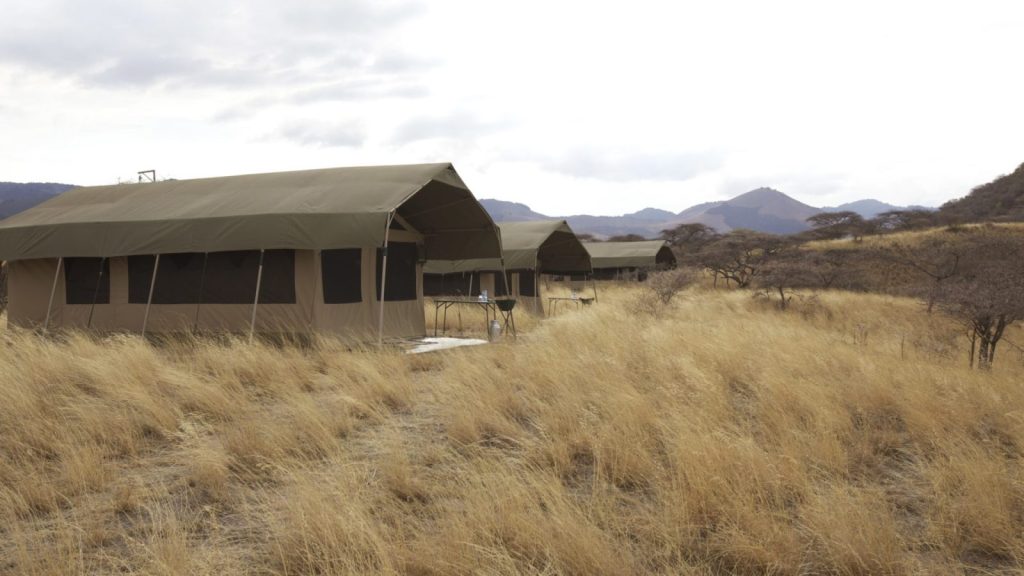
A seasonal mobile camp moves between locations at particular times of year. In the Serengeti, some operators reposition their camps to suit different stages of the wildebeest migration. You normally arrive at a camp that is already set up. It can stay in the same place for your entire visit, even though it moves several times a year.
On an expedition-style mobile safari, you may sleep at more than one campsite during the same trip. The crew may pack up after breakfast and travel ahead while you spend the day on a game drive. Ask whether the team handles the setup or guests are expected to help. Also ask how often you will need to pack. Moving once over five nights feels different from moving every morning.
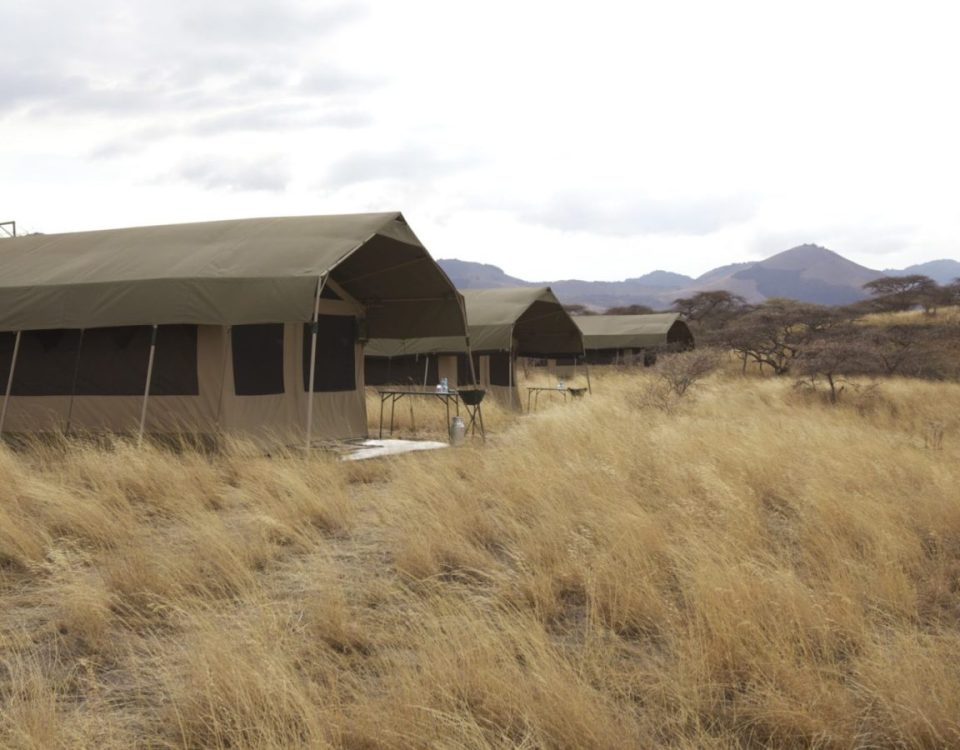
A lodge is fixed, but it doesn’t have to be a large hotel. It can be a small property with only a few rooms. Likewise, a tented property may stay in the same place all year. Canvas tells you what the room is made of. It doesn’t tell you whether the camp moves or what facilities you’ll have.
Comfort: Ask About the Bed, Bathroom and Space to Rest
A fully serviced mobile camp can offer a walk-in tent, proper bedding, meals prepared by a cook and a private bathroom. It may still use a bucket shower, with staff bringing water when you want to wash. A simpler camp might have a low mattress and a shared toilet. Ask for photographs of the actual tent and bathroom if the difference matters to you.
Then think through a normal day. Can you stand up inside the tent to dress? Is the toilet inside your room or across an outdoor path? Can you charge a camera battery in your room or only in a shared area? Is there somewhere shaded to sit between drives? These questions are especially useful if you’re travelling with young children, older relatives or someone who needs step-free access or overnight power.
A lodge can be the better option if you want a room you can return to easily while others stay out on a drive. Still, don’t assume a permanent building is accessible. Some lodges have steps, long paths or rooms scattered along a slope. Ask how far your room is from the dining area and whether staff escort guests after dark. Check both arrangements at camps as well.
Cost: Compare the Full Safari, Not the Nightly Rate
Mobile camping is not automatically cheaper than a lodge. A simple camping itinerary can cost less than a lodge-based trip, particularly when several guests share the vehicle and crew costs. A private mobile camp can cost more than a mid-range lodge because the operator brings equipment and staff to one site for your group. With only two guests, there are fewer people to share those costs.
Send both operators the same comparison request. For example, ask for a total for two adults travelling for five nights, with the same parks, a private vehicle, meals, all required fees and transfers. Ask them to show what you would still pay separately. You may find that one quote includes your game drives and park entry, while another looks cheaper because it covers accommodation and meals only.
Check whether the rate is per person sharing, per room or for the whole group. If you’re travelling alone, ask about any single supplement and whether you can join shared drives. If you’re booking a private camp, find out whether there’s a minimum group charge. Once you have comparable totals, decide what the extra money buys. A shorter drive to the wildlife area may be worth more to you than a larger room, or the other way round.
Closeness: Measure Time to Wildlife, Not Distance to the Gate
A camp can be near a park gate and still be a long drive from the area where you want to spend the morning. Conversely, a fixed lodge inside the park may make it easy to start a drive near productive wildlife habitat. Ask your guide to name the area you’ll explore first and estimate how long it normally takes to reach it from each property.
Here’s a practical comparison. If one property is 20 minutes from your usual game-drive area and another is 60 minutes away, the difference is about 80 minutes on a return outing. Those are example times, not estimates for a particular park. Ask whether the longer route passes through good wildlife habitat or mainly involves driving to a gate. An hour spent spotting animals can feel quite different from an hour spent in transit.
If you’re booking for the migration, ask where a seasonal camp will be during your exact dates and what the operator plans if the herds are elsewhere. A well-positioned camp gives you access to the right part of the Serengeti for your dates, but it cannot guarantee where the herds will be. Likewise, hearing animals after dark is part of some camp stays, not a reason to choose a site on the assumption that wildlife will come close. Follow staff instructions when moving around either kind of property after dark.
Which Safari Style Should You Choose?
Choose mobile camping if the location gives you more time in an area you care about and the camp offers the facilities you need. It can be a good fit if you like a small group, spend most of your day outdoors and don’t mind a simpler bathroom or limited charging.
Choose a lodge if you want reliable rest between drives or your group has different needs. One person might want to stay out until late afternoon while another wants to return for lunch and a nap. Check whether the property and vehicle arrangements let you do that without ending the drive for everyone.
Combine the two if location and comfort matter at different points in your trip. You might spend three nights in a seasonal camp near your main wildlife area, then two nights at a lodge with more space to rest. Avoid adding a change of accommodation simply to try both styles if it costs you most of a day on the road.
Frequently Asked Questions
Is mobile camping the same as fly camping?
No. A mobile camp can serve as your main accommodation for several nights and may have full-size beds and private bathrooms. Fly camping usually means a short overnight at a smaller, simpler temporary site, often as an addition to a guided walk.
Does a mobile camp always move while you are staying there?
No. Some move between seasons and remain in one place throughout your stay. Ask for the number of campsite changes on your itinerary and how much travel each one involves.
What should I prioritise on a first safari?
Start with the exact location and the daily driving time. Then make sure the room or tent meets your needs and compare the full prices. If both options offer similar wildlife access, choose the one where you expect to sleep and rest better.