Night Walks in Uganda: Bushbabies, Pottos, and Other Nocturnal Animals
On a night walk in Kibale, the first sign of a bushbaby might be two points of reflected light in the branches. A quick leap can help your guide narrow down what you’re seeing. A potto, by contrast, may move so slowly that you lose sight of it as soon as it reaches a cluster of leaves. Sometimes you’ll hear an animal without seeing it at all.
Night walks in Uganda are guided outings for watching and listening to wildlife after dark. Kibale National Park is a good starting point if you want to look for nocturnal primates. Around nearby Bigodi, ask whether a guided evening walk is available and where it takes place. Neither outing guarantees a bushbaby or potto. You’ll get more out of the walk if you’re also interested in frogs, insects and the sounds of the forest.
Where to Book Night Walks in Uganda
| Where to look | What the outing may involve | What to confirm |
|---|---|---|
| Kibale National Park | A guided forest walk looking for galagos, pottos and other nocturnal wildlife | The reporting point, start time, and whether park entry is separate |
| Bigodi area, near Kibale | A locally arranged night walk that may cover wetland edges or nearby vegetation | The exact trail, who leads it and whether transfers are included |
Kibale National Park for nocturnal primates
Uganda Wildlife Authority describes night walks in Kibale as a way to look for pottos and galagos, another name for bushbabies. If you’re already visiting the park for chimpanzee tracking, the evening outing gives you a reason to look at the forest differently. Instead of following a group of chimpanzees, you might spend several minutes looking into one tree or listening from the edge of a trail.
Ask the park or your operator where to report. If you’re expecting to meet at Kanyanchu because that’s where your daytime activity starts, confirm it for the night walk too. Ask whether the walk is separate from your daytime booking and whether your driver will wait or return to collect you. If you’ve spent most of the day on the road, you may enjoy the walk more on your second evening than immediately after check-in.
Bigodi for wetland edges and forest sounds
Bigodi Wetland Sanctuary is known for community-guided visits. If you want an evening outing, check with the local organiser whether a night walk is running on your date. A walk advertised as “Bigodi” may follow a route in the surrounding area rather than the sanctuary’s usual daytime trail. Ask which habitats it covers and whether there are boardwalks, muddy sections or uneven ground.
A wetland-edge walk gives you a different focus from a forest-canopy outing. You might spend more time listening for frogs or watching insects near the path. Choose it if that variety appeals to you. If your main interest is nocturnal primates, ask the guide which of the available routes is better suited to looking for them.
What Can You See on a Night Walk?
Bushbabies can be easier to notice when they move
Bushbabies, or galagos, are small nocturnal primates. Several species occur in Uganda, so bushbaby is a group name rather than an identification of one species. A brief look may show large eyes, a long tail or an animal moving quickly between branches. Those features can help you recognise a galago, but you may not see enough to say which one it was.
If the guide points out eyeshine, look for the branch first. Then watch the space around it. An animal that moves out of the light may reappear on another branch, but don’t expect the guide to keep a beam on it as it goes. A short view can be enough to notice how it moves. If you only saw its eyes, ask what other clues the guide used.
Pottos tend to move more slowly
A potto is also a nocturnal primate, but it is not a bushbaby. Watch for a compact animal gripping a branch and moving carefully through the vegetation. You’re less likely to notice it by a quick leap. Your guide may instead point out a shape that only becomes recognisable once you can see the head or limbs against the branch.
Patience helps here. If the guide finds a potto partly hidden by leaves, wait quietly and watch the gaps. It may move into view, or it may stay out of sight. There’s no need to change position repeatedly, shake a branch or ask for a brighter light to get a better look.
Frogs, insects and animals you may only hear
Depending on the route, you may hear frogs or insects long before you see anything in the trees. Ask your guide to separate the sounds for you. Is a call coming from low vegetation or farther into the forest? Has the same animal called again from the same place? Listening can be the most interesting part of the walk when the canopy is difficult to see.
Some guides may point out bats overhead or explain the call of a tree hyrax. A civet or genet is a possibility on some routes, but don’t plan the outing around seeing one. If your guide can’t identify a sound or you only catch a glimpse, leave it as an unknown. That’s a normal part of watching wildlife after dark.
How a Guided Night Walk Works
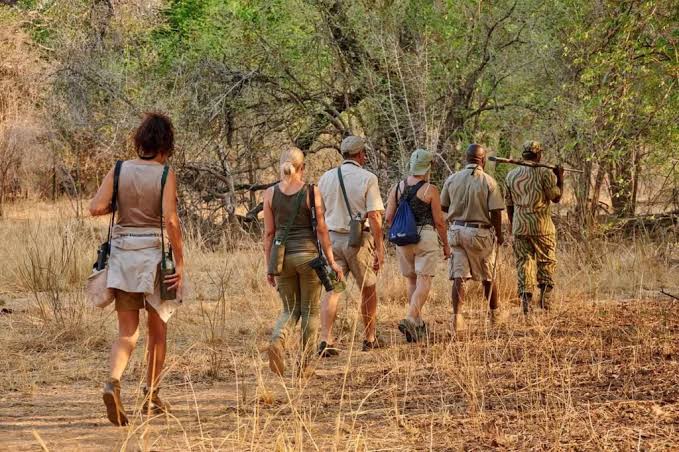
Your guide will explain where to walk, how closely the group should stay together and when to use your torch. Expect short stretches of walking broken up by quiet stops. In places with roots or slippery ground, the first thing you need to see is the path. Stop walking before you look up into the canopy.
Let the guide handle lighting wildlife. Use your own torch for your footing as instructed and avoid sweeping a bright beam through the trees or into other people’s faces. If the guide asks you to switch off your light or move on from a sighting, do so. Skip flash photography and don’t play animal calls to draw wildlife closer. If you want to take a photo, ask first and be ready to put the camera away if it’s distracting you from the trail.
Night walks and night game drives are separate activities. A drive uses a vehicle and may cover more ground, while a forest walk lets you stop and listen among the trees. A park that offers a night drive does not necessarily allow visitors to walk after dark. Book the activity you want and follow the access rules for that site.
What to Pack and Ask Before You Go
Bring closed shoes with grip, long trousers and a light rain layer. Ask whether the guide supplies torches or whether you need your own. If you bring a head torch, check that it has a low setting and is charged. A small pair of binoculars can help when an animal is briefly visible, but you don’t need to carry heavy camera equipment on a first walk.
Ask about walking time and terrain, not just the outing length. A walk with frequent stops may cover little ground but still keep you on your feet for much of the evening. Ask whether there are steep sections, roots, narrow boards or muddy stretches. If anyone in your group has trouble walking in low light, explain that before booking and ask whether a shorter route is available.
Confirm the total price and your return arrangements. Ask whether the booking includes guiding, site or park entry and transport from your accommodation. If you’re travelling with children, confirm the minimum age for that outing and ask how late you’ll finish. Let the lodge know if you’ll be back after its usual dinner time.
Frequently Asked Questions
Are bushbaby and potto sightings guaranteed?
No. These animals can be quiet, hard to see in foliage or elsewhere on the night you visit. A knowledgeable guide can help you recognise movement, calls and eyeshine, but those clues don’t always lead to a clear sighting.
Can you do a night walk and chimpanzee tracking in one day?
Yes, if both bookings work with your transport and you’re comfortable with two walks in one day. If you have two nights near Kibale, consider putting the activities on different days. That gives you more time to rest and more flexibility if conditions change.
Can you walk into the forest on your own after dark?
Don’t assume a daytime trail is open at night. Arrange an authorised guided outing, confirm the meeting point and stay with the group. If you want to listen for wildlife from your lodge instead, ask staff which areas guests may use after dark.