One of Africa’s Oldest and Richest Forests
The ecology of Uganda’s Impenetrable Forest represents one of the most biologically significant ecosystems on the African continent, a status that earned Bwindi UNESCO World Heritage recognition in 1994 and made it a global priority for conservation funding and research. Long before it became famous as a gorilla trekking destination, Bwindi was already remarkable in its own right: an ancient Afromontane rainforest that survived the last Ice Age largely intact, functioning today as a living refuge of biodiversity found almost nowhere else on Earth. Understanding this broader ecology adds real depth to a trek, since the same forest structure that gives Bwindi its name also happens to be exactly what makes it such extraordinary gorilla habitat.
Why the Forest Earned Its Name
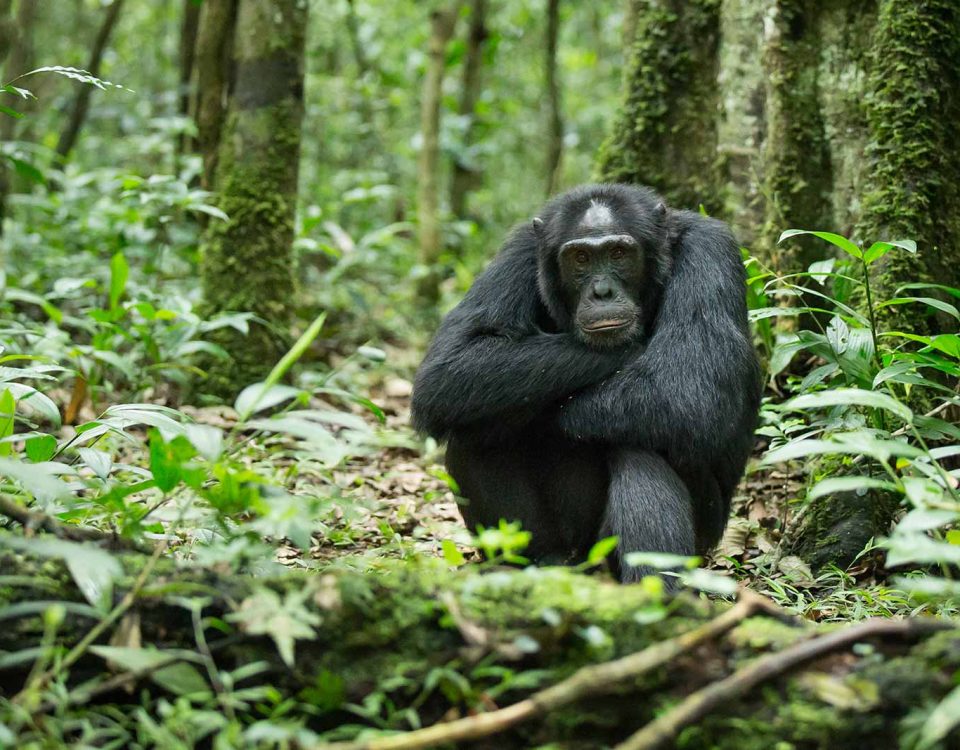
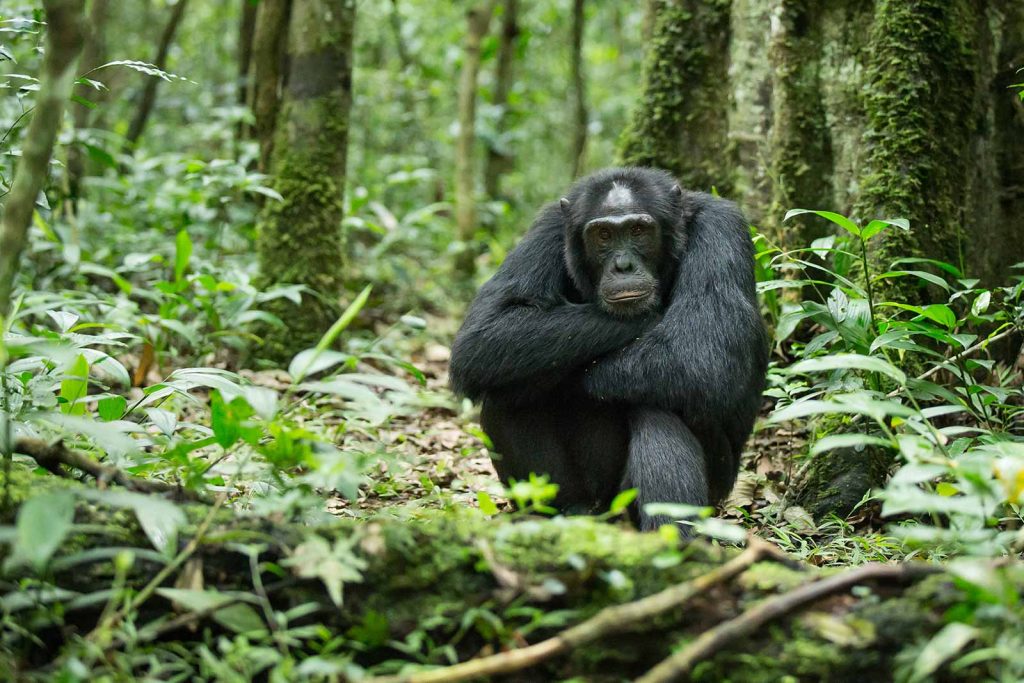
Bwindi’s full name, the Bwindi Impenetrable Forest, is not an exaggeration or marketing flourish. The park’s dense, tangled understory, a nearly impassable weave of vines, ferns, and shrubs beneath a closed canopy, gave early explorers and local communities genuine difficulty moving through the forest without cut paths, and the name stuck permanently. This density is not incidental; it reflects the forest’s structural maturity and near-continuous vegetation cover across multiple canopy layers, from towering emergent trees reaching over 30 meters down through a mid-story canopy to the thick undergrowth that makes off-trail movement genuinely difficult even today, guided treks included.
Geological Age and Ice Age Survival
Bwindi is estimated to be among the oldest forests in Africa, with some research suggesting portions of the ecosystem have existed continuously for at least 25,000 years, making it old enough to have survived the last major Ice Age largely intact while many surrounding forest ecosystems across the continent were reduced or eliminated by the era’s cooler, drier climate. This long, uninterrupted history allowed an exceptional diversity of species to evolve and persist within the forest, including a significant number found nowhere else on Earth, a legacy of isolation and stability rarely matched by younger forest ecosystems elsewhere in the region.
A Genuine Biodiversity Hotspot
The numbers behind Bwindi’s biodiversity are striking even by the high standards of tropical African forests. The park hosts more than 320 recorded tree species, over 200 species of butterfly, and more than 350 recorded bird species, including 23 species found only within the Albertine Rift region and nowhere else in the world. Mammal diversity is similarly exceptional, with more than 120 recorded species ranging from forest elephants and several duiker species to eleven primate species beyond mountain gorillas themselves, including chimpanzees, L’Hoest’s monkeys, and black-and-white colobus. This concentration of endemic and rare species places Bwindi among the most important single sites for biodiversity conservation anywhere on the African continent, a significance that extends well beyond its role as a gorilla trekking destination.
The Albertine Rift Connection
Bwindi sits within the Albertine Rift, a geologically ancient region running along the western edge of East Africa’s Rift Valley system, recognized globally as one of the continent’s most important centers of species endemism. The rift’s varied topography, ranging from lowland forest to high-altitude montane zones, has produced isolated pockets of habitat where species evolved separately over long periods, resulting in unusually high rates of endemic plants, birds, and mammals found within a relatively compact geographic area. Bwindi represents one of the richest single fragments of this broader ecological region, concentrating an outsized share of the Albertine Rift’s total biodiversity within its roughly 330 square kilometers.
Altitude Zones and Vegetation Structure
The forest’s ecology varies considerably across its elevation range, which spans from roughly 1,160 meters at its lowest point to 2,607 meters at its highest ridges, a range wide enough to support several distinct vegetation zones within a single park. Lower elevations feature classic tropical rainforest structure with a closed, multi-layered canopy, while higher elevations transition into montane forest and, in some areas, bamboo zones similar to those found in the nearby Virunga volcanoes. This altitude variation matters enormously for gorilla ecology specifically, since mountain gorillas rely on a genuinely diverse diet drawn from across these different zones, shifting their foraging patterns seasonally to take advantage of fruiting trees at lower elevations and herbaceous vegetation and bamboo shoots at higher elevations depending on availability.
Why This Structure Supports Gorillas So Well
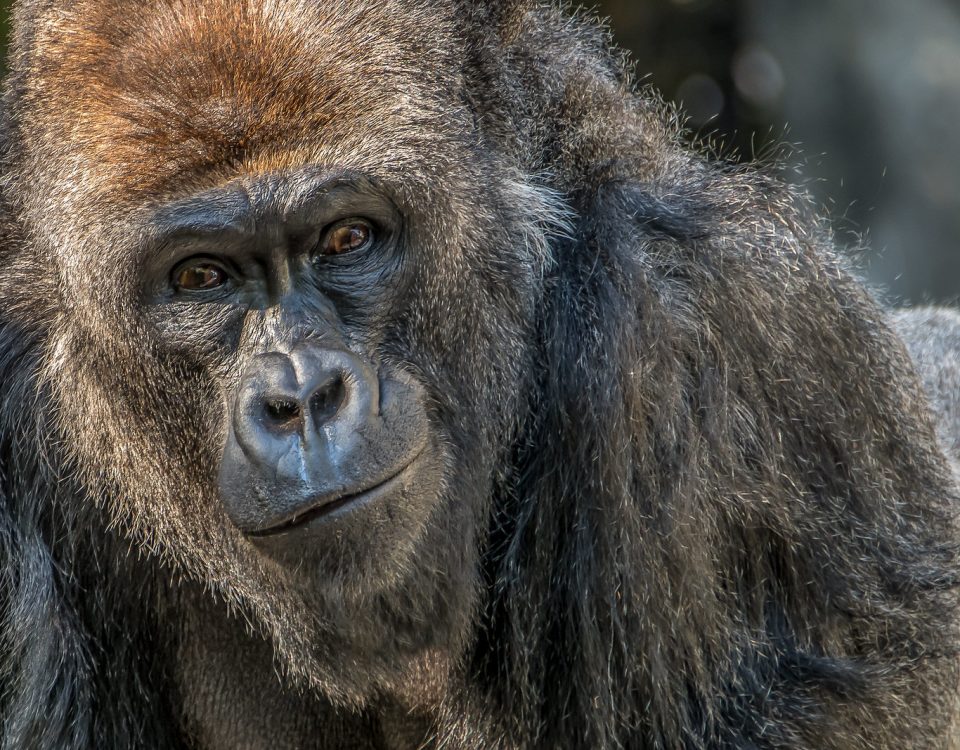
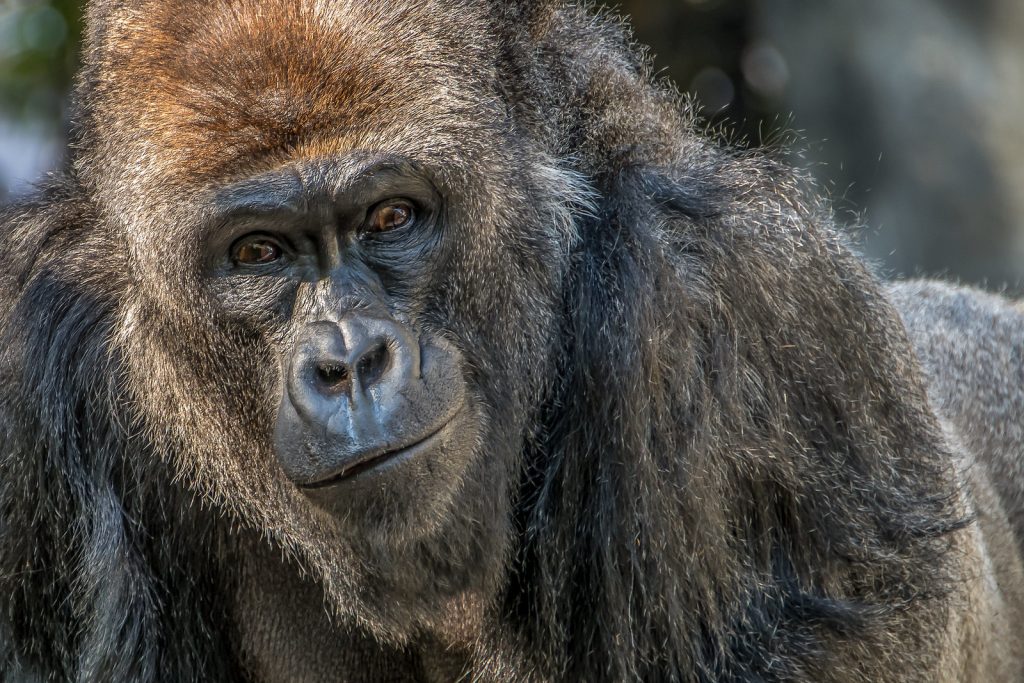
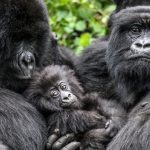
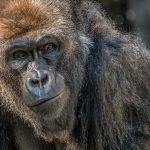
Mountain gorillas require substantial daily food intake, and Bwindi’s layered vegetation structure, offering dozens of edible plant species across multiple altitude zones, provides exactly the kind of year-round dietary flexibility a large-bodied, non-migratory primate needs to thrive within a fixed home range. This dietary diversity, combined with dense understory vegetation offering both food and effective cover, likely explains why Bwindi supports roughly half of the world’s remaining mountain gorilla population despite covering a considerably smaller area than the neighboring Virunga Massif, whose gorillas rely more heavily on a narrower range of high-altitude vegetation types.
Rainfall, Climate, and Watershed Function
Bwindi receives substantial annual rainfall, typically distributed across two wet seasons that maintain the forest’s characteristic humidity and support its dense vegetation growth throughout the year. The forest also plays a significant watershed role, with numerous streams and rivers originating within its boundaries feeding into the broader regional water system that supports agriculture and communities well beyond the park’s edges. This hydrological function adds a practical, non-charismatic layer of ecological value to Bwindi that sometimes gets overlooked amid the understandable focus on gorillas, but which matters considerably to the surrounding human population dependent on the water systems the intact forest helps regulate.
Birdlife and the Forest Floor
Beyond its primate diversity, Bwindi ranks among Africa’s premier birdwatching destinations, drawing dedicated birders specifically for the chance to spot Albertine Rift endemics found in few other locations worldwide, including the African green broadbill, Shelley’s crimsonwing, and the striking Rwenzori turaco. The forest’s dense canopy and multiple vegetation layers support distinct bird communities at different elevations, meaning a single day’s walk through varying altitude zones can produce a genuinely wide range of sightings for visitors willing to slow down and look beyond the primates. At ground level, the forest floor hosts its own distinct ecosystem of invertebrates, fungi, and decomposing plant matter that quietly supports the entire food web above it, a layer of biodiversity easy to overlook but essential to the forest’s overall ecological function.
Conservation Pressures on This Ecosystem
Bwindi’s ecological richness exists under real and ongoing pressure, much of it stemming from the same dense human population surrounding the park that also makes conservation here so logistically challenging. Agricultural encroachment along the park boundary, demand for firewood and building materials, and the broader habitat fragmentation pressures affecting the wider Albertine Rift region all threaten to gradually erode the forest’s ecological integrity if not actively managed. These pressures connect directly to the threats facing mountain gorillas discussed elsewhere on this site, since habitat quality and forest ecological health underpin gorilla survival just as fundamentally as direct protection from poaching or disease. Sustained conservation funding, much of it generated through gorilla trekking tourism itself, remains essential to managing these pressures and preserving Bwindi’s ecological function for the long term, not just as gorilla habitat but as one of Africa’s genuinely irreplaceable forest ecosystems.
An Ecosystem Worth Understanding Beyond the Gorillas
While gorilla trekking rightfully remains the primary draw for most visitors, understanding the ecology of Uganda’s Impenetrable Forest reveals a far richer picture than a single charismatic species can capture on its own. From ancient, Ice Age-surviving forest structure to exceptional bird and butterfly diversity, from the specific forest floor ecology covered in our related piece on giant African millipedes and Bwindi’s forest floor ecosystem to the broader watershed functions supporting communities well beyond the park boundary, Bwindi represents a complete, functioning ecosystem rather than simply a backdrop for gorilla encounters. Visitors planning a trek through Bwindi Impenetrable National Park who take even a little time to appreciate this broader ecological context, whether through a guided nature walk or simply paying closer attention during the trek itself, tend to come away with a considerably richer understanding of why this particular forest, among all of East Africa’s protected areas, has earned such an extraordinary global conservation reputation.
Guides working across Bwindi’s four trekking sectors are typically well versed in this broader ecology and happy to point out notable trees, birds, or forest floor details along the trail if asked, since much of this knowledge rarely comes up unless a visitor shows specific interest. Taking a few minutes during the walk to ask about a towering hardwood tree, an unusual butterfly, or the layered structure of the canopy overhead costs nothing and often adds a memorable dimension to the day that goes well beyond the gorilla encounter itself, rooting the experience in the full, ancient ecosystem that made it possible in the first place. Few forests anywhere combine this depth of biological history, endemic diversity, and functioning ecological complexity within such a compact, walkable area, making Bwindi worth appreciating on its own scientific merits, independent of the gorillas that first brought most visitors through its gates in the first place.