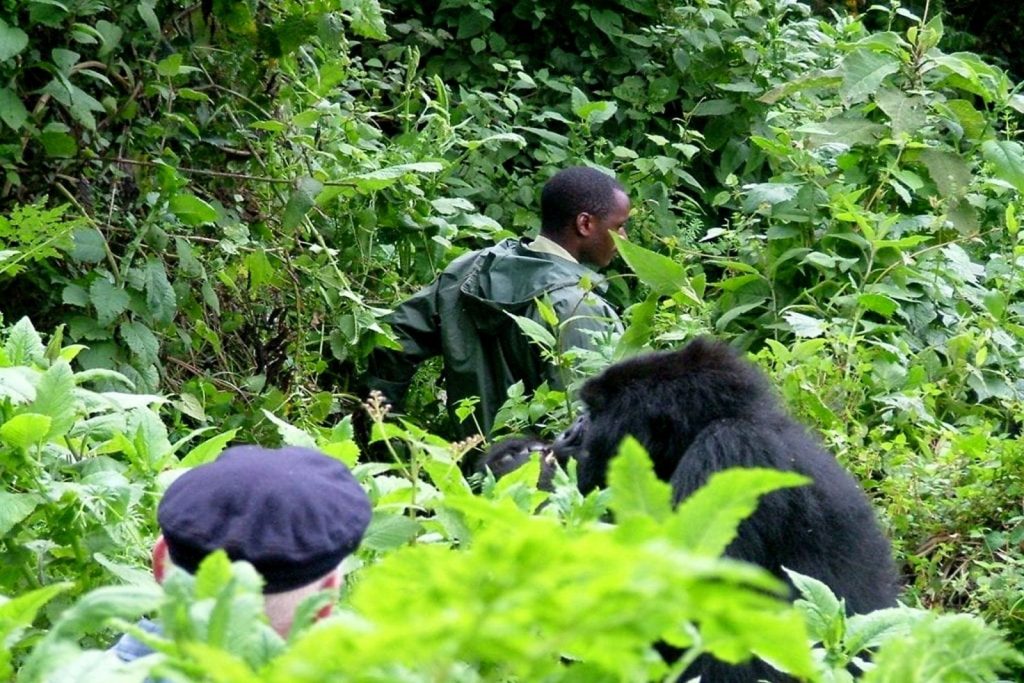
What Do Gorillas Eat And Other Gorilla Facts: First of all, the largest primates still alive are gorillas, which are found across forested regions of central and eastern Africa, split between several distinct subspecies that differ in size, habitat, and how endangered each one is. Gorillas have feelings like joy and melancholy that are comparable to those of humans, and they operate within a highly evolved social framework built around long-term family bonds rather than loose, shifting groups. Even while poaching is causing their numbers to decline, diseases and habitat damage still pose a threat, and WWF is trying to establish new protected places where their numbers can flourish, working alongside national park authorities across the region. Four recognised subspecies make up the gorilla family: the mountain gorilla and eastern lowland gorilla, both found in the eastern DRC region and its neighbouring countries, and the western lowland gorilla and Cross River gorilla, found further west across central Africa. Of these four, the Cross River gorilla is by far the rarest, with only a few hundred individuals believed to remain scattered across the wild today.
What Food Do Gorillas Consume?
Gorillas primarily eat fruits, stems, leaves, and bamboo shoots as part of an overwhelmingly vegetarian diet, spending much of each day simply foraging and chewing through large volumes of plant matter to meet their energy needs. An adult male can eat well over 30 pounds of vegetation in a single day, which is part of why gorilla groups are almost always found close to reliable, dense sources of food rather than roaming widely between distant feeding grounds. Termites and ants are common secondary food sources for Western lowland gorillas in particular, who also break open termite nests with their powerful hands to consume the larvae inside, making them slightly less strictly vegetarian than their mountain-dwelling relatives. Mountain gorillas, by contrast, rely much more heavily on leaves, stems, and shoots found at higher altitude, since fruiting trees are noticeably scarcer in their cooler, misty forest habitat than in the warmer lowland forests further west.
Are gorillas solitary creatures?
Gorillas travel in family groupings known as troops, which can consist of anywhere from a few individuals to over 40 members depending on the population and available habitat. A “Silverback,” the dominant adult male gorilla within the group, is in charge and has typically been so for years, making most of the decisions about where the troop feeds, rests, and moves each day. Younger males eventually leave the troop they were born into, either living alone for a time or forming new groups of their own, while females more often transfer between established troops as they mature. These solitary or newly formed bachelor groups can be genuinely unpredictable, since a young male without a troop of his own is sometimes more aggressive toward outsiders than an established silverback comfortably surrounded by his own settled family.
To what extent are humans connected to gorillas?
Gorillas are among the most intelligent creatures on the planet, and they are our closest relatives after chimpanzees and bonobos, since they share roughly 98% of our DNA. This close genetic relationship shows up clearly in their behaviour too, from tool use observed in the wild to the strong emotional bonds they form within their own family groups. Researchers have documented gorillas using sticks to test water depth and rocks to crack open tough plant matter, behaviour that was once assumed to be unique to chimpanzees and humans. Gorillas in captivity have also shown the ability to learn basic sign language for simple requests and needs, though this remains a genuinely active subject of ongoing debate among researchers about how much of it actually reflects true language use rather than simple association.
What dangers do gorillas encounter?
Since significant parts of the range of all four gorilla subspecies fall outside formally protected regions entirely, they are typically threatened by habitat destruction from logging and agriculture, diseases like Ebola that can devastate entire family groups at once, and poaching, whether targeted directly or as accidental bycatch from snares set for other animals. In places like the Congo, WWF and national park authorities are working together to establish new gorilla reserves.
To what extent do gorillas grow?
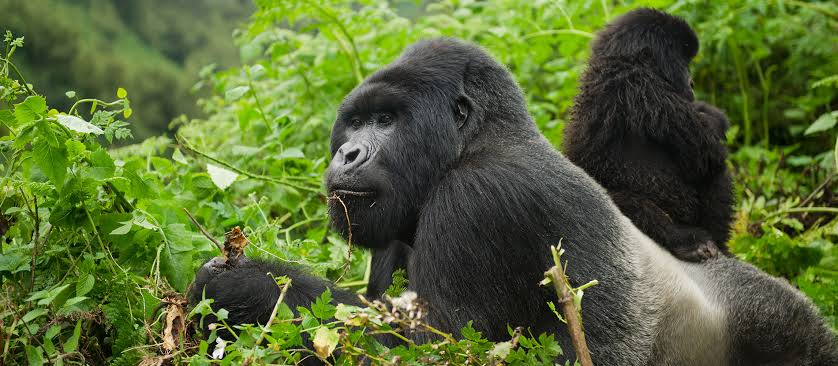
When standing upright on two legs, an adult male gorilla can reach a height of around six feet and weigh up to 440 pounds, though most of their time is actually spent moving on all fours using their knuckles for support. Male gorillas that reach full adulthood and develop the characteristic patch of white hair across their back, usually around the age of 12 to 14, are referred to as silverbacks. Females are considerably smaller in every respect, typically weighing around half as much as a mature male, which makes the size difference between the sexes one of the more visible and easily noticed features of the species when observed out in the wild during a trek.
What is the frequency of gorilla births?
Female gorillas carry their young for an 8.5-month gestation period, similar in length to a human pregnancy, and typically give birth to a single infant at a time, with twins being rare across the species as a whole. After birth, mothers raise their offspring for three to four years before the young gorilla becomes independent enough to move away from her constant care, and births are usually spaced several years apart as a result, which is part of why gorilla populations recover so slowly after a decline. This slow reproductive rate is one of the main reasons conservation work focuses so heavily on protecting existing adults rather than simply relying on natural population growth alone to recover numbers lost to poaching, disease, or habitat loss.
Gorilla Trekking in the Democratic Republic of Congo
The Democratic Republic of Congo (DRC) is home to two gorilla species found nowhere else together: mountain gorillas in Virunga National Park — Africa’s oldest national park, established in 1925 — covers 7,900 km² of remarkable ecological diversity, from the volcanic peaks of the Virunga Massif to the glaciers of the Rwenzori Mountains and the tropical lowland forests of the Congo Basin. Few, if any, parks anywhere in Africa manage to pack this much sheer ecological variety into a single protected area. The park is also home to hippos, elephants, okapis, and the entire cast of Congo rainforest wildlife.
Eastern Lowland Gorillas — A Unique Encounter
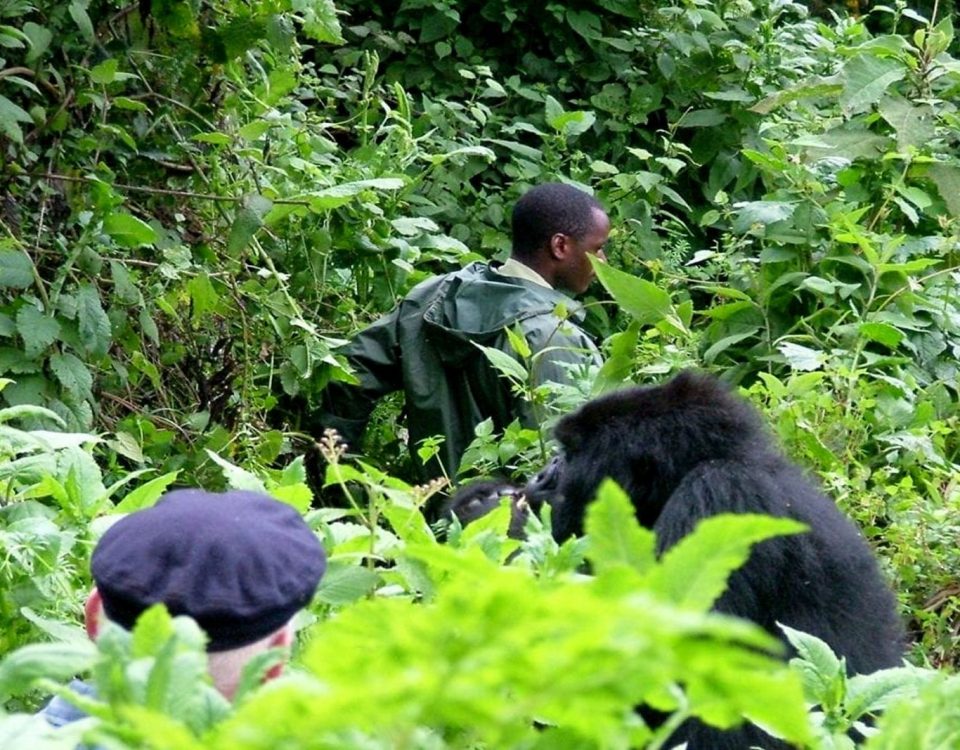
The eastern lowland gorilla (Grauer’s gorilla) is the world’s largest subspecies of gorilla, with silverbacks weighing up to 220kg. Found only in the DRC, Grauer’s gorillas are considerably rarer than mountain gorillas — their population has declined by more than 70% since the 1990s due to conflict, habitat loss, and poaching. Kahuzi-Biega National Park in South Kivu offers the only reliable trekking experience with habituated Grauer’s gorilla families. The park protects both lowland and highland forest across a genuinely wide altitude range, which is part of why it can support a gorilla subspecies as physically large as this one.
A gorilla permit in the DRC costs USD 400 per person — significantly cheaper than Rwanda (USD 1,500) or Uganda (USD 800). The experience is raw, off-the-beaten-track, and unforgettable for travellers seeking something genuinely uncommon. Infrastructure is noticeably more basic than in Rwanda or Uganda, so travellers should arrive with realistic expectations about comfort in exchange for a far less crowded encounter with the gorillas themselves. Group sizes on DRC treks also tend to be noticeably smaller than the standard eight-person limit used elsewhere in the region, which adds considerably to the sense of a more personal, far less scripted encounter with the gorillas.
Practical Information for DRC Gorilla Trekking
Getting to Virunga and Kahuzi-Biega
The most common entry point to eastern DRC is via Kigali, Rwanda. Goma — the gateway to Virunga National Park — is just 80km from Kigali. Direct flights from Nairobi and Kampala also serve Goma. Bukavu (gateway to Kahuzi-Biega) is accessible from Goma by road (3–4 hours) or by light aircraft. Most travellers base themselves in Kigali beforehand and treat the DRC leg as a short add-on to a wider Rwanda itinerary, rather than planning it as a standalone destination in its own right.
Is it safe to trek gorillas in the DRC?
Security in eastern DRC is complex and fluctuates. Virunga National Park and Kahuzi-Biega have experienced periods of closure due to armed group activity. Always check current security conditions with your tour operator and your government’s travel advisory before planning a DRC gorilla trek. Reputable operators with established local security networks are essential. Itineraries are typically kept deliberately flexible for this reason, with alternative dates or backup destinations held quietly in reserve in case conditions change close to departure.
Recommended Tours: 4 Days Bwindi Gorilla Trekking Safari | 8 Days Kenya Wildlife Safari
Together, these two national parks make the DRC one of the only countries anywhere where visitors can realistically trek two genuinely different gorilla subspecies without ever leaving a single national territory. Anyone considering it should go in well informed.