Where Nkuringo Sits Within Bwindi
Perched on the southwestern edge of Bwindi Impenetrable National Park, the Nkuringo sector occupies a ridge with arguably the finest panoramic setting of any trailhead in the park, looking out across a deep, forested valley toward the volcanic peaks of the Virunga Massif on a clear day. It was here, in the late 1990s, that Uganda Wildlife Authority habituated its very first gorilla family outside the original Buhoma sector, making Nkuringo something of a pioneer in Bwindi’s gorilla trekking story. Today it remains smaller and quieter than Rushaga or Buhoma, but it has earned a distinct reputation among trekkers and guides alike as the sector with the steepest trailhead in Bwindi, a reputation that shapes almost everything about planning a visit here.
This guide focuses specifically on what makes the Nkuringo terrain so demanding, who should choose it, and how it compares to Bwindi’s other three trekking sectors, which we cover individually in dedicated guides to Ruhija, Rushaga, and Buhoma.
Why Nkuringo Is Called Bwindi’s Steepest Trailhead
The defining feature of a Nkuringo trek is not the length of the walk but its shape. Trekkers begin at the park boundary on the ridge, at an elevation of roughly 2,600 meters, and immediately descend into the valley below in search of the resident gorilla families, since the forest itself sits considerably lower than the trailhead. That descent is often the easy part. The real challenge comes on the return journey, when tired legs must climb back up the same steep, often muddy slope carrying the accumulated fatigue of a full day’s trekking. Guides and porters at Nkuringo describe this climb as consistently the toughest single stretch of trail anywhere in Bwindi, steeper and more sustained than the ridge-and-valley terrain found in Rushaga or the shorter approaches common around Buhoma.
What the Terrain Actually Feels Like
The path itself alternates between narrow forest trail and, closer to the ridge, sections of open farmland and terraced hillside that offer little shade from the equatorial sun. After rain, which can arrive with little warning at this altitude, the red volcanic soil turns slick and the descent becomes as much a test of balance as of stamina. Locally hired porters, available at the trailhead for a modest fee, are less a luxury here than a genuinely practical necessity, both for carrying gear and for offering a steadying hand on the steeper switchbacks. Even fit, experienced hikers who have completed treks elsewhere in Bwindi without assistance often engage a porter specifically for a Nkuringo trek, a decision most do not regret by the final climb.
How Long a Nkuringo Trek Typically Takes
Trek duration depends entirely on where the assigned gorilla family happens to be feeding that morning, and this varies more at Nkuringo than in some other sectors because the resident families range across a wide stretch of forest that dips toward the international boundary with DR Congo. A short day might have trekkers reaching the gorillas within ninety minutes of descending into the valley; a longer one can stretch to four or five hours of hiking before the family is located, not counting the permitted hour spent in their company. Whatever the outbound time, trekkers should mentally budget an equal or greater amount of time for the uphill return, which typically feels considerably harder than the same distance did on the way down.
The Gorilla Families of Nkuringo
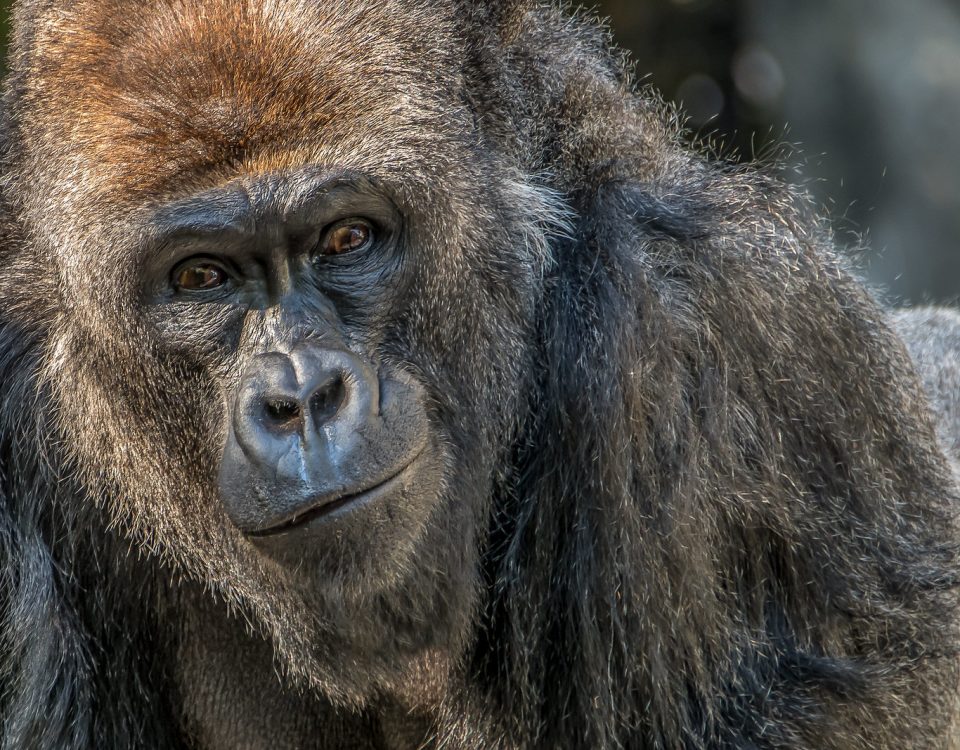
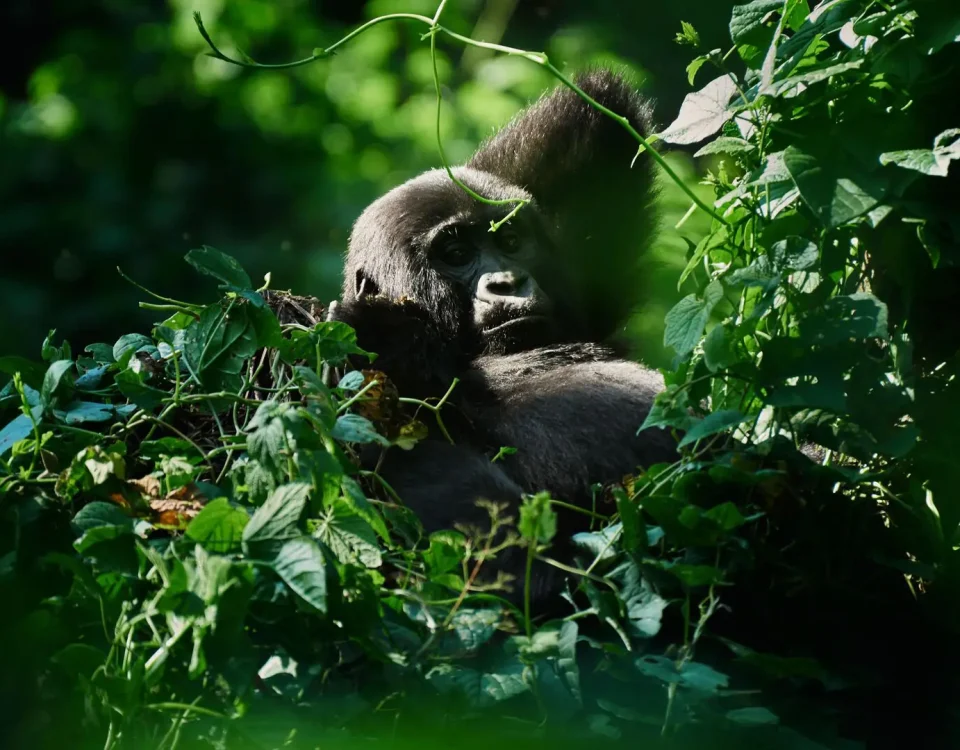
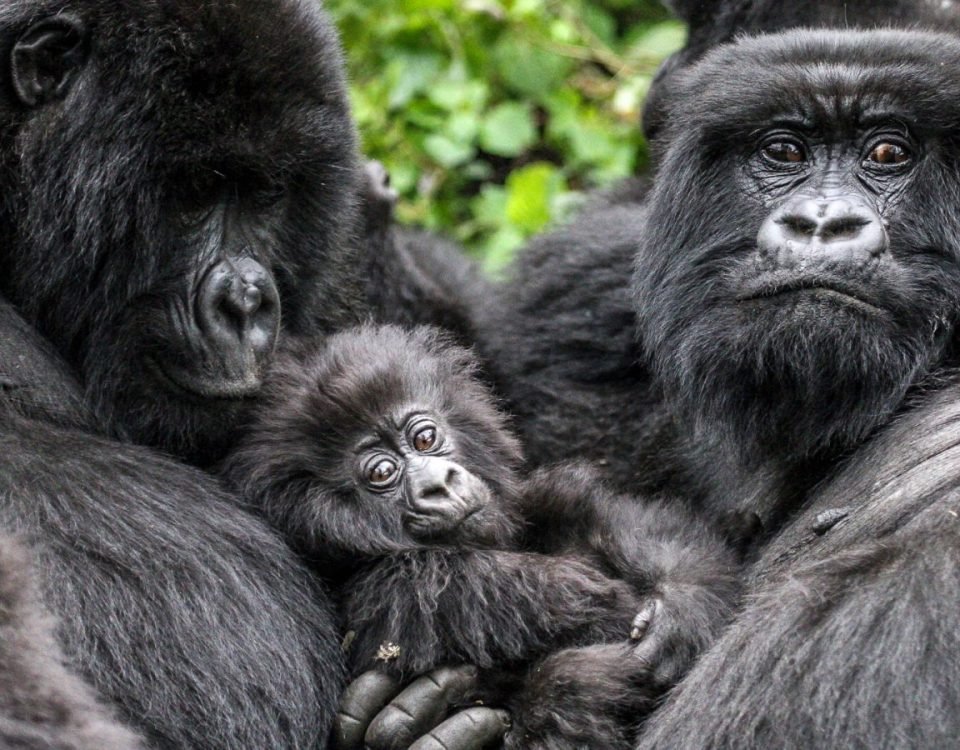
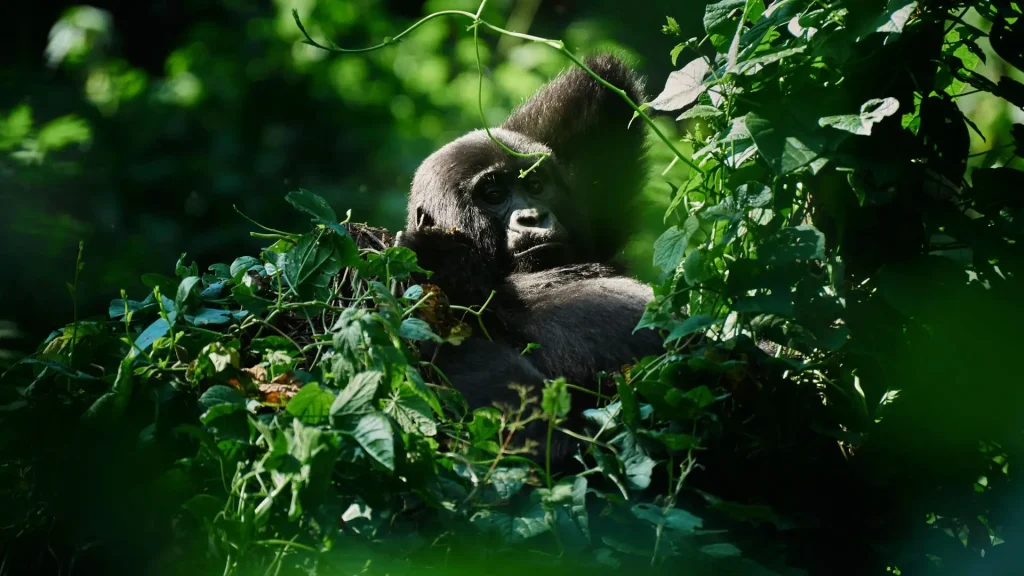
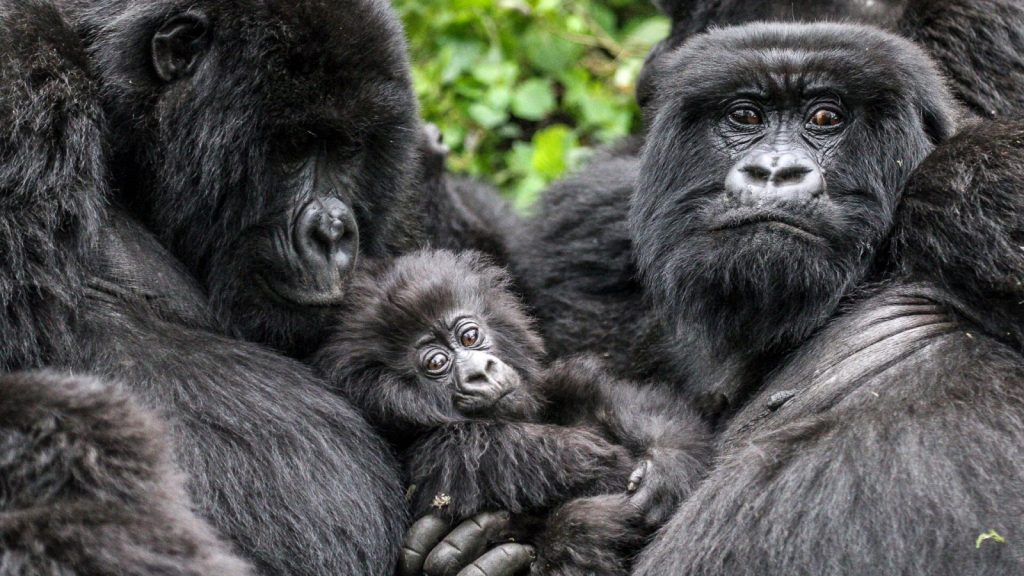
Nkuringo hosts several habituated families, most descended from or related to the original Nkuringo group habituated in the sector’s early years. Family composition shifts over time as gorillas mature, disperse, or new silverbacks take over leadership, so travelers should expect their guide to brief them on the specific group they are likely to visit on the morning of the trek itself, following the standard allocation process used across Bwindi. What distinguishes trekking here is less the individual families themselves, since gorilla family dynamics follow similar patterns across all of Bwindi’s sectors, and more the physical effort required to reach them and the dramatic backdrop of forested valley and distant volcanic silhouettes along the way.
Nkuringo’s Pioneering Community Conservation Model
Beyond the physical challenge, Nkuringo carries genuine historical significance in Uganda’s conservation story. It was among the first places in the country where a structured revenue-sharing arrangement between the park authority and neighboring communities was tested at scale, built on the recognition that local households living along the park boundary needed a direct, tangible stake in gorilla conservation to reduce pressure on the forest from farming, hunting, and firewood collection. That early model helped shape the community revenue-sharing systems now used more broadly across Uganda’s gorilla trekking areas, channeling a portion of permit revenue into schools, health facilities, and water projects in surrounding villages. Readers curious about how permit fees are distributed today across the wider system can find a full breakdown in our guide to where your gorilla permit money actually goes.
The nearby Batwa community, displaced from the forest when Bwindi was gazetted as a national park in 1991, also runs cultural tourism experiences accessible from the Nkuringo trailhead, giving trekkers who arrive a day early the option to combine a forest trek with a more grounded look at the human history bound up with this landscape.
Who Should Choose Nkuringo Over Other Sectors
Nkuringo suits trekkers who prioritize scenery and a genuine physical challenge over the shortest or gentlest possible walk. The views from the ridge, particularly at sunrise before the day’s trek begins, rank among the best in the park, and the sense of accomplishment after completing the final climb tends to stick with visitors longer than an easier trek elsewhere might. It is a poor choice, however, for travelers with significant mobility limitations, cardiovascular concerns, or a strong aversion to sustained uphill exertion at moderate altitude, since there is no way to shorten or avoid the return climb once a family has been located deep in the valley.
Practical Preparation for a Nkuringo Trek
Trekkers heading to this sector benefit from arriving a day or two early to acclimatize, since the trailhead itself sits at a meaningfully higher elevation than lower-lying parts of the park. Sturdy, broken-in hiking boots with real ankle support matter more here than almost anywhere else in Bwindi, and gardening gloves are genuinely useful for gripping vegetation and steadying yourself on the steepest sections. Hiring a porter is worth the modest cost regardless of fitness level, both to support the local economy around the trailhead and to have a second pair of hands available on the descent back to the trailhead lodges.
Comparing Nkuringo’s Difficulty to Bwindi’s Other Sectors
Every Bwindi sector involves genuine forest hiking, but guides who have led treks across all four consistently rank Nkuringo as the most physically demanding overall, ahead of Rushaga’s more moderate ridge trails, Ruhija’s high-altitude but comparatively gentler paths, and Buhoma’s shorter, better-established routes near the original park headquarters. The difference comes down to that single, unavoidable climb back to the trailhead. Rushaga can occasionally produce an equally long trek if a family has wandered far, but its terrain rarely forces the same sustained, steep gradient found on Nkuringo’s return leg. For trekkers weighing which sector to book, this comparison matters more than family selection, since Uganda Wildlife Authority assigns specific families on the morning of the trek rather than allowing advance requests.
Where to Stay Near the Nkuringo Trailhead
Accommodation directly at the Nkuringo trailhead ranges from comfortable mid-range lodges to a handful of higher-end properties built specifically to take advantage of the ridge’s sweeping views toward the Virunga volcanoes. Staying as close to the trailhead as possible is worth prioritizing here more than in other sectors, since it minimizes the early-morning transfer time before the 7 a.m. briefing and allows tired trekkers to reach a hot shower and a meal quickly after the demanding return climb. Several lodges in the area also support the same community programs that grew out of Nkuringo’s original revenue-sharing model, so a stay here often channels additional benefit directly back into the villages bordering the park.
Getting to Nkuringo
The Nkuringo sector is most easily reached from Kisoro town, a roughly two to three hour drive from Kabale along a mix of paved and unpaved roads, or via a short domestic flight into Kisoro airstrip followed by a shorter road transfer. This proximity to Kisoro also makes Nkuringo a natural pairing with a Mgahinga Gorilla National Park visit or a cross-border trip into Rwanda’s Volcanoes National Park, since all three sit within a relatively compact corner of southwestern Uganda near the tri-border area with Rwanda and DR Congo.
Booking a Nkuringo Permit
Permits for the Nkuringo sector are issued through Uganda Wildlife Authority at the same standard rate applied across Bwindi, and because the sector hosts fewer daily permits than larger sectors like Rushaga, booking well in advance is strongly advised, particularly during the peak trekking months of June through September and December through February. Travelers assembling a broader itinerary around a Bwindi Impenetrable National Park visit often combine a Nkuringo trek with time in Queen Elizabeth National Park to the north, taking advantage of the scenic drive that links the two.
Ultimately, a trek through the Nkuringo sector rewards travelers willing to trade a little extra physical effort for arguably the most dramatic scenery and the deepest conservation history among Bwindi’s four trailheads. The steep climb back to the ridge is, by nearly universal agreement among those who have made it, entirely worth the view waiting at the top and the encounter that came before it.