Ranking cities by their street food is an inherently subjective exercise, shaped as much by personal taste as by any objective measure, yet a handful of East African cities consistently stand out for the sheer density, variety, and daily vitality of their roadside food culture. From Kampala’s late-night rolex stands to Dar es Salaam’s mishikaki grills and Zanzibar’s evening food markets, comparing these cities side by side reveals distinct regional food identities built from genuinely different staple ingredients, cooking methods, and eating customs.
What Makes a Great Street Food City
A genuinely excellent street food city needs more than a few good vendors scattered across town; it requires density, variety, and a culture of everyday street eating woven into daily urban life rather than treated as an occasional novelty. The strongest contenders across East Africa share several common traits: a signature dish closely identified with the specific city, affordable pricing that keeps street food genuinely accessible to everyday residents rather than positioned as a tourist novelty, and a late-night or all-hours vendor culture that reflects real, sustained local demand rather than food served purely for passing visitors.
Kampala: The Rolex Capital
Kampala’s street food scene centers unmistakably on the rolex, a rolled chapati and egg omelet, often loaded with vegetables, that has become Uganda’s most internationally recognized street food and a genuine point of national pride, celebrated with its own dedicated festival in the capital. Our dedicated piece on the Ugandan rolex as Kampala’s essential street food covers this specific dish’s origin and preparation in considerably more depth, while our companion guide to traditional Ugandan food beyond the rolex surveys the wider dish landscape available across the city’s food stalls and roadside vendors. Beyond the rolex, Kampala’s street vendors serve roasted maize, grilled meat skewers, and muchomo alongside fresh fruit stalls that operate deep into the night across neighborhoods including Wandegeya, Kikubo, and the areas surrounding Makerere University, giving the city a genuinely round-the-clock street eating culture.
Nairobi: Nyama Choma and Bold Flavor
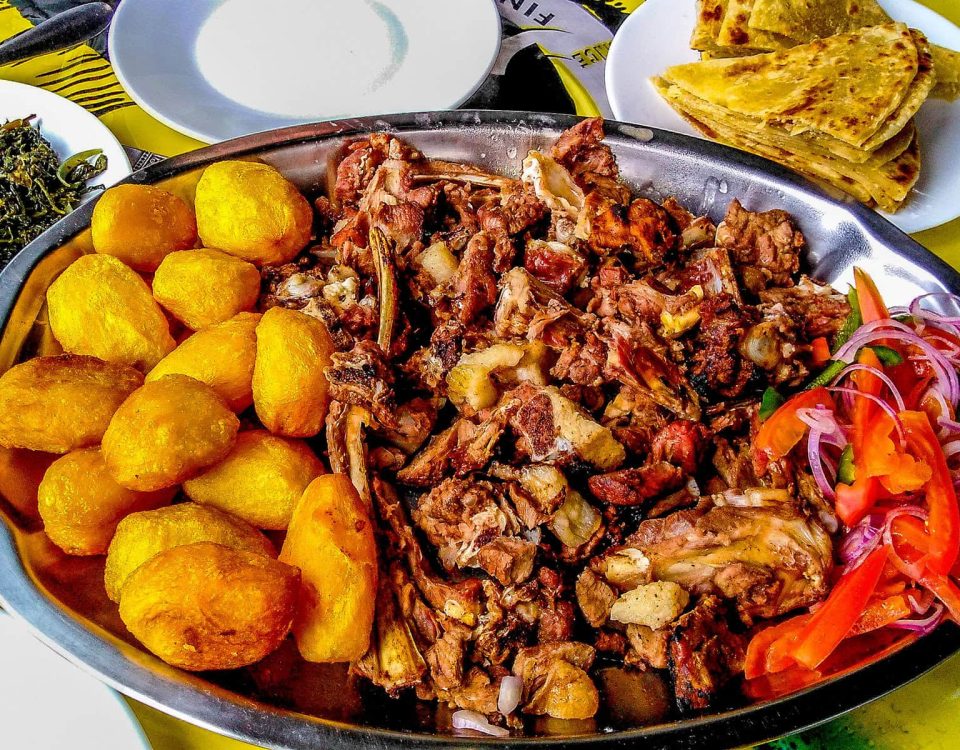
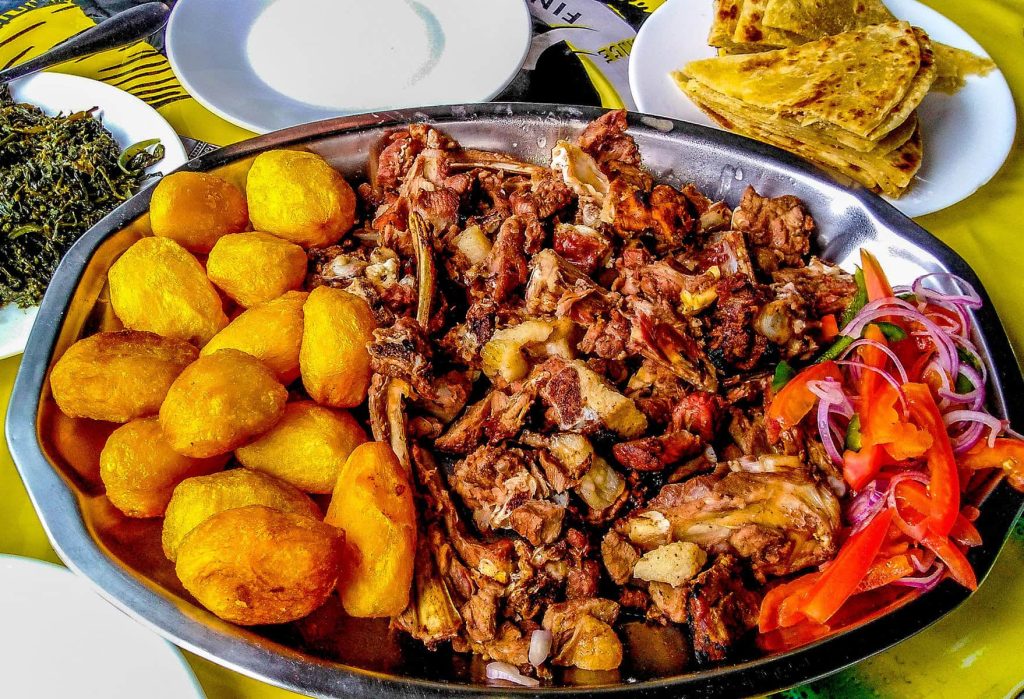
Nairobi’s street food identity centers heavily on nyama choma, grilled meat, typically goat or beef, cooked slowly over charcoal and served with kachumbari, a fresh tomato and onion salad, and ugali or greens, widely considered close to Kenya’s unofficial national dish and available from countless roadside grills across the city. Nairobi street food culture also embraces mutura, a distinctive blood sausage made from seasoned offal and blood stuffed into cleaned intestine casing and grilled or boiled, a dish with genuinely deep roots in Nairobi’s working-class food culture that has, in recent years, gained broader popularity and even upscale reinterpretation across the city’s dining scene. Smokies, roasted sausages typically served with a hardboiled egg and kachumbari from mobile street carts, round out Nairobi’s core street food identity as a particularly convenient, affordable grab-and-go option found throughout the city’s business districts.
Dar es Salaam: Home of Mishikaki and Chips Mayai
Dar es Salaam holds a strong claim as the birthplace of both mishikaki, marinated meat skewers grilled over open coals and widely considered East Africa’s answer to the kebab, and chipsi mayai, a distinctive dish combining deep-fried potato chips folded directly into a beaten egg omelet, a genuinely indulgent, filling street snack found at food stalls throughout the city at nearly any hour. The city’s street food scene benefits from Tanzania’s broader spice trade history, with mishikaki marinades and accompanying sauces often carrying noticeably more complex seasoning than comparable grilled meat dishes found further inland, a legacy of the coast’s centuries of Indian Ocean trade contact.
Zanzibar: Evening Food Markets and Coastal Flavor
Zanzibar’s Stone Town transforms each evening as vendors set up along the waterfront, serving Zanzibar mix, a combination of samosas, bhajias, cassava chips, and lentil fritters typically served with a tangy sauce, alongside grilled seafood skewers, sugarcane juice, and the island’s own version of chips mayai. Our dedicated guide to Zanzibar’s Forodhani Gardens night food market covers this specific evening food scene in considerably more detail, including what to expect from the market’s atmosphere and specific vendor specialties, while our broader piece on coastal Swahili cuisine across Zanzibar and Mombasa situates this street food culture within the wider Swahili coast culinary tradition it draws from.
Kigali: A Quieter, More Orderly Street Food Scene
Kigali’s street food culture operates on a noticeably different rhythm than its regional neighbors, shaped partly by the city’s strong emphasis on public order and formal market regulation, meaning street eating tends to concentrate more heavily around designated market areas and organized food stalls than the more informally scattered roadside vendor culture found in Kampala or Nairobi. Grilled brochettes, skewered meat similar in concept to Tanzanian mishikaki, alongside roasted plantain and fresh fruit stalls, form the core of Kigali’s more understated but still genuinely satisfying street food offering, well complemented by the city’s broader farm-to-table restaurant scene for travelers seeking a fuller dining experience beyond street stalls alone.
Mwanza and Kisumu: Lake Victoria’s Fish-Forward Street Food
The cities ringing Lake Victoria, particularly Mwanza on the Tanzanian shore and Kisumu on the Kenyan side, offer a genuinely distinct street food identity built around fresh lake fish, with grilled tilapia and Nile perch served whole or in portions from lakeside stalls forming a signature local specialty unavailable in quite the same form at inland cities further from the water. This fish-forward street food culture connects directly to the lake’s broader fishing economy and market culture, where fresh catch moves quickly from landing sites to grills and market stalls each day.
How These Cities Compare
Ranked purely on variety and round-the-clock accessibility, Kampala and Nairobi arguably edge out the rest of the region, both offering an exceptionally dense, genuinely all-hours street food culture woven deeply into daily urban life rather than confined to specific market hours or tourist-oriented evening markets. Zanzibar’s Forodhani Gardens, while more concentrated into a single evening market format, offers arguably the single most atmospheric street food experience in the region, combining food, waterfront setting, and genuine local social gathering into one distinctly memorable evening. Dar es Salaam’s specific signature dishes, mishikaki and chipsi mayai, meanwhile carry a strong enough individual identity to make the city a genuine culinary destination in its own right, regardless of how it ranks on sheer volume or variety compared to its regional neighbors.
Drinks and Sweets That Complete the Experience
What Locals Drink Alongside Street Food
Street food across East African cities is rarely eaten in isolation from a specific accompanying drink, with fresh sugarcane juice, ginger-flavored sodas, and chilled bottled water widely available from the same stalls or immediately adjacent vendors selling grilled meat, rolex, or mishikaki. In coastal cities including Zanzibar and Mombasa, fresh coconut water and tamarind juice add a distinctly tropical dimension to the street food drink landscape unavailable in quite the same form at inland cities further from the coast, reflecting the same broader coastal culinary identity shaping the region’s food more generally.
Sweet Endings From the Same Stalls
Sweet street snacks, including mandazi, a lightly sweetened fried dough popular across Kenya, Tanzania, and Uganda alike, and vitumbua, small rice-flour cakes particularly associated with the Swahili coast, round out many street food outings with an affordable dessert course sold from the same general vendor network serving savory dishes throughout the day. These sweet offerings tend to appear earlier in the day compared to the heavier grilled meat dishes more commonly associated with evening and late-night street eating, giving each city’s street food scene its own distinct daily rhythm beyond a single signature dish alone.
Eating Street Food Safely and Respectfully
Travelers new to East African street food should choose busy stalls with high turnover, a reliable sign of fresh ingredients and food that has not sat prepared for extended periods, and watch for vendors handling raw and cooked food separately with visibly clean preparation surfaces. Approaching street food with genuine curiosity, asking vendors about their specific dish and its preparation rather than pointing and ordering in silence, tends to produce both a richer cultural exchange and, frequently, genuinely better food recommendations from vendors happy to share what makes their particular version of a dish worth trying.
Building a Street Food Itinerary Across Cities
Travelers moving between multiple East African cities on a single trip have a genuine opportunity to build a rough street food itinerary of their own, sampling rolex in Kampala, nyama choma or mutura in Nairobi, mishikaki in Dar es Salaam, and an evening at Forodhani Gardens in Zanzibar within a single well-planned regional trip. Each city’s signature dish reflects genuinely distinct local ingredients, history, and daily rhythm rather than simple regional variation on a single shared theme, making this kind of comparative street food tour a genuinely rewarding way to understand East Africa’s culinary diversity firsthand rather than relying on any single city’s offering as representative of the wider region.
Ultimately, ranking these cities is less about crowning a single definitive winner and more about recognizing that each has developed its own genuinely distinct street food identity shaped by local geography, trade history, and everyday urban rhythm, a diversity worth experiencing directly rather than reducing to a simple numbered list.