Bunyoro-Kitara Kingdom History: Traditions and Places to Visit
At Mparo Royal Tombs near Hoima, you can learn about Omukama Kabalega and his resistance to British colonial expansion. At Kibiro, on the shore of Lake Albert, a different part of the kingdom’s history comes into view. The village’s salt-making tradition helps explain how communities earned a living and traded long before modern roads connected the region.
These two places offer a useful introduction to Bunyoro-Kitara Kingdom history. The story includes early traditions about Kitara, the rise of the Babiito dynasty, colonial rule and the restoration of the monarchy as a cultural institution. If you are passing through western Uganda on safari, Hoima gives you a starting point for understanding that history and the traditions that continue today.
Bunyoro-Kitara Kingdom History at a Glance
| Period | What happened |
|---|---|
| Early Kitara traditions | Oral accounts remember the Batembuzi and Bachwezi rulers. Their dates and the extent of their authority are uncertain. |
| Babiito dynasty | The Babiito royal line succeeded the Bachwezi in the kingdom’s historical tradition. |
| Nineteenth century | Kamurasi and his son Kabalega ruled during a period of renewed influence for Bunyoro. |
| 1899 | British forces and their allies captured Kabalega. He was exiled to the Seychelles. |
| 1964 | A referendum led to the return of Buyaga and Bugangaizi to Bunyoro. |
| 1967 | Uganda’s republican constitution abolished the kingdoms. |
| 1994 | Solomon Gafabusa Iguru I was enthroned after Uganda allowed the restoration of traditional monarchies. |
Kitara, the Bachwezi and the Babiito Dynasty
Bunyoro-Kitara is a historic kingdom in western Uganda. The title Omukama means king in this context. Banyoro refers to the people, and Runyoro is their language. These terms help you follow accounts of the royal court and understand why a guide may refer to Kabalega by his title rather than by his name alone.
The name Kitara connects Bunyoro to accounts of an older political order in the Great Lakes region. Royal traditions remember the Batembuzi and the Bachwezi before the Babiito dynasty. Stories about these early rulers carry cultural and spiritual meaning. Historians can examine them alongside archaeology and other records, but they cannot pin every ruler to a firm date or draw a precise map of Kitara’s reach.
The Babiito dynasty belongs to a more clearly documented part of the kingdom’s history. Over time, rulers negotiated with neighbouring kingdoms, dealt with succession disputes and lost or regained territory. If a guide describes a place as part of old Kitara, ask whether that connection comes from oral tradition, archaeological evidence or later records. The distinction helps you understand what the place can tell you.
Kabalega, Colonial Rule and the Lost Counties
Why Omukama Kabalega is remembered
Chwa II Kabalega succeeded his father, Kamurasi, in the nineteenth century. He strengthened the kingdom’s military organisation and sought to recover territory. He also resisted British forces and their allies as they extended colonial control over the region. His resistance continued until his capture in 1899 and exile to the Seychelles.
Kabalega is often introduced through the story of his resistance. To get a fuller account, ask about the kingdom he governed before his capture. How did it trade with its neighbours? How did military organisation change during his reign? Those questions help explain why his rule matters in Bunyoro beyond the events that ended it.
What were the Lost Counties?
The term Lost Counties refers to territories taken from Bunyoro and incorporated into Buganda under British colonial arrangements. The dispute continued through Uganda’s independence in 1962. In 1964, a referendum in Buyaga and Bugangaizi led to those two counties returning to Bunyoro. It did not settle every historical claim associated with the Lost Counties.
Uganda abolished the kingdoms under its 1967 Constitution. After the government allowed traditional monarchies to return in the 1990s, Solomon Gafabusa Iguru I was enthroned in 1994. The restored monarchy has a cultural role. It does not exercise the governmental authority that earlier kings held.
Bunyoro Traditions You May Hear About
Empaako is a naming tradition shared by the Banyoro and several other western Ugandan communities, including the Batooro. An empaako is an additional name used to express respect, affection or familiarity. You may hear one in a greeting, even when the person has already introduced themselves by another name. If you are unsure how to address someone, ask what they prefer.
In 2013, UNESCO added the Empaako tradition to its List of Intangible Cultural Heritage in Need of Urgent Safeguarding. The listing concerns the naming practice and its transmission, rather than a building or physical site. It is separate from Uganda’s submission of Kibiro for possible World Heritage recognition.
Empango is associated with royal coronation traditions. In contemporary Bunyoro, it is also used for the commemoration of Iguru I’s enthronement on 11 June 1994. If your trip coincides with a commemoration, confirm the programme and which events the public may attend. A ceremony can have different rules for access, dress and photography than an ordinary heritage visit.
Cultural Places to Visit Around Hoima
Mparo Royal Tombs
Mparo Royal Tombs lie near Hoima on the road towards Masindi. The site contains the grave of Omukama Kabalega, making it a direct place to learn about his life and legacy. Ask the custodian to explain what is known about the site and how the tombs are cared for. If you have already read about Kabalega’s exile, ask what happened after it and how he came to be buried here.
Treat Mparo as a sacred burial ground. Confirm which parts visitors may enter, whether a guide or custodian will be available and if photography is permitted. Permission to photograph the grounds does not automatically extend to the interiors or to people carrying out their duties there.
Karuziika Palace
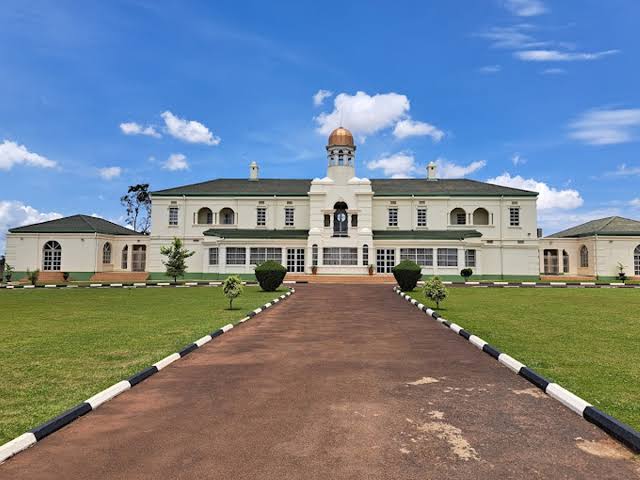
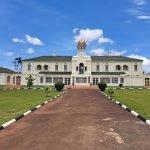
Karuziika Palace, also written Karuzika, is the royal palace in Hoima. It offers a way to learn about the institution of the Omukama and the role of royal regalia. The kingdom’s tourism material identifies Nyamyarro as a royal regalia museum inside the palace. Since palace access can depend on arrangements, confirm what you will actually be able to see before you go.
If interior access is unavailable, ask whether a local guide can explain the palace’s role and how it relates to Mparo. The palace tells the story of the royal institution and its ceremonies. The tombs tell the story of how particular rulers are remembered.
Kibiro Salt-Producing Village
Kibiro sits below the escarpment on the shore of Lake Albert. Salt production here has a long history and helped support trade in Bunyoro-Kitara. Ask a local guide or salt producer how workers recover salt from the soil and what happens at each stage before it is ready to sell. A visit is a chance to learn about the work itself, rather than only seeing the hot springs or taking a photograph of the landscape.
Uganda has placed Kibiro Salt Producing Village on its UNESCO World Heritage Tentative List. That is a step towards possible nomination, not an inscription on the World Heritage List. Kibiro is also a working community. Ask permission before entering a work area, photographing people or handling tools. Check the route and how much walking is involved, particularly if you are travelling with someone who finds steep or uneven ground difficult.
How to Plan Your Visit
Start by choosing the part of the story that interests you most. If you want to understand Kabalega’s reign, confirm a visit to Mparo. If you are interested in trade and everyday work, give Kibiro enough time for a local explanation instead of treating it as a brief stop on a transfer day.
Arrange visits in advance where possible. Ask whether a custodian will be there, what any visitor or guide fee covers and whether cash is needed. If you are continuing to a national park, leave room for the visit to run longer than expected. You will get more from one good conversation than from rushing to several sites whose access you have not confirmed.
Frequently Asked Questions
Is Bunyoro-Kitara the same kingdom as Buganda?
No. They are distinct kingdoms with different royal traditions. Bunyoro’s king is called the Omukama and Buganda’s king the Kabaka. Their histories intersect through relations between the kingdoms, colonial land decisions and the Lost Counties dispute.
Where is Omukama Kabalega buried?
He is buried at Mparo Royal Tombs near Hoima. Contact the site or arrange a local guide before arriving if you want someone to explain the tombs and their history.
Is Kibiro a UNESCO World Heritage Site?
No. Kibiro appears on Uganda’s World Heritage Tentative List. UNESCO recognition of the Empaako naming tradition is a separate matter and does not change Kibiro’s status.
Ask at least one question about the present as well as the past. At Mparo, ask who cares for the tombs today. At Kibiro, ask how people learn salt-making and what keeps the practice going. The answers help you understand Bunyoro-Kitara as a place where people continue to care for, practise and pass on their heritage.