Dian Fossey and the Legacy of Gorilla Research in Rwanda
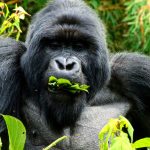
Dian Fossey and the legacy of gorilla research in Rwanda remain central to understanding mountain gorilla conservation in Africa. Her pioneering studies transformed scientific knowledge of mountain gorilla behaviour, family relationships, communication and survival challenges.
When Fossey began her research in Rwanda in 1967, mountain gorillas faced serious threats from poaching, habitat destruction and increasing human pressure on protected forests. Relatively little was known about their daily lives, and many people misunderstood their behaviour.
Through years of observation in the Virunga Mountains, Fossey documented the peaceful nature of gorilla families, their complex social relationships and their dependence on healthy forest habitats.
Her work also attracted international attention to the urgent need for mountain gorilla protection.
Today, researchers, wildlife rangers, veterinarians and conservation organisations continue building on this scientific foundation. Visitors undertaking gorilla trekking in Rwanda can learn about her contribution while experiencing one of Africa’s most important wildlife conservation achievements.
Who Was Dian Fossey?
Dian Fossey was an American primatologist and wildlife conservationist born on 16 January 1932 in San Francisco, California.
Before dedicating her life to gorilla research, she trained as an occupational therapist and worked with children in Kentucky, United States.
Her interest in animals and African wildlife eventually inspired her to visit Africa in 1963. During this journey, she met renowned palaeoanthropologist Louis Leakey, who later encouraged her to undertake long-term research on mountain gorillas.
Leakey believed that studying great apes could improve scientific understanding of human evolution and social behaviour.
Fossey became one of three prominent female primate researchers associated with Leakey’s research initiatives.
| Researcher | Primary research subject |
|---|---|
| Dian Fossey | Mountain gorillas |
| Jane Goodall | Chimpanzees |
| Birutė Galdikas | Orangutans |
Their research contributed significantly to modern primatology and international wildlife conservation.
The Beginning of Gorilla Research in Rwanda
Fossey initially conducted mountain gorilla research in the Democratic Republic of Congo in 1967. Political instability forced her to relocate to Rwanda, where she continued studying gorillas in the Virunga Mountains.
On 24 September 1967, she established the Karisoke Research Centre between Mount Karisimbi and Mount Bisoke.
The name Karisoke combines parts of the names of these two volcanic mountains.
The original research centre consisted of two tents surrounded by dense mountain vegetation. Working conditions were demanding because of frequent rainfall, cold temperatures, steep terrain and limited access to essential supplies.
Nevertheless, the research programme developed into one of the world’s longest-running studies of wild gorillas.
Dian Fossey Gorilla Fund+2
How Dian Fossey Gained the Trust of Mountain Gorillas
When Fossey began her research, many mountain gorillas were understandably cautious around humans. Previous encounters with hunters and other intruders had contributed to their fear.
Fossey built on earlier research conducted by American zoologist George Schaller. She gradually familiarised gorillas with her presence through patient observation and repeated visits.
Her approach involved avoiding sudden movements, observing natural behaviour and learning to recognise individual gorillas.
Over time, certain gorilla families became sufficiently accustomed to her presence for detailed scientific observation.
This process, known as habituation, remains important in modern gorilla research and regulated tourism.
However, contemporary habituation programmes follow stricter health and safety procedures. Visitors should never attempt to imitate historical photographs showing researchers touching or sitting extremely close to gorillas.
Major Scientific Contributions of Dian Fossey
Fossey’s research improved understanding of several important aspects of mountain gorilla biology and behaviour.
1. Gorilla Family Relationships
Her observations documented the complex social relationships within gorilla groups.
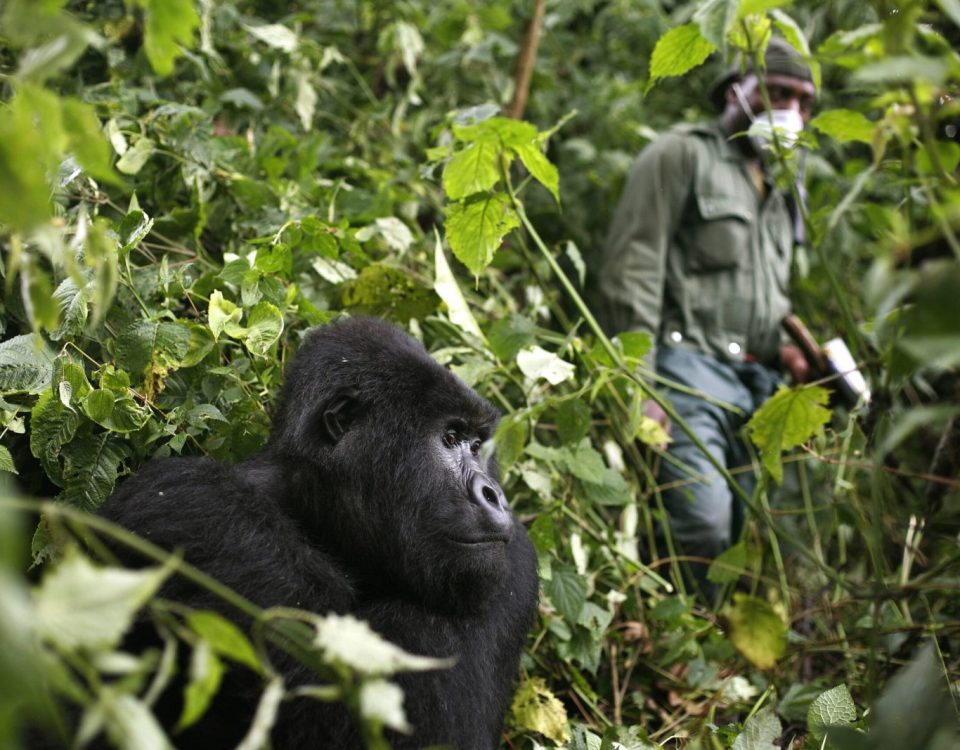
Mountain gorillas generally live in family groups containing adult females, infants, juveniles and one or more mature males.
Dominant silverbacks often play important roles in protecting group members, coordinating movements and resolving conflicts.
Fossey’s work helped demonstrate that gorilla societies are characterised by cooperation, individual relationships and parental care.
2. Gorilla Communication
Mountain gorillas communicate through vocalisations, facial expressions, gestures and body movements.
Long-term observation allowed researchers to better understand how gorillas express excitement, discomfort, aggression and reassurance.
Chest beating, for example, is a communication behaviour rather than an automatic indication that a gorilla intends to attack.
These findings helped correct widespread misconceptions about gorillas being naturally aggressive animals.
3. Feeding Habits
Fossey documented mountain gorilla feeding patterns and their dependence on natural forest vegetation.
Her observations contributed to understanding how gorillas select food, travel between feeding areas and adapt to changing environmental conditions.
Leaves, stems, shoots and other vegetation provide the majority of their nutritional requirements.
4. Reproduction and Infant Development
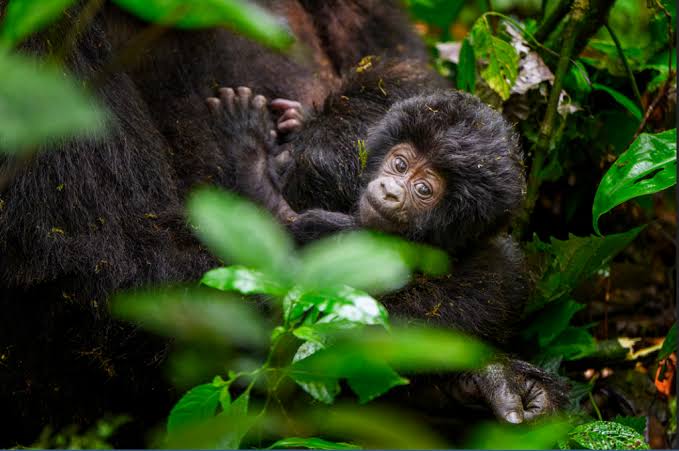
Long-term monitoring provided valuable information about gorilla pregnancies, births, infant survival and maternal care.
Researchers observed how young gorillas learn feeding habits, develop social relationships and gradually become independent.
These records remain useful when assessing population growth and conservation challenges.
5. Individual Personalities
Fossey recognised individual gorillas through distinctive physical features, including their unique nose patterns.
Recording individual identities allowed researchers to monitor relationships, behavioural changes and life histories over extended periods.
Modern researchers continue using individual identification alongside photography, genetic analysis and other scientific methods.
Digit: The Gorilla Who Inspired a Conservation Movement
Digit was one of the mountain gorillas Fossey observed during her research in Rwanda.
She developed a particularly strong attachment to him, documenting his behaviour and development over several years.
On 31 December 1977, Digit was killed by poachers. His death deeply affected Fossey and strengthened her commitment to protecting mountain gorillas.
She established the Digit Fund to raise financial support for direct gorilla protection and anti-poaching activities.
The organisation later became the Dian Fossey Gorilla Fund, which continues supporting gorilla conservation and scientific research.
Dian Fossey Gorilla Fund+2
Digit’s story also helped attract international attention to the dangers facing mountain gorillas.
Dian Fossey’s Fight Against Poaching
Fossey believed that scientific research alone would be insufficient if gorillas continued disappearing because of illegal hunting.
She promoted direct protection measures, sometimes described as active conservation. These included forest patrols, snare removal and increased monitoring of gorilla families.
Many snares placed inside mountain forests were intended to capture smaller animals. However, gorillas could accidentally become trapped and suffer serious injuries.
Her conservation campaign also generated controversy. Some of her confrontational methods and treatment of suspected poachers attracted criticism.
She strongly opposed gorilla tourism, fearing that increased human contact would threaten gorilla health and natural behaviour.
Modern conservation programmes generally combine wildlife law enforcement with community participation, regulated tourism, scientific research and alternative livelihood opportunities.
Recognising these differences provides a more balanced understanding of Fossey’s historical contribution.
National Geographic+2
Gorillas in the Mist: The Book and Film
In 1983, Fossey published her book Gorillas in the Mist, describing her experiences studying mountain gorillas and protecting their natural habitats.
The book introduced international readers to gorilla behaviour, family relationships and conservation challenges.
In 1988, a film adaptation starring Sigourney Weaver brought her story to a much larger audience.
Both the book and film increased public interest in mountain gorillas and encouraged international support for wildlife conservation.
However, the film is a dramatised account of her life and should not be treated as a completely accurate scientific or historical record.
The Gorilla Organization+1
The Death of Dian Fossey
Dian Fossey was found murdered at her Karisoke research camp on 26 December 1985, aged 53.
The circumstances surrounding her death remain unresolved, and the identity of her killer has not been conclusively established.
She was buried at Karisoke near Digit and other gorillas she had studied.
Her death attracted international attention, but the research and conservation programmes she established continued through the dedication of Rwandan researchers, trackers, wildlife authorities and international conservation partners.
Important Milestones in Dian Fossey’s Life
| Year | Historical event |
|---|---|
| 1932 | Born in San Francisco, California |
| 1963 | First visit to Africa |
| 1967 | Established Karisoke Research Centre |
| 1974 | Completed her doctorate at Cambridge University |
| 1977 | Digit was killed by poachers |
| 1978 | Established the Digit Fund |
| 1983 | Published Gorillas in the Mist |
| 1985 | Died at Karisoke |
| 1988 | Film adaptation of Gorillas in the Mist released |
| 2022 | Ellen DeGeneres Campus opened in Rwanda |
The Legacy of Gorilla Research in Rwanda Today
The Dian Fossey Gorilla Fund continues conducting research, protecting gorillas and supporting conservation education.
Modern researchers study gorilla health, reproduction, genetics, social relationships, nutrition and habitat conditions.
Long-term scientific records are particularly valuable because mountain gorillas live for several decades. Researchers can examine changes across generations and assess how environmental conditions influence their behaviour.
Rwandan scientists and conservation professionals now play central roles in these research programmes.
Their work also includes training university students, supporting local communities and developing future conservation specialists.
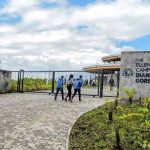
The Ellen DeGeneres Campus of the Dian Fossey Gorilla Fund
Opened in February 2022, the Ellen DeGeneres Campus provides modern facilities for gorilla research, conservation education and public engagement near Volcanoes National Park.
The campus was developed with financial support initiated by Ellen DeGeneres and Portia de Rossi.
Visitors can learn about mountain gorilla behaviour, Fossey’s research methods and the development of conservation programmes.
The facilities include scientific laboratories, educational spaces and exhibitions documenting the history of gorilla research.
Visiting the campus is particularly rewarding for travellers who want to understand gorilla conservation before undertaking their mountain gorilla trek.
Google Arts & Culture+2
Visiting Dian Fossey’s Grave in Rwanda
Visitors interested in conservation history can enquire about guided hikes to the original Karisoke Research Centre and Fossey’s burial site.
The excursion involves walking through mountainous forest terrain between Mount Karisimbi and Mount Bisoke.
Rainfall, muddy trails and high elevation can make the hike physically demanding.
Suitable hiking boots, waterproof clothing, drinking water and a reasonable level of physical fitness are recommended.
Confirm current trail accessibility, permit requirements and operating arrangements before including the excursion in your Rwanda safari itinerary.
Frequently Asked Questions
Why is Dian Fossey famous?
Dian Fossey is famous for her long-term mountain gorilla research, anti-poaching campaigns and contributions to international wildlife conservation.
When did Dian Fossey begin researching gorillas in Rwanda?
She established the Karisoke Research Centre on 24 September 1967.
Where is Dian Fossey buried?
She is buried at the original Karisoke research site in Rwanda’s Volcanoes National Park, near Digit and other gorillas.
What was Dian Fossey’s favourite gorilla?
Digit was among the gorillas with whom she developed a particularly strong attachment.
Did Dian Fossey support gorilla trekking?
She generally opposed gorilla tourism because she believed increased human contact could threaten gorilla health and survival.
Does Dian Fossey’s research continue today?
Yes. The Dian Fossey Gorilla Fund continues scientific research, gorilla protection, conservation education and community development programmes.
Dian Fossey and the legacy of gorilla research in Rwanda demonstrate the importance of long-term scientific observation and dedicated wildlife protection.
Her research improved understanding of mountain gorilla behaviour, social relationships, communication and survival challenges. Her conservation campaigns also helped attract international attention to the threats facing endangered gorillas.
Today, Rwandan researchers, wildlife rangers, veterinarians and conservation organisations continue developing the work she began in 1967.
When visiting Volcanoes National Park, consider learning about this conservation history alongside your gorilla trekking experience. Understanding the decades of research and protection behind every gorilla encounter can deepen your appreciation of Rwanda’s mountain forests and their remarkable inhabitants.