Gorilla Diet: What Mountain Gorillas Eat in the Wild
The mountain gorilla diet consists mainly of leaves, stems, shoots, roots, fruits and other plant materials found within tropical mountain forests. Despite their enormous size and muscular appearance, mountain gorillas obtain nearly all their nutritional requirements from vegetation rather than meat.
Mountain gorillas inhabit protected forests in Uganda, Rwanda and the Democratic Republic of Congo, where they have access to numerous plant species. Their feeding habits vary according to elevation, seasonal rainfall, habitat conditions and food availability.
Adult male gorillas can consume considerable quantities of vegetation daily to maintain their large bodies. Their specialised digestive systems allow them to obtain energy and nutrients from fibrous plants that humans would find difficult to digest.
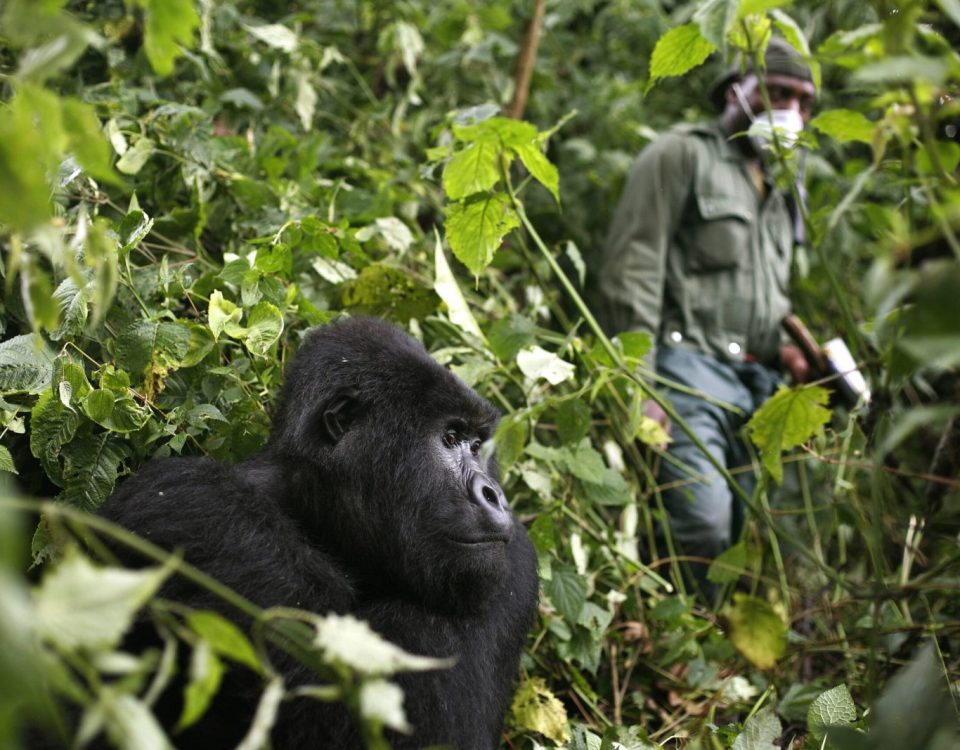
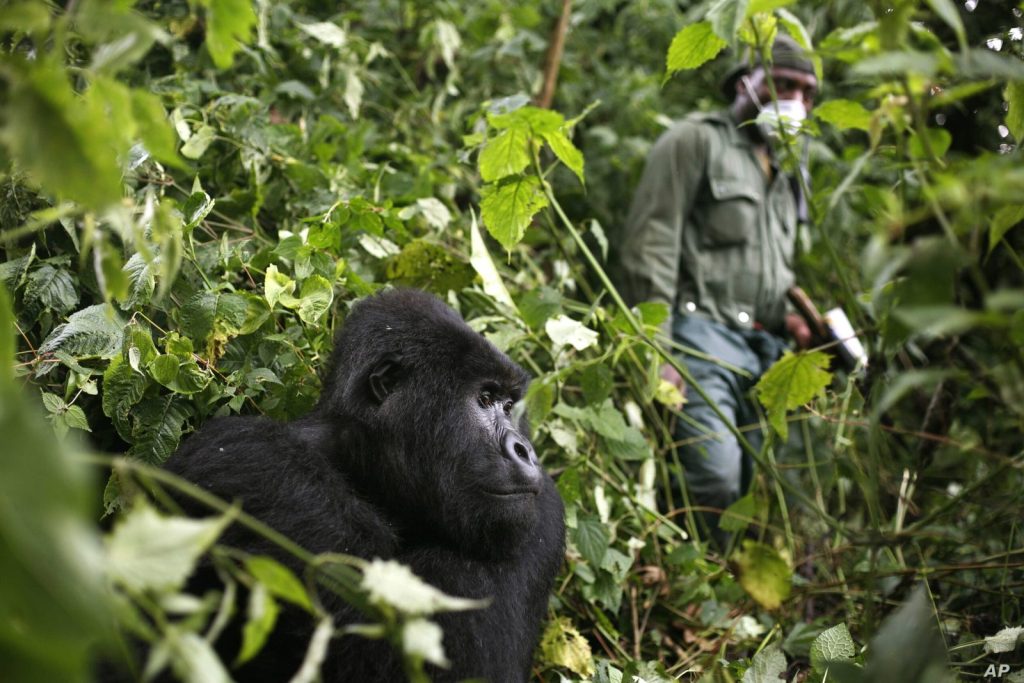
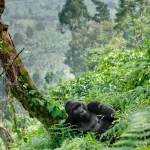
During gorilla trekking in Bwindi Impenetrable National Park or Volcanoes National Park, visitors frequently encounter gorillas feeding, resting or moving between food sources.
Understanding what mountain gorillas eat in the wild provides valuable knowledge about their behaviour, habitat requirements and the importance of forest conservation.
What Do Mountain Gorillas Eat in the Wild?
Mountain gorillas are primarily herbivorous, meaning they depend mainly on plant-based foods. Their diet includes various parts of trees, shrubs, vines and ground vegetation growing naturally within mountain forests.
Unlike humans, mountain gorillas can consume large quantities of tough, fibrous vegetation without cooking or processing it.
| Food type | Nutritional contribution |
|---|---|
| Green leaves | Protein, minerals and fibre |
| Plant stems | Fibre, moisture and nutrients |
| Bamboo shoots | Energy and nutrients |
| Wild fruits | Natural sugars and vitamins |
| Plant roots | Carbohydrates and minerals |
| Tree bark | Fibre and selected minerals |
| Flowers | Seasonal nutrients |
| Plant pith | Moisture and digestible plant material |
| Insects | Occasional animal protein |
The availability of these foods varies considerably between Bwindi and the higher-elevation Virunga mountain forests.
Dian Fossey Gorilla Fund+2
Main Foods in the Mountain Gorilla Diet
1. Leaves and Green Vegetation
Leaves form an important part of the mountain gorilla diet. Gorillas consume leaves from numerous plant species, including herbaceous plants, shrubs and trees.
Young leaves are often preferred because they are softer and generally easier to process than mature vegetation.
Leaves provide protein, fibre, vitamins and minerals necessary for muscle development, growth and general health.
During gorilla trekking, visitors frequently observe gorillas gathering handfuls of leaves before carefully chewing them.
2. Plant Stems and Shoots
Mountain gorillas consume substantial quantities of plant stems and young shoots.
They frequently peel away tough outer layers to reach softer internal tissues. Their strong hands and powerful jaws allow them to process vegetation that many other animals cannot easily consume.
Stems provide moisture, fibre and varying amounts of carbohydrates and other nutrients.
These foods are particularly important when seasonal fruits are less abundant.
3. Bamboo Shoots
Bamboo shoots are among the preferred seasonal foods of mountain gorillas living in the Virunga Massif.
Young bamboo shoots are relatively soft and contain valuable nutrients. Gorillas may adjust their movements to reach bamboo-growing areas when new shoots become available.
Research in Volcanoes National Park indicates that fresh bamboo shoots become particularly available during the region’s two rainy seasons.
OUP Academic+1
Visitors trekking in Mgahinga Gorilla National Park or Volcanoes National Park may encounter gorillas feeding within bamboo forests.
4. Wild Fruits
Mountain gorillas consume wild fruits whenever suitable varieties become available.
Gorillas living in Bwindi Impenetrable Forest generally consume more fruit than those occupying the higher elevations of the Virunga Mountains.
Wild figs and other naturally occurring forest fruits provide energy through natural sugars.
Fruit consumption varies according to seasonal availability. When preferred fruits become scarce, gorillas rely more heavily on leaves and fibrous vegetation.
5. Tree Bark and Wood
Mountain gorillas occasionally consume tree bark and selected types of wood.
These materials may provide minerals and other nutrients that complement their regular diet.
Gorillas use their strong teeth and hands to remove bark or break apart suitable pieces of wood.
Their ability to select particular plant materials demonstrates their familiarity with the nutritional resources available within their habitats.
6. Roots, Flowers and Plant Pith
Roots, flowers and pith provide additional dietary variety.
Pith is the soft tissue found inside certain plant stems. Gorillas often remove the tougher outer layers before eating this inner material.
Flowers and roots may become important seasonal foods, depending on the plants available within a gorilla family’s feeding area.
How Much Food Does a Mountain Gorilla Eat Daily?
Mountain gorillas spend several hours each day feeding because their plant-based diet contains substantial quantities of fibre and water.
Adult silverbacks generally consume more food than adult females and younger gorillas because of their larger body size.
Daily food consumption varies according to age, body weight, activity levels and the nutritional composition of available vegetation.
Large adult gorillas can consume tens of kilograms of fresh vegetation daily. However, assigning the same daily intake figure to every gorilla would be inaccurate.
Unlike predators that consume occasional large meals, mountain gorillas feed repeatedly throughout the day, with periods of resting and travelling between feeding sessions.
Mountain Gorilla Diet in Bwindi vs the Virunga Mountains
Although mountain gorillas belong to the same subspecies, their feeding habits differ according to their natural habitats.
| Dietary characteristic | Bwindi gorillas | Virunga gorillas |
|---|---|---|
| Wild fruit consumption | Relatively higher | Generally lower |
| Herbaceous vegetation | Important | Particularly important |
| Bamboo shoots | Depends on local availability | Important seasonal food |
| Tree leaves | Regularly consumed | Variable consumption |
| Plant stems | Important food source | Major dietary component |
| Seasonal dietary changes | More influenced by fruit availability | Particularly influenced by bamboo availability |
Research comparing the two populations has established that Bwindi gorillas generally consume more fruit, while Virunga gorillas depend more heavily on herbaceous vegetation.
Even within individual forest regions, different gorilla families may consume different plants according to the areas they occupy.
PubMed+2
How Mountain Gorillas Obtain Protein
Many people wonder how mountain gorillas develop powerful muscles while eating predominantly vegetarian foods.
Green leaves, young shoots and other plant materials contain protein and amino acids necessary for growth and tissue maintenance.
Mountain gorillas consume large quantities of these foods, allowing them to obtain substantial amounts of nutrients throughout the day.
Their digestive systems contain microorganisms that help break down fibrous plant materials. This fermentation process produces compounds that contribute to their energy requirements.
Their muscular development also depends on genetics, hormones, physical activity and natural body structure.
Mountain gorillas do not require regular meat consumption to maintain their strength.
Do Mountain Gorillas Eat Meat?
Mountain gorillas do not normally hunt or consume other mammals as part of their regular diet.
They may occasionally ingest ants, other small invertebrates or insects attached to vegetation. However, animal matter represents a very small component of their feeding habits.
This distinguishes mountain gorillas from chimpanzees, which have been documented hunting and consuming smaller animals.
Mountain gorillas remain predominantly plant-eating primates.
Do Mountain Gorillas Eat Bananas?
Although bananas are commonly associated with gorillas in popular culture, cultivated bananas are not a normal staple of the wild mountain gorilla diet.
Mountain gorillas obtain most of their food from naturally occurring forest vegetation.
Occasionally, gorillas moving outside protected forest boundaries may encounter cultivated crops. Such encounters can create conflicts between wildlife and neighbouring farmers.
Visitors should never offer bananas or any other human food to wild gorillas.
Feeding wildlife can alter natural behaviour, encourage dependency and increase opportunities for disease transmission.
Do Mountain Gorillas Drink Water?
Mountain gorillas obtain considerable amounts of water from fresh vegetation, particularly succulent stems, leaves and shoots.
They can also drink directly from streams, pools and other natural water sources when necessary.
Their water requirements depend on temperature, rainfall, food moisture content and physical activity.
During warmer conditions, gorillas may adjust their behaviour or consume vegetation containing more moisture.
Protecting natural forest water sources is therefore important for maintaining suitable gorilla habitats.
A Typical Mountain Gorilla Feeding Day
Mountain gorillas generally alternate between feeding, resting, travelling and social activities during daylight hours.
| Time of day | Typical activity |
|---|---|
| Early morning | Leaving sleeping nests and searching for food |
| Mid-morning | Feeding on available vegetation |
| Late morning | Feeding and moving between food sources |
| Midday | Resting, grooming and social interactions |
| Afternoon | Additional feeding and short movements |
| Late afternoon | Feeding and preparing sleeping nests |
| Night | Sleeping |
This schedule is illustrative rather than fixed. Weather, food availability, group movements and interactions with neighbouring gorilla families can influence daily activities.
What Do Baby Mountain Gorillas Eat?
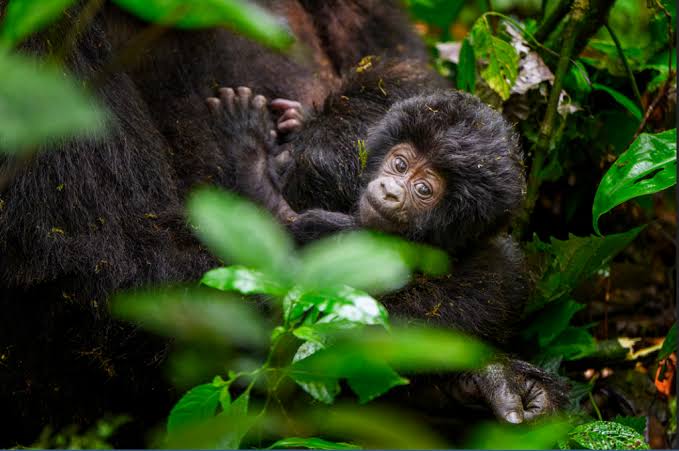
Newborn mountain gorillas depend primarily on their mothers’ milk.
As infants grow, they gradually begin tasting leaves, stems and other vegetation consumed by adult family members.
Young gorillas learn which plants are suitable by observing their mothers and other members of their group.
Although they begin eating solid foods during infancy, nursing may continue for several years.
This extended period of maternal care allows young gorillas to develop physically and learn essential feeding and survival skills.
How Seasonal Changes Affect the Mountain Gorilla Diet
Mountain gorillas adapt their feeding habits according to seasonal changes in forest vegetation.
During rainy periods, certain plants produce fresh shoots and young leaves. Bamboo shoots may become particularly attractive to gorillas living in suitable habitats.
In Bwindi, the availability of ripe forest fruits can influence feeding patterns and daily travel distances.
When fruits become scarce, gorillas increase their dependence on other available vegetation.
This dietary flexibility helps mountain gorillas survive changing environmental conditions without leaving their natural habitats.
Why Forest Conservation Is Important for Gorilla Nutrition
Mountain gorillas depend on diverse natural vegetation to meet their nutritional requirements.
Habitat destruction can reduce the availability of preferred foods and restrict access to seasonal feeding areas.
Climate change may also influence plant growth, fruiting periods and bamboo availability.
Protecting mountain forests allows gorillas to maintain natural feeding patterns and access suitable vegetation throughout the year.
Conservation programmes in Uganda, Rwanda and the Democratic Republic of Congo therefore protect both gorillas and the plant communities on which they depend.
Frequently Asked Questions
What is the favourite food of mountain gorillas?
Mountain gorillas consume many preferred plant species, including young leaves, stems and seasonal bamboo shoots. Their preferences vary according to habitat and food availability.
Are mountain gorillas vegetarians?
Mountain gorillas are primarily herbivorous. They obtain nearly all their nutrition from plant materials, although occasional insect consumption may occur.
Why are gorillas strong if they do not eat meat?
Their strength results from genetics, natural muscle development, physical activity and nutrients obtained through a predominantly plant-based diet.
Do mountain gorillas eat fruit every day?
Not necessarily. Fruit consumption depends on seasonal availability and habitat conditions. Bwindi gorillas generally consume more fruit than Virunga gorillas.
Can tourists feed mountain gorillas?
No. Feeding mountain gorillas is prohibited because it can disturb natural behaviour and increase health risks.
Do mountain gorillas eat throughout the night?
Mountain gorillas generally feed during daylight hours and spend the night resting in sleeping nests.
The mountain gorilla diet consists primarily of leaves, stems, bamboo shoots, wild fruits and other nutritious forest vegetation. Their specialised digestive systems allow them to obtain sufficient energy and nutrients from large quantities of plant-based foods.
Gorillas living in Bwindi generally consume more fruit, while those inhabiting the Virunga Mountains depend more heavily on herbaceous vegetation and seasonal bamboo shoots.
Understanding gorilla feeding behaviour provides valuable knowledge about their natural habitats and conservation requirements.
During your gorilla safari in Uganda or Rwanda, take time to observe how these powerful primates select, prepare and consume their food. Their daily feeding habits demonstrate the importance of protecting healthy mountain forests for their continued survival.