Differences Between Lowland Gorillas in Congo and Mountain Gorillas in Uganda and Rwanda
- Habitat and Distribution

Lowland gorillas inhabit the dense tropical rainforests of the Congo Basin, including parts of the Democratic Republic of Congo (DRC). They thrive in low-altitude forests, swamps, and marshes. On the contrary, mountain gorillas live at high altitudes in the volcanic mountain ranges of Uganda, Rwanda, and DRC: they are found in Uganda’s Bwindi Impenetrable Forest and the stretch of mountains called the Virunga Mountains that extends to Rwanda and DRC.
- Physical Appearance
Mountain gorillas are generally bigger and stronger than their lowland counterparts, have longer and thicker creep, which helps them survive cold conditions in their mountain habitats, and also have shorter and finer hair as their surroundings are warmer and very humid. Mountain gorillas also have wider faces and more powerful physiques, while lowland gorillas have narrow faces and slender bodies.
- 3. Behavior and Social Structure
These two species, like other social reptiles, live in groups headed by a dominant silverback male. However, lowland gorillas are much arboreal, spending considerable amounts of time in trees, more so where fruits are found abundantly. In contrast, mountain gorillas seem more terrestrial and forage primarily on the ground, feeding largely on bamboo, leaves, and roots.
- Diet
Their habit is more varied and includes fruits, seeds, and insects due to the great resources of the Congo Basin. Almost purely herbivorous subsistence is characteristic of mountain gorillas, mainly made up of leaves, stems, barks, and wild celery. Such different forms of diet can be credited to the low fruits available at their greater altitudes.
- Population and Conservation Status
Mountain gorillas are critically reduced, with estimates around 1,000 individuals. Several measures, including anti-poaching and ecotourism, have indeed helped stabilize numbers during recent years. Compared to this, lowland gorillas, especially its western lowland subspecies, are in larger numbers, but their numbers are threatened as sites continue to disappear and poaching intensifies.
- Access and Tourism
Tourists typically flock to either Uganda’s Bwindi Impenetrable Forest or the Volcanoes National Park of Rwanda to see mountain gorillas. In well-organized trekking, these two places offer an easy and enjoyable trek for tourists. Tourists can also view lowland gorillas in the Odzala-Kokoua National Park
and Virunga National Park of Congo; however, many parts are not really very easily accessible for many tourists due to the logistical challenges and political instability.
- Scientific Classification
Both belong to the same genus of Gorilla but not to the same species or subspecies. Mountain gorilla, Gorilla beringei beringei, is a subspecies of eastern gorilla, while lowland gorillas involve western lowland gorilla (Gorilla gorilla gorilla) and eastern lowland gorilla (Gorilla beringei graueri).
Although lowland gorillas and mountain gorillas are similar, they have certain distinguishing factors that set them apart. These include the characteristic of where they live, their physical appearance, the way they behave, and what they eat. In fact, visiting their different habitats gives you access to interesting opportunities of learning more about these primates and adding your bit to their conservation.
Gorilla Trekking in the Democratic Republic of Congo
The Democratic Republic of Congo (DRC) is home to two gorilla species found nowhere else together: mountain gorillas in Virunga National Park and eastern lowland gorillas (Grauer’s gorillas, Gorilla beringei graueri) in Kahuzi-Biega National Park. Both are UNESCO World Heritage Sites.
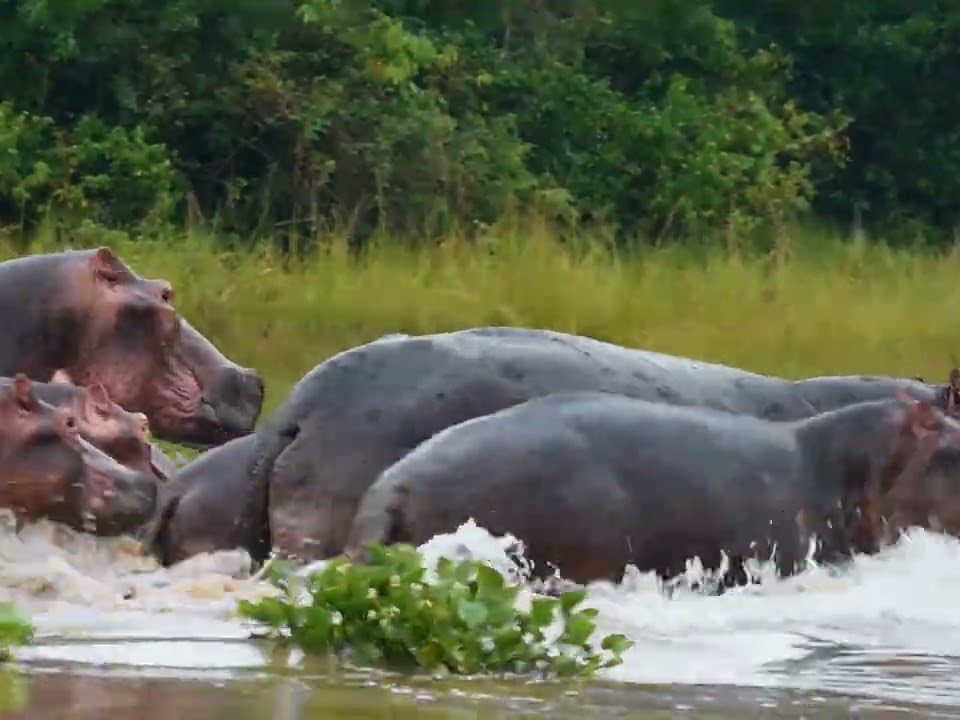
Virunga National Park – Africa’s oldest national park, established in 1925 – covers 7,900 km² of remarkable ecological diversity, from the volcanic peaks of the Virunga Massif to the glaciers of the Rwenzori Mountains and the tropical lowland forests of the Congo Basin. The park is also home to hippos, elephants, okapis, and the entire cast of Congo rainforest wildlife.
Eastern Lowland Gorillas – A Unique Encounter
The eastern lowland gorilla (Grauer’s gorilla) is the world’s largest subspecies of gorilla, with silverbacks weighing up to 220kg. Found only in the DRC, Grauer’s gorillas are considerably rarer than mountain gorillas – their population has declined by more than 70% since the 1990s due to conflict, habitat loss, and poaching. Kahuzi-Biega National Park in South Kivu offers the only reliable trekking experience with habituated Grauer’s gorilla families.
A gorilla permit in the DRC costs USD 400 per person – significantly cheaper than Rwanda (USD 1,500) or Uganda (USD 800). The experience is raw, off-the-beaten-track, and unforgettable for travellers seeking something genuinely uncommon.
Practical Information for DRC Gorilla Trekking
Getting to Virunga and Kahuzi-Biega
The most common entry point to eastern DRC is via Kigali, Rwanda. Goma – the gateway to Virunga National Park – is just 80km from Kigali. Direct flights from Nairobi and Kampala also serve Goma. Bukavu (gateway to Kahuzi-Biega) is accessible from Goma by road (3-4 hours) or by light aircraft.
Is it safe to trek gorillas in the DRC?
Security in eastern DRC is complex and fluctuates. Virunga National Park and Kahuzi-Biega have experienced periods of closure due to armed group activity. Always check current security conditions with your tour operator and your government’s travel advisory before planning a DRC gorilla trek. Reputable operators with established local security networks are essential.
Recommended Tours: 8 Days Congo Gorillas & Nyiragongo Safari | 5 Days Lowland Gorilla Safari Congo