Bagamoyo Historic Town: Slave Trade History and Coastal Ruins
Bagamoyo Historic Town is one of Tanzania’s most important coastal heritage destinations. Located north of Dar es Salaam, this former trading port preserves stories of Indian Ocean commerce, the East African slave trade, early missionary activities and German colonial rule. Its old buildings, narrow streets, historical monuments and nearby archaeological sites offer visitors an opportunity to understand several centuries of Tanzanian history.
A Bagamoyo historic town guide helps you explore these places with a clearer understanding of their significance. You can visit the Caravan Serai Museum, examine the ruins at Kaole, walk through the old town and learn how Bagamoyo developed into a major nineteenth-century trading centre.
Today, Bagamoyo remains a working coastal town with fishing activities, markets, artists and local communities. Its historical attractions make it particularly suitable for travellers interested in culture, architecture and the connections between Tanzania’s coast and inland regions.
Where Is Bagamoyo Historic Town Located?
Bagamoyo lies on Tanzania’s Indian Ocean coast, approximately 70 kilometres north of Dar es Salaam. It belongs to the Pwani Region and can be reached by road.
The journey from Dar es Salaam usually takes between 1.5 and 3 hours, depending on traffic, your departure point and road conditions.
Its location makes Bagamoyo suitable for a day excursion, although spending one or two nights allows more time to explore its historical sites.
The town developed around a natural coastal landing area that connected inland caravan routes with maritime trade across the Indian Ocean.
Travellers arriving today will find historical buildings alongside ordinary homes, shops, fishing activities and newer developments.
The History of Bagamoyo Historic Town
Bagamoyo Before the Nineteenth Century
The coast around Bagamoyo was connected to Indian Ocean trading networks long before the nineteenth-century slave and ivory caravans.
African coastal communities traded with merchants from other parts of the Indian Ocean region, contributing to the development of Swahili culture.
Nearby Kaole provides archaeological evidence of this earlier history through its mosques, tombs and remains of coastal settlement.
These older structures are important because Bagamoyo’s history extends beyond the nineteenth-century slave trade.
Bagamoyo and the Slave Trade
During the nineteenth century, Bagamoyo became an important coastal destination for trading caravans travelling between the interior of East Africa and the Indian Ocean.
Caravans transported ivory and other goods, while enslaved people were forcibly brought towards the coast.
Some enslaved people were transported onwards to Zanzibar and other destinations. Others experienced exploitation within regional trading and labour systems.
The journeys involved forced movement, separation from families, violence and severe hardship.
Bagamoyo therefore holds an important place in the history of slavery in East Africa.
Visitors should approach this history respectfully and understand that the experience of enslaved people cannot be reduced to individual buildings or simple stories.
The Meaning of Bagamoyo
The name Bagamoyo is commonly associated with the Swahili expression Bwaga Moyo, often interpreted as laying down or losing one’s heart.
Several explanations connect the name with exhausting caravan journeys, including the experiences of enslaved people and porters.
However, these interpretations should be presented as historical traditions rather than a single proven account of the town’s naming.
A knowledgeable local guide can explain the different versions and the historical context behind them.
Important Historical Sites in Bagamoyo
Bagamoyo contains several places associated with its commercial, religious and colonial history.
| Historical attraction | Main significance | Suggested visiting time |
|---|---|---|
| Caravan Serai Museum | Caravan trade and slavery history | 45–60 minutes |
| Bagamoyo Old Fort | Nineteenth-century coastal architecture | 30–45 minutes |
| Catholic Mission | Missionary history and historical buildings | 45–60 minutes |
| German colonial buildings | Colonial administration and architecture | 30–45 minutes |
| Kaole Ruins | Early Islamic coastal settlement | 60–90 minutes |
| Historic town streets | Swahili architecture and everyday heritage | 45–90 minutes |
These times are approximate. Opening arrangements, access and guided-tour requirements may change.
Caravan Serai Museum and the Slave Trade
The Caravan Serai is one of Bagamoyo’s important historical landmarks.
Caravanserais traditionally provided accommodation and facilities for traders and people travelling along established trading routes.
Bagamoyo’s Caravan Serai is associated with the movement of caravans between the coast and the interior.
Today, the site offers an opportunity to examine the commercial networks that connected inland communities with coastal merchants.
During your visit, ask about the relationship between the ivory trade, forced labour and the trafficking of enslaved people.
You should also understand the different roles played by traders, caravan organisers, porters and local communities.
Historical interpretation is particularly important here because many surviving structures have undergone changes over time.
Allow approximately one hour to explore the site and discuss its history with a guide.
Bagamoyo Old Fort
The Old Fort is another important landmark in the historic town.
Originally constructed during the nineteenth century, it reflects the architecture and commercial activity of Bagamoyo during its period as a significant trading centre.
The structure is associated with different functions during its long history.
Its thick walls and internal spaces provide an opportunity to examine historical building methods used along the East African coast.
Visitors should ask a guide to explain which features are original and which have been repaired or altered.
The fort is particularly interesting for travellers studying architecture, coastal commerce and the changing uses of historic buildings.
Take time to examine its layout instead of treating it as a quick photography stop.
Kaole Ruins: Evidence of an Older Coastal Settlement
The Kaole Ruins are among the most important archaeological attractions near Bagamoyo.
Located approximately five kilometres south of the historic town, they preserve remains associated with an early Swahili coastal settlement.
The site includes historic mosques, tombs and other archaeological features.
Much of the surviving architecture dates to the medieval period, several centuries before Bagamoyo became a major nineteenth-century caravan port.
This distinction is essential when interpreting the ruins.
Ancient Mosques and Tombs
Kaole’s surviving mosques demonstrate the long history of Islam along Tanzania’s coast.
Their construction reflects religious practices and architectural traditions connected with early Swahili settlements.
The tombs provide further evidence of the communities that lived in the area.
Visitors can observe stone construction, architectural details and the arrangement of the surviving structures.
A local guide can explain the archaeological significance of the site and the conservation challenges affecting ancient buildings.
Avoid touching fragile structures or walking across protected archaeological features.
Why Kaole Deserves a Separate Visit
Kaole provides a useful historical comparison with Bagamoyo.
While Bagamoyo is strongly associated with nineteenth-century caravan trade and colonial history, Kaole represents an earlier period of coastal settlement.
Visiting both places gives you a broader understanding of the region’s development.
Allow at least one hour at Kaole, with additional time if you enjoy archaeology or historical photography.
The Catholic Mission and Missionary History
Bagamoyo also played an important role in the development of Catholic missionary activities on mainland Tanzania.
The historic Catholic Mission is associated with nineteenth-century missionary work, education and the reception of formerly enslaved people.
Its buildings and grounds preserve evidence of this period.
The mission’s history includes religious activities, education and attempts to provide shelter and assistance to people affected by slavery.
It should also be examined within the wider context of European involvement in East Africa.
Depending on access arrangements, visitors may be able to see historical buildings, religious structures and memorial features.
Dress respectfully and follow instructions when entering active religious areas.
German Colonial History in Bagamoyo
Bagamoyo became an important administrative centre during the early period of German colonial rule in East Africa.
The town served as an early headquarters for the German colonial administration before Dar es Salaam became the principal administrative centre.
Several historical buildings are associated with this period.
These structures reflect changes in political authority, commerce and urban development during the late nineteenth century.
When exploring the old town, look for differences between Swahili coastal buildings and colonial administrative architecture.
A guided walking tour can help you identify these features and understand their historical functions.
Colonial rule involved political control and coercion, so its architectural remains should be understood within that wider history.
Exploring Bagamoyo’s Historic Streets
Walking through Bagamoyo allows you to experience the town beyond its major monuments.
Some older streets contain buildings with carved doors, shaded verandas and architectural features associated with Swahili coastal life.
You may encounter small shops, places of worship, fishing activities and local businesses.
Remember that Bagamoyo is a residential town.
Ask permission before photographing people, particularly around homes, religious institutions and places of work.
A local guide can help you recognise historical buildings that might otherwise appear ordinary.
Walking is generally easiest during the cooler morning hours.
Carry drinking water and wear comfortable shoes because some streets have uneven surfaces.
Beaches and Coastal Activities
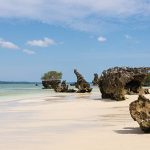
Bagamoyo’s Indian Ocean shoreline provides opportunities to relax after visiting the historical attractions.
You can walk along selected beach areas, observe fishing boats and enjoy views of the coast.
Some hotels and guesthouses offer beachfront accommodation and outdoor dining.
Swimming conditions vary with tides, weather, local activities and the particular beach.
Ask your accommodation provider about suitable swimming areas before entering the water.
The shoreline is especially pleasant during the late afternoon when temperatures become cooler.
If you plan to photograph fishing activities, seek permission and avoid interfering with people at work.
Best Time to Visit Bagamoyo
Bagamoyo has a warm coastal climate throughout the year.
The most suitable travel period depends on your preference for weather, sightseeing and accommodation availability.
| Period | General conditions | Travel considerations |
|---|---|---|
| June to October | Generally drier | Comfortable for walking tours |
| November to December | Warm with possible short rains | Flexible sightseeing recommended |
| January to February | Often hot and relatively dry | Start outdoor visits early |
| March to May | Main rainy period | Expect occasional travel disruption |
Rainfall varies between years, so these periods are general guidance rather than guarantees.
For historical walking tours, mornings are usually preferable because the temperature is lower.
During hotter months, organise indoor attractions around midday and explore outdoor sites earlier or later.
How to Reach Bagamoyo
Travelling from Dar es Salaam
The easiest option for many international travellers is a private vehicle with a driver.
This allows you to arrange stops and manage your time between historical attractions.
Public transport is another possibility, although it may require more planning and local transfers.
If travelling independently, confirm your return arrangements before leaving Dar es Salaam.
Combining Bagamoyo with Other Destinations
Bagamoyo can form part of a longer Tanzania itinerary.
You could spend one day exploring Dar es Salaam before travelling north to examine Bagamoyo’s historical attractions.
For a longer coastal journey, consider combining your visit with Saadani National Park, where wildlife viewing and coastal scenery can be experienced on the same trip.
Travel arrangements between these destinations should be checked carefully because some routes depend on road conditions and the season.
Where to Stay in Bagamoyo
Accommodation in Bagamoyo includes guesthouses, small hotels and coastal lodges.
Your choice should depend on whether you prefer historical sightseeing, beach relaxation or convenient transport.
Staying near the old town can reduce travel between monuments.
Beachfront accommodation may offer a quieter setting, although you might need transport to reach the historical centre.
Before booking, check:
- Distance from the historic town.
- Availability of reliable transport.
- Air conditioning or suitable ventilation.
- Restaurant and breakfast arrangements.
- Security and luggage storage.
- Whether historical tours can be organised.
Travellers planning several activities may find that two nights provide a more comfortable experience than a rushed day trip.
Practical Bagamoyo Historic Town Guide
A little preparation will make your visit easier.
Carry Tanzanian shillings for smaller purchases and confirm entrance charges before visiting attractions.
Use a knowledgeable local guide for historical sites, particularly those connected with slavery and colonial rule.
Wear lightweight clothing, comfortable walking shoes and sun protection.
Respect religious buildings and active community spaces.
Do not remove objects from archaeological areas.
Keep valuables secure and arrange reliable transport if returning after dark.
Most importantly, allow enough time for explanations and questions. Bagamoyo’s historical significance becomes clearer when you understand how its different sites relate to one another.
Frequently Asked Questions About Bagamoyo
Is Bagamoyo worth visiting?
Yes. Bagamoyo is particularly worthwhile for travellers interested in Tanzanian history, Swahili culture, archaeology and colonial-era architecture.
How many days should you spend in Bagamoyo?
One full day covers several major attractions. Two days provide more time for Kaole, the old town, museums and coastal relaxation.
Is Bagamoyo a UNESCO World Heritage Site?
Bagamoyo forms part of Tanzania’s proposed Central Slave and Ivory Trade Route on UNESCO’s Tentative List. This does not mean it has already been inscribed as a World Heritage Site.
Can you visit Kaole Ruins independently?
Visits are possible, but local guidance is recommended to understand the remains and follow site rules. Confirm access arrangements in advance.
Is Bagamoyo suitable for families?
Yes, particularly for families with older children interested in history. Parents should explain the difficult subject of slavery in an age-appropriate manner.
Bagamoyo Historic Town offers a valuable introduction to Tanzania’s coastal history. Its caravan heritage, religious institutions, colonial buildings and nearby archaeological remains reveal how the region developed over several centuries.
The Caravan Serai helps explain nineteenth-century trade, while Kaole preserves evidence of a much older Swahili settlement. The Catholic Mission and colonial buildings add further chapters to the story.
A well-planned visit gives you time to understand these different periods without confusing their historical roles.
For travellers who want to learn about Tanzania beyond its national parks, Bagamoyo provides a meaningful cultural and historical experience.