
Danakil Depression: Visiting One of Earth’s Hottest Places
Few landscapes on the planet look genuinely alien, but a Danakil Depression tour delivers exactly that: sulfur springs in blazing yellow and green, an active lava lake glowing at night, and vast white salt flats stretching to the horizon, all sitting in a basin dropping well below sea level in one of the hottest inhabited places on Earth. This remote corner of Ethiopia’s Afar region rewards travelers willing to handle serious heat and genuinely rugged logistics with scenery unlike anywhere else in East Africa. This guide covers what to expect and how to visit safely.
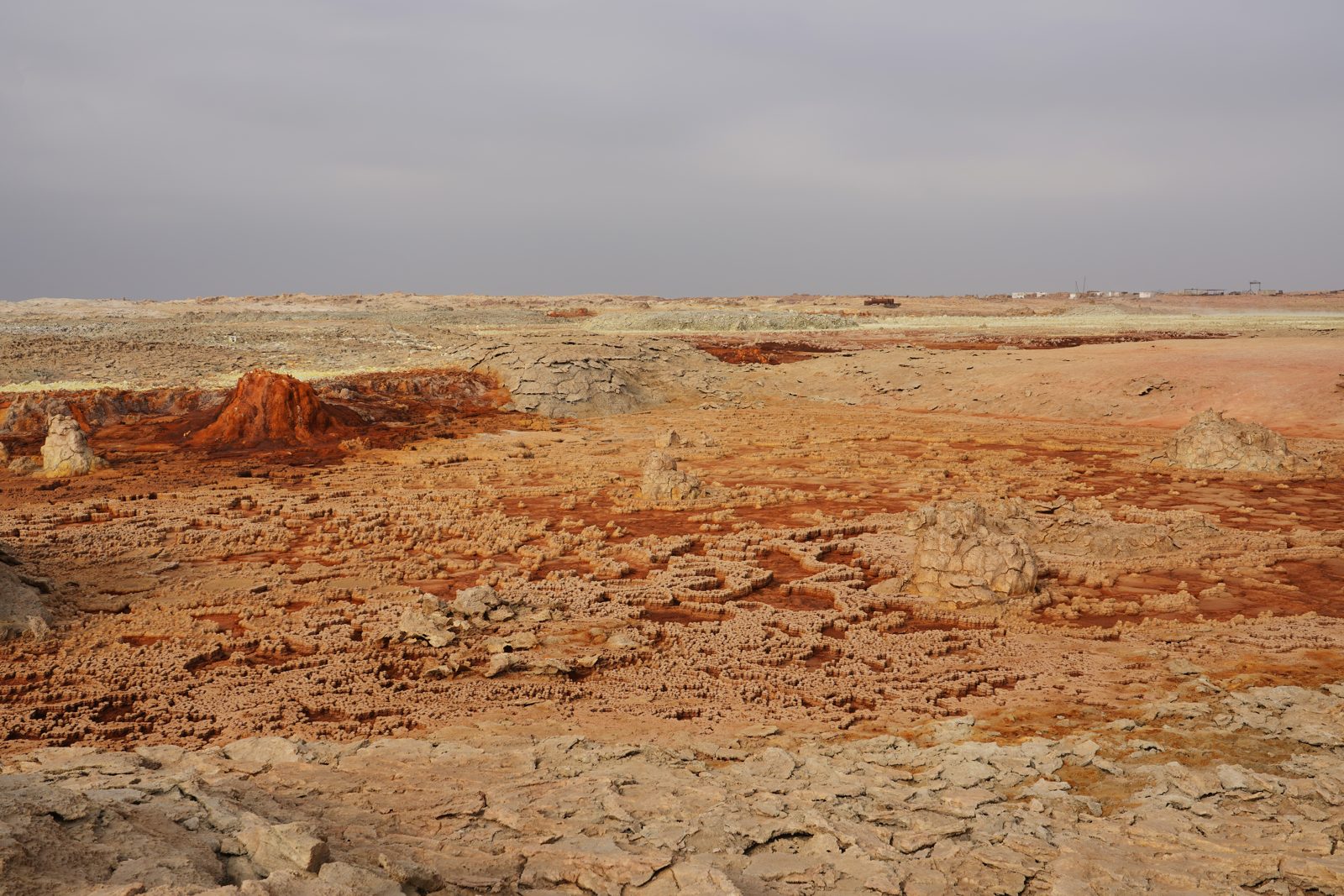
The colorful sulfur landscape of Dallol in the Danakil Depression, Ethiopia. Photo: A.Savin, Free Art License, via Wikimedia Commons.
Why the Danakil Depression Is So Extreme
The Danakil sits at the junction of three tectonic plates pulling apart from one another, a geological process slowly splitting the African continent and creating the volcanic and geothermal activity that defines the region’s landscape. Parts of the depression drop more than a hundred meters below sea level, trapping heat and creating some of the highest average temperatures recorded anywhere on the planet, regularly exceeding fifty degrees Celsius during the hottest parts of the year. This combination of extreme heat, active volcanism, and genuine geological rarity is precisely what draws travelers willing to handle the physical demands of a visit.
The Dallol Sulfur Springs
Dallol’s hydrothermal field ranks among the most visually extraordinary sights in the depression, a landscape of acid pools, sulfur deposits, and mineral formations in shades of yellow, green, and orange that genuinely look more like another planet than anywhere on Earth. The site sits atop one of the most acidic natural environments known, and walking among its formations requires staying strictly on marked paths, both for safety given the unstable, acidic ground and to avoid damaging fragile mineral formations that took years to form. Early morning visits offer the most comfortable temperatures and often the best light for photography across the colorful terrain.
Erta Ale: The Smoking Mountain
Erta Ale holds one of the very few permanent lava lakes on Earth, a churning pool of molten rock visible from the volcano’s rim after a demanding overnight hike from base camp. Reaching the summit typically means hiking through the night specifically to avoid the worst of the daytime heat, arriving at the crater rim in darkness when the lava lake’s glow is at its most dramatic. This is one of the most physically demanding components of a Danakil itinerary, but for many travelers it’s also the single most unforgettable, watching molten rock churn and occasionally spatter in an otherwise pitch-black landscape.
The Salt Flats and Traditional Caravans
Vast white salt flats stretch across sections of the depression, worked for generations by local Afar communities who cut salt slabs by hand and transport them by camel caravan much as they have for centuries, despite the arrival of modern trucks in some areas. Watching or photographing this traditional salt trade offers a genuine window into how the region’s harsh environment has shaped a distinct way of life, and travelers should approach these encounters with the same respect and awareness of consent that responsible travel in any inhabited area demands, rather than treating working people as a photo opportunity.
Safety and Why Organized Tours Matter
Independent travel in the Danakil Depression is neither practical nor advisable, given the region’s extreme heat, remote location, and, historically, occasional security concerns in parts of the wider Afar region near Ethiopia’s border with Eritrea. Every visit happens through organized, multi-day tours departing from Mekele, typically with armed escorts as a standard, non-negotiable safety precaution rather than an indication of ongoing danger to organized tourist groups specifically. Choosing an established operator with a strong safety record and genuine local knowledge of current conditions is the single most important decision for anyone planning this trip, more so than almost any other destination covered in a broader Ethiopia itinerary.
What a Typical Danakil Tour Involves
Most Danakil tours run three to four days from Mekele, combining a visit to Dallol’s sulfur springs, the salt flats and traditional caravans, and an overnight ascent of Erta Ale, though some itineraries split these into separate shorter trips. Accommodation along the route is extremely basic, often simple mats under the stars given the extreme heat, which makes proper preparation for sleeping conditions as important as preparing for the daytime heat and hiking demands. Vehicles used for the journey need to handle genuinely rough terrain, and breakdowns, while not common with reputable operators, are a real possibility this far from any meaningful infrastructure.
Health and Heat Preparation
The Danakil’s extreme heat makes hydration and heat management the central health concern for any visit, considerably more pressing than the general travel health precautions relevant to Ethiopia as a whole. Drinking water constantly, even before feeling thirsty, protecting skin and eyes from intense sun exposure, and pacing physical activity, especially the Erta Ale night hike, around the body’s actual limits rather than a group’s schedule, all matter considerably here. Travelers with underlying heart conditions or heat sensitivity should discuss this specific itinerary with a doctor before booking, given how genuinely extreme the conditions are compared to a standard safari or trekking day elsewhere in Ethiopia.
Best Time to Visit
The cooler months, roughly November through March, offer marginally more bearable conditions than the peak of the dry season’s heat, though ‘cooler’ in the Danakil is a relative term given how consistently extreme temperatures run throughout the year. Avoiding the absolute hottest months, typically May through September, is worth prioritizing for any traveler concerned about heat tolerance, since daytime temperatures during this stretch push toward the upper extremes even by the region’s own standards.
What to Pack for the Danakil
Lightweight, breathable, sun-protective clothing matters more here than almost anywhere else on a Danakil trip, alongside a high-SPF sunscreen, a wide-brimmed hat, and quality sunglasses given the intense, near-constant sun exposure across open salt flats and volcanic terrain. A headlamp is essential for the overnight Erta Ale ascent, and sturdy, closed-toe footwear protects against sharp volcanic rock and the crusted salt surfaces that can be rougher underfoot than they appear. Given the extremely basic accommodation, typically a simple mat rather than any kind of bed, a lightweight sleeping bag liner adds comfort without much added bulk, and bringing more water than you think you’ll need is a sound instinct rather than overcaution in a place this genuinely extreme.
Is the Danakil Depression Worth the Difficulty?
For travelers drawn to genuinely rare, otherworldly landscapes, and comfortable with real physical demands and basic conditions, the Danakil delivers scenery and experiences that few other places on Earth can match, colored sulfur springs, an active lava lake, and a living salt trade that has continued largely unchanged for generations. It’s not a comfortable add-on for travelers seeking a relaxed extension to a standard Ethiopia itinerary; it demands real commitment to heat, basic conditions, and a genuinely adventurous mindset. For those willing to meet those demands, though, it consistently ranks among the most talked-about and memorable parts of an Ethiopia trip, sometimes even overshadowing Lalibela’s churches or the Simien Mountains’ dramatic peaks in trekkers’ own retellings afterward.
Costs and Booking a Danakil Tour
A multi-day Danakil tour costs meaningfully more per day than a standard Ethiopia itinerary elsewhere in the country, reflecting the armed escort requirement, the specialized vehicles needed for the terrain, and the genuinely remote logistics of supplying food, water, and basic camping equipment this far from any town. Booking through an operator with a proven track record specifically in the Danakil, rather than a general Ethiopia tour company without dedicated experience in this region, is worth the extra diligence given how much safety and logistics depend on real local expertise here.
Combining the Danakil With Your Ethiopia Itinerary
The Danakil Depression typically sits as a standalone, intense addition to a broader Ethiopia trip rather than something combined casually with other regions, given its distinct logistics and physical demands. Travelers building a full itinerary around our Ethiopia travel guide often treat the Danakil as a dedicated three-or-four-day chapter, bookended by Mekele flights, separate from the northern historical circuit around Lalibela and the Simien Mountains, given how physically different and demanding the experience is from the rest of the country, and most trekkers agree it deserves to be treated as its own dedicated priority rather than squeezed in as an afterthought.
Recommended Tours: 9 Days Uganda Gorilla Safaris & Jinja Nile Cultural Experience | 7 Days Classic Rwanda Safari