Mount Karisimbi vs Bisoke: Which Volcano Hike Is Right for You?
Travelers planning a Rwanda gorilla trekking trip often want to add a volcano hike to their itinerary, and the Karisimbi vs Bisoke decision comes down almost entirely to how much time and physical commitment you’re willing to put in. Both sit within Volcanoes National Park’s chain of Virunga peaks, but they offer genuinely different experiences, one a demanding two-day expedition to Rwanda’s highest point, the other a challenging but achievable single-day hike to a crater lake. This guide breaks down the real differences to help you choose.
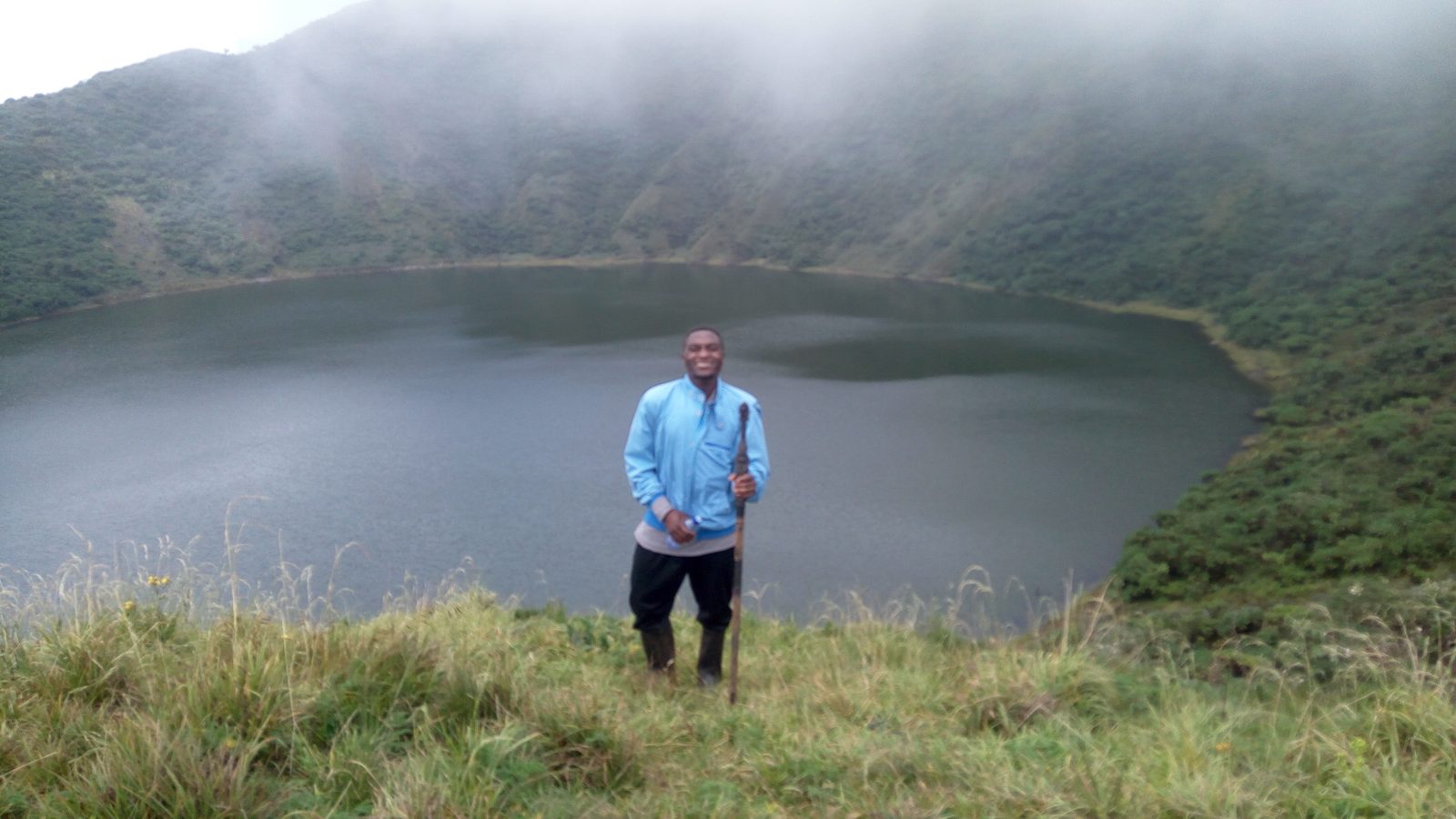
The crater lake at the summit of Mount Bisoke, Volcanoes National Park, Rwanda. Photo: SIBOMANA Constantin, CC BY-SA 4.0, via Wikimedia Commons.
Mount Bisoke: The Accessible Day Hike
Bisoke, at 3,711 meters, is the more popular choice for visitors with limited time, achievable as a single, demanding day hike that most reasonably fit trekkers can complete without technical climbing experience. The hike rewards summiters with a genuinely striking crater lake at the top, a body of water sitting almost perfectly within the volcano’s crater, often shrouded in cloud that clears intermittently to reveal the full scene below. Round trip, including summit time, typically takes a full day, roughly six to seven hours, making it feasible to combine with other activities on the same broader trip without dedicating multiple days purely to the hike itself.
Mount Karisimbi: The Demanding Two-Day Expedition
Karisimbi, at 4,507 meters, stands as the highest of the Virunga volcanoes and requires a genuinely different level of commitment, an overnight expedition with a camp partway up the mountain before continuing to the summit early the next morning. This two-day structure exists partly because of the sheer distance and elevation gain involved, and partly to allow some acclimatization to the altitude before pushing to the top, where temperatures can drop close to freezing overnight, a significant contrast to the warm lowland climate most visitors experience elsewhere in Rwanda.
Difficulty Comparison
Bisoke demands solid fitness and a full day of sustained climbing, but doesn’t require the same level of preparation, gear, or acclimatization planning that Karisimbi genuinely does. Karisimbi’s additional elevation, colder overnight conditions, and multi-day structure make it considerably more demanding, requiring proper cold-weather gear, a higher baseline fitness level, and mental preparation for camping at altitude rather than returning to a comfortable lodge the same evening. Trekkers uncertain about their fitness level for either hike should discuss their specific concerns with their tour operator before booking, since neither hike is one to attempt without honest self-assessment.
Views and Scenery
Bisoke’s crater lake is the hike’s signature reward, a genuinely photogenic feature that Karisimbi’s summit, while offering sweeping views across the Virunga range and, on clear days, toward Lake Kivu and the wider Rift Valley, doesn’t quite match in terms of a single dramatic focal point. Karisimbi’s higher elevation does offer a genuinely different sense of scale and achievement, standing atop the tallest peak in the range, and its summit sometimes features a light dusting of frost or even snow given the altitude, a rare sight this close to the equator.
Cost Comparison
Bisoke’s permit costs less than Karisimbi’s, reflecting the shorter duration and lower logistics burden of a single-day hike versus a two-day expedition requiring porters, camping equipment, and overnight support on the mountain. Travelers on a tighter budget or timeline will find Bisoke the more accessible and affordable option, while those specifically seeking the achievement and experience of summiting Rwanda’s highest point should budget for Karisimbi’s higher cost as a worthwhile investment in a genuinely rarer accomplishment.
Which Hike Fits Your Itinerary
Most travelers combining a volcano hike with gorilla trekking and a broader Rwanda itinerary find Bisoke the more practical choice, since it fits into a single day without disrupting the rest of a tightly scheduled trip. Karisimbi suits travelers with genuinely more time, at least two full days dedicated purely to the hike, and a specific goal of reaching Rwanda’s highest point rather than simply wanting a scenic volcano hike as one part of a broader itinerary.
Preparing for Either Hike
Both hikes demand proper layered clothing given the temperature swing between the base and higher elevations, sturdy waterproof hiking boots, and trekking poles for the steep, sometimes muddy volcanic terrain. Karisimbi trekkers need additional cold-weather gear for the overnight camp, including a warm sleeping bag rated for near-freezing conditions, while Bisoke hikers can pack somewhat lighter given the single-day structure and return to lodge accommodation the same evening.
Wildlife and Vegetation Along the Way
Both hikes pass through several distinct vegetation zones as elevation increases, from montane forest through bamboo stands and into heather and afro-alpine moorland near the higher reaches, giving trekkers a genuine sense of ecological transition over the course of a single hike. Golden monkeys occasionally appear in the bamboo zones on the lower slopes of either mountain, and buffalo tracks and other wildlife signs are commonly spotted, even if larger mammals themselves are less frequently encountered given the noise and pace of a hiking group compared to a quiet gorilla trekking approach.
Guides and Group Size
Both hikes require a mandatory park guide, and armed rangers typically accompany groups given the border-adjacent location and standard wildlife safety protocols applied throughout Volcanoes National Park. Group sizes are generally kept manageable for both hikes, and trekkers should expect a similar briefing and permit process to gorilla trekking, checking in at park headquarters before departing for the trailhead each morning.
Weather Considerations
Weather at altitude on either mountain can shift quickly, and clear morning conditions at the base don’t guarantee clear views from the summit, particularly on Bisoke where cloud frequently rolls into the crater during the day. Karisimbi’s higher elevation makes it even more susceptible to sudden temperature drops and reduced visibility, reinforcing why proper cold-weather gear and realistic expectations about summit views matter regardless of which hike you choose.
Booking Tips for Either Hike
Permits for both hikes are available through the Rwanda Development Board, generally with more flexibility around booking timelines than gorilla permits, since demand runs considerably lower for volcano hikes than for the tightly capped gorilla trekking system. That said, booking through your tour operator alongside your gorilla permit remains the simplest approach, letting a single point of contact coordinate your full itinerary rather than managing separate bookings across different activities and providers.
Who Should Choose Which Hike
Fit, adventurous travelers with a spare two days and a specific goal of reaching Rwanda’s highest point should book Karisimbi, while those wanting a genuinely rewarding but more time-efficient volcano experience, one that fits neatly around gorilla trekking and other activities, will find Bisoke the better match. Neither choice is objectively superior; the right one depends entirely on how much of your trip you’re willing to dedicate to a single activity versus keeping your itinerary more varied across Rwanda’s broader range of experiences.
Combining a Volcano Hike With Gorilla Trekking
Both hikes operate through Volcanoes National Park’s same booking system used for gorilla and golden monkey trekking in the region, making it straightforward to combine a volcano hike with your broader primate-trekking itinerary in the same general area. Scheduling the volcano hike either before or after your gorilla trek, rather than on the same day, gives your body adequate recovery time between two genuinely demanding physical activities, letting you enjoy each experience fully rather than pushing through fatigue from back-to-back exertion.
Recommended Tours: 7 Days Rwanda & Uganda Gorilla and Wildlife Safari from Kigali | 7 Days Classic Rwanda Safari