Meet the gorilla families of Bwindi: Habituated groups explained
Bwindi Impenetrable National Park in southwestern Uganda is one of the world’s most important destinations for mountain gorilla trekking. Its ancient rainforest shelters a significant share of the remaining mountain gorilla population, including several families that have become accustomed to the controlled presence of humans. These habituated groups give visitors the opportunity to observe wild gorillas at close range while supporting conservation and community development.
Every gorilla family has its own history, social structure and character. Some are famous because they were among the first groups opened to tourism. Others became known after splitting from larger families or developing under the leadership of a new silverback. Their members change over time as young gorillas grow, new babies are born, individuals die and adult females move between groups.
Bwindi has four main gorilla trekking sectors: Buhoma, Ruhija, Rushaga and Nkuringo. Each sector has several habituated families, although the groups available for tourism can change as the Uganda Wildlife Authority manages the park. Understanding these families and their locations helps you choose a suitable trekking sector before booking your gorilla permit.
What is a habituated gorilla family?
A habituated gorilla family is a wild group that has gradually become accustomed to the presence of humans through a carefully managed process. Habituation does not mean that the gorillas become domesticated, tame or dependent on people. They continue to live naturally in the forest, find their own food, raise their young and move freely across their territory.
The process involves researchers, trackers and conservation teams visiting a selected gorilla group regularly. These visits allow the animals to become familiar with human presence without being encouraged to interact with people. The process can take several years because the gorillas must become comfortable enough for carefully controlled observation.
Once a family meets the required conditions, conservation authorities may approve it for tourism. Visitors can then track the group with trained rangers and spend a limited period observing its members.
Habituation is important because mountain gorillas are naturally cautious around unfamiliar humans. It also allows conservation teams to monitor the health, behaviour and population of groups that receive visitors.
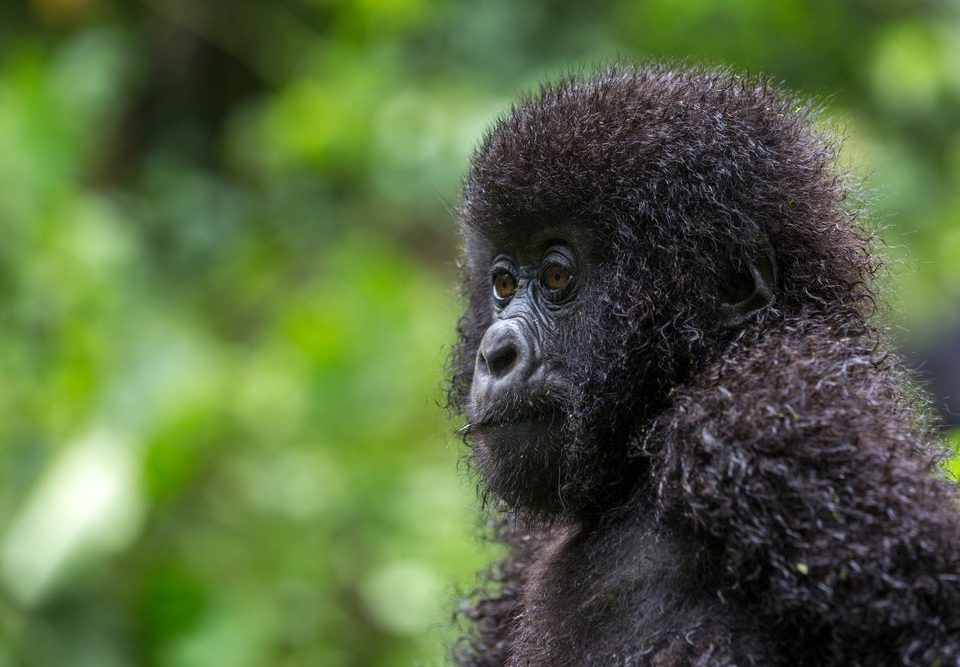
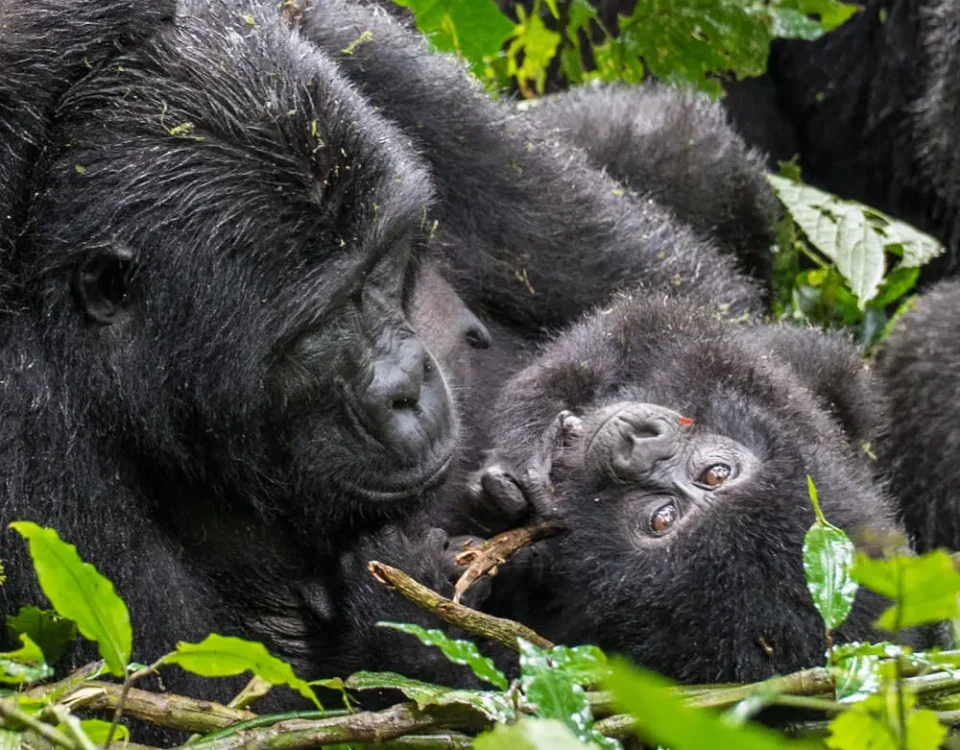
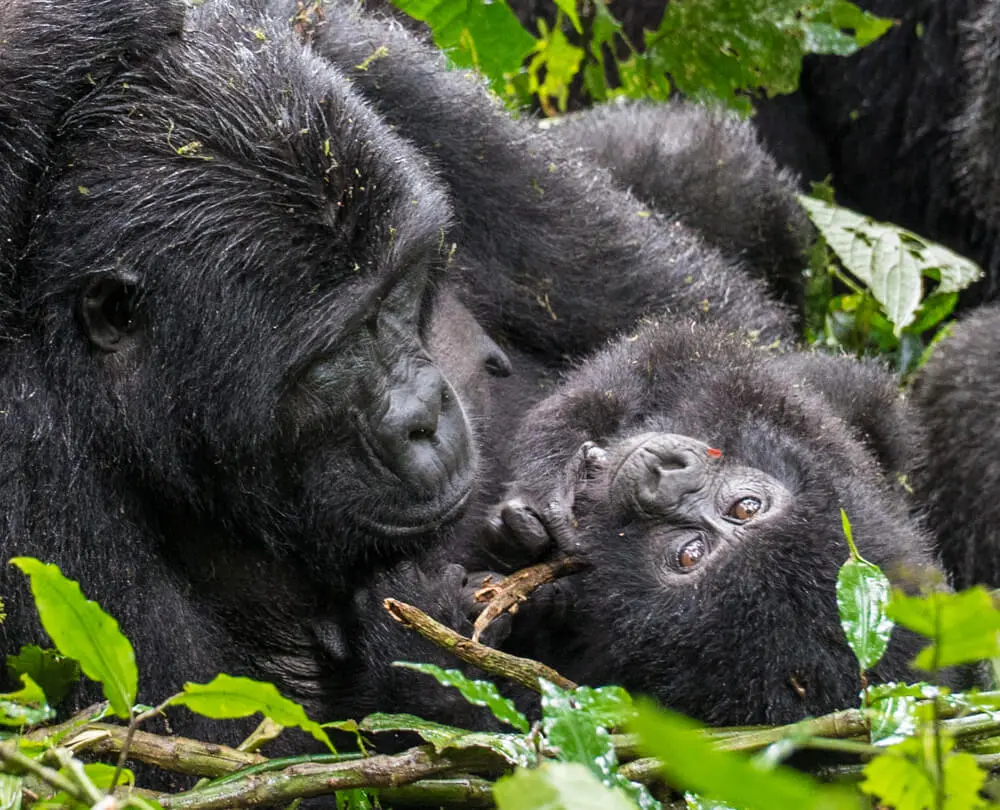
A habituated family remains wild. A silverback may continue feeding, resting or moving through the vegetation while visitors watch from the required distance. Mothers protect their infants, young gorillas play, and other members maintain their normal social relationships.
Understanding Bwindi’s four gorilla trekking sectors
Bwindi’s gorilla families are distributed across four trekking sectors. Each sector has its own briefing point, accommodation options, road access and forest terrain. Your permit is connected to a particular sector, so choosing the right location is an important part of planning your trip.
Buhoma sector: The home of Uganda’s first habituated family
Buhoma lies in the northern part of Bwindi and holds an important place in Uganda’s gorilla tourism history. It was here that the Mubare family became the first mountain gorilla group in Uganda to open for tourism in 1993.
The sector is popular with visitors combining gorilla trekking with wildlife experiences in Queen Elizabeth National Park. It also has a range of accommodation options, from comfortable guesthouses to high-end safari lodges.
Mubare gorilla family
The Mubare family is historically significant because it was the first gorilla group opened to tourism in Uganda. Its name comes from Mubare Hill, where the group was initially located.
The family has experienced considerable changes over the years. Leadership changes, the movement of individual gorillas and other natural events have affected its membership and social structure. These changes are normal among mountain gorillas, whose families do not remain the same indefinitely.
Visitors interested in the history of gorilla tourism often find Mubare particularly interesting. Its story reflects the development of conservation and responsible wildlife tourism in Bwindi.
Habinyanja gorilla family
Habinyanja is another well-known family in Buhoma. It has a long history of habituation and tourism and was once recognised as a relatively large group.
The family became particularly notable because of changes in its leadership and a division that contributed to the formation of another group. Such splits can occur when younger or subordinate silverbacks establish their own families.
Habinyanja’s history helps explain how gorilla groups develop over time. A family may remain stable for years, but competition between males, changes in leadership and the movement of females can eventually alter its structure.
Rushegura gorilla family
Rushegura is associated with the division of the original Habinyanja group. It formed when a silverback and several members separated and established a new family.
The group became one of the recognised tourism families in Buhoma. Its history demonstrates how new gorilla families can develop naturally from existing groups.
Rushegura is also an example of why family membership figures should be treated as estimates. Births, deaths and movement between groups can change the number of individuals over time.
Other Buhoma groups
Other names associated with Buhoma include Katwe and Muyambi. Their availability and status for tourism should always be confirmed when booking because the list of families open to visitors can change.
Buhoma is a useful choice if you want to explore the northern side of Bwindi and combine gorilla trekking with other destinations in western Uganda.
Ruhija sector: Families in the eastern forest
Ruhija is located in the eastern part of Bwindi. It is known for its high elevation, cool conditions, forested ridges and excellent birdwatching opportunities. The terrain includes steep valleys and thick vegetation, making trekking a rewarding experience for visitors who enjoy walking through mountain rainforest.
Several recognised gorilla families are associated with Ruhija.
Bitukura gorilla family
Bitukura is one of the best-known families in Ruhija. The group became habituated after a relatively organised process involving regular visits by researchers and trackers.
It has been recognised for its social stability and the relationships among its members. Like other families, its composition changes as individuals mature, new infants arrive and gorillas move between groups.
Bitukura is an established tourism family, and visitors tracking it have the opportunity to observe different age groups interacting within the forest.
Oruzogo gorilla family
Oruzogo is another recognised family in Ruhija. It has attracted attention for its size and the presence of younger gorillas.
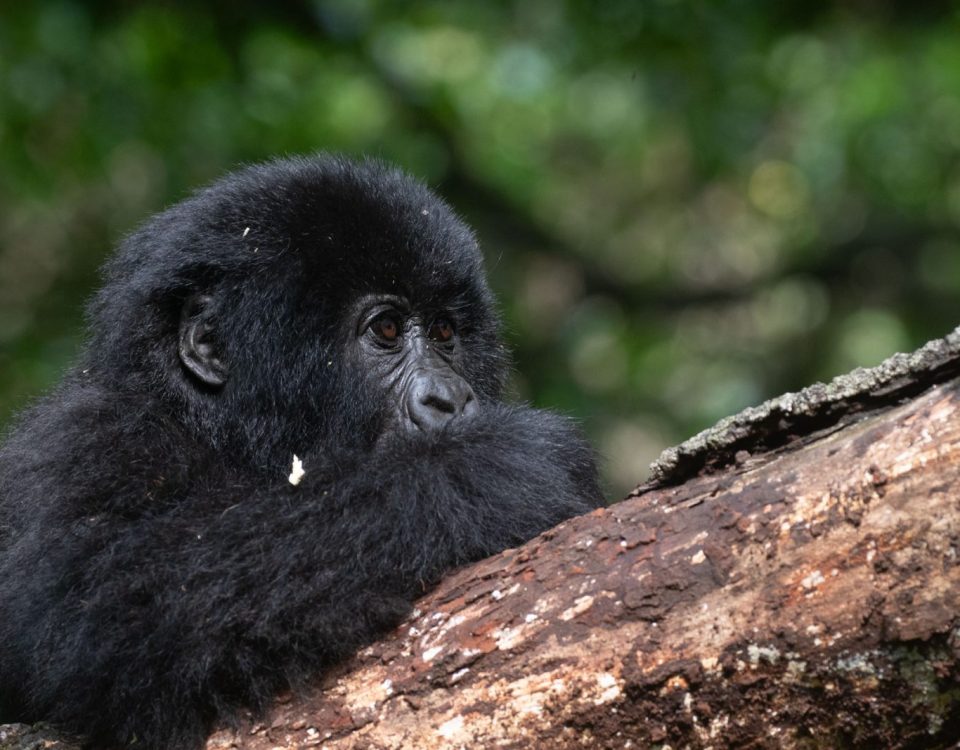
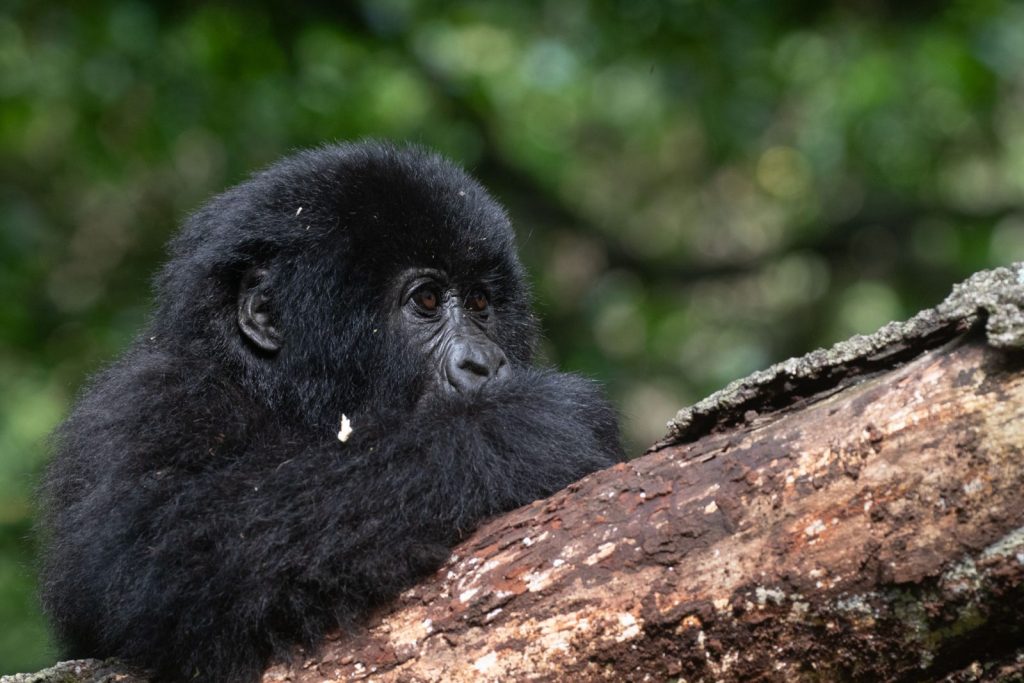
Young gorillas can make a trek particularly entertaining. They often play, climb vegetation, chase one another and interact with other members of the family. Their behaviour gives visitors an opportunity to observe how mountain gorillas develop social skills.
The silverback remains central to the family’s social organisation, although mothers and other adults also play important roles in caring for younger members.
Kyaguliro gorilla family
Kyaguliro has an important history in gorilla research and conservation. It has been associated with scientific monitoring, which provides valuable information about mountain gorilla behaviour, health and social relationships.
The family is particularly relevant to visitors interested in the research work behind gorilla conservation. Scientific monitoring helps conservation teams understand how gorillas respond to environmental changes, disease risks and interactions within their groups.
Its research history also explains why the status and availability of particular families may differ from one season to another.
Mukiza gorilla family
Mukiza is another family associated with Ruhija. Its history is connected to changes in the structure of the Kyaguliro group, demonstrating how family divisions can lead to the formation of separate social units.
A new family develops when a silverback establishes leadership and other gorillas remain with or join him. These changes are part of the natural social behaviour of mountain gorillas.
Ruhija is worth considering if you prefer a cooler forest environment and want to combine gorilla trekking with birdwatching. However, the elevation and steep forest trails still require reasonable physical preparation.
Rushaga sector: The largest selection of habituated families
Rushaga lies in southern Bwindi and is known for having a high concentration of habituated gorilla families. This gives the sector an important role in gorilla tourism, particularly during busy travel periods when visitors need more permit options.
The area has several recognised families, including Nshongi, Mishaya, Kahungye, Busingye, Bweza and Mucunguzi. Other groups may also be available depending on current tourism and conservation arrangements.
Rushaga is also the main location for Uganda’s Gorilla Habituation Experience, which allows a small number of visitors to accompany researchers and trackers as they work with a group that is still becoming accustomed to human presence.
Nshongi gorilla family
Nshongi became famous for its unusually large membership when it was opened to tourism. It was once regarded as one of the largest habituated mountain gorilla families in Bwindi.
The group attracted attention because of the number of individuals living together under one social structure. Large families provide opportunities to observe several relationships at once, including interactions between adults, mothers, infants and younger gorillas.
Like other families, Nshongi has experienced changes in membership and structure. Its history is an important example of the changing nature of gorilla social groups.
Mishaya gorilla family
Mishaya developed after a silverback separated from the Nshongi group and established his own family.
The group takes its name from the silverback associated with its formation. Its history illustrates the importance of dominant males in mountain gorilla social organisation.
Silverbacks provide leadership and protection. They also influence the movement and daily activities of their families. When a male establishes a new group, the resulting family may develop its own territory and social relationships.
Mishaya is one of the recognised names in Rushaga’s gorilla tourism history.
Kahungye gorilla family
Kahungye is another well-known Rushaga family. It has experienced changes in its social structure, including a split that contributed to the formation of Busingye.
The group is part of the wider history of gorilla habituation and tourism in southern Bwindi. Its members continue to live naturally in the forest, and their numbers can change over time.
Visitors should avoid relying on old online descriptions that give exact membership figures. The number of gorillas in a family can change through births, deaths and movement between groups.
Busingye gorilla family
Busingye developed from the Kahungye group after a silverback established a separate family.
Its formation demonstrates that gorilla families are not permanent units with fixed membership. A dominant male may separate from another group and establish his own family, sometimes attracting females and younger members.
Busingye is among the recognised families associated with Rushaga and contributes to the sector’s variety of trekking experiences.
Bweza gorilla family
Bweza is another established Rushaga family. Its history is connected to changes in the Nshongi group, from which members separated to form a new social unit.
The family is part of the range of gorilla groups that have made Rushaga an important trekking destination. Its members continue to be monitored by conservation teams, just like other habituated families.
Mucunguzi gorilla family
Mucunguzi is also associated with Rushaga. Its history reflects the formation and development of newer gorilla groups as individual males establish leadership.
Newly established families may have different social structures from older groups. Their membership can change as females join, infants are born and young males mature.
Rushaga is a practical option for visitors seeking a wider choice of trekking permits. It is also the sector to consider if you want the extended Gorilla Habituation Experience.
Nkuringo sector: Gorilla trekking in steep mountain terrain
Nkuringo is located in the southwestern part of Bwindi. It is known for its steep hillsides, dramatic scenery and demanding forest trails.
The sector is particularly suitable for visitors who enjoy challenging hikes and want to explore a less developed part of the park. However, you should prepare for steep climbs and descents. The time required to find a gorilla family depends on where the trackers locate the group.
Nkuringo gorilla family
The Nkuringo family is one of the best-known groups in this sector. It gave the area its name and has played an important role in the development of gorilla tourism in southern Bwindi.
The group has a history of leadership changes and natural developments within its social structure. Like all mountain gorilla families, it depends on the relationships between its silverback, adult females and younger members.
Tracking this family can involve demanding walking conditions because of the steep terrain. The experience may be particularly rewarding for visitors who enjoy mountain hiking and forest exploration.
Bushaho gorilla family
Bushaho is another recognised family associated with the Nkuringo area. Its development is connected to changes in the wider gorilla population and the formation of separate social groups.
The family provides another example of how mountain gorillas establish new social units. As the group develops, its members form relationships and establish patterns of movement within their forest habitat.
The availability of particular Nkuringo families can change, so confirm current trekking arrangements before choosing accommodation or making final travel plans.
How gorilla families are formed
Mountain gorilla families develop through natural social relationships. A typical group includes a dominant silverback, adult females, younger males, juveniles and infants.
The silverback usually leads the family and makes important decisions about movement and protection. Adult females contribute to the group’s social structure and raise their young. Infants remain close to their mothers, while juveniles gradually become more independent.
Some families remain together for many years. Others change when a silverback dies, a younger male establishes a separate group or females move to another family.
A family split does not necessarily mean that the original group has failed. It is a natural part of mountain gorilla social behaviour. The formation of groups such as Rushegura, Mishaya and Busingye demonstrates how these changes have shaped Bwindi’s gorilla population.
Conservation teams monitor these developments to understand group membership, health and behaviour. Their records help park authorities manage tourism and protect the animals.
What makes one gorilla family different from another?
Every gorilla family has its own social structure and history. Some groups have many members, while others are smaller. Some include several young gorillas, while others have more adults.
The dominant silverback also influences the family’s behaviour. Some silverbacks may appear relaxed while feeding or resting near visitors. Others may be more active, moving frequently through the forest or responding to changes around the group.
The presence of infants and juveniles can make a visit particularly interesting because younger gorillas often play and explore their surroundings. However, no family guarantees a particular behaviour during a trek. You may find the gorillas feeding quietly, resting together, grooming one another or moving through thick vegetation.
The forest environment also affects the experience. Some groups range through steep valleys, while others may be found in areas with more accessible terrain. Their movements change daily as they search for food and suitable nesting locations.
Can you choose the gorilla family you want to visit?
You can usually choose your preferred trekking sector when arranging your gorilla permit, subject to availability. However, you should not assume that you can select a specific family and receive a guarantee that you will track it.
The Uganda Wildlife Authority manages the allocation of visitors to gorilla families. On the morning of the trek, rangers organise visitors into small groups and assign them to available families.
The allocation may consider the location of the gorillas, the number of visitors, individual fitness levels and other operational factors. Trackers also provide information about where each family was last seen.
If you have concerns about your fitness or mobility, explain them during the briefing. The rangers can consider your circumstances when assigning a group, although they cannot guarantee a short trek.
For this reason, choose your sector based on accommodation, road access, your wider itinerary and the type of trekking environment you prefer. Treat the family assignment as part of the experience rather than a guaranteed booking choice.
How many visitors can track each habituated family?
For standard gorilla trekking in Uganda, a maximum of eight visitors are permitted to visit one habituated family per day. This limit helps reduce disturbance and the risk of transmitting human diseases to gorillas.
The small group size also gives visitors a better opportunity to observe the animals without creating unnecessary pressure around them.
Each standard trek includes up to one hour with the gorillas after the group has been located. Rangers explain the rules before the trek and supervise visitors during the encounter.
The Gorilla Habituation Experience in Rushaga follows a different arrangement. It allows up to four visitors to accompany researchers and habituation teams for a longer observation period, subject to the current programme rules.
Why the number and names of gorilla families change
Gorilla family lists are not permanent. A group that appears in an older travel guide may have changed its membership, split into separate families or moved into a different management arrangement.
Births increase family membership, while deaths reduce it. Young males may eventually leave their birth groups, and adult females can move between families. Leadership changes can also affect the structure of a group.
New families may develop as researchers and conservation teams monitor groups that become suitable for habituation. Other groups may be reserved for research or managed differently from tourism families.
This is why you should be careful with websites that publish exact family sizes without explaining when the information was collected. A figure that was correct several years ago may no longer represent the current group.
For the most reliable information, confirm the available families and trekking arrangements with the Uganda Wildlife Authority or your tour operator before travelling.
Which Bwindi sector should you choose?
Your preferred sector should depend on your travel plans and trekking priorities.
Buhoma is a good choice if you want to explore northern Bwindi and combine gorilla trekking with Queen Elizabeth National Park. It has a long history of gorilla tourism and several accommodation options.
Ruhija is worth considering if you enjoy birdwatching, cooler mountain conditions and eastern Bwindi’s forest environment. It also has recognised families with important research histories.
Rushaga is suitable if you want a wider selection of habituated families or are interested in the Gorilla Habituation Experience. Its location in southern Bwindi can also work well for itineraries connecting with Kisoro or Rwanda.
Nkuringo is a strong option for visitors who enjoy challenging hikes and dramatic mountain scenery. You should be prepared for steep terrain and potentially strenuous walking.
Remember that the easiest sector is not necessarily the one with the shortest gorilla trek on your chosen day. Gorilla families move through the forest, and their location can change overnight.
Preparing for your gorilla family encounter
Whichever family you visit, the basic trekking requirements remain similar. Wear sturdy hiking boots with good grip, long trousers, a long-sleeved shirt and suitable rain protection. Bwindi is a rainforest, so conditions can change quickly even during the drier months.
Carry drinking water and a small amount of energy food for the walk. Gardening gloves can help protect your hands when moving through vegetation, while gaiters can reduce contact with mud and insects.
Follow your ranger’s instructions throughout the trek. Keep the required distance from the gorillas, avoid touching them and do not use flash photography. If you are feeling unwell, inform the authorities before entering the forest because respiratory infections can pose a serious risk to gorillas.
During the one-hour encounter, observe the family’s behaviour without trying to attract attention. You may see a silverback resting, a mother caring for her infant, juveniles playing or several adults feeding together.
The most important thing is to remember that you are visiting a wild family in its natural home. Each encounter is different, and no two trekking days are exactly the same.
Frequently asked questions about Bwindi gorilla families
How many habituated gorilla families are in Bwindi?
The number changes as families split, new groups become habituated and conservation authorities adjust tourism arrangements. Bwindi has more than a dozen recognised habituated families, distributed across Buhoma, Ruhija, Rushaga and Nkuringo. Not every habituated group is necessarily open to standard tourism.
Which was the first gorilla family opened to tourism in Uganda?
The Mubare family in Buhoma was the first mountain gorilla family opened to tourism in Uganda in 1993.
Which Bwindi sector has the most gorilla families?
Rushaga is widely recognised for having the largest concentration of habituated gorilla groups. It also hosts Uganda’s Gorilla Habituation Experience.
Can I request a particular silverback or gorilla family?
You can express a preference when discussing your permit, but a specific family assignment is not guaranteed. Rangers allocate visitors according to the operational arrangements on the day of trekking.
Are all habituated gorilla families open to tourists?
No. Some groups are reserved for research or have different management arrangements. The families available for standard trekking can also change over time.
Is the Mubare family still important to gorilla conservation?
Yes. Its historical importance comes from being the first family opened to tourism in Uganda. It represents an important stage in the development of gorilla tourism and conservation in Bwindi.
Can a gorilla family split into two groups?
Yes. Family splits occur naturally, often when a silverback establishes a separate group. The formation of families such as Rushegura, Mishaya and Busingye illustrates this process.
How long can I stay with a gorilla family?
A standard gorilla trekking permit allows up to one hour with the habituated family after it has been located. The separate Gorilla Habituation Experience allows a longer encounter, subject to its specific rules.
Experience the different gorilla families of Bwindi
Bwindi’s gorilla families represent years of conservation work and the natural development of mountain gorilla social groups. From the historic Mubare family in Buhoma to the well-known groups of Rushaga and the mountain families of Ruhija and Nkuringo, each has a story shaped by leadership, family relationships and life in the rainforest.
When planning your trek, focus on selecting the right sector, securing a valid permit and preparing for the physical demands of the forest. The family you meet will have its own character, and the experience will depend on where the gorillas are, what they are doing and how they respond to the natural surroundings on that day.