Everyone who has seen a wildlife documentary knows the image: a wall of wildebeest plunging down a riverbank into churning brown water while crocodiles wait below. What documentaries rarely explain clearly is that these crossings happen at several different rivers across two countries over the course of the year, and that the Tanzanian crossings, at the Grumeti and the western stretch of the Mara River inside the Serengeti, follow their own distinct timing and character quite separate from the more heavily publicized crossings that occur once the herds push north into Kenya’s Maasai Mara.
Two Rivers, Two Very Different Crossings
Tanzania’s portion of the Great Migration includes two major river obstacles the wildebeest must cross as they move through the Serengeti ecosystem in their roughly clockwise annual circuit. The Grumeti River, flowing through the Serengeti’s Western Corridor, is the first major crossing point the herds typically encounter, usually between late May and July as the migration moves west and then north out of the southern and central Serengeti plains. The Mara River itself also flows through a stretch of northern Serengeti territory before crossing into Kenya, meaning that some of the crossings often attributed entirely to the Maasai Mara actually happen first on Tanzanian soil, in the Kogatende area of the northern Serengeti, before the same herds cross back and forth across the border multiple times through August, September, and into October.
This distinction matters for travelers planning a trip specifically around river crossings, since a safari built around the Grumeti in June looks nothing like one built around the northern Mara crossings in September, both in timing and in the landscape and logistics surrounding each location.
The Grumeti Crossings: Smaller Scale, Different Drama
The Grumeti River crossings tend to be smaller and less predictable in scale than the crossings that later occur on the Mara, with herds sometimes crossing in smaller, staggered groups rather than the massed, thousands-strong plunges more associated with the Mara later in the season. What the Grumeti lacks in raw scale it makes up for with its resident population of exceptionally large Nile crocodiles, some among the biggest recorded anywhere in East Africa, grown large partly on the strength of decades of migration-season feeding opportunities. The Western Corridor’s riverine forest setting also differs visually from the more open, eroded banks typical of the Mara crossing points further north, giving Grumeti crossings a denser, more enclosed feel, often photographed through gaps in overhanging vegetation rather than across the wide open vistas typical of Mara crossing photography.
Because the Western Corridor sees considerably less tourist traffic than the northern Serengeti during peak crossing season, travelers who time a visit to the Grumeti crossings correctly often find themselves with far fewer vehicles competing for a viewing spot, a meaningful advantage for photographers and anyone put off by the crowded vehicle lines that can form at popular Mara crossing points later in the year.
The Northern Serengeti and Kogatende
By the time the migration reaches the Mara River in the far north of the Serengeti, typically from July through October depending heavily on rainfall patterns that year, the herds have grown into the massed columns most familiar from wildlife documentaries. The Kogatende area, along with the Lamai Wedge further north, offers front-row access to these crossings from the Tanzanian side, and critically, the migration does not cross the Mara River just once during this period. Herds frequently cross back and forth multiple times over the course of weeks, driven by grazing conditions, predator pressure, and what researchers still describe as a not-fully-understood herd psychology that can send tens of thousands of animals into the water, only to have a portion turn back moments later without any obvious trigger.
This back-and-forth pattern means that, contrary to popular belief, there is no single “crossing season” with guaranteed daily action. Some days produce nothing more than herds grazing calmly along the riverbank; others produce multiple dramatic crossings within a few hours. Experienced guides operating in the Kogatende area read a combination of herd density, movement patterns, and the behavior of resident crocodiles to anticipate when a crossing is likely, though even the most experienced trackers acknowledge an irreducible element of unpredictability.
How This Differs From the Kenyan Mara Crossings
Travelers researching Great Migration river crossings often encounter conflicting information because the same river, and often the very same herds, produce crossings on both sides of the Tanzania-Kenya border within the same season. The crossings inside Kenya’s Maasai Mara Reserve, covered in more depth in dedicated coverage of the Mara River crossings there, generally draw larger crowds of safari vehicles given the Mara’s more concentrated tourism infrastructure and shorter average visitor stays. The Tanzanian side, particularly the Lamai Wedge and the more remote stretches of Kogatende, tends to offer a quieter, less commercially developed viewing experience for travelers willing to base themselves in the northern Serengeti’s more limited camp options rather than the denser lodge clusters found across the border.
Reading the Herds: What Increases the Odds
No operator can guarantee a river crossing on any given day, and travelers who arrive expecting one on command are often disappointed by a migration that, by its nature, follows rainfall and grazing conditions rather than a tourist itinerary. That said, certain patterns improve the odds meaningfully. Herds tend to build up density along a riverbank over several days before a crossing occurs, and guides who track this buildup, often through radio communication with other vehicles and camps across the northern Serengeti and into the Mara, can often position guests near a likely crossing point with a reasonable lead time. Mornings tend to see more crossing activity than the heat of midday, though crossings can and do happen at almost any hour. Staying multiple nights in the crossing zone rather than attempting a single-day visit dramatically improves the statistical odds of witnessing one, since even a well-guided single day can come up empty if herd movement that particular week favors a different stretch of river.
Crocodiles, Casualties, and the Ecology of a Crossing
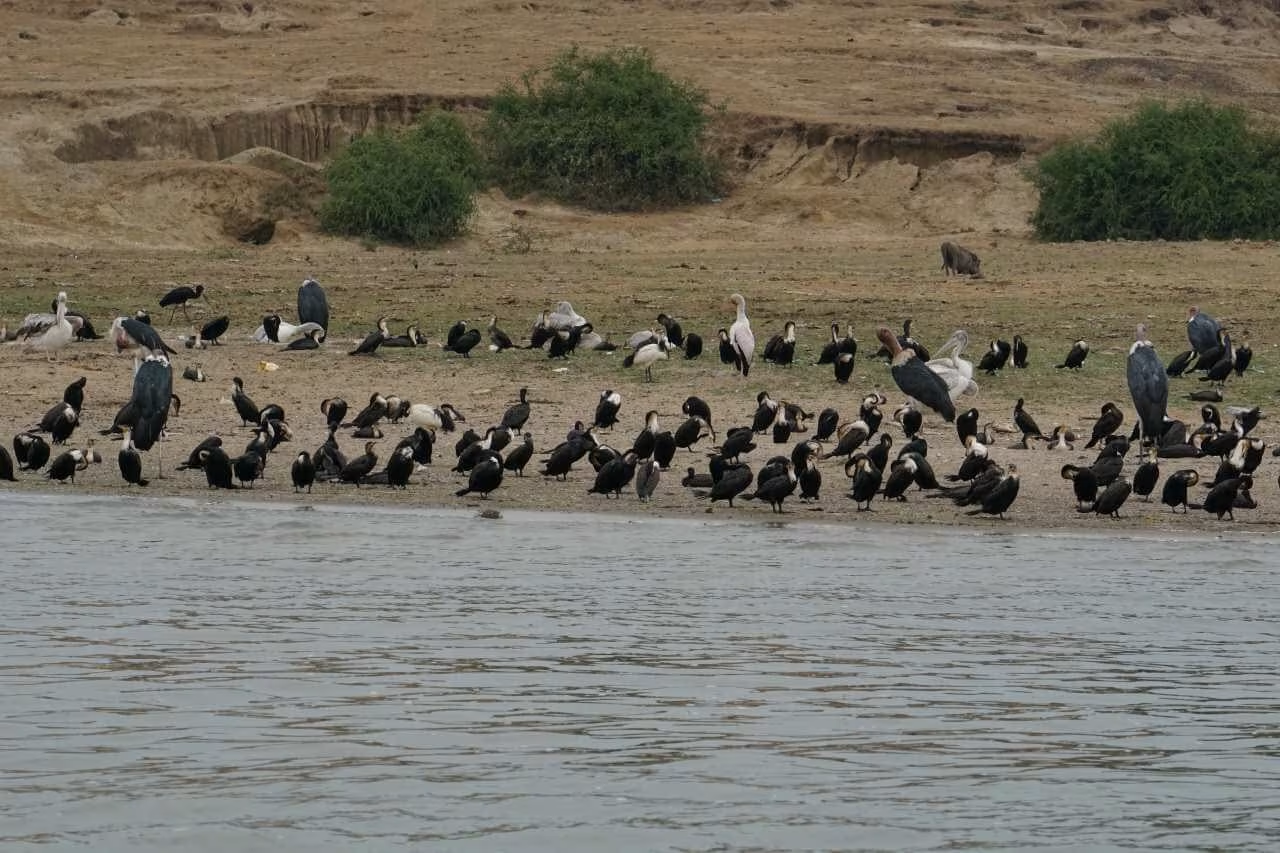
The drama of a river crossing draws heavily on the presence of Nile crocodiles that have adapted their own annual behavior around the migration’s arrival, and both the Grumeti and the Mara support crocodile populations large enough, and old enough, to have witnessed decades of these seasonal feeding opportunities. Not every crossing produces a kill, and many pass with no crocodile encounter at all, but when a kill does occur it typically happens in the opening seconds as the first wildebeest hit deep water, disoriented and unable to see clearly beneath the surface where a crocodile may already be positioned. The casualties that do occur, whether from crocodile predation, drowning in a crowded crush of panicked animals, or exhaustion on a steep exit bank, feed an entire secondary ecosystem downstream, from vultures and marabou storks to the catfish and other river life that process what the larger scavengers leave behind. Researchers who have studied the ecological role of mass drownings during crossings have documented measurable nutrient contributions to river systems from the carcasses that do not make it across, a reminder that the crossings function as more than a visual spectacle within the broader Serengeti-Mara ecosystem.
Herd size at any given crossing point varies enormously, from a few dozen animals testing a crossing to columns numbering in the thousands strung out along a riverbank for a considerable distance. Zebra frequently lead or travel alongside the wildebeest during crossings, and their slightly more cautious approach to entering the water is sometimes credited by guides with helping trigger or delay a crossing attempt, since wildebeest herd behavior often follows the lead of whichever animals commit first.
Planning a Trip Around the Crossings
Because crossing timing shifts from year to year based on rainfall, any itinerary built specifically around witnessing a river crossing benefits from flexibility and from working with operators who track migration movement in near-real time rather than relying purely on historical average dates. Camps in the Western Corridor and around Kogatende, some operating seasonally to align specifically with the migration’s presence in each area, offer the most direct access, though they typically come at a premium given both their prime positioning and the logistical challenge of operating in Tanzania’s more remote northern reaches. Fly-in access via small aircraft to airstrips near Kogatende has become increasingly common for travelers unwilling to spend the better part of a day driving from central Serengeti camps, cutting significantly into the time actually available for game viewing once on the ground.
Travelers building a broader itinerary around the migration often combine time in the Serengeti’s different sectors with a stop at the Ngorongoro Crater or Tarangire, timing the northern Serengeti portion of the trip specifically around the crossing season and treating the rest of the circuit as a complementary addition rather than the main event. Several multi-day Tanzania safari itineraries are built with exactly this kind of seasonal flexibility in mind, shifting camp locations within the Serengeti to follow the migration’s expected position rather than fixing a single base for the entire trip. Given how much crossing behavior depends on that year’s specific rainfall pattern, confirming current herd positioning with an operator shortly before travel, rather than relying solely on historical seasonal averages, remains the most reliable way to maximize the chances of witnessing one of the more genuinely unpredictable spectacles in African wildlife travel.