
Eastern Lowland Gorillas vs Mountain Gorillas: What’s the Difference?
Gorilla trekking in Africa offers the incredible opportunity to observe two distinct subspecies of gorillas in the wild: eastern lowland gorillas (Gorilla beringei graueri) and mountain gorillas (Gorilla beringei beringei). While both are part of the same species family, their habitats, physical characteristics, behavior, and conservation status differ significantly. Understanding these differences is crucial for travelers deciding where to go in 2026 for a gorilla safari experience. Each encounter offers a unique glimpse into the lives of these gentle giants and the ecosystems they inhabit.
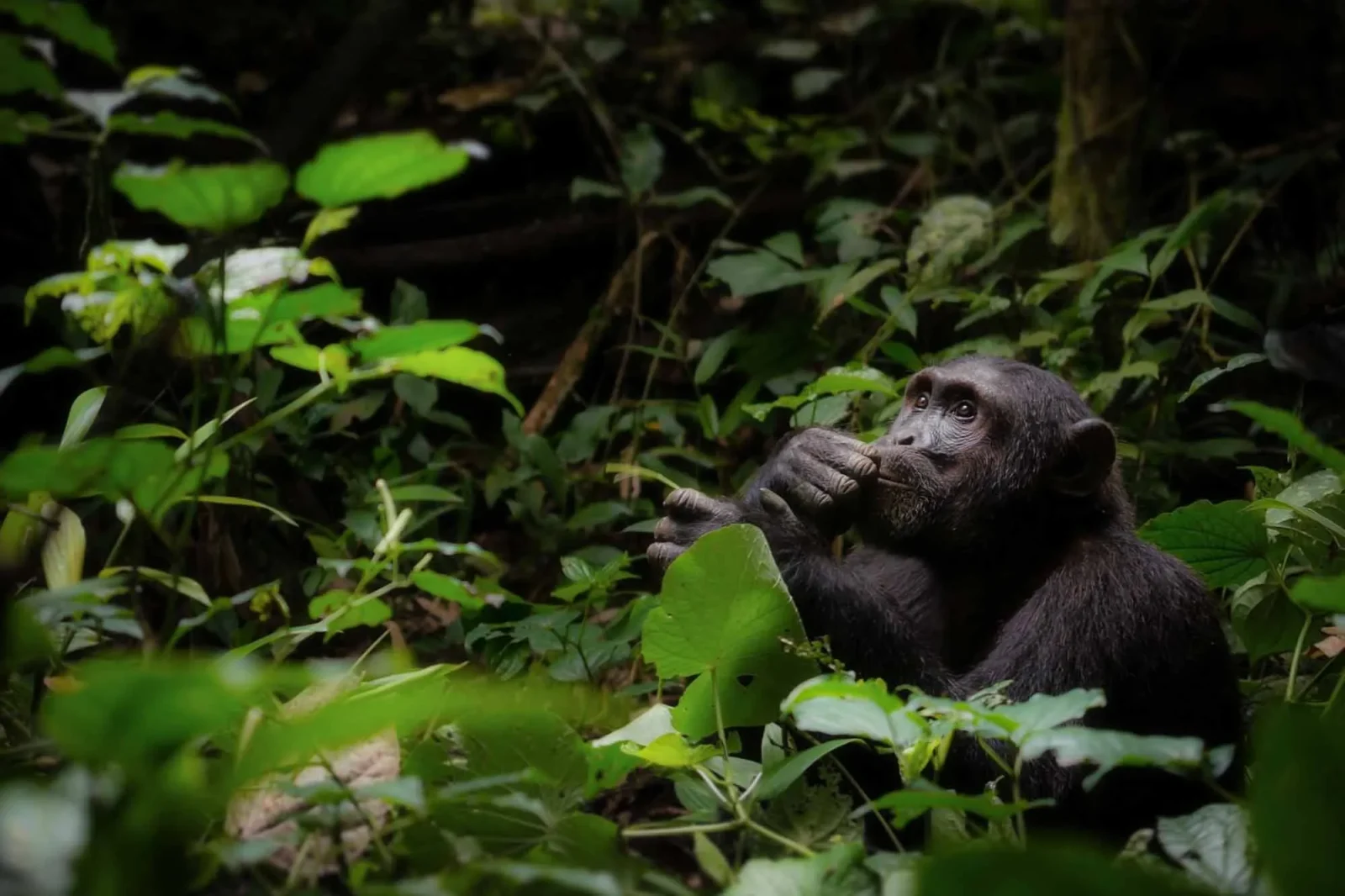
Eastern lowland gorillas are primarily found in the lowland and sub-montane forests of eastern Democratic Republic of the Congo, notably in Kahuzi-Biega National Park, while mountain gorillas inhabit the volcanic highlands of Uganda, Rwanda, and the DRC, including Bwindi Impenetrable Forest, Mgahinga Gorilla National Park, and Virunga National Park.
Habitat and Geography
The habitat of each subspecies is one of the most striking differences. Mountain gorillas live in high-altitude, misty forests and bamboo zones, often at elevations between 2,000 and 4,000 meters. Their environment is cooler, wetter, and often shrouded in clouds, creating a dense, mossy forest perfect for their foraging needs.
In contrast, eastern lowland gorillas prefer lower-altitude tropical and sub-montane forests, sometimes extending into swamps and bamboo forests but generally in warmer, less mountainous regions. These gorillas inhabit vast expanses of dense lowland rainforest, which are harder to navigate and less habituated, making sightings more challenging.
This difference in habitat also influences trekking logistics. Mountain gorilla treks are usually shorter and more predictable due to habituation, while eastern lowland gorilla treks can be more physically demanding and unpredictable, requiring more stamina and patience.
Physical Differences
Eastern lowland gorillas are the largest of all gorilla subspecies, with adult males reaching 250 kilograms or more. They have longer limbs, broader chests, and slightly sparser, darker coats compared to mountain gorillas. Their size and strength are adaptations to navigating dense lowland forests.
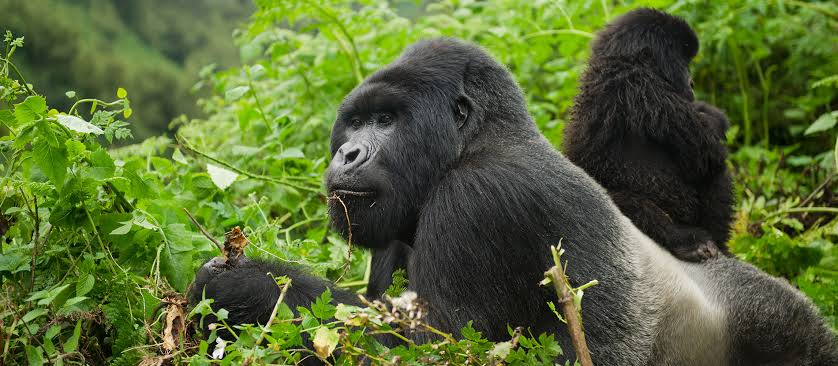
Mountain gorillas, while slightly smaller (adult males around 180-220 kilograms), are stockier with thicker fur, which protects them from the cold high-altitude climate. Their black, dense fur gives them a softer, fluffier appearance, which makes them particularly photogenic in misty forest conditions.
Facial differences are also notable: eastern lowland gorillas have more pronounced brows and longer faces, while mountain gorillas tend to have rounder faces and softer expressions, which sometimes gives the impression of a more approachable demeanor.
Behavior and Social Structure
Both subspecies live in stable family groups led by a dominant silverback male, but their behavior reflects adaptations to their respective environments.
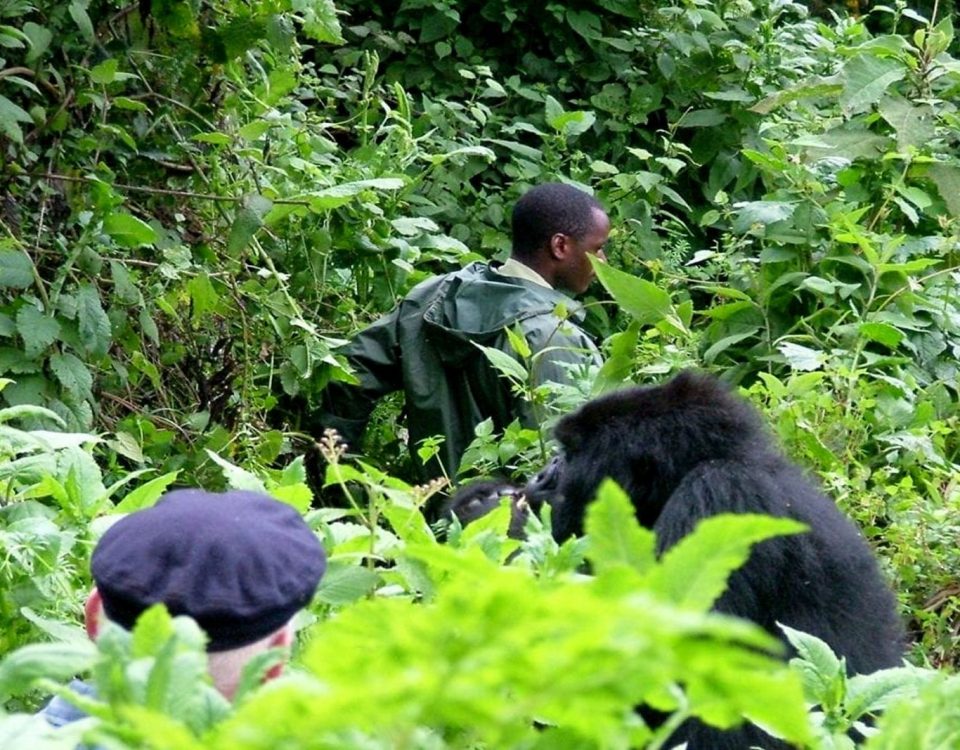
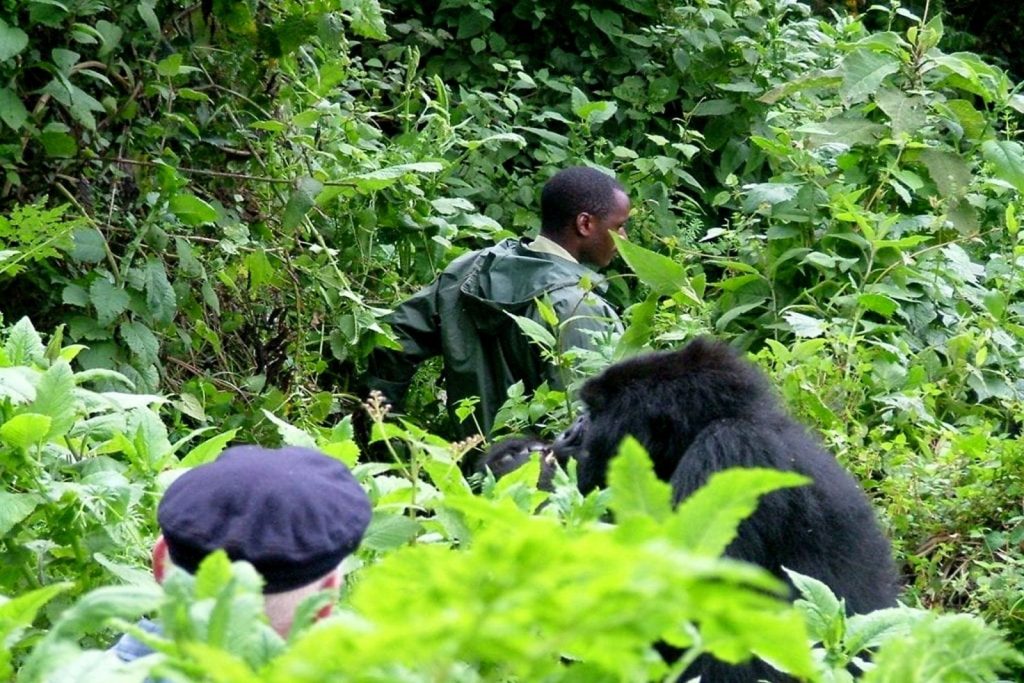
Mountain gorillas are more habituated to human presence, especially in Uganda and Rwanda, making them relatively easier to observe. They are curious but cautious, often allowing trekkers to approach within a safe distance. Their foraging habits include a mix of leaves, stems, and occasional fruits, adapted to high-altitude vegetation.
Eastern lowland gorillas are less habituated and can be shyer and more elusive. Their larger home ranges in lowland forests mean encounters can require several hours of trekking. They feed primarily on a diverse range of lowland vegetation, including bamboo shoots, leaves, and fruit, which affects their movement patterns.
Both subspecies are peaceful, social, and intelligent, but eastern lowland gorillas’ less frequent contact with humans gives each encounter a sense of wild authenticity.
Conservation Status
Mountain gorillas have benefited from decades of intense conservation efforts and are critically endangered, with their numbers gradually increasing to over 1,000 individuals across Uganda, Rwanda, and DRC as of 2026. Strict park protection, tourism revenue, and anti-poaching patrols have contributed to this positive trend.
Eastern lowland gorillas, however, face greater threats from habitat loss, political instability, and poaching. Their population is estimated at just over 3,800 individuals, making them the largest yet still critically endangered gorilla subspecies. Conservation efforts are ongoing but challenged by the region’s remoteness and security concerns.
Visiting these gorillas supports conservation initiatives, funding anti-poaching operations, ranger salaries, and community outreach programs that incentivize local populations to protect these magnificent creatures.
Trekking Experience Comparison
For travelers, the choice between the two subspecies often comes down to trekking style and desired experience.
Mountain gorilla trekking is more predictable, well-structured, and accessible. Trails are better maintained, and sightings are almost guaranteed with permits. The experience is ideal for first-time gorilla trekkers, photographers, and those seeking comfort with high wildlife success rates.
Eastern lowland gorilla trekking offers raw, off-the-beaten-path adventure. Treks are longer, less predictable, and physically challenging, but the reward is an intimate encounter with one of the rarest gorilla subspecies on Earth. This experience is suited for adventurous travelers seeking a sense of exploration and solitude.
Both experiences provide up to one hour of direct observation, offering unforgettable opportunities to witness gorilla behavior, from playful interactions among juveniles to the powerful presence of silverbacks.
Which Should You Choose?
Your choice depends on your priorities:
First-time gorilla trekkers or those seeking easier access: Mountain gorillas in Uganda, Rwanda, or Virunga National Park.
Adventure seekers and wildlife specialists: Eastern lowland gorillas in Kahuzi-Biega National Park or lowland sectors of Virunga.
Conservation-conscious travelers: Both subspecies provide opportunities to support vital conservation, but eastern lowland gorillas require additional logistics that may maximize impact per visitor.
In 2026, both experiences offer once-in-a-lifetime memories, but understanding the differences ensures your expectations align with the trekking conditions, wildlife behavior, and adventure level you seek.
Eastern lowland gorillas and mountain gorillas are distinct yet equally remarkable subspecies, each offering a unique lens into the lives of Africa’s great apes. Their differences in habitat, physical traits, behavior, and conservation status shape the trekking experience, guiding travelers toward the adventure that suits them best. Whether navigating the misty highlands with mountain gorillas or trekking the dense lowland forests for eastern lowland gorillas, encounters with these majestic creatures are both humbling and inspiring, leaving a lasting impression on any wildlife enthusiast.
Gorilla Trekking in the Democratic Republic of Congo
The Democratic Republic of Congo (DRC) is home to two gorilla species found nowhere else together: mountain gorillas in Virunga National Park and eastern lowland gorillas (Grauer’s gorillas, Gorilla beringei graueri) in Kahuzi-Biega National Park. Both are UNESCO World Heritage Sites.
Virunga National Park – Africa’s oldest national park, established in 1925 – covers 7,900 km² of remarkable ecological diversity, from the volcanic peaks of the Virunga Massif to the glaciers of the Rwenzori Mountains and the tropical lowland forests of the Congo Basin. The park is also home to hippos, elephants, okapis, and the entire cast of Congo rainforest wildlife.
Eastern Lowland Gorillas – A Unique Encounter
The eastern lowland gorilla (Grauer’s gorilla) is the world’s largest subspecies of gorilla, with silverbacks weighing up to 220kg. Found only in the DRC, Grauer’s gorillas are considerably rarer than mountain gorillas – their population has declined by more than 70% since the 1990s due to conflict, habitat loss, and poaching. Kahuzi-Biega National Park in South Kivu offers the only reliable trekking experience with habituated Grauer’s gorilla families.
A gorilla permit in the DRC costs USD 400 per person – significantly cheaper than Rwanda (USD 1,500) or Uganda (USD 800). The experience is raw, off-the-beaten-track, and unforgettable for travellers seeking something genuinely uncommon.
Practical Information for DRC Gorilla Trekking
Getting to Virunga and Kahuzi-Biega
The most common entry point to eastern DRC is via Kigali, Rwanda. Goma – the gateway to Virunga National Park – is just 80km from Kigali. Direct flights from Nairobi and Kampala also serve Goma. Bukavu (gateway to Kahuzi-Biega) is accessible from Goma by road (3-4 hours) or by light aircraft.
Is it safe to trek gorillas in the DRC?
Security in eastern DRC is complex and fluctuates. Virunga National Park and Kahuzi-Biega have experienced periods of closure due to armed group activity. Always check current security conditions with your tour operator and your government’s travel advisory before planning a DRC gorilla trek. Reputable operators with established local security networks are essential.
Recommended Tours: 8 Days Congo Gorillas & Nyiragongo Safari | 5 Days Lowland Gorilla Safari Congo